
The Architecture of Exclusion: Assessing Proposed Federal Rollbacks of LGBTQ+ Rights
An in-depth examination of the political strategies and proposed federal policies aimed at dismantling LGBTQ+ civil rights protections.
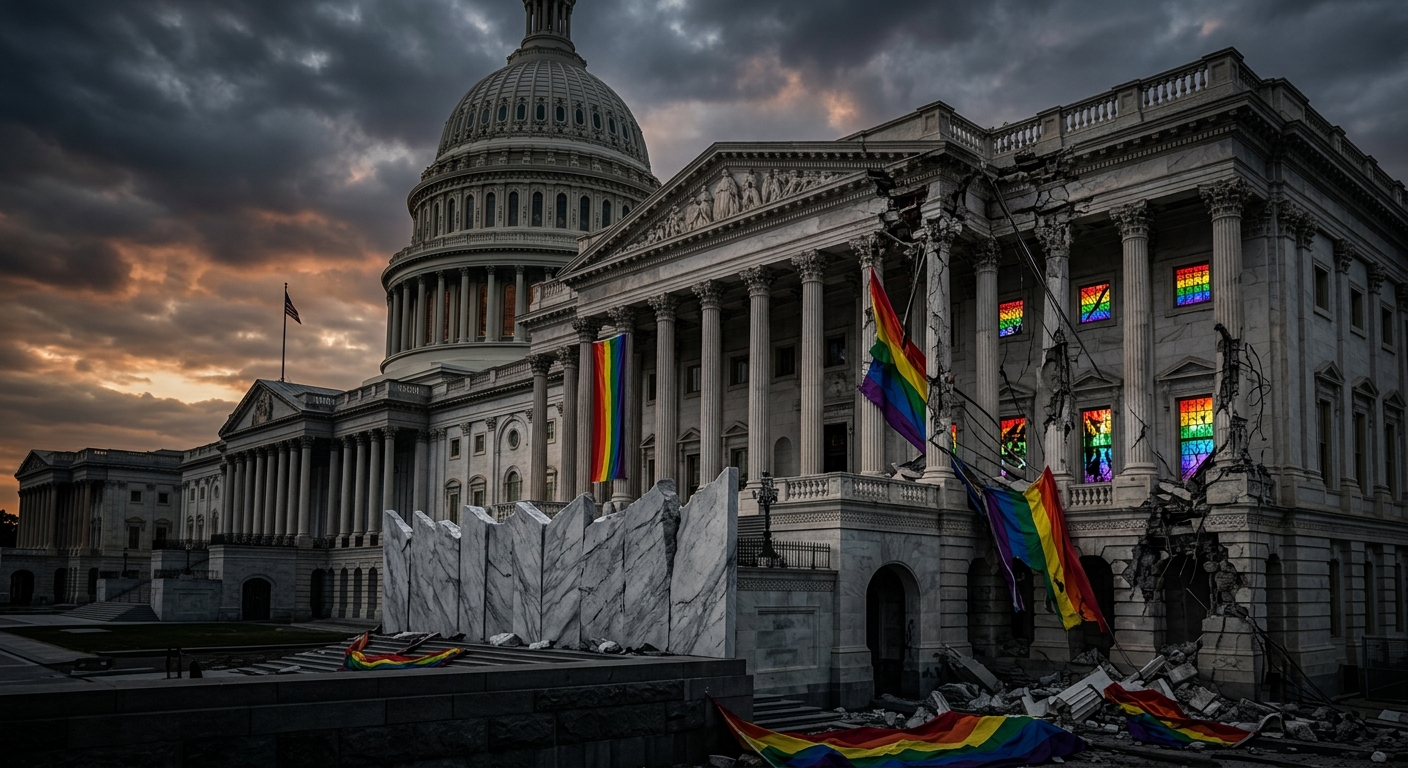
The Shifting Terrain of Civil Liberties and LGBTQ+ Protections
The trajectory of civil rights in the United States has rarely been a linear progression. Over the past decade, the legal and social landscape regarding sexual orientation and gender identity has experienced profound shifts, oscillating between landmark expansions of equality and coordinated, systemic retractions. Recent political discourse and emerging conservative policy frameworks have signaled a renewed and highly aggressive strategy targeting LGBTQ+ communities. Central to this movement are the campaign promises of prominent political figures, alongside comprehensive conservative blueprints that explicitly outline mechanisms for undoing established civil rights protections at the federal level.
Understanding the magnitude of these proposals requires recognizing a fundamental shift in political strategy. The current agenda has moved beyond merely resisting the expansion of new rights; it is proactively designed to erode existing safeguards and leverage the full weight of the federal administrative state to marginalize transgender, nonbinary, and queer individuals. The implications of these proposed frameworks are vast, threatening to unravel decades of legal precedent and societal progress by fundamentally redefining how federal agencies interpret, implement, and enforce foundational anti-discrimination laws. This transition from a defensive political posture to an offensive, institutional strategy marks a critical juncture in the fight for civil liberties, demanding a thorough analysis of the specific mechanisms being proposed to restrict equality.
Systemic Dismantling of Anti-Discrimination Safeguards
A primary tactic within this proposed political framework involves the systematic dismantling of anti-discrimination policies that have provided critical shelter for marginalized communities in both public and private spheres. The strategy hinges on the executive branch’s ability to direct federal agencies, particularly the Department of Justice, to radically reinterpret foundational civil rights statutes. By asserting that laws such as the Civil Rights Act of 1964 and the Education Amendments of 1972 do not inherently protect against discrimination based on sexual orientation or gender identity, a future administration could effectively nullify protections across vast swaths of American public life without needing congressional approval.
The consequences of such reinterpretations would be immediate and far-reaching, directly impacting several core areas of everyday existence and economic survival for LGBTQ+ individuals:
- Educational Environments: Under Title IX, current administrative interpretations offer transgender students protections against severe harassment and secure their right to use facilities and participate in activities aligned with their gender identity. Proposed policies explicitly vow to revoke these inclusive guidelines immediately, potentially mandating that public schools and federally funded universities force students into environments based strictly on sex assigned at birth, thereby fostering hostile, legally perilous educational climates.
- Workplace and Employment Protections: By actively challenging the application of the Supreme Court’s landmark decision in Bostock v. Clayton County, federal agencies could roll back guidance that protects LGBTQ+ workers. This would allow federal contractors and private employers greater leeway to terminate or refuse to hire employees based on their gender identity or sexual orientation, often under the expanded guise of religious freedom or employer discretion.
- Housing and Emergency Shelters: The Department of Housing and Urban Development (HUD) could rescind crucial administrative rules that mandate equal access to federally funded housing and homeless shelters. This rollback would leave highly vulnerable populations, particularly LGBTQ+ youth who already face disproportionate rates of homelessness, without legal recourse if denied life-saving emergency accommodations.
By systematically stripping away these foundational protections, the federal government would not merely be stepping back from active civil rights enforcement; it would be sending a powerful, legally binding signal to state governments and private entities that discrimination against LGBTQ+ individuals is federally permissible and procedurally shielded.
Institutionalizing Exclusion: From Healthcare to the Armed Forces
Beyond the passive removal of protective legal frameworks, the proposed policies advocate for the active institutionalization of exclusion. This represents a more aggressive phase of policy formulation where the federal government proactively mandates discriminatory practices within its own ranks and across the myriad of programs it funds. The overarching goal is to create immense structural barriers that make participation in public life extraordinarily difficult, if not impossible, for transgender and gender-nonconforming individuals.
One of the most highly publicized arenas for this strategy is the United States Armed Forces. Policy proposals strongly suggest a swift reinstatement of the ban on transgender individuals serving openly in the military. Proponents of the ban often cite unit cohesion and military readiness as primary justifications, despite comprehensive studies, internal data, and testimonies from top military commanders affirming that inclusive service does not degrade operational effectiveness. Reinstating such a ban would not only abruptly strip thousands of active-duty personnel of their careers and livelihoods but also reinforce a stigmatizing national narrative regarding the civic capabilities and worth of transgender citizens.
Healthcare access stands out as another highly critical target for institutional exclusion. Proposed political agendas aim to heavily leverage the administrative power of the Department of Health and Human Services (HHS) to aggressively restrict access to gender-affirming care. This strategy includes concerted efforts to prohibit federal healthcare programs, such as Medicare, Medicaid, and the Veterans Health Administration (VHA), from covering these medically necessary treatments. Such a move would effectively sever access to life-saving care for millions of low-income, disabled, and elderly transgender individuals, as well as military veterans. Furthermore, proposals seek to entirely eliminate non-discrimination protections established under Section 1557 of the Affordable Care Act, empowering healthcare providers, hospitals, and private insurance companies to flatly refuse services to LGBTQ+ patients based on institutional, moral, or religious objections.
Criminalization and the Weaponization of Federal Statutes
Perhaps the most alarming and severe aspect of these proposed policy frameworks is the explicit intent to weaponize existing federal law to effectively criminalize gender nonconformity. This tactic transitions the federal government’s posture from administrative exclusion to active, punitive law enforcement. A key element of this aggressive strategy involves the manipulation and expansion of long-standing federal statutes, such as obscenity laws and historical obscenity codes like the Comstock Act, to target public expressions of queer identity and the provision of standard medical care.
Under these radical proposals, the federal government could attempt to redefine drag performances, LGBTQ+ Pride events, and even the mere public presence of visibly transgender individuals as inherently explicit or inherently harmful to minors. By expanding the legal definition of ”obscenity” to broadly encompass gender nonconformity, federal law enforcement agencies could be empowered to raid community events, arrest performers, and prosecute local organizers under severe federal charges. This legal maneuvering attempts an end-run around established First Amendment protections by deliberately classifying LGBTQ+ expression and association not as protected free speech, but as illicit criminal conduct.
Moreover, the political rhetoric surrounding these policies increasingly frames the provision of widely accepted gender-affirming medical care to minors as a direct form of child abuse or endangerment. While family law and the regulation of medical practice are traditionally the strict purview of individual state governments, proponents of these new federal policies seek to use the immense investigative power of the Department of Justice to aggressively probe and prosecute medical professionals, clinics, and even parents who facilitate this specialized care. By threatening severe federal prosecution—including potential wire fraud or civil rights violations—for healthcare decisions endorsed by every major medical and psychological association in the United States, these policies aim to create a chilling effect so profound that medical providers will abandon the field entirely, effectively cutting off critical access to care nationwide.
Coercing States and Overriding Local Autonomy
The aggressive implementation of a hostile federal administrative agenda against LGBTQ+ rights will inevitably lead to massive, unprecedented conflicts with state governments. Over the past decade, numerous politically progressive states have explicitly positioned themselves as ”sanctuaries” for transgender youth, their families, and medical providers, codifying comprehensive civil rights protections and legally shielding healthcare operations from out-of-state investigations. However, the policy frameworks proposed by conservative legal strategists outline specific methods for the federal government to aggressively override this local autonomy and coerce resistant states into compliance.
The primary and most powerful mechanism for this coercion is the conditional allocation of federal funding. The United States government provides hundreds of billions of dollars annually to states for vital public education, healthcare infrastructure, transportation, and emergency services. Proposed policies suggest directly tying these critical, life-sustaining funds to strict compliance with federal anti-LGBTQ+ mandates. For instance, a future administration could explicitly threaten to withhold essential Title IX education funding from state university systems or local school districts that permit transgender athletes to participate in sports aligned with their gender identity, or that enforce policies respecting a student’s chosen name and pronouns in the classroom.
This strategy of aggressive financial coercion seeks to forcefully bend even progressive states to implement exclusionary policies out of sheer economic necessity and fear of budget shortfalls. Furthermore, federal agencies could attempt to pre-empt comprehensive state-level anti-discrimination laws by issuing broad, sweeping administrative rules that mandate prioritization of religious exemptions over local LGBTQ+ civil rights protections. This aggressive, unilateral assertion of federal executive power would undoubtedly spark severe and protracted legal battles, fundamentally testing the constitutional boundaries of federalism, states’ rights, and the separation of powers in the modern context of civil liberties. International human rights observers have extensively noted that this coordinated legal effort strongly mirrors authoritarian tactics utilized globally, where central governments systematically dismantle the legal standing and autonomy of vulnerable minority groups.
The Human Cost of Policy Rollbacks
Beyond the complex legal maneuvering, statutory interpretations, and political brinkmanship, it is absolutely imperative to recognize the profound, devastating human cost associated with these proposed policy rollbacks. The mere persistent proposal and debate of these hostile policies contribute directly to a toxic societal climate, deeply emboldening discriminatory behavior, increasing instances of hate crimes, and significantly exacerbating the psychological marginalization of an already vulnerable demographic.
The daily psychological toll on LGBTQ+ individuals, particularly transgender youth, is severe and well-documented by public health experts. When the highest levels of the federal government continuously debate their fundamental right to exist in public spaces, access routine medical care, and participate equally in daily civic life, the ensuing chronic stress and alienation significantly drive up the risk of severe depression, acute anxiety, and suicidality. Furthermore, the deliberate restriction of gender-affirming care is absolutely not a matter of simply delaying cosmetic or elective procedures; it is the forced denial of widely recognized, life-saving medical interventions. Denying this critical care forces individuals into prolonged, severe psychological distress and significantly diminishes their overall life expectancy and quality of life.
Economic stability and physical safety are also heavily and disproportionately impacted. Stripping workplace protections, housing anti-discrimination rules, and healthcare access simultaneously exposes LGBTQ+ individuals to arbitrary eviction, sudden job termination, and medical bankruptcy, driving up the already disproportionate rates of severe poverty and chronic homelessness within the community. The ultimate culmination of these proposed federal policies is a comprehensive, systematic effort to erase transgender and gender-nonconforming individuals entirely from the American public sphere, creating an artificially hostile environment where living authentically and safely is met with insurmountable legal, economic, and social barriers deliberately erected by the state.
Frequently Asked Questions (FAQs)
What is Title IX, and how does it relate to LGBTQ+ rights?
Title IX is a foundational federal civil rights law enacted in 1972 that strictly prohibits sex-based discrimination in any school, college, or education program that receives federal funding. In recent years, federal courts and the Department of Education have clearly interpreted ”sex-based discrimination” to legally encompass discrimination based on sexual orientation and gender identity. This critical interpretation protects LGBTQ+ students from bullying and harassment, ensuring their equitable right to access educational facilities and programs safely. Newly proposed political agendas explicitly seek to legally reverse this interpretation, actively removing all federal protections for transgender youth in educational settings.
How can the federal government practically restrict gender-affirming healthcare?
While the direct, day-to-day practice of medicine is generally regulated by individual state medical boards, the federal government exercises immense, indirect control through massive public funding streams and broad administrative rules. An administration could heavily restrict gender-affirming care by explicitly prohibiting federal healthcare programs—such as Medicare, Medicaid, and the Veterans Health Administration—from financially covering these medical treatments. Furthermore, the Department of Health and Human Services could aggressively rewrite civil rights rules under the Affordable Care Act to explicitly permit doctors, hospitals, and private insurers to arbitrarily deny care to LGBTQ+ individuals based entirely on personal religious or moral objections.
What is the connection between obscenity laws and gender nonconformity?
Conservative legal theorists and politicians are increasingly attempting to radically expand the historical and legal definition of ”obscenity” to directly include public expressions of gender nonconformity, such as theatrical drag performances or even the simple presence of transgender individuals in shared public spaces. By maliciously classifying these identities and cultural expressions as inherently sexualized or inherently inappropriate for minors, they seek to bypass strong First Amendment free speech protections and explicitly use severe criminal statutes to arrest performers, community organizers, and transgender individuals.
Can federal policies legally override state laws that protect LGBTQ+ individuals?
The intersection of federal supremacy and state law is incredibly complex. While individual states can autonomously enact their own robust civil rights protections, the federal government can effectively use the ”power of the purse” to coerce local compliance. By aggressively threatening to withhold essential, multi-billion dollar federal funding for public education, state healthcare systems, or infrastructure projects, the federal government can place immense pressure on states to abandon their own protective laws. Additionally, federal administrative agencies can design rules explicitly intended to legally preempt state laws, leading to significant, high-stakes Supreme Court battles over state autonomy and civil rights.
How are civil rights organizations preparing for these potential policy shifts?
Legal advocacy groups and major civil rights organizations are actively preparing highly robust, multi-tiered litigation strategies to forcefully challenge these proposed policies in federal court the moment they are enacted. Their comprehensive approach involves fiercely defending existing civil rights legal precedents, rapidly filing emergency injunctions to halt the immediate implementation of discriminatory executive orders, and working closely with progressive state legislatures to legally fortify local civil rights protections. Furthermore, these organizations are investing heavily in public education and grassroots community organizing to build a broader, highly resilient coalition capable of fiercely resisting administrative overreach and actively advocating for permanent legislative safeguards at both the state and national levels.
References
- Trump on LGBTQ Rights: Rolling Back Protections and Criminalizing Gender Nonconformity — American Civil Liberties Union (ACLU). 2024-06-13. https://www.aclu.org/news/lgbtq-rights/trump-on-lgbtq-rights-rolling-back-protections-and-criminalizing-gender-nonconformity
- Fact Sheet: Donald Trump on LGBTQ Issues: Transgender Americans — GLAAD. 2024-08-20. https://glaad.org/fact-sheet-donald-trump-on-lgbtq-issues-transgender-americans/
- Interview: Trump Poses More Threats to Rights of LGBT People — Human Rights Watch. 2024-11-19. https://www.hrw.org/news/2024/11/19/interview-trump-poses-more-threats-rights-lgbt-people
- Overview of President Trump’s Executive Actions Impacting LGBTQ+ Health — KFF. 2026-05-20. https://www.kff.org/racial-equity-and-health-policy/issue-brief/overview-of-president-trumps-executive-actions-impacting-lgbtq-health/
Similar Articles








Read full bio of medha deb


