
Federal Power, Local Police, and Immigration
Examining the constitutional clash between federal immigration mandates and local law enforcement autonomy.
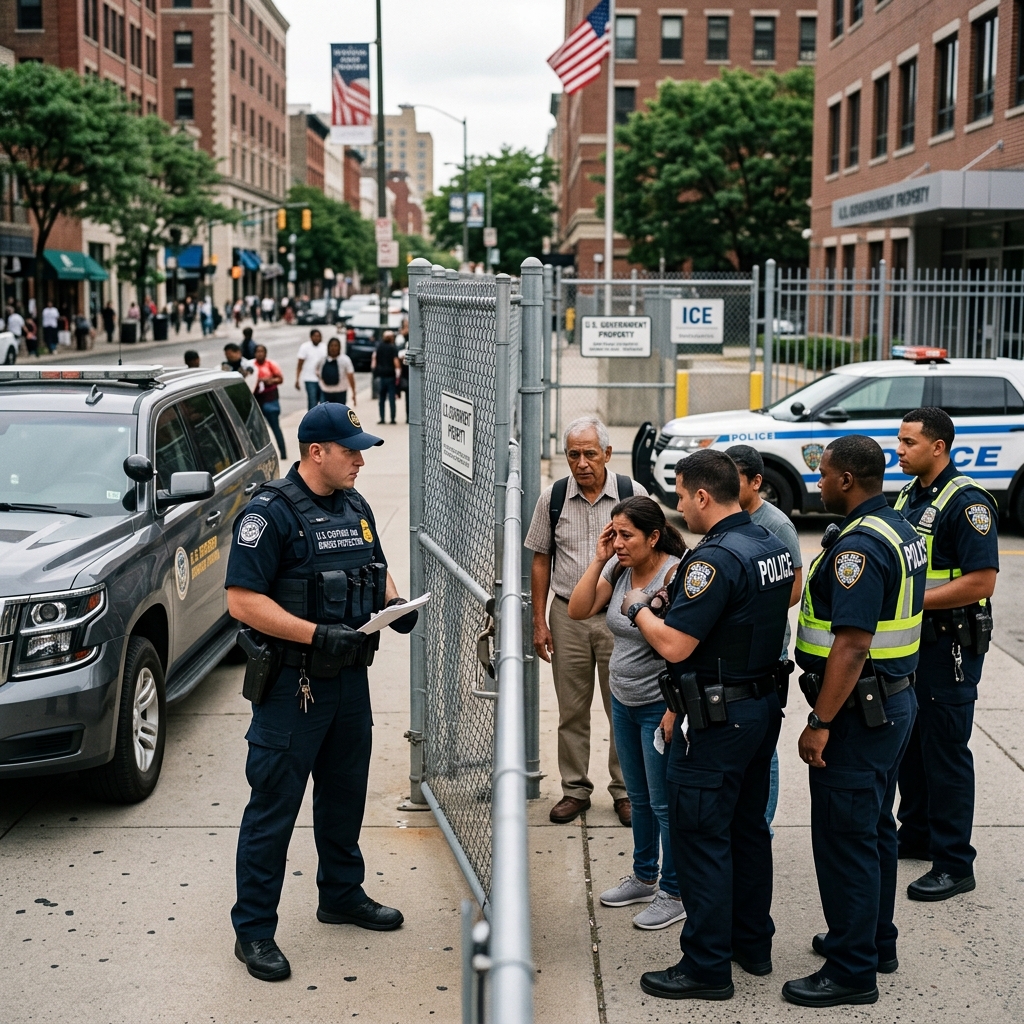
The Tug-of-War Over Local Police and Federal Immigration Agendas
The United States operates on a system of dual sovereignty, a delicate constitutional balance where the federal government and state governments share power but retain distinct realms of authority. One of the most contentious modern battlegrounds testing this equilibrium lies in the realm of immigration enforcement. Tensions frequently ignite when federal authorities—often spearheaded by the Department of Justice and the Attorney General—attempt to conscript state and local law enforcement agencies into executing federal immigration policies. At the center of this storm are county sheriffs, local police chiefs, and municipal leaders who find themselves caught between federal demands for cooperation and state-level mandates aimed at protecting immigrant communities.
The pressure to transform local jails into extensions of the federal immigration infrastructure raises profound questions regarding constitutional law, the allocation of local resources, and the fundamental purpose of community policing. Through press conferences, grant condition threats, and public memorandums, the federal government has repeatedly attempted to bring local jurisdictions into compliance with federal immigration priorities. Do local police exist to serve the immediate safety needs of their communities, or are they subordinate arms of the federal deportation apparatus? Understanding the legal doctrines, the practical implications for community trust, and the limits on federal power is essential to navigating this conflict over local sovereignty and federal immigration control.
Deciphering the Tenth Amendment and the Anti-Commandeering Doctrine
At the heart of the legal pushback against federal immigration mandates is the Tenth Amendment of the U.S. Constitution. It establishes that powers not delegated to the United States by the Constitution are reserved to the States respectively, or to the people. Over decades of jurisprudence, the Supreme Court has interpreted this amendment to establish the "anti-commandeering" doctrine, a fundamental tenet of federalism that prohibits the federal government from coercing state or local governments into enacting, administering, or enforcing federal regulatory programs.
The Supreme Court cemented this doctrine in landmark cases such as New York v. United States (1992) and Printz v. United States (1997). In Printz, the Court explicitly ruled that the federal government could not compel local chief law enforcement officers to conduct background checks for a federal firearms program. Writing for the majority, Justice Antonin Scalia affirmed that the federal government may neither issue directives requiring the States to address particular problems, nor command the States’ officers to administer or enforce a federal regulatory program.
In the context of immigration, this doctrine serves as the primary legal shield for "sanctuary" or "safe" jurisdictions. When an Attorney General threatens to withhold federal law enforcement grants unless a local police department agrees to assist U.S. Immigration and Customs Enforcement (ICE), states argue that this constitutes unconstitutional commandeering. Federal immigration law remains the exclusive purview of the federal government. While federal agents have the authority to enforce civil immigration codes, they cannot constitutionally force local sheriffs or municipal police officers to spend local tax dollars, allocate personnel, or utilize local jail space to act as force multipliers for ICE. The anti-commandeering principle ensures that local officials remain accountable only to their local electorate.
The Mechanics of ICE Detainers vs. Fourth Amendment Rights
Much of the day-to-day friction between federal immigration agencies and local law enforcement revolves around the use of "ICE detainers" or immigration holds. A detainer is a formal request from ICE to a state or local jail agency, asking them to hold an individual for up to 48 hours beyond the time they would otherwise be released from state custody (such as after posting bail, being acquitted, or completing a sentence). The purpose of this extra detention is to give federal agents time to assume custody of the individual for potential civil deportation proceedings.
The legal nature of these detainers is highly controversial. Unlike a criminal arrest warrant, which must be signed by a neutral judge upon a showing of "probable cause" as required by the Fourth Amendment, an ICE detainer is typically a civil administrative document signed by a federal immigration officer. Because the 48-hour requested hold period often excludes weekends and federal holidays, an individual might languish in a local county jail for several days without ever seeing a judge or having a new criminal charge levied against them.
This distinction has led to severe legal liabilities for local governments. Multiple federal courts have ruled that because a detainer is merely a request and not a legally binding order, a local jail that holds someone solely on the basis of an ICE detainer is effectively making a new, warrantless arrest. If that detention violates the Fourth Amendment, the local municipality—not the federal government—can be sued for damages. Consequently, many sheriffs and jail administrators, acting on the advice of their county counsels, proactively decline to honor warrantless detainers to avoid costly civil rights lawsuits.
Why County Sheriffs Are Caught in the Crossfire
County sheriffs occupy a unique and highly politicized space in the American law enforcement landscape. Unlike appointed municipal police chiefs, sheriffs are typically elected officials whose authority is enshrined in state constitutions. They run county jails, manage court security, and oversee patrol operations. Because they control the jail intake and release process, sheriffs are the primary gatekeepers of the populations that ICE wishes to access.
This gatekeeper role makes sheriffs prime targets for federal pressure. The federal government frequently attempts to forge voluntary partnerships with sheriffs, such as through the 287(g) program, which deputizes local jail personnel to perform specific federal immigration enforcement functions under ICE supervision. Proponents of such cooperation argue that allowing ICE to screen inmates and facilitate deportations directly from local jails enhances public safety by ensuring that undocumented individuals with criminal records are not released back into the community.
Conversely, because sheriffs are directly accountable to the voters of their specific county, their policies often reflect the political leanings of their local electorate. In conservative counties, a sheriff might enthusiastically welcome federal partnerships. In more progressive or diverse counties, sheriffs might actively resist federal entanglements to protect their constituents. Furthermore, for many sheriffs, the refusal to partner with ICE is rooted in operational pragmatism. Aside from the financial burden and legal liability of holding inmates for federal authorities, sheriffs must maintain order and trust within their jurisdictions. Engaging in federal civil immigration enforcement can alienate substantial segments of the county’s population, making the primary job of local law enforcement significantly more difficult.
The Sociological Impact: Crime Reporting and Community Trust
Beyond the legal arguments of federalism and the Fourth Amendment, the most profound implication of local police participating in federal immigration enforcement involves community safety and trust. Law enforcement executives widely agree that the effectiveness of community policing depends almost entirely on the willingness of residents to communicate with officers. When local police are viewed as a de facto extension of the federal deportation system, trust fractures, particularly within immigrant communities.
Criminological research has consistently demonstrated that when local authorities engage in immigration enforcement, it creates a chilling effect on crime reporting. Undocumented immigrants, as well as their citizen family members, become acutely fearful that interacting with the police—even as a victim or a witness to a crime—could trigger an investigation into their immigration status, ultimately leading to detention or deportation.
For example, a study examining the implementation of aggressive federal-local immigration partnerships found a marked decrease in the number of incidents reported by Hispanic communities to local police. If victims of domestic violence, human trafficking, or gang extortion are too terrified to dial 911, perpetrators operate with impunity, and the overall safety of the entire community is compromised. Recognizing this dangerous dynamic, many states and cities have passed laws explicitly prohibiting local police from inquiring about a person’s immigration status. These policies, often labeled by critics as "sanctuary" laws, are defended by local leaders and law enforcement professionals as essential "community trust" initiatives necessary for comprehensive public safety.
State Legislative Countermeasures: The Rise of Safe Jurisdictions
In response to both federal pressure and the desire to safeguard community trust, numerous states and municipalities have enacted robust legislative firewalls. These laws vary significantly in scope but generally prohibit local law enforcement agencies from using local funds or personnel to assist in federal civil immigration enforcement.
States like California, Illinois, and Maryland have passed comprehensive legislation that legally restricts sheriffs and police departments from honoring administrative ICE detainers, sharing release dates of inmates, or entering into 287(g) agreements that deputize local officers as federal immigration agents. These statutory frameworks force local agencies to prioritize local public safety operations over federal administrative tasks.
By codifying these restrictions, state legislatures effectively shield local sheriffs from federal pressure, providing them with a clear, unified legal mandate to refuse cooperation. While the federal government has repeatedly challenged these state laws in court, federal courts have largely upheld the states’ rights to control their own resources under the Tenth Amendment. The ongoing tug-of-war highlights the resilient nature of American federalism, where local governments continually assert their constitutional right to prioritize the welfare and safety of their communities over the enforcement mandates of the federal executive branch.
Frequently Asked Questions (FAQ)
- What does the term "sanctuary jurisdiction" mean?
A "sanctuary jurisdiction" is a broad, non-legal term used to describe cities, counties, or states that limit their cooperation with federal civil immigration enforcement to prioritize local public safety and community trust. - Can the federal government defund local police if they refuse to help ICE?
The federal government can place certain conditions on federal grants, but under the anti-commandeering doctrine of the Tenth Amendment, it cannot coerce states into enforcing federal laws by threatening to withdraw completely unrelated funding or retroactively punishing non-compliant jurisdictions. - What is the difference between an ICE detainer and a judicial warrant?
A judicial warrant is signed by a neutral judge based on probable cause of a crime. An ICE detainer is an administrative request generated by a federal immigration officer for a civil immigration violation, not a criminal offense. - Is civil immigration enforcement the same as criminal law enforcement?
No. Most immigration violations, such as overstaying a visa, are classified as civil violations under federal law. Consequently, local police officers generally lack the legal authority to arrest individuals solely for civil immigration infractions unless explicitly deputized.
References
- Amdt10.4.2 Anti-Commandeering Doctrine — Congress.gov. https://constitution.congress.gov/browse/essay/amdt10-4-2/ALDE_00013626/
- Printz v. United States, 521 U.S. 898 (1997) — Library of Congress / Legal Information Institute. 1997. https://www.law.cornell.edu/supct/html/95-1478.ZO.html
- Policy Number 10074.2: Issuance of Immigration Detainers — U.S. Immigration and Customs Enforcement (ICE). 2017-03-24. https://www.ice.gov/sites/default/files/documents/Document/2017/10074-2.pdf
- The Effect of Immigration Enforcement on Crime Reporting — Industrial Relations Section, Princeton University. https://irs.princeton.edu/publications/effect-immigration-enforcement-crime-reporting-evidence-priority-enforcement-program
- Governor Moore Signs Legislation to Prohibit Maryland Jurisdictions from Deputizing Officers — Maryland.gov. 2026-02-17. https://governor.maryland.gov/news/press/pages/Governor-Moore-Signs-Legislation-to-Prohibit-Maryland-Jurisdictions-from-Deputizing-Officers-for-Federal-Civil-Immigration-.aspx
- Immigration Enforcement Guidance — New York State Attorney General. https://ag.ny.gov/immigration-enforcement
Similar Articles








Read full bio of medha deb




