
The Challenge of Oversight in Federal Law Enforcement
Balancing intelligence operations with strict rules protecting civil liberties.
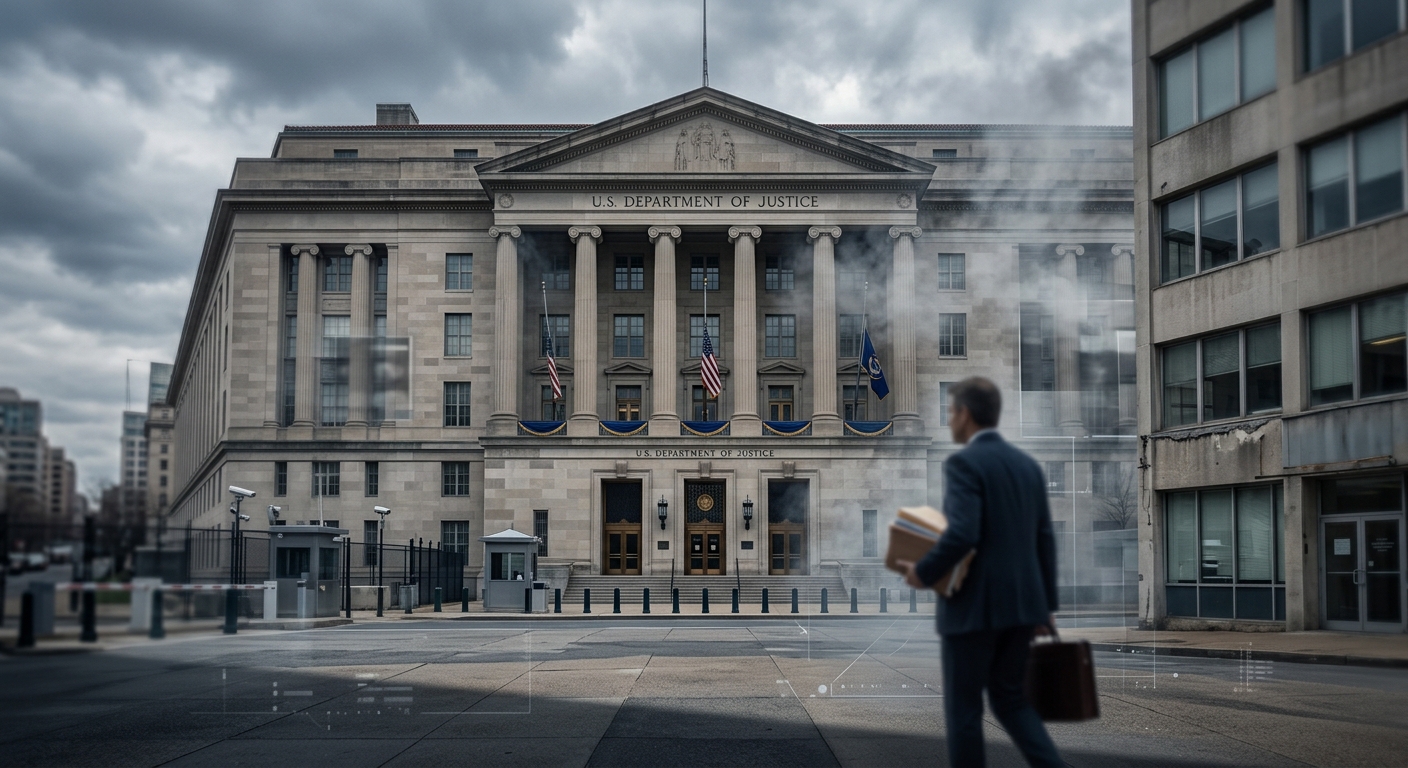
The federal government’s intelligence and law enforcement apparatus is a sprawling, multi-billion-dollar machinery designed to anticipate, investigate, and neutralize an ever-evolving array of threats. At the heart of this formidable machinery lies an inherent and persistent contradiction: the operational demand for rapid, proactive threat mitigation frequently clashes with the meticulous, time-consuming requirements of internal compliance and legal oversight. In high-pressure environments, it is not uncommon for personnel to justify bypassing procedural safeguards by claiming they are simply too overwhelmed with active cases to navigate administrative frameworks. However, when federal agencies prioritize operational speed over their own internal rules, the foundational pillars of civil liberties, constitutional rights, and public trust are put at significant risk. This comprehensive analysis delves into the complex architecture of federal law enforcement oversight, examining the critical guidelines that govern domestic intelligence operations, the systemic challenges in adhering to them, and the profound societal implications of allowing operational urgency to eclipse constitutional fidelity.
Introduction to Federal Surveillance Guidelines
To fully understand the friction between operational tempo and regulatory compliance, one must first examine the historical and legal context of the rules governing federal agencies. The bedrock of domestic intelligence gathering in the United States was radically reshaped in the aftermath of the September 11, 2001, terrorist attacks. Recognizing the need for a more agile and preemptive approach to national security, the Department of Justice spearheaded a consolidation of existing protocols. The result was the Attorney General’s Guidelines for Domestic FBI Operations (AGG-DOM), officially implemented in December 2008 .
The AGG-DOM was intended to synthesize several disparate sets of rules that previously separated criminal investigations from national security operations. This consolidation aimed to complete the transformation of federal law enforcement from a reactive, purely criminal investigative body into a proactive, domestic intelligence entity. While the guidelines provided enhanced flexibility, they also introduced a unified standard for civil liberties protections. The overarching philosophy was that an agency could possess broad intelligence-gathering capabilities without sacrificing the rule of law, provided that strict internal mechanisms were in place .
The Genesis of Internal Controls
Following the establishment of the AGG-DOM, federal agencies required an operational manual to translate broad legal principles into actionable, day-to-day procedures. This necessitated the creation of internal operations guides, most notably the Domestic Investigations and Operations Guide (DIOG). The DIOG dictates exactly how and when agents can deploy intrusive investigative techniques, such as utilizing confidential human sources, conducting physical surveillance, and executing open-source data collection. The rules are meticulously structured around a risk-based model, meaning that the intrusiveness of the investigative tool must be directly proportional to the verified threat level and accompanied by a corresponding level of supervisory approval .
Mechanics of Domestic Investigation Regulations
Understanding how domestic investigations are categorized is crucial to analyzing where and why compliance failures occur. The operations guidelines categorize investigations into distinct, escalating tiers. Each tier requires a different level of factual predication and commands a different threshold of supervisory or legal approval. When these tiers are bypassed, oversight crumbles.
| Investigation Type | Required Factual Predication | Permitted Investigative Methods |
|---|---|---|
| Assessment | No factual predication required; only an “authorized purpose” | Public records, voluntary interviews, physical surveillance |
| Preliminary Investigation | Information or an allegation of criminal activity | Court-ordered monitoring, wider data collection |
| Full Investigation | Articulable factual basis of a crime or national security threat | Full spectrum of tools, including electronic wiretaps |
Navigating Investigative Tiers
The inherent tension arises when investigators, driven by the perceived urgency of a threat, fail to properly categorize their activities or intentionally bypass the required legal reviews for the corresponding tier. The administrative burden of documenting predication, drafting detailed justifications, and securing chain-of-command approvals is frequently cited as a major hurdle. Yet, this bureaucratic friction is not a flaw in the system; it is the primary architectural mechanism preventing unconstitutional surveillance and abuse of power.
The “Too Busy” Dilemma: Balancing Operational Demands and Civil Liberties
A recurring and troubling theme in external audits of federal law enforcement is the justification that investigators are simply too inundated with active, high-priority threats to adhere strictly to internal procedural guidelines. This excuse highlights a systemic cultural issue where legal compliance is viewed as an administrative obstacle—a secondary priority—rather than a fundamental, non-negotiable legal obligation.
The Department of Justice’s Office of the Inspector General (OIG) has repeatedly highlighted instances of widespread procedural violations. Independent audits have consistently uncovered significant non-compliance rates, revealing that agents frequently fail to obtain the necessary approvals from senior officials before initiating highly sensitive investigations. Furthermore, auditors have documented numerous cases where personnel neglected to conduct required legal reviews before deploying intrusive intelligence-gathering tools . Bipartisan coalitions of lawmakers have continuously pressed agency directors for accountability, noting that systemic violations of internal rules open the door for improper considerations to negatively influence the investigative decision-making process .
Administrative Burden vs. Constitutional Protection
The argument that the rapid pace of modern operational demands should somehow supersede regulatory compliance relies on a deeply flawed dichotomy. Constitutional protections and national security are not mutually exclusive concepts; rather, adherence to the Constitution is what legitimizes the exercise of law enforcement power. When agencies prioritize sheer expediency over established protocol, they actively bypass the very safeguards meticulously designed to protect First and Fourth Amendment rights. A rushed, unpredicated investigation that skips mandatory legal review is substantially more likely to result in the unlawful surveillance of constitutionally protected activities, including political speech, religious practices, and peaceful assembly.
The Consequences of Oversight Failures
The societal repercussions of ignoring internal oversight rules extend far beyond bureaucratic reprimands or unfavorable audit reports; they directly and detrimentally impact the health of democratic institutions. When federal agencies fail to follow their own regulatory guidelines, the collateral damage is almost always disproportionately borne by marginalized communities, activist organizations, and political dissidents.
First and foremost, oversight failures severely erode public trust. Law enforcement and domestic intelligence agencies rely heavily on the voluntary cooperation of the communities they serve. If a community begins to believe that it is being subjected to unwarranted, unpredicated surveillance due to a law enforcement agency’s lax adherence to its own internal rules, that critical cooperation vanishes. Oversight entities like the Privacy and Civil Liberties Oversight Board (PCLOB) have frequently raised concerns about how unchecked domestic intelligence operations can inadvertently target groups based on shared racial, religious, or ideological affiliations, rather than on individualized, factual suspicion of criminal activity .
Data Privacy in the Modern Era
Furthermore, in the era of advanced digital surveillance, the stakes of regulatory non-compliance are exponentially higher. The sheer volume of data that can be collected through open-source intelligence gathering, social media monitoring algorithms, and broad intelligence frameworks means that a single procedural violation can instantly compromise the privacy of thousands of citizens. If an automated algorithm flags a digital posting and an agent opens an assessment without executing the proper legal review, the subsequent, unverified data dragnet can permanently entangle completely innocent individuals within the complex web of the federal intelligence apparatus.
Potential Reforms and the Path Forward
Addressing the pervasive operational bypass culture requires significantly more than issuing new departmental memorandums or slightly tweaking existing operational guidelines; it demands comprehensive systemic reform and the imposition of rigorous, uncompromising external accountability mechanisms.
- Strengthening Independent Audits: Internal compliance mechanisms must be heavily bolstered by frequent, unannounced, and comprehensive audits conducted by independent oversight bodies such as the OIG and the PCLOB. These audits should pivot away from merely sampling a small, random percentage of cases; instead, they should employ advanced data analytics to identify systemic, agency-wide anomalies in approvals and case classifications.
- Technological Safeguards: Agencies must integrate hard compliance checkpoints directly into their digital case management software. If an investigator attempts to open an investigation, launch an assessment, or deploy a sensitive technique without the requisite digital signature from a supervising official or legal counsel, the system should automatically and immutably block the action.
- Legislative and Policy Remedies: The legislative branch plays a vital role in curbing oversight failures. Lawmakers must consider conditioning agency funding on verified, demonstrated compliance with domestic operations guidelines. Additionally, legislative reforms could increase the factual threshold required to open low-level intelligence assessments, thereby drastically reducing the risk of baseless, proactive surveillance.
- Cultural Shifts within Agencies: Ultimately, the executive leadership of federal law enforcement agencies must forcefully instil a top-down culture where legal compliance is recognized as mission-critical. Training programs from the academy to the executive level must emphasize that safeguarding civil liberties is not a secondary objective to national security-it is the foundational reason national security exists.
Frequently Asked Questions (FAQs)
What are the primary guidelines governing domestic federal investigations?
The primary framework includes the Attorney General’s Guidelines for Domestic FBI Operations (AGG-DOM) and internal operational manuals like the Domestic Investigations and Operations Guide (DIOG). These documents establish the legal thresholds, required factual predication, and necessary supervisory approvals needed to conduct domestic intelligence and criminal investigations.
Why do oversight and compliance failures occur in law enforcement?
Failures often stem from a high-pressure operational tempo. Investigators sometimes view the rigorous documentation, legal reviews, and chain-of-command approvals as administrative burdens that slow down urgent national security or criminal threat responses, leading to an agency culture that occasionally prioritizes speed over protocol.
What is the role of the Office of the Inspector General (OIG)?
The OIG acts as an independent watchdog within federal departments. It conducts exhaustive audits and investigations into agency operations to uncover procedural violations, identify systemic vulnerabilities, and recommend policy reforms to ensure that agencies adhere to both the law and their own internal regulations.
How do compliance failures impact civil liberties?
When procedural safeguards are bypassed, the risk of unconstitutional surveillance skyrockets. This can result in law enforcement monitoring individuals based on First Amendment-protected activities, political beliefs, or demographic factors rather than a genuine suspicion of criminal conduct, thereby chilling free speech and eroding public trust.
References
- The Attorney General’s Guidelines for Domestic FBI Operations — Department of Justice. 2008-09-29. https://www.justice.gov/archive/opa/docs/guidelines.pdf
- FBI Domestic Investigations and Operations Guide (DIOG) — Federal Bureau of Investigation. 2011-10-15. https://vault.fbi.gov/FBI%20Domestic%20Investigations%20and%20Operations%20Guide%20%28DIOG%29
- Investigation of Allegations of Cheating on the FBI’s Domestic Investigations and Operations Guide (DIOG) Exam — Office of the Inspector General. 2010-09-01. https://www.oversight.gov/sites/default/files/oig-reports/s1009r.pdf
- Durbin, Grassley Press FBI on Reports of Widespread Rule-Breaking in Sensitive Investigations — U.S. Senate Committee on the Judiciary. 2022-03-28. https://www.judiciary.senate.gov/press/dem/releases/durbin-grassley-press-fbi-on-reports-of-widespread-rule-breaking-in-sensitive-investigations
- Privacy and Civil Liberties Oversight Board (PCLOB) Current Oversight Projects — PCLOB.gov. 2023-01-01. https://www.pclob.gov/Oversight
Similar Articles








Read full bio of Sneha Tete




