
FDA Drug Recalls: 6-Step Process And 3 Recall Classes
Comprehensive guide to FDA drug recalls: classifications, processes, patient rights, and legal options for affected individuals.
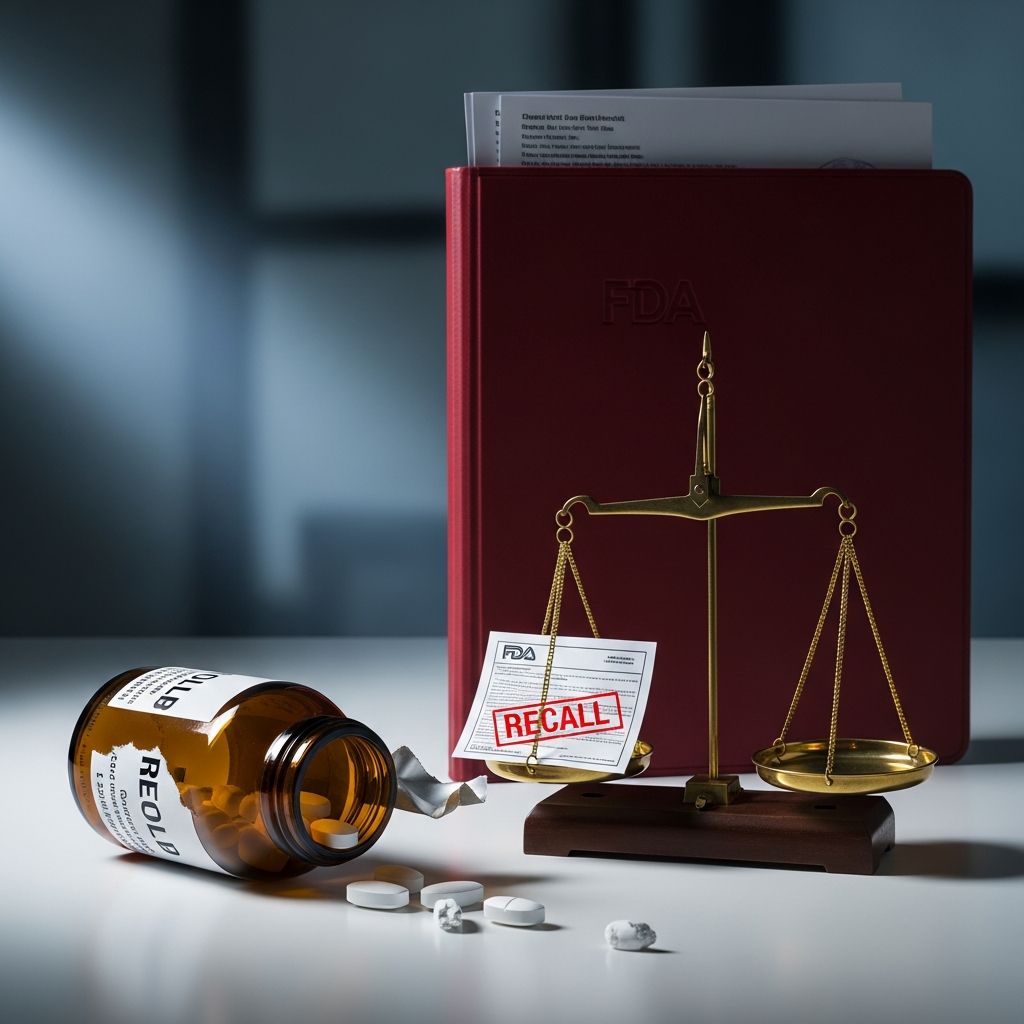
Drug recalls represent a critical mechanism for safeguarding public health by swiftly removing defective or dangerous medications from circulation. Managed primarily by the U.S. Food and Drug Administration (FDA), these actions address violations ranging from contamination to labeling errors, ensuring minimal harm to consumers.
Defining Drug Recalls and Their Importance
A drug recall occurs when a manufacturer, often at the FDA’s urging, removes a product from the market due to safety concerns, quality issues, or regulatory non-compliance. This process protects patients from potential adverse effects, such as serious illnesses or fatalities linked to impure, mislabeled, or ineffective drugs.
Recalls are essential in the pharmaceutical industry because medications directly impact health. For instance, contaminated drugs can lead to infections, while incorrect dosages might exacerbate conditions rather than treat them. The FDA oversees these events to maintain trust in the healthcare system and prevent widespread harm.
Categories of FDA Drug Recalls
The FDA classifies recalls based on the severity of health risks, using a three-tier system to prioritize responses. This classification guides the urgency of notifications and the scope of removal efforts.
- Class I Recalls: These pose the highest risk, where product use could result in serious health consequences or death. Examples include bacterial contamination in injectable drugs or high levels of impurities causing organ damage.
- Class II Recalls: Involve temporary or reversible health issues, or a low probability of severe outcomes. Common causes are labeling mistakes or minor potency deviations, like incorrect strength indications on tablets.
- Class III Recalls: Present the lowest risk, unlikely to harm users but still violate standards. These often involve aesthetic defects, such as faulty packaging that doesn’t affect efficacy.
Additionally, market withdrawals differ from recalls; they address minor violations not warranting legal action, like small labeling discrepancies without health risks.
Initiation Pathways: Voluntary, Requested, and Mandatory
Most recalls—over 99%—are voluntary, initiated by manufacturers upon discovering defects through internal audits or consumer reports. The company notifies direct accounts, who then alert sub-distributors, creating a chain of communication to halt distribution.
FDA-requested recalls occur when agency inspections or data reveal imminent dangers, prompting a formal letter to the manufacturer. Though termed ‘requested,’ these carry significant pressure, especially for Class I scenarios, and are logged in the FDA’s Recall Enterprise System (RES).
Mandatory recalls are rare and statutorily limited to specific products like infant formula, certain biologics, or devices. The FDA issues a direct order only if voluntary efforts fail and public health demands immediate action.
| Type | Initiator | Common Triggers | FDA Role |
|---|---|---|---|
| Voluntary | Manufacturer | Internal quality checks | Oversees and classifies |
| Requested | FDA prompts manufacturer | Inspection findings | Monitors execution |
| Mandatory | FDA orders | Severe, non-compliant cases | Directly enforces |
Step-by-Step FDA Recall Process
The recall unfolds in structured phases to ensure efficiency and accountability.
- Issue Detection: Problems arise from manufacturing flaws, adverse event reports, or FDA audits. Manufacturers investigate to confirm violations.
- Risk Evaluation: The FDA’s Center Recall Unit (CRU) assesses hazards, considering exposure likelihood and potential consequences, then assigns a class.
- Strategy Development: Collaborating with the firm, the FDA outlines recall depth (e.g., wholesale or retail level), public alerts via press releases, and verification methods.
- Notification and Removal: Manufacturers contact accounts within set timelines, often 24-72 hours for urgent cases. Products are segregated, returned, or destroyed.
- Effectiveness Monitoring: The FDA audits compliance through account checks, ensuring 100% recovery for high-risk recalls.
- Termination and Follow-Up: Once effective, the FDA terminates the recall, reviews root causes, and mandates corrective actions to prevent recurrence.
Public warnings, especially for Class I, appear in FDA Enforcement Reports and media, urging consumers to check lots and consult providers.
Reasons Behind Drug Recalls
Recalls stem from diverse issues in the complex drug supply chain.
- Contamination: Microbial or chemical impurities, often in sterile injectables.
- Mislabeling/Packaging: Wrong drug name, strength, or allergen info, risking misuse.
- Potency/Quality Failures: Sub- or super-potent drugs due to stability problems.
- Adulteration: Unapproved ingredients or poor manufacturing practices.
- Stability Concerns: Degradation leading to inefficacy post-expiry.
In 2023-2025, trends show rising recalls for nitrosamine impurities in blood pressure meds and sterile compounding errors.
Patient and Provider Actions During Recalls
Consumers should monitor FDA alerts, verify product lots via fda.gov/recalls, and avoid using suspect drugs. Return them to pharmacies or dispose safely per guidelines.
Healthcare providers assess patient risks, switch therapies, and report issues to FAERS (FDA Adverse Event Reporting System). Pharmacies quarantine inventory and notify patients.
Legal Implications and Compensation Options
If harmed by a recalled drug, victims may pursue claims for medical costs, pain, and lost wages. Strict product liability applies if the drug was defective, regardless of manufacturer negligence.
Options include manufacturer lawsuits, pharmacy claims for dispensing errors, or FDA-related petitions. Statutes of limitations vary by state (1-4 years). Class actions consolidate similar cases for efficiency.
Evidence like lot numbers, prescriptions, and medical records strengthens claims. Consult attorneys specializing in pharmaceutical litigation.
Frequently Asked Questions
What should I do if my medication is recalled?
Stop using it immediately, contact your pharmacist for replacements, and monitor FDA updates. Seek medical advice if you’ve taken it.
How do I check if a drug is recalled?
Visit the FDA’s recall database at fda.gov/safety/recalls or search by product name.
Can I get a refund for recalled drugs?
Yes, pharmacies or manufacturers typically offer refunds or exchanges upon return.
Are all recalls dangerous?
No, Class III are low-risk, but follow instructions for any recall.
Who pays if I’m injured by a recalled drug?
Potentially the manufacturer via lawsuit; insurance may cover initial costs.
Preventing Future Recalls: Industry and Regulatory Efforts
Post-recall, FDA mandates root-cause analyses, enhanced GMP (Good Manufacturing Practices), and inspections. Technologies like blockchain track supply chains, while AI predicts contamination risks.
Consumers aid prevention by reporting side effects promptly, fostering a proactive safety net.
References
- Understanding FDA Drug Recall Procedures — Hemophilia Federation of America. 2023. https://www.hemophiliafed.org/understanding-fda-drug-recall-procedures/
- What Is a Drug Recall and Why Are Drugs Recalled? — Tiga Health. 2024. https://www.tigahealth.com/what-is-a-drug-recall-and-why-are-drugs-recalled/
- Overview of the FDA’s Drug-Recall Process — U.S. Pharmacist. 2023-07-24. https://www.uspharmacist.com/article/overview-of-the-fdas-drugrecall-process
- Drug Recall Policies and Procedures — Illinois State Board of Education. 2022. https://www.isbe.net/CTEDocuments/HST-690019.pdf
- Food and Drug Administration Recalls — NCBI Bookshelf / StatPearls. 2023. https://www.ncbi.nlm.nih.gov/books/NBK570589/
- Regulatory Procedures Manual, Chapter 7 — U.S. Food and Drug Administration. 2024. https://www.fda.gov/media/71814/download
- Recalls, Corrections and Removals (Devices) — U.S. Food and Drug Administration. 2025. https://www.fda.gov/medical-devices/postmarket-requirements-devices/recalls-corrections-and-removals-devices
Similar Articles








Read full bio of medha deb




