
Analyzing the Civil Rights Implications of the Latest FBI Director Nomination
Examining how federal law enforcement shifts impact our civil liberties.
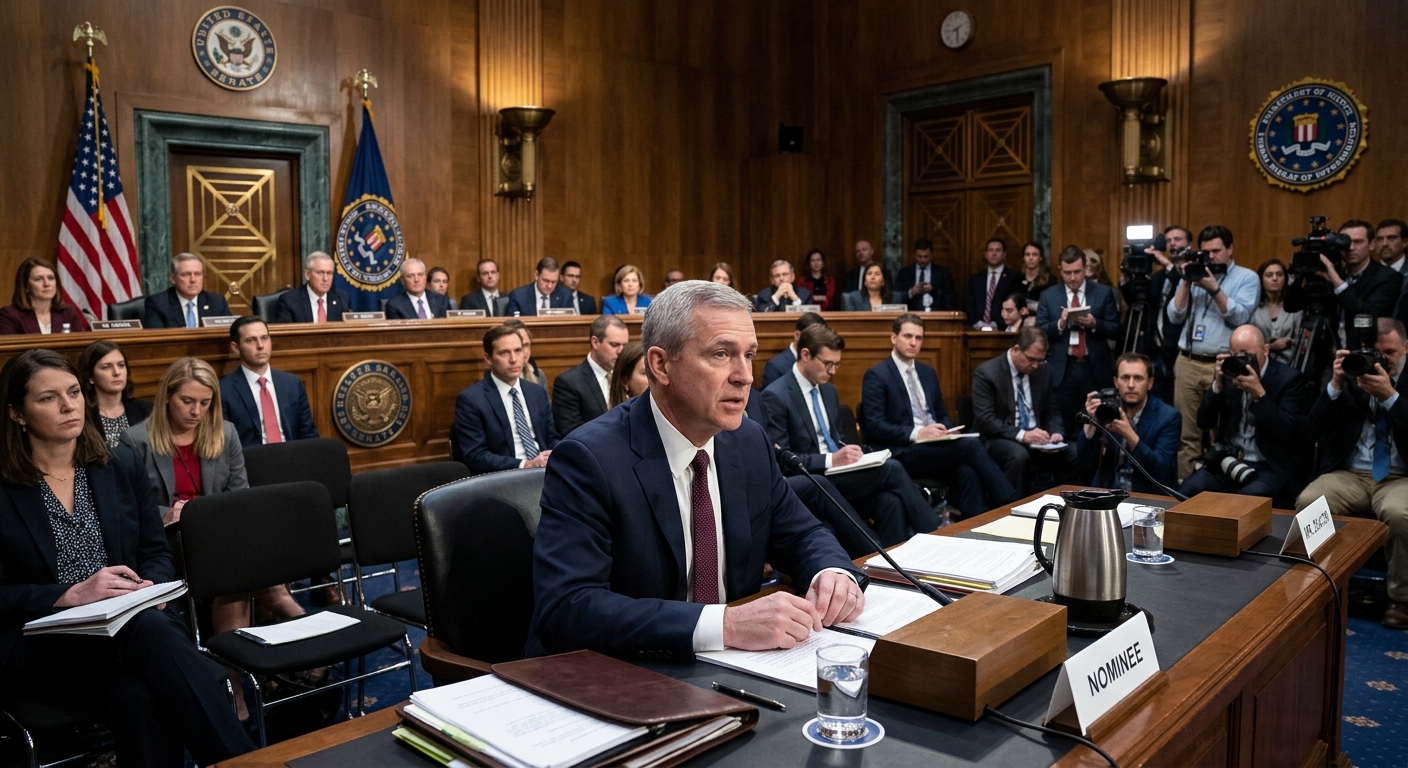
The Intersection of Federal Law Enforcement and Constitutional Rights
The role of the Director of the Federal Bureau of Investigation is unique within the architecture of the United States government. Following the extensive abuses documented during the J. Edgar Hoover era, Congress deliberately designed the position with a ten-year term. The express goal was to insulate the nation’s premier law enforcement agency from the partisan whims of the executive branch and ensure that the administration of justice remained blind to political affiliation. Today, as the political landscape shifts and controversial figures like Kash Patel are nominated for top federal intelligence and law enforcement roles, the discussion surrounding the preservation of civil liberties has never been more urgent. This discourse transcends basic managerial competence; it represents a fundamental debate over how the Constitution’s guarantees—specifically the First and Fourth Amendments—will be interpreted, respected, and enforced by those holding the immense power of the federal state.
When prospective or acting law enforcement leaders signal a willingness to dismantle traditional guardrails, the stakes for the American public are extraordinarily high. The FBI possesses unparalleled resources, surveillance capabilities, and investigative authority. If these tools are redirected from impartial crime-fighting toward ideological enforcement or political retribution, the foundational civil liberties that define American democracy face severe peril. Examining the philosophies of new leadership paradigms is essential for understanding the future trajectory of constitutional rights in the United States.
Freedom of the Press Under Fire
The First Amendment serves as the bedrock of American democracy, providing journalists the necessary legal shield to hold government officials accountable without fear of reprisal. However, recent rhetoric and legal maneuvers from prominent political figures have raised severe alarms among press freedom and civil liberties advocates. Historically, the relationship between the free press and the FBI has been naturally adversarial but strictly bound by legal guardrails and mutual respect for constitutional limits. The prospect of an FBI leadership that actively views the media as an enemy of the state threatens to rapidly dismantle these essential protections.
When law enforcement leaders threaten to use civil litigation and criminal statutes to exact retribution against reporters who publish unfavorable stories, the chilling effect on investigative journalism is immediate and profound. We have already witnessed troubling precursors to this environment, such as retaliatory defamation lawsuits filed against established media outlets and the unprecedented weaponization of federal investigative resources to hunt down journalists’ confidential sources. Instances where agencies have launched probes into reporters covering the personal conduct of agency directors signify a dangerous departure from democratic norms.
Furthermore, internal mandates requiring polygraph tests for federal staff specifically to root out media leaks signal a drastic shift toward an insular, opaque governance model. A healthy democracy requires transparency. When the vast apparatus of federal law enforcement is deployed primarily to silence critics, suppress whistleblowers, and intimidate the media rather than investigate genuine crimes, the core tenets of a free and open society are deeply compromised.
Surveillance, Privacy, and the Fourth Amendment
Beyond the First Amendment, proposed shifts in FBI leadership pose significant questions regarding the Fourth Amendment, which explicitly protects citizens from unreasonable searches and seizures. In the digital age, the mechanisms of surveillance have grown exponentially, requiring stringent judicial oversight to prevent government overreach. A leadership paradigm that prioritizes aggressive intelligence gathering over civilian privacy threatens to erode these vital protections.
One of the most fiercely debated issues in contemporary civil liberties is the utilization of the Foreign Intelligence Surveillance Act (FISA), particularly Section 702. While originally designed to target foreign adversaries operating abroad, this sweeping authority routinely captures the domestic communications of American citizens. Privacy advocates and bipartisan lawmakers warn that without rigorous reforms, placing this unchecked surveillance apparatus in the hands of leaders who prioritize political loyalty over constitutional rights could lead to disastrous domestic privacy violations.
Additionally, federal agencies have increasingly exploited what privacy experts call the “data broker loophole.” Instead of obtaining a warrant signed by a judge based on probable cause, law enforcement agencies simply purchase massive amounts of commercially available data—including detailed location histories and internet browsing logs—from private tech companies. When agency leaders advocate for aggressive, warrantless data collection while simultaneously expressing hostility toward civilian use of encrypted communication platforms like Signal, they establish a dangerous framework. In this framework, civilian privacy is treated not as a fundamental constitutional right, but as a suspicious obstacle to state power.
The Erosion of Institutional Independence
The post-Watergate consensus established a necessary, albeit fragile, wall between the White House and the Department of Justice. This critical separation ensures that criminal investigations are pursued based strictly on facts, evidence, and the law, rather than the political objectives of the sitting president. Nominations that promise to “clean house” and prioritize absolute ideological allegiance to the executive branch threaten to obliterate this firewall completely.
An FBI directed by individuals who view the agency as a personal tool for presidential retribution would fundamentally alter the American justice system. This approach fosters a toxic internal environment where career civil servants, intelligence analysts, and special agents are subjected to intense ideological purity tests. Recent reports of federal personnel being dismissed or marginalized for harmless personal expression—such as displaying Pride flags at their desks—highlight a cultural shift from meritocracy to partisan loyalty.
Such an environment deeply discourages internal watchdogs and whistleblowers from stepping forward to report waste, fraud, corruption, or abuse of power. If career agents fear severe professional or legal retaliation for conducting impartial investigations, the agency devolves into an echo chamber of the executive branch. This ultimately prioritizes the punishment of political rivals and the protection of allies over the impartial pursuit of equal justice under the law.
Policing Dissent and Civil Society
The history of federal law enforcement is occasionally marred by dark periods where the agency targeted domestic civil rights groups. The most notorious example is the covert COINTELPRO operations of the 1950s and 60s, which actively surveilled, infiltrated, and sought to discredit figures like Dr. Martin Luther King Jr., as well as various anti-war and equality movements. Modern civil liberties organizations look to this history with deep concern when analyzing current leadership shifts.
Contemporary proposals to abruptly sever ties with established civil rights organizations and label domestic watchdog groups as “partisan smear machines” suggest a dangerous regression in community policing. When the FBI leadership dictates that non-governmental organizations monitoring domestic extremism are themselves adversaries of the state, it paves the way for the criminalization of lawful, constitutionally protected dissent. Civil liberties advocates fear that federal law enforcement could once again be unleashed on marginalized communities, peaceful protesters, and political opposition groups under the broad, nebulous guise of maintaining national security.
This aggressive posture toward civil society inherently discourages democratic civic participation. If citizens harbor legitimate beliefs that attending a peaceful protest, joining a civil rights organization, or publicly criticizing government policies could subject them to covert federal surveillance or retaliatory investigations, the democratic process itself is suppressed by fear.
Comparing Law Enforcement Paradigms
To fully understand the magnitude of these proposed shifts, it is highly instructive to contrast the traditional, post-Church Committee norms of federal law enforcement with the emerging “loyalty-first” paradigm championed by some modern political figures.
| Operational Area | Traditional Democratic Guardrails | Loyalty-First Paradigm |
|---|---|---|
| Press Relations | Journalists are protected under the First Amendment; internal leaks are managed through standard administrative channels. | Journalists face retaliatory criminal investigations, crippling defamation lawsuits, and aggressive source-hunting. |
| DOJ Independence | Strict separation between White House political goals and the initiation of FBI investigations. | The FBI functions as a direct investigative arm for executive branch retribution and political enforcement. |
| Surveillance & Privacy | Adherence to strict warrant requirements, minimization procedures, and careful use of FISA provisions. | Exploitation of commercial data broker loopholes and overt hostility toward civilian use of encryption. |
| Internal Dissent | Whistleblowers are legally protected; diverse viewpoints and professional disagreements are tolerated. | Ideological purity tests, widespread polygraphs, and rapid termination for social or political expression. |
The Imperative of Congressional Oversight
In the face of these profound challenges to civil liberties, the role of the legislative branch becomes paramount. The United States Senate possesses the constitutional duty of advice and consent, a power that must be exercised with extreme diligence, skepticism, and rigor when evaluating nominees for positions of such immense authority and destructive potential.
During confirmation hearings, lawmakers must demand clear, unequivocal, and legally binding commitments to upholding the Constitution. Nominees must be pressed aggressively on their views regarding the First Amendment, their willingness to defy unlawful or partisan orders from the executive branch, and their specific strategies for reforming highly controversial surveillance programs. The Senate must act as the ultimate vetting mechanism for the preservation of democratic norms.
Beyond the initial confirmation process, Congress must continuously utilize its oversight capabilities and the power of the purse to constrain executive overreach. Lawmakers must prioritize the following legislative and oversight actions:
- Reforming Intelligence Gathering: Implementing strict, unyielding warrant requirements for accessing the private communications of American citizens under FISA Section 702.
- Closing the Data Broker Loophole: Passing comprehensive legislation that explicitly prohibits federal law enforcement agencies from purchasing consumer data that would otherwise require a judge’s approval.
- Strengthening Whistleblower Protections: Expanding and enforcing robust legal safeguards for civil servants who expose unconstitutional orders, waste, or partisan abuses of power.
- Protecting the Free Press: Supporting and passing federal shield laws that protect journalists from being compelled to reveal confidential sources or facing retaliatory federal investigations.
The preservation of civil liberties relies heavily on a proactive, vigilant, and courageous legislature willing to check the ambitions of the executive branch at every turn.
Frequently Asked Questions (FAQs)
Why does the FBI Director have a 10-year term?
Congress established a 10-year term for the FBI Director in 1976, following the highly controversial, decades-long tenure of J. Edgar Hoover. The fixed term is specifically designed to cross presidential administrations, insulating the director from partisan politics and ensuring that federal law enforcement remains independent, objective, and loyal to the Constitution rather than any single politician.
What constitutes a First Amendment violation by a federal agency?
A First Amendment violation can occur when a federal agency uses its vast legal and investigative authority to censor speech, punish critics, or chill journalistic practices. Examples include initiating retaliatory criminal investigations against reporters, seizing journalistic materials without a valid warrant, terminating employees for protected personal expression, or using frivolous litigation to financially ruin critics.
How do federal agencies bypass the Fourth Amendment using data brokers?
Traditionally, the Fourth Amendment requires law enforcement to obtain a warrant based on probable cause from a judge to access private data. However, many agencies exploit a modern legal loophole by utilizing taxpayer funds to purchase massive datasets—such as mobile phone location histories and online activity—directly from commercial data brokers, effectively bypassing the judicial oversight required for a search warrant.
What was COINTELPRO and why is it relevant today?
COINTELPRO (Counter Intelligence Program) was a series of covert, often highly illegal, FBI projects conducted between 1956 and 1971. The program aimed to surveil, infiltrate, discredit, and disrupt domestic political organizations, including civil rights leaders, feminist organizations, and anti-war protesters. Its exposure led to significant modern reforms in how intelligence agencies operate. It remains deeply relevant today as a cautionary tale of what happens when law enforcement targets domestic civil society organizations under the guise of national security.
Conclusion
The stewardship of the Federal Bureau of Investigation is one of the most consequential responsibilities in the American government. When the philosophies of those nominated to lead this institution conflict directly with fundamental constitutional guarantees, the public and the press must remain highly vigilant. The ongoing debates surrounding press freedom, warrantless surveillance, ideological independence, and the politicization of justice are not mere abstract legal discussions; they dictate the everyday realities of American freedom and privacy. Ensuring that federal law enforcement remains a non-partisan defender of the rule of law, rather than a weapon of political retribution, requires unwavering commitment from lawmakers, civil society, and the judiciary. The preservation of our civil liberties depends entirely on holding our most powerful federal institutions strictly accountable to the Constitution.
References
- In Senate Floor Speech, Durbin Calls For Opposition To FISA Section 702 Reauthorization Without Serious Reforms — United States Senate Committee on the Judiciary. 2026-06-03. https://www.judiciary.senate.gov/
- FBI’s retaliatory probe of Times’ reporter is ‘off the rails’ — Freedom of the Press Foundation. 2026-04-22. https://freedom.press/
- The New “Signalgate”: Kash Patel’s First Amendment Fail — Cato Institute. 2026-01-27. https://www.cato.org/
- FBI Director Kash Patel targets press — U.S. Press Freedom Tracker. 2026-05-07. https://pressfreedomtracker.us/
- Democracy Forward Investigates FBI Director Kash Patel Amid Alarming Reports About Conduct and Leadership — Democracy Forward. 2026-04-21. https://democracyforward.org/
Similar Articles








Read full bio of medha deb


