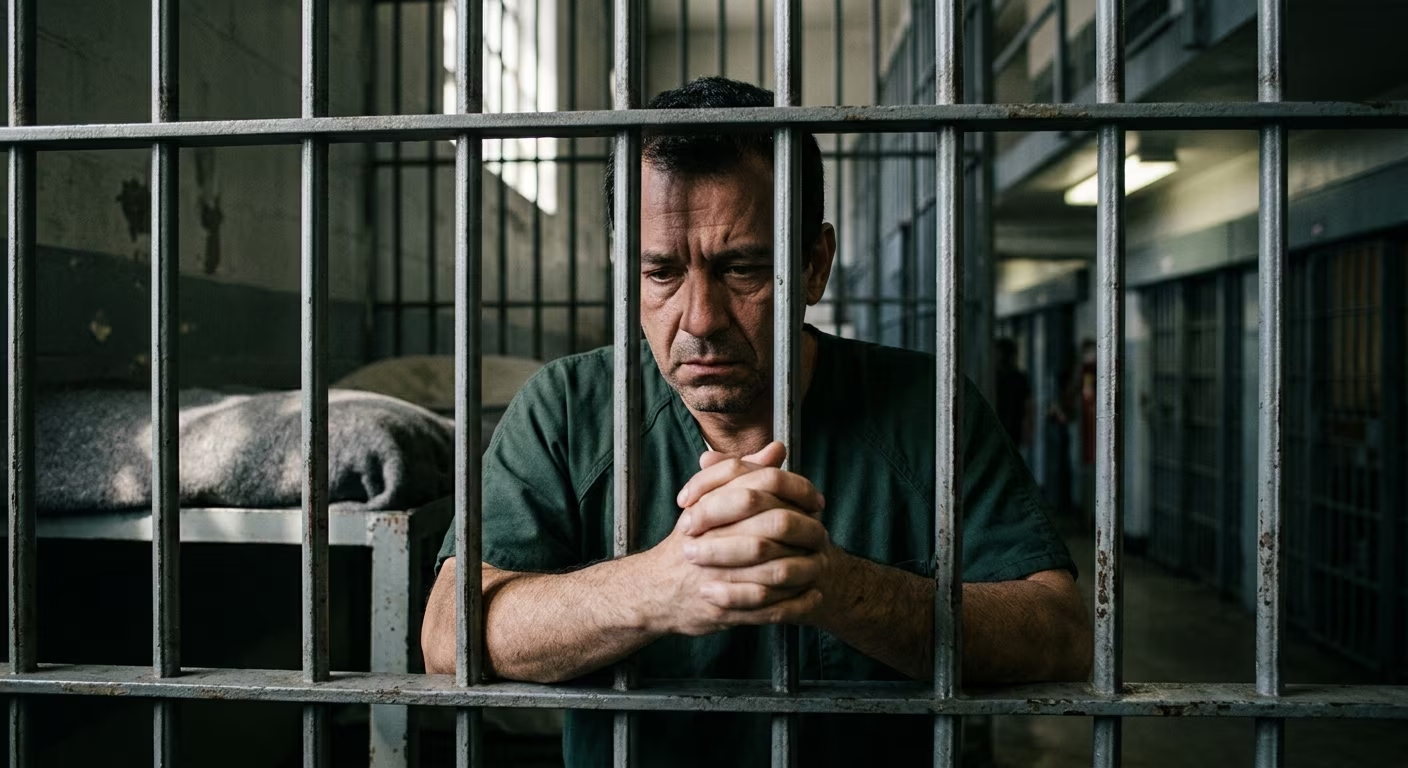
The American criminal justice system operates on a fundamental premise of proportional punishment. For non-violent infractions, the judiciary commonly dispenses short-term sentences—often a year or two—intended to penalize and theoretically rehabilitate the offender. However, a grim and silent epidemic operates behind the concrete walls of the nation’s correctional facilities, subverting the very nature of these judicial mandates. For highly vulnerable demographic groups—most notably pregnant individuals, people battling pre-existing medical complications, and marginalized communities such as Indigenous Americans—a brief stint in prison can abruptly and devastatingly escalate into a death sentence. This fatal transformation does not stem from the severity of the original crime. Instead, it is the direct consequence of systemic medical negligence, overcrowded and unsanitary conditions, and an overarching culture of mass incarceration that consistently prioritizes punitive confinement over basic human survival. When the state assumes custody of an individual, it constitutionally assumes responsibility for their well-being. Yet, time and again, the carceral apparatus fails to uphold this mandate, leaving those with the greatest medical needs trapped in a bureaucratic labyrinth that responds to health emergencies with apathy or delayed intervention. By exploring the intersection of minor sentencing, systemic healthcare failures, and racial disparities, we can begin to understand the lethal reality of the modern prison system.
The Hidden Crisis: Pregnant Individuals in the Carceral System
When examining the collateral damage of mass incarceration, the plight of pregnant individuals remains one of the most hidden and urgent crises. The architecture of the modern prison was primarily designed to house healthy, young male populations. Consequently, the specialized infrastructural and medical requirements necessary to support a safe pregnancy are often completely absent. According to the Bureau of Justice Statistics, a 2024 report on maternal health outcomes revealed that hundreds of pregnancies are managed within state and federal prisons annually, yet the level of care varies wildly and often falls well below community health standards.
Incarcerated expectant mothers are routinely subjected to environments that are deeply antithetical to prenatal health. Nutritional deficits, high-stress environments, and exposure to endemic violence can induce severe complications, including preeclampsia and premature labor. Furthermore, the psychological trauma of being incarcerated while pregnant cannot be overstated. Expectant individuals face the terrifying reality of navigating complex medical changes while entirely isolated from their familial support networks. Minor complications, which could be swiftly managed by an outpatient obstetrician in the free world, can easily escalate into life-threatening emergencies when triage requests are ignored or delayed by correctional officers lacking medical training.
Beyond the biological risks, the punitive nature of the system frequently inflicts gratuitous cruelty. Despite widespread condemnation by major medical organizations, the practice of shackling pregnant inmates during transport, and sometimes even during labor, persists in various jurisdictions. This practice not only severely restricts a medical provider’s ability to administer emergency care but also degrades the fundamental human dignity of the patient. The failure to provide compassionate medical release or home confinement alternatives for these individuals highlights a profound flaw in the justice system. For a pregnant person serving time for a low-level drug offense, the refusal to grant a temporary reprieve or alternative sentencing is not just punitive; it actively gambles with two lives.
Systemic Medical Negligence and Pandemic Vulnerabilities
The broader failure of correctional healthcare systems extends far beyond maternal health. The prison environment is an incubator for illness. Overcrowded dormitories, poor ventilation, and chronic stress create a perfect storm for the rapid transmission of infectious diseases and the rapid deterioration of chronic conditions. The Bureau of Justice Statistics reported that between 2001 and 2019, approximately 87 percent of deaths among state prisoners and 89 percent among federal prisoners were attributed to illness. These alarming figures represent a systemic inability to provide adequate, timely medical care.
In many facilities, the process for an inmate to receive medical attention is heavily bureaucratic and fundamentally suspicious. Sick calls are often treated with skepticism, with correctional staff assuming inmates are malingering to avoid work details or seeking attention. This institutional culture of disbelief means that early warning signs of severe illnesses—such as asthma attacks, diabetic shock, or early-stage viral infections—are frequently dismissed until they become acute emergencies. By the time an individual is finally transferred to a specialized medical facility, the window for life-saving intervention has often closed.
The vulnerability of the incarcerated population was catastrophically exposed during global public health crises. When highly contagious respiratory viruses breach the walls of a prison, the concept of social distancing is a physical impossibility. Hand sanitizer is often banned due to its alcohol content, and access to basic hygiene products like soap can be restricted or commodified in the prison commissary. For an individual serving a two-year sentence, catching a virulent disease inside a state or federal penitentiary turns a brief period of confinement into a fight for survival. The refusal of many jurisdictions to aggressively depopulate prisons during health emergencies—by releasing those near the end of their sentences, the elderly, or the medically compromised—demonstrates how deeply entrenched the obsession with mass incarceration truly is.
The Disproportionate Toll on Indigenous Communities
The lethal consequences of these systemic failures are not distributed evenly across the incarcerated population. They land with disproportionate severity on marginalized groups, particularly Indigenous communities. Native Americans and Alaska Natives experience some of the most alarming disparities within the criminal justice system. A 2026 report by the Bureau of Justice Statistics highlighted that federal arrest rates for American Indian and Alaska Native (AIAN) persons remain staggering, with states like South Dakota and North Dakota showing the highest federal arrest rates per 100,000 AIAN individuals.
This overrepresentation is compounded by the unique jurisdictional complexities of Indian Country. Because many crimes committed on tribal lands fall under federal jurisdiction, Native Americans are frequently funneled into the federal prison system rather than local or state facilities. As a result, when an Indigenous person is convicted of a non-violent offense, they are often transported to federal penitentiaries located hundreds, or even thousands, of miles away from their reservations and communities.
This extreme geographic displacement has devastating consequences, particularly for medically vulnerable individuals. When an incarcerated person is entirely severed from their community, they lose access to their tribal support networks, spiritual practices, and external advocates who might otherwise monitor their health and demand accountability from prison officials. For a pregnant Indigenous woman serving a short sentence, being shipped across the country means facing an incredibly high-risk medical event in complete isolation. If complications arise, her family is unable to advocate on her behalf, and the tribal community is left grieving a preventable loss. This intersection of racial inequity, severe geographic isolation, and institutional medical neglect represents one of the most egregious human rights violations within the modern American carceral state.
Structural Fixes: Moving from Retribution to Care
Reversing this deadly trend requires a fundamental paradigm shift away from retributive justice and toward a model prioritizing human life and rehabilitation. The first and most crucial step is the aggressive expansion of compassionate release and medical diversion programs. The criminal justice system must acknowledge that incarcerating medically fragile individuals—including pregnant people, the elderly, and those with severe chronic illnesses—serves no legitimate public safety interest. For these populations, alternatives such as electronic monitoring, home confinement, or community-based rehabilitation centers should be the default, not the exception.
To dismantle the systems that turn short sentences into death sentences, policymakers must implement the following structural reforms:
- Decarceration and Medical Diversion: Aggressively expanding compassionate release protocols for pregnant individuals and those with severe, chronic illnesses to ensure they receive community-based healthcare.
- Legislative Bans on Shackling: Enacting strict federal and state laws to prevent the physical restraint of pregnant individuals during transport, labor, and postpartum recovery.
- Independent Medical Oversight: Removing profit incentives by ending private healthcare contracts in favor of independent, state-run health department oversight to guarantee equitable patient care.
- Restorative Justice for Indigenous Communities: Empowering tribal courts to handle non-violent offenses locally to prevent the geographic displacement and cultural isolation of Native individuals.
Legislative action is also imperative to establish uncompromisable baseline standards of care. Comprehensive federal and state laws must be enacted to entirely ban the shackling of pregnant individuals at any stage of their incarceration. Furthermore, correctional healthcare must be subjected to rigorous, independent oversight. Currently, many prison medical systems are operated by private, for-profit contractors whose financial incentives often align with minimizing outside hospital transfers and rationing care. Removing the profit motive from prison healthcare and integrating facility medical wards into state health departments could dramatically improve accountability and patient outcomes. By dismantling the reflexive urge to incarcerate and implementing targeted, compassionate reforms, society can ensure that a minor, short-term sentence never again acts as a backdoor death penalty for the vulnerable.
Frequently Asked Questions (FAQs)
What is compassionate release?
Compassionate release is a legal mechanism that allows eligible incarcerated individuals to be released from prison before their sentence is completed. This is typically granted due to extraordinary and compelling circumstances, such as a severe terminal illness, advanced age, or a highly debilitating medical condition that the prison facility is ill-equipped to handle safely.
Why are pregnant individuals in prison considered highly vulnerable?
Pregnant individuals require specialized, consistent prenatal care, proper nutrition, and low-stress environments—elements that are largely absent in correctional facilities. The risk of delayed emergency medical response, combined with the profound trauma of potential shackling and the immediate separation from the newborn post-delivery, significantly elevates the physical and psychological health risks for both the parent and child.
What are the main causes of mortality in state and federal prisons?
According to federal statistics, the vast majority of deaths in state and federal prisons are directly related to illness, accounting for nearly 90 percent of all fatalities over recent decades. Chronic conditions like heart disease, cancer, and liver disease, alongside highly transmissible infectious diseases, often prove fatal due to delayed diagnostics and inadequate ongoing care within the carceral system.
How does mass incarceration disproportionately impact Indigenous populations?
Due to complex federal laws governing tribal lands, many offenses committed in Indian Country are prosecuted at the federal level rather than locally. This jurisdictional anomaly results in Native Americans facing harsher federal sentencing guidelines and being incarcerated in federal penitentiaries located far from their communities. This causes severe cultural, spiritual, and geographical isolation, which is uniquely devastating during medical emergencies.
What role do private contractors play in prison healthcare?
Many state and federal correctional systems outsource their healthcare operations to private, for-profit corporations. Advocates and critics alike argue that this creates a dangerous financial incentive to cut operational costs by understaffing medical wards, delaying necessary hospital transfers, and denying expensive medications, thereby directly contributing to the systemic medical neglect experienced by the incarcerated population.
References
- Maternal Healthcare and Pregnancy Prevalence and Outcomes in Prisons, 2023 — Bureau of Justice Statistics. 2024-04-09. https://bjs.ojp.gov/library/publications/maternal-healthcare-and-pregnancy-prevalence-and-outcomes-prisons-2023
- Mortality in State and Federal Prisons, 2001–2019 – Statistical Tables — Bureau of Justice Statistics. 2021-12-28. https://bjs.ojp.gov/library/publications/mortality-state-and-federal-prisons-2001-2019-statistical-tables
- American Indian and Alaska Native Persons in the Federal Criminal Justice System, 2023 — Bureau of Justice Statistics. 2026-03-24. https://bjs.ojp.gov/library/publications/american-indian-and-alaska-native-persons-federal-criminal-justice-system-2023