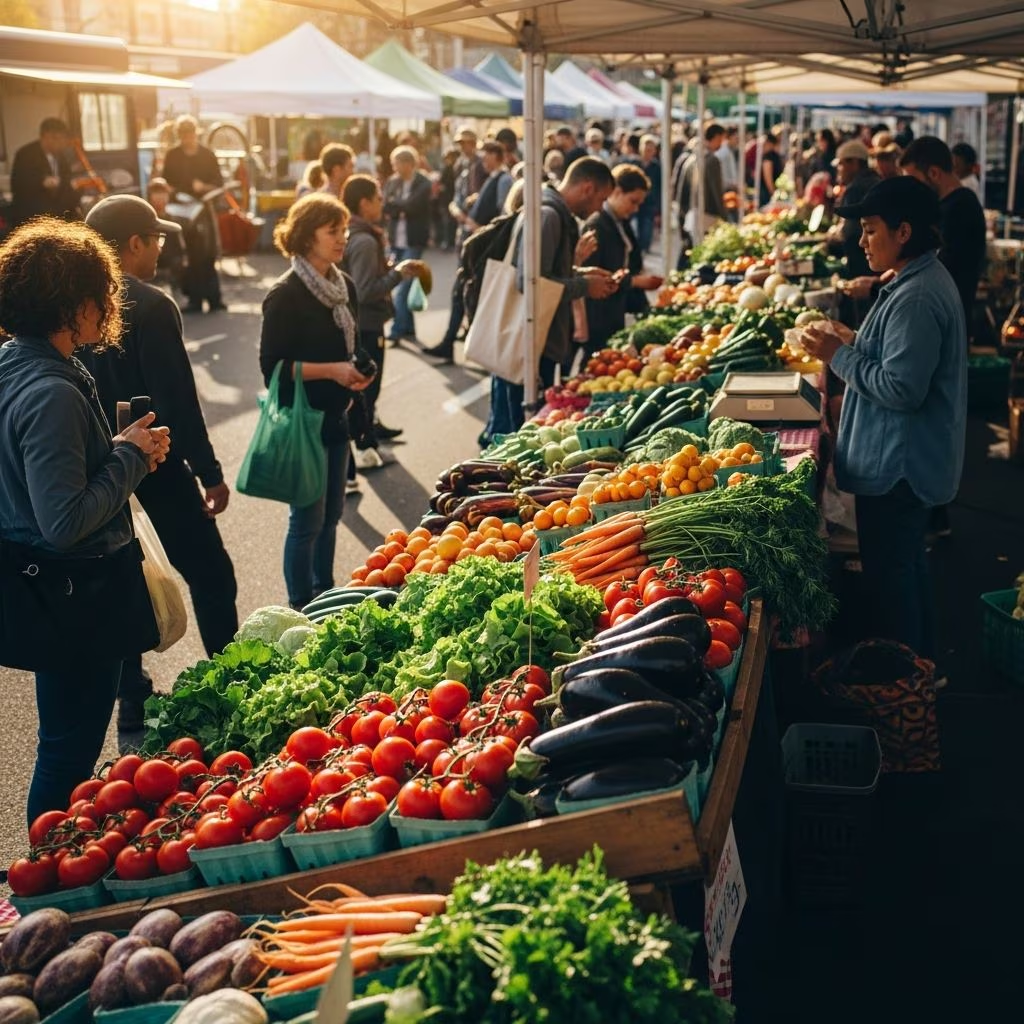
Farmers markets offer small producers a vibrant platform to connect directly with buyers, fostering local economies and fresh product access. Success hinges on strategic preparation, regulatory awareness, and customer-focused tactics that turn occasional visitors into loyal patrons.
Assessing Readiness for Market Entry
Before committing to a farmers market, evaluate your operation’s capacity. Consider production scale, transportation logistics, and time availability for weekly setups. Markets demand consistent quality and attendance, so align your farm or craft business with these rhythms.
- Production Capacity: Ensure you can supply enough volume without depleting inventory for other channels.
- Financial Viability: Calculate booth fees, travel costs, and potential revenue to confirm profitability.
- Personal Fit: Markets require engaging with crowds; assess your comfort in sales interactions.
Markets thrive on unique offerings like heirloom vegetables, artisanal cheeses, or handmade goods, differentiating from grocery stores.
Selecting the Ideal Market Venue
Research local markets to match your products with audience demographics and competition levels. Visit as a shopper to gauge foot traffic, vendor mix, and customer preferences.
| Market Type | Typical Crowd | Best Products | Booth Fees (Avg.) |
|---|---|---|---|
| Urban | Young professionals, families | Organic produce, baked goods | $50–$100/week |
| Suburban | Middle-income households | Fresh meats, flowers | $30–$70/week |
| Rural | Locals seeking staples | Eggs, honey, preserves | $20–$50/week |
Apply early via market websites or managers; popular spots fill quickly. Highlight your unique value, such as sustainable practices or rare varieties.
Navigating Legal and Permitting Requirements
Compliance is non-negotiable to avoid fines or shutdowns. Requirements vary by product type, location, and sales volume.
- Business License: Register as a sole proprietor, LLC, or similar; obtain a seller’s permit for sales tax collection.
- Food Safety Permits: Cottage food operations for baked goods need health department approval; direct-to-consumer meat sales require USDA inspection in some states.
- Liability Insurance: Protects against claims; many markets mandate $1M coverage.
- Certified Producer Status: In states like California, grow-your-own verification is required for produce vendors.
Consult state agriculture departments for specifics. For example, Florida emphasizes vendor solicitation and nonprofit structuring for new markets.
Business Planning Essentials
A solid plan outlines goals, budgets, and contingencies. Start with product selection: focus on high-margin, perishable items that travel well.
- Define core products and seasonal rotations.
- Project startup costs: canopy ($200), tables ($100), signage ($50), initial inventory.
- Forecast sales: Aim for 20–50% markup over costs, adjusting based on market data.
- Plan marketing: Social media teasers and loyalty programs build repeat business.
Track metrics like sales per hour and customer feedback to refine operations quarterly.
Designing an Eye-Catching Booth
Your booth is your storefront. Prioritize cleanliness, height variation for visibility, and sensory appeal—bright colors, fresh scents, samples.
- Structure: 10×10 canopy with weights for wind; elevated displays prevent bending.
- Layout: Traffic flow from left to right; high-value items at eye level.
- Branding: Banners with farm name, logos, and stories; QR codes link to websites.
- Equipment: Folding tables, coolers for perishables, bags/scales.
Attractive setups can boost sales by 30–50%; test arrangements at home first.
Strategic Pricing and Payment Systems
Price competitively yet profitably: Research competitors, factor costs (labor, materials, fees), and test elasticity with signs like “3 for $5.”
| Cost Factor | Example | Impact on Price |
|---|---|---|
| Materials | $1/lb tomatoes | Base $2.50/lb retail |
| Booth/Travel | $40/day | Add $0.50/lb |
| Profit Margin | 40% | Final $3.50/lb |
Accept cash, cards via Square/PayPal (2–3% fees), and SNAP/EBT where available to widen access. Dynamic pricing for bulk or end-of-day deals minimizes waste.
Mastering Customer Engagement and Sales
Friendliness sells: Greet warmly, share product stories, offer tastes. Train staff on upsells like bundles.
- Peak hours: Mornings for produce, afternoons for prepared foods.
- Weather prep: Rainy-day discounts or indoor alternatives.
- Record-keeping: Log transactions for taxes and insights.
Build community by joining market events or sponsoring demos.
Overcoming Common Hurdles
Vendors face weather variability, slow starts, and competition. Solutions include diversification, email lists for off-season sales, and vendor networks for tips.
Fatigue from setups: Rotate family help and invest in wheeled carts. Low traffic: Collaborate on joint promotions.
Scaling Up for Long-Term Growth
Once established, expand to multiple markets, wholesale, or pop-ups. Analyze data to drop underperformers; reinvest in value-adds like subscriptions.
Success stories show vendors doubling revenue within a year through consistency and adaptation.
Frequently Asked Questions
What permits do I need for selling produce?
Typically a seller’s permit and local business license; certified producer affidavits for direct sales in regulated states.
How much can I expect to earn initially?
$200–$1,000 per day varies by market size, products, and weather; build to steady income over seasons.
Can I sell non-food items?
Yes, crafts, plants, soaps if market rules allow; check vendor guidelines upfront.
What’s the best way to handle payments?
Combine cash box with mobile POS like Square for cards/EBT; keep change handy.
How do I join a market?
Submit applications detailing products, insurance, and references; attend vendor meetings.
References
- Plain Language Guide to Selling at a Farmers Market — Northeast Sustainable Food Project/J. Hashley. 2013. https://farmersmarketcoalition.org/wp-content/uploads/2013/11/NESFP-Plain-Language-Guide-to-Selling-at-Farmers-Market-from-J-Hashley.pdf
- Starting a Farmers’ Market — University of Florida IFAS Extension. Accessed 2026. https://sfyl.ifas.ufl.edu/agriculture/starting-a-farmers-market/
- Starting a New Farmers Market — UC Davis Small Farm Program. 2005. https://wafarmersmarkets.org/wp-content/uploads/2025/09/Starting-a-New-Farmers-Market_UCDavis_2005.pdf
- Starting a Certified Farmers’ Market — Farmers Market Alliance. Accessed 2026. https://farmersmarketalliance.org/resources/starting-a-certified-farmers-market/
- How to Start Selling Your Products at a Farmers Market — U.S. Chamber of Commerce. Accessed 2026. https://www.uschamber.com/co/grow/sales/guide-to-success-at-farmers-market
- Certified Farmers’ Markets in Los Angeles County — LA County Public Health. Accessed 2026. http://www.publichealth.lacounty.gov/eh/business/certified-farmers-markets.htm