
Support for Families of Disabled Veterans
Essential aid programs for spouses and children of service-connected disabled veterans, including healthcare, education, and financial support.
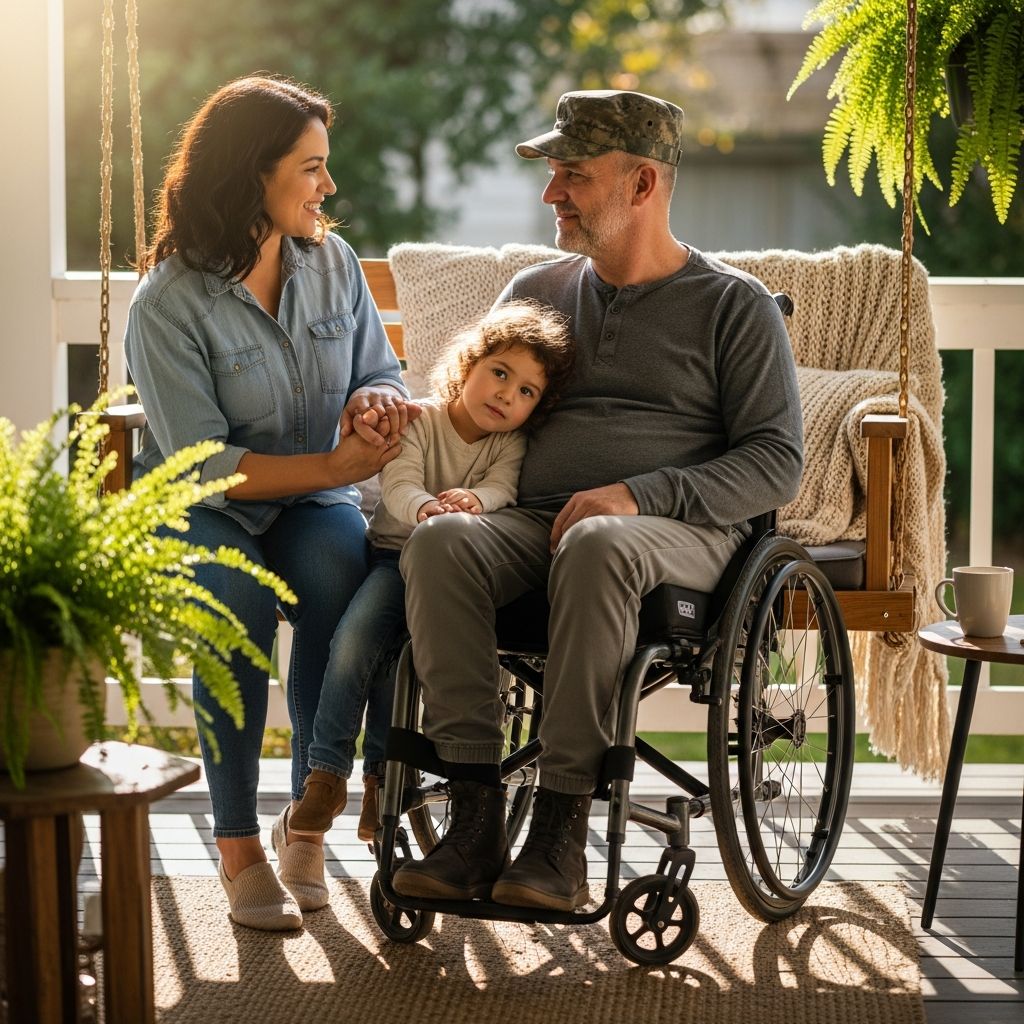
Families of veterans with service-connected disabilities often face unique challenges, but federal programs provide substantial assistance to help spouses and children thrive. These benefits encompass healthcare coverage, financial compensation, educational opportunities, and housing support, ensuring dependents receive the care and resources they need.
Understanding Eligibility for Family Benefits
To access most benefits, dependents must prove their relationship to a qualifying veteran. Typically, the veteran must have a service-connected disability rated at least 10% or higher by the VA, with enhanced options for those rated permanently and totally disabled (P&T). Spouses qualify through marriage records, while children need birth certificates or adoption papers. Eligibility hinges on active duty service, honorable discharge, and a linked disability condition.
Key qualifying factors include:
- Veteran served on active duty, active duty for training, or inactive duty training.
- Disability occurred during service, was aggravated by service, or manifested post-service but traces back to military exposure.
- Dependents include current spouses, surviving spouses, and unmarried children under 18 or up to 26 if in school.
National Guard and Reserves members qualify if called to federal active duty. Applications require VA Form 21-686c for dependency verification, submitted via va.gov or mail.
Healthcare Coverage Options
Dependents without TRICARE access can turn to CHAMPVA, the Civilian Health and Medical Program of the Department of Veterans Affairs. This comprehensive health insurance covers 75% of allowable costs after a $50 annual deductible per individual ($100 family max), including doctor visits, hospitalizations, mental health, and prescriptions.
| Feature | CHAMPVA Details | Comparison to Standard Insurance |
|---|---|---|
| Coverage Scope | Most medically necessary services | Broad, no network restrictions |
| Cost Share | 25% after deductible | Lower copays than many plans |
| Eligibility | Dependents of P&T vets or deceased | Not means-tested |
Medicare-eligible spouses pay reduced premiums, and CHAMPVA supplements Medicare Part B. Applications involve VA Form 10-10d and proof of other insurance. Priority healthcare access for veterans in Group 1 enhances family stability.
Financial Compensation Programs
Dependency and Indemnity Compensation (DIC) delivers tax-free monthly payments to surviving spouses and children when a veteran dies from service-connected causes or was rated P&T at death. 2025 rates start at $1,695 for spouses, plus $407 per child under 18, with additional amounts for helpless children or school-age dependents up to 26.
Additional allowances apply:
- $370 for spouse receiving aid for the blind or housebound.
- $690 extra if caring for two dependents.
- Up to $1,654 for severely disabled dependents.
Surviving spouses remarry after age 57 retain benefits. Apply using VA Form 21P-534EZ within two years of death for full backpay.
Educational Opportunities and Vocational Aid
The Survivors’ and Dependents’ Educational Assistance (DEA) program, under Chapter 35, offers up to 45 months of education benefits. Eligible spouses get up to 7 years from P&T rating or death; children qualify between ages 18-26. Monthly stipends for 2025: full-time $1,536, half-time $765.
Covered pursuits include college degrees, vocational training, apprenticeships, and licensing exams. Benefits pair with GI Bill transfers if available. Online application at va.gov/education.
Vocational rehabilitation extends to dependents in some cases, focusing on employment skills for adult children with disabilities.
Housing and Home Loan Advantages
Spouses and children benefit indirectly from VA home loans waiving funding fees for 10%+ disabled veterans, reducing closing costs by 2.15%-3.3%. DIC recipients access Specially Adapted Housing (SAH) grants up to $117,014 for barrier-free modifications if the veteran died leaving a surviving spouse.
Family caregivers may qualify for housing stipends under the Program of Comprehensive Assistance for Family Caregivers (PCAFC), providing monthly payments averaging $2,000+ based on location and care level.
Special Benefits for 100% Disabled Veterans’ Families
Families of veterans rated 100% P&T unlock premium perks. CHAMPVA eligibility expands, TDIU payments equate to 100% rates even if combined rating is lower, and commissary/exchange privileges grant tax-free shopping.
Priority Group 1 healthcare ensures copay-free treatment for service-connected issues, extending to dependents via CHAMPVA coordination.
Application Process and Required Documentation
Streamline claims online at va.gov. Gather:
- Marriage/birth certificates.
- VA award letters showing rating.
- Death certificate (for DIC).
- DD-214 discharge form.
Expect 3-6 months processing; appeals via Higher-Level Review or Supplemental Claim if denied. Free legal aid from accredited VA representatives.
Frequently Asked Questions
What qualifies a child as a dependent for VA benefits?
Children under 18, or 18-26 in school, adopted/stepchildren, or permanently helpless due to disability before 18.
Can remarried surviving spouses get DIC?
Yes, if remarriage occurs after age 57 or after January 1, 2004, and was terminated.
Does CHAMPVA cover dental or vision?
Limited dental for non-surgical; full vision care including exams and glasses.
How much education aid under Chapter 35?
Up to 45 months at $1,536/month full-time for college or training.
Are Guard/Reserve dependents eligible?
Yes, if veteran had federal active duty orders.
References
- VA Disability Conditions List – Veterans Guide — Veterans Guide. 2025. https://veteransguide.org/conditions/
- VA Benefits Qualifications — Disability Law Group. 2025. https://disabilitylawgroup.com/practice-areas/qualifications-for-va-benefits/
- Information for Military & Veterans — Social Security Administration. 2025-01-17. https://www.ssa.gov/people/veterans/
- Eligibility For VA Health Care — U.S. Department of Veterans Affairs. 2025. https://www.va.gov/health-care/eligibility/
- Eligibility For VA Disability Benefits — U.S. Department of Veterans Affairs. 2025. https://www.va.gov/disability/eligibility/
- The 2025 Benefits List for Veterans and Dependents — Hill & Ponton. 2025. https://www.hillandponton.com/additional-benefits-for-100-percent-disabled-veterans/
- Chapter 35 Benefits — Georgia Department of Veterans Service. 2025. https://veterans.georgia.gov/chapter-35
Similar Articles








Read full bio of medha deb


