
False Accident Reports: Legal Risks and Your Rights
Understand what happens when accident reports are false, how the law responds, and what you can do to protect yourself.
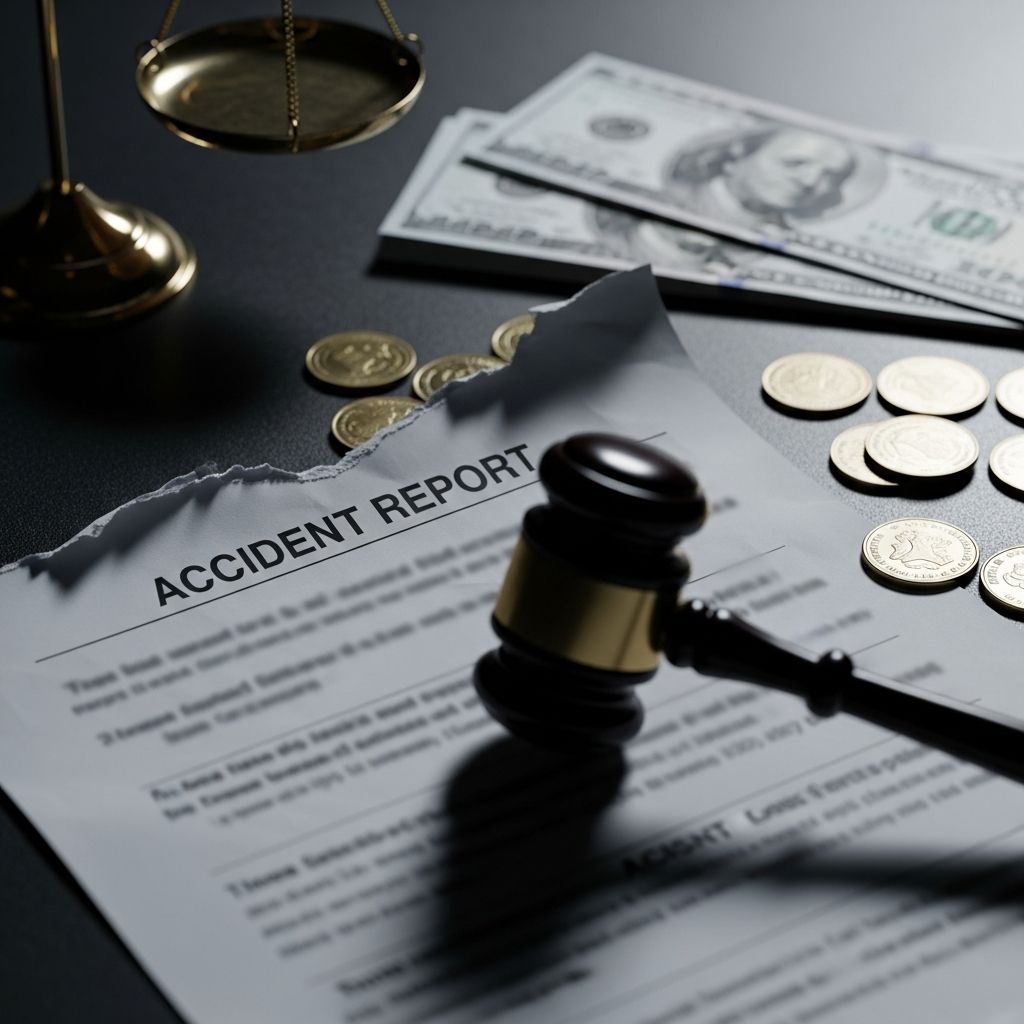
False or misleading information in a car accident report can change who is blamed, whether claims get paid, and even who faces criminal charges. Whether the falsehood is intentional or a genuine mistake, understanding the legal landscape is critical if your rights or reputation are on the line.
This guide explains what a false accident report is, how the law treats deliberate lies versus honest errors, the potential criminal and civil consequences, and the practical steps you can take if you are harmed by a false report.
What Is a False Accident Report?
A false accident report generally involves providing information about a crash that is factually untrue, incomplete in a misleading way, or intentionally distorted. The falsehood might appear in:
- Police crash reports prepared by law enforcement officers
- Insurance claim forms submitted to insurers
- Written statements to adjusters, employers, or property owners
- Sworn testimony in depositions, hearings, or trials
Most legal systems distinguish between:
- Intentional misstatements (knowing lies or fabricated evidence)
- Reckless statements (made with serious disregard for the truth)
- Honest errors (confusion, memory lapses, or misperception)
Criminal liability typically requires proof that the person knew the information was false and intended to mislead authorities, insurers, or the court.
Common Ways Accident Reports Become False
False reporting happens in many forms, with varying degrees of seriousness. Some frequent scenarios include:
- Inventing a crash or injuries to collect insurance money or paid time off
- Blaming the wrong driver to avoid tickets, higher premiums, or liability
- Exaggerating injuries or property damage to inflate settlement values
- Concealing risk factors such as speeding, distraction, alcohol, or drugs
- Altering the timeline (e.g., claiming the crash occurred while working to obtain workers’ compensation)
- Encouraging witnesses to lie or tailoring their statements to fit one party’s story
Even relatively small lies can have outsized effects on fault determination, claim outcomes, and whether prosecutors decide to file charges.
Criminal Consequences of False Accident Information
Deliberately lying about an accident can trigger several criminal offenses. The exact charge depends on state law and the context of the lie.
| Type of Conduct | Typical Criminal Charge | Possible Penalties (Example Frameworks) |
|---|---|---|
| Knowingly filing a false police report about a crash | False reporting / obstruction of justice | Misdemeanor in many states; potential fines and up to several months in jail |
| Submitting fraudulent documents or claims to an insurer | Insurance fraud | Often a misdemeanor or felony depending on the dollar amount; fines and possible prison |
| Lying under oath in court or at a sworn deposition | Perjury | Felony in most jurisdictions; substantial prison exposure and fines |
| Coaching others to lie or fabricating evidence | Obstruction of justice / witness tampering | Felony or serious misdemeanor depending on the jurisdiction |
Many states explicitly criminalize false crash reports to police. For example, one state statute makes it a misdemeanor to knowingly provide false information to law enforcement that leads to a criminal or internal investigation, carrying potential jail time and fines. Other states treat significant insurance fraud involving car accidents as a felony once the claim value crosses a threshold figure.
On a national scale, organizations such as the Coalition Against Insurance Fraud report that insurance fraud, including staged or exaggerated vehicle accidents, costs hundreds of billions of dollars annually. Lawmakers and prosecutors often cite these figures to justify aggressive enforcement.
Civil Liability for False Accident Reports
Even where prosecutors decline to file charges, people harmed by false accident reports may have civil claims. Civil cases focus on money damages rather than jail time.
Possible civil causes of action include:
- Fraud or fraudulent misrepresentation – knowingly making a false statement of fact with the intent to induce reliance, causing financial loss
- Defamation – spreading false statements that damage someone’s reputation (for example, falsely accusing another driver of drunk driving)
- Abuse of process or malicious prosecution – misusing legal or administrative processes to harass or injure another person
- Negligent misrepresentation – carelessly providing inaccurate information that others reasonably rely on
Civil lawsuits typically seek:
- Compensatory damages (lost wages, increased premiums, attorney fees, medical costs, and other financial losses)
- Non-economic damages in some jurisdictions (reputational harm, emotional distress)
- Punitive damages where the conduct is especially intentional, malicious, or reckless
The proof standard in civil court is generally lower than in criminal court; the plaintiff usually needs to show that the defendant more likely than not (a “preponderance of the evidence”) lied and caused harm, rather than proving guilt beyond a reasonable doubt.
When the Police Report Is Simply Wrong
Not every inaccurate police report is the result of a lie. Officers may mishear statements, misidentify vehicles, or misunderstand the mechanics of the crash. Memory differences, stress, and language barriers can also produce errors.
However, an incorrect report can still be damaging. It may:
- Influence how insurers apportion fault and evaluate claims
- Shape early settlement negotiations in favor of the dishonest or mistaken party
- Discourage police or prosecutors from pursuing charges against the truly at-fault driver
- Affect civil lawsuit outcomes if not corrected or challenged
Courts and insurers usually treat the police report as one piece of evidence among many. A well-documented challenge, supported by photographs, physical evidence, and independent witnesses, can overcome errors in the official narrative.
Impact on Insurance Claims and Premiums
False information has predictable consequences in the insurance context:
- Claim denial: Insurers often deny claims outright if they determine that material facts were misrepresented.
- Policy cancellation or non-renewal: A proven lie can lead to termination of coverage and difficulty obtaining new policies.
- Premium increases: Even if a claim is ultimately paid, a driver wrongly assigned as at fault may face higher premiums for years.
- Referral to fraud units or law enforcement: Many insurers maintain special investigation units and may refer serious cases to prosecutors for insurance fraud charges.
Conversely, if you are the victim of a false report, a strong evidentiary record can help your insurer resist paying on a fraudulent claim and protect your own loss history and premiums.
How to Respond if Someone Lies About an Accident
If you suspect that another driver, passenger, or witness has made false statements about your crash, swift and organized action is essential.
1. Preserve and Collect Evidence
- Take scene photographs from multiple angles, including skid marks, debris, traffic signals, and vehicle positions.
- Get names and contact information for independent witnesses.
- Request and keep medical records if you were injured.
- Secure any available surveillance or dashcam footage as soon as possible—many systems overwrite data quickly.
2. Obtain and Review the Police Report
- Request a certified copy of the crash report from the law enforcement agency.
- Highlight specific inaccuracies, such as misstated lanes, directions, time of day, or witness comments.
- Prepare a written summary of your version of events referencing your photographs and other evidence.
3. Notify Your Insurance Company Promptly
- Provide your insurer with full, truthful information and all evidence supporting your account.
- Explain where you believe the other party has misrepresented facts.
- Ask whether a recorded statement is required; if you have an attorney, coordinate before giving one.
4. Consider Legal Representation
- Consult with a personal injury or insurance litigation attorney, especially if injuries, large property damage, or potential criminal allegations are involved.
- An attorney can communicate with insurers, challenge false statements, and evaluate potential civil claims for fraud or defamation.
- Where appropriate, counsel may also liaise with law enforcement if criminal false-reporting or insurance fraud is suspected.
5. Correct the Record Where Possible
- Some agencies allow you to file a supplemental statement or request an amendment to an accident report, adding your corrections and supporting evidence.
- In litigation, your lawyer can use cross-examination, expert testimony (such as accident reconstruction), and documentary evidence to impeach false witnesses.
Intent vs. Honest Mistake: Why It Matters
Whether the false information was intentional is central to both criminal and civil outcomes:
- Criminal cases usually require proof that the person knew the information was false and intended to mislead authorities or insurers.
- Civil fraud claims also require proof of intentional deception, though under a lower burden of proof.
- Negligent misrepresentation and similar claims may apply where someone should have known better, even if they did not mean to lie.
If you gave information you believed to be accurate at the time, you generally are not guilty of filing a false report, although your statements may still be questioned, and you may need to clarify or correct them later.
Preventing Problems: Best Practices When Reporting Accidents
You can reduce the risk of disputes and allegations of false reporting by following cautious reporting practices:
- Stick to observable facts (speeds, positions, signals) and avoid speculation about what the other driver “must have” been doing.
- Read forms carefully before signing any police or insurance document.
- Correct errors immediately if you realize you misspoke or left something important out.
- Do not guess about distances or speeds; say you are unsure where appropriate.
- Seek legal advice before giving sworn testimony or detailed written statements in high-stakes cases.
Frequently Asked Questions (FAQs)
Q: Is lying on an accident report always a crime?
Not every inaccuracy is criminal. For criminal charges like false reporting or insurance fraud, authorities typically must prove that you knowingly made a false statement with the intent to mislead law enforcement, insurers, or the court.
Q: Can I be sued if my mistake in the report harms someone else?
Yes. Even without criminal charges, you can face civil claims such as negligent misrepresentation or defamation if another person suffers financial or reputational harm because they reasonably relied on your inaccurate statements.
Q: What if the other driver’s lies cause my claim to be denied?
You can work with your insurer and, if needed, an attorney to challenge the false account using photographs, witness statements, and expert analysis. Depending on the facts, you may also pursue a civil action for fraud or defamation and ask the court to award damages for your losses.
Q: Can a person be punished in civil court even if they beat criminal charges?
Yes. Criminal cases require proof beyond a reasonable doubt, while civil cases generally require only a preponderance of the evidence. It is possible for someone to be acquitted of criminal false-reporting but still be found civilly liable for fraud or similar claims arising from the same conduct.
Q: How long do I have to act if I was harmed by a false report?
Time limits (statutes of limitation) vary by state and by type of claim, such as defamation, fraud, or personal injury. Because these deadlines can be short and complex, it is important to speak with a qualified attorney in your jurisdiction as soon as you suspect you have been harmed.
References
- False Police Report — Law Offices of Adam S. Kutner. 2023-05-01. https://www.askadamskutner.com/las-vegas-personal-injury-lawyers/filing-claims-in-nevada/false-police-report/
- Legal Action for False Car Accident Claims in Washington — Briggs & Briggs Injury Lawyers. 2023-06-14. https://www.briggsandbriggs.com/blog/suing-for-false-car-accident-claims/
- Can You Sue Someone for Lying About a Car Accident? — 1-800-THE-LAW2. 2023-11-08. https://www.1800thelaw2.com/resources/vehicle-accident/can-you-sue-someone-for-lying/
- What Happens if a Car Accident Police Report is Wrong? — Tyroler Leonard Injury Law. 2022-09-20. https://injurylawmn.com/what-happens-accident-police-report-wrong/
- Overcoming the Lies of an At-Fault Driver — Rosen Justice Injury Lawyers. 2023-03-10. https://rosenjustice.com/blog/overcoming-the-lies-of-an-at-fault-driver/
- What If the At-Fault Driver Is Lying About an Accident? — McMath Woods P.A. 2023-04-05. https://www.mcmathlaw.com/blog/what-if-the-at-fault-driver-is-lying-about-an-accident/
- What Happens If the Other Driver Lies About the Car Accident? — MyAccidentLaw.com. 2023-07-12. https://myaccidentlaw.com/what-happens-if-the-other-driver-lies-about-the-car-accident/
Similar Articles








Read full bio of Sneha Tete


