
Fake Check Scams: How to Protect Your Money
Learn how fake check scams work, spot the warning signs, and take fast action to avoid losing your hard-earned money.
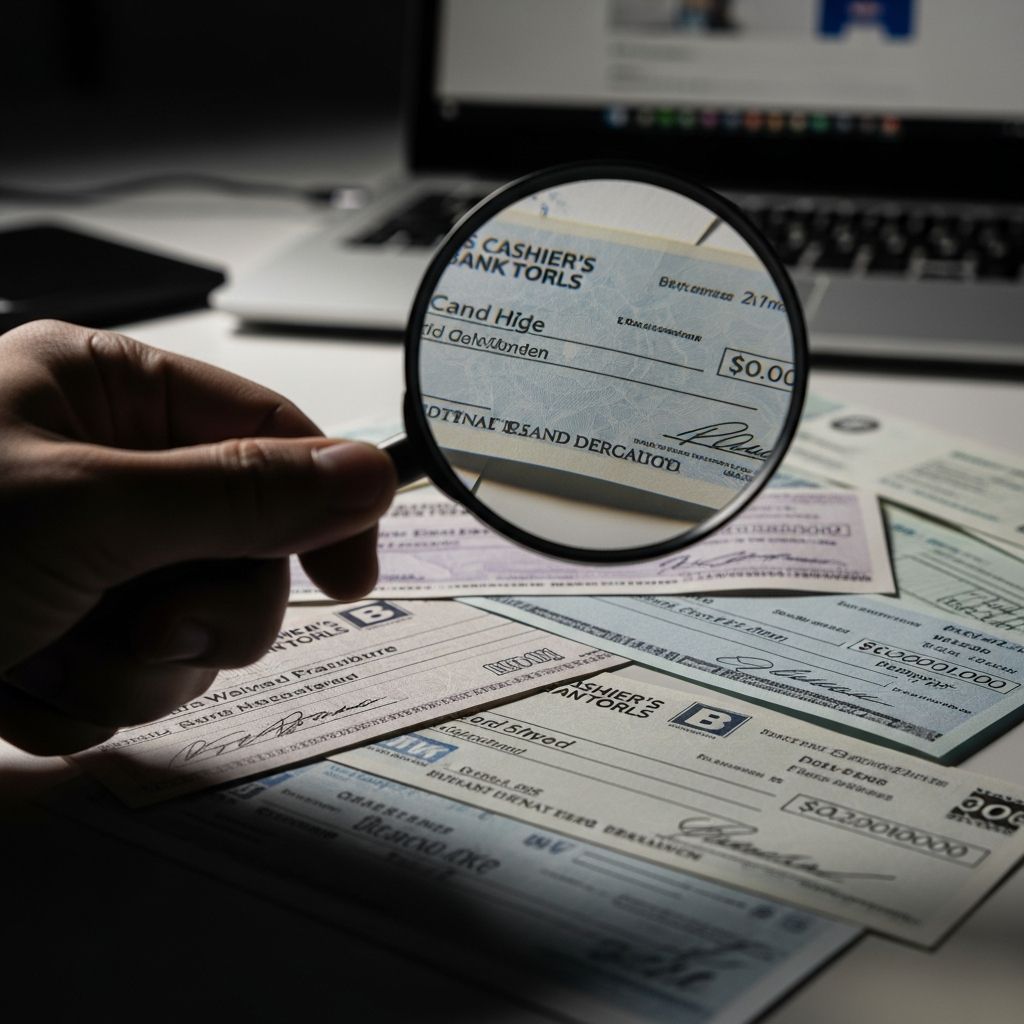
Fake check scams have grown more sophisticated with modern printers and design software, making it harder for people and even businesses to tell the difference between a real check and a fraudulent one. Scammers rely on that confusion to trick you into depositing a check and sending them money before your bank discovers the fraud. This guide explains how these schemes work, how to spot danger early, and what to do if you are targeted.
Why Fake Check Scams Are So Common
Although many payments are now digital, checks are still widely used for refunds, person-to-person payments, business transactions, and remote work. That gives criminals an attractive opportunity:
- Checks are often trusted by consumers as “guaranteed” funds, especially cashier’s checks and money orders.
- Banks may make some funds available quickly, even before the check has fully cleared through the banking system.
- Today’s technology allows scammers to create convincing counterfeit checks in minutes.
Regulators and financial institutions warn that these scams can appear in many different forms, but almost all share the same basic pattern: you receive a check from someone you do not truly know, are pressured to act fast, and are asked to send some portion of the money elsewhere before the check is found to be fake.
How Fake Check Scams Typically Work
Although details can vary, most fake check scams follow a similar sequence:
- The offer: You receive an unexpected check connected to a job, prize, sale, or other opportunity.
- The hook: The sender gives you a story about why the check is more than you are supposed to keep.
- The rush: You are told to deposit the check and quickly send part of the funds back or forward it to someone else, often by wire, peer-to-peer app, gift card, or cryptocurrency.
- The delay: Your bank may show the money as available, which makes the check look real even though it has not fully cleared.
- The discovery: Days or weeks later, the check is returned unpaid as counterfeit or altered.
- The loss: Because you already sent real money out, you are responsible for the amount you sent, plus any bank fees.
Common Situations Where Fake Checks Appear
Scammers adjust their stories to fit current trends, but many schemes fall into familiar categories.
| Scenario | How the Scam Is Framed | What the Scammer Wants You to Do |
|---|---|---|
| Remote or part-time job | You are “hired” quickly and sent a check for supplies, equipment, or to process payments. | Deposit the check and send money to a supposed vendor or co-worker. |
| Secret shopper or mystery shopper | You are “paid” to evaluate a store, wire service, or money transfer company. | Deposit a check, shop with a small part, and wire most of it back as part of the “test.” |
| Online selling or marketplace | A buyer “overpays” with a check and gives an excuse for the extra amount. | Refund the difference by wire, app, or gift card before the check clears. |
| Lottery, prize, or grant | You are told you won a contest, sweepstakes, or grant you never entered. | Deposit a check that supposedly covers taxes or fees, then send those fees elsewhere. |
| Romance or friendship | Someone you met online claims they need help moving money or cashing a check. | Deposit their check, then send money back or forward funds for them. |
Why Funds Availability Does Not Mean a Check Is Safe
A critical point many people misunderstand is the difference between your bank making funds available and the check being truly paid by the bank it is drawn on. Regulators explain that banks are required by law to make at least a portion of many check deposits available within a short time, often a few business days, but that does not mean the check has cleared.
Behind the scenes, your bank must still present the check through the payment system and wait for confirmation from the other institution. If the other bank later reports that the check is counterfeit, altered, or drawn on a closed account, your bank reverses the deposit and you are responsible for any money already withdrawn or transferred.
In short:
- “Available” does not equal “verified.”
- You, not the bank, bear the loss if you spend or send money from a fake check you deposited.
Red Flags That Suggest a Fake Check Scam
No single sign proves a check is fake, but if you notice one or more of these warning signals, stop and verify before you act.
- You are asked to deposit a check from a person, company, or organization you do not know well.
- Someone sends you a check as part of a job, prize, refund, or grant that you did not expect.
- You are instructed to send money back quickly by wire, person-to-person app, gift card, or cryptocurrency.
- The story involves an overpayment or complicated instructions that require you to move money for someone else.
- You are pressured not to talk to your bank, family, or friends about the transaction.
- The sender claims the check is “risk-free” or “guaranteed” and says your bank has already confirmed it is good.
Protecting Yourself Before You Deposit a Check
It is much easier to avoid a loss than to fix the damage after the fact. Consumer advocates and financial regulators recommend several basic habits to reduce your risk.
Question Checks from Strangers
- Be very cautious about accepting checks from individuals or businesses you have not met in person or independently verified.
- If someone insists on paying you with a cashier’s check, money order, or corporate check for more than the agreed amount, treat that as a serious warning sign.
Use Safer Payment Methods When Possible
- For selling goods, consider secure electronic payments or reputable marketplace payment systems rather than personal checks.
- For remote work, insist on direct deposit, payroll platforms, or verified employer payment channels rather than handling incoming checks on the company’s behalf.
Verify Independently, Not Through the Sender
- Look up the issuing bank’s contact information yourself using a trusted directory or the bank’s official website, not a phone number printed on the check or given by the sender.
- Call the bank and ask whether the account exists and whether the check appears valid, understanding that even then, fraud might not be obvious immediately.
Smart Practices After You Deposit a Check
If you decide to deposit a check, take steps to limit potential damage while the check is still clearing.
- Wait before spending: Do not use or transfer the money until you are confident the check has fully cleared and the issuing bank has honored it.
- Ask your bank questions: Request that your bank explain when the check will be considered final, not just when funds are available for withdrawal.
- Document communications: Keep records of emails, texts, and messages related to the check; they can help if fraud is later discovered.
How Businesses and Banks Fight Check Fraud
While this guide is focused on individual consumers, it helps to understand how financial institutions and businesses combat check fraud. Many of the same tools can indirectly protect you as their customer.
- Fraud monitoring: Banks use automated systems and trained staff to flag suspicious deposits and patterns that may indicate counterfeit checks.
- Positive pay: Business customers can send their bank a list of checks they have issued so that the bank pays only items that match the list, helping stop counterfeit or altered checks.
- Employee training: Financial institutions invest in training staff to recognize red flags, verify identification, and spot unusual transactions.
- Secure check design: Many businesses use checks with advanced security features such as watermarks, microprinting, and chemically reactive paper to make counterfeiting more difficult.
These measures help reduce fraud overall, but they do not eliminate the risk that a fake check could be deposited into your account. That is why personal vigilance is still essential.
What To Do If You Suspect a Fake Check
Acting quickly can limit your losses and help protect others.
Stop Using the Money
- If you think a check you deposited may be fraudulent, avoid spending or transferring any of the funds.
- Do not send money back to the person who gave you the check, even if they pressure you or claim there is an urgent reason.
Contact Your Bank Immediately
- Call or visit your bank and explain why you are concerned.
- Ask whether the check has been returned or whether any holds can be placed on the account to reduce risk.
- Follow your bank’s instructions and ask them to document your report in their records.
Gather Evidence
- Save the original envelope, the check, receipts, emails, text messages, and screenshots of online ads or profiles.
- Write down dates, times, and phone numbers used in any conversations with the suspected scammer.
Reporting Fake Check Scams
Reporting helps law enforcement identify patterns, warn others, and, in some cases, shut down ongoing operations. Even if you are embarrassed or unsure, it is important to share what happened.
- Tell your bank: Provide full details so they can flag your account and watch for related attempts.
- Contact local law enforcement: File a police report to create an official record, especially if you suffered a financial loss.
- Reach out to your state attorney general: Many state attorneys general investigate consumer fraud and can offer guidance; contact details are available through the National Association of Attorneys General.
- Report to federal consumer agencies: In the United States, federal agencies collect complaints and share them with law enforcement networks to spot large-scale schemes.
Frequently Asked Questions (FAQs)
How can a fake check “clear” and then bounce later?
When you deposit a check, your bank may make some funds available quickly because federal rules require them to release money within specific timeframes for many deposits. However, the underlying check may still be moving through the banking system. If the bank on which the check is drawn later determines it is counterfeit or altered, the check is returned unpaid and your bank reverses the deposit.
Am I always responsible for money I send from a fake check?
In most cases, yes. If you authorize a withdrawal, transfer, or wire based on a check that turns out to be fraudulent, you are generally liable for the funds you sent and any resulting bank charges. That is why regulators stress that you should never send money to a stranger in reliance on a check that has not fully cleared.
Does a cashier’s check or money order guarantee payment?
No. While genuine cashier’s checks and money orders are secure instruments, they can be counterfeited. Regulators warn that scammers frequently use fake cashier’s checks, money orders, and corporate checks because people assume they are automatically safe.
How can I verify whether a check is legitimate?
You can contact the bank that supposedly issued the check using a phone number or website you obtain independently (not those supplied on the check or by the sender). Ask whether the account exists and whether the check details appear accurate. Even this is not foolproof, but it can help you identify obvious fraud before you deposit the item.
Is it safer to avoid checks altogether?
Checks can still be used safely in many situations, especially when both parties are known and trusted. However, reducing how often you accept checks from unfamiliar individuals or organizations and relying more on traceable, secure electronic payments can significantly lower your risk of being drawn into a fake check scam.
References
- Beware of Fake Checks — Federal Deposit Insurance Corporation (FDIC). 2019-08-01. https://www.fdic.gov/consumers/consumer/news/august2019.html
- NCUA Warns of Fake Check Scams — National Credit Union Administration (NCUA). 2017-08-24. https://ncua.gov/newsroom/news/2017/ncua-warns-fake-check-scams
- Fake Check Scams — American Bankers Association. 2023-02-01. https://www.aba.com/advocacy/community-programs/consumer-resources/protect-your-money/fake-check-scams
- Check Fraud: A Guide to Avoiding Losses — Office of the Comptroller of the Currency (OCC). 2010-03-01. https://www.occ.gov/publications-and-resources/publications/banker-education/files/pub-check-fraud.pdf
- Toolkit Module 3: Preventing and Detecting Check Fraud — Federal Reserve Financial Services. 2022-06-15. https://fedpaymentsimprovement.org/resources/check-fraud-mitigation-toolkit/toolkit-module-3-preventing-and-detecting-check-fraud/
- 8 Ways to Help Prevent Check Fraud — City National Bank. 2023-05-10. https://www.cnb.com/personal-banking/insights/check-fraud-prevention.html
- Understanding and Preventing Commercial Check Fraud — Union State Bank. 2022-11-01. https://www.myunionstate.bank/commercial-check-fraud
Similar Articles








Read full bio of medha deb


