
Extremist Rhetoric and State-Level Border Militarization
How extreme political discourse drives unprecedented state border enforcement.
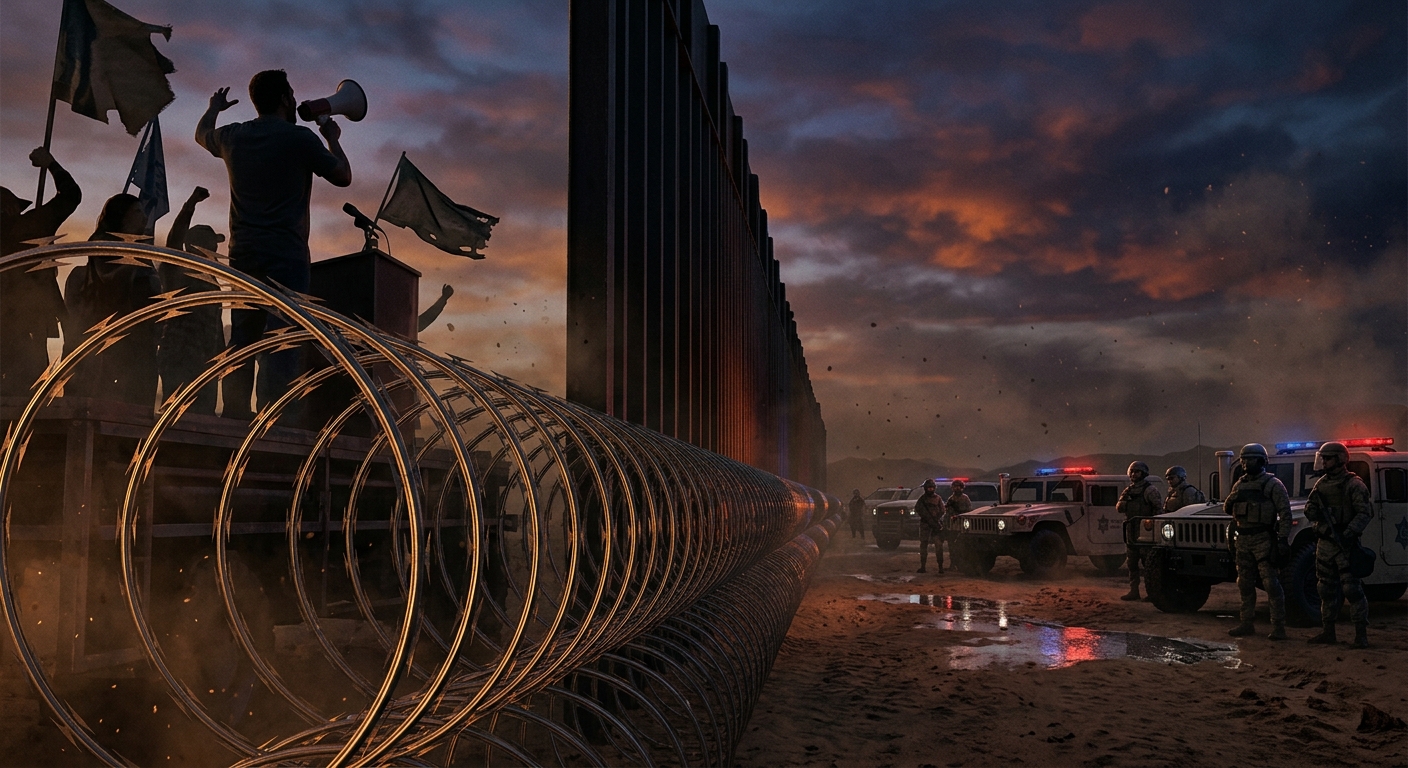
The landscape of immigration enforcement in the United States has undergone a profound and highly contentious transformation over the past decade. Historically recognized as the exclusive domain of the federal government, the regulation of international borders and foreign nationals is increasingly being challenged by aggressive, state-level interventions. This paradigm shift is not merely a bureaucratic realignment; it is deeply intertwined with the escalation of polarized political discourse. State executives and legislative bodies have begun to operationalize rhetoric that was once relegated to the furthest fringes of political extremism.
As the geopolitical drivers of migration intensify—ranging from climate change and economic collapse to rampant gang violence and political instability—the pressure on border regions naturally increases. However, the localized response to these pressures has taken a drastic turn. By adopting hyper-nationalist vocabulary and framing migration as an existential threat, certain jurisdictions have sought to justify the unprecedented militarization of their borders.
This article explores the complex intersection of extreme political narratives—specifically the characterization of migration as an ‘invasion’—and the resulting state-led immigration policies. We will examine the constitutional conflicts these policies ignite, the mechanics of localized border militarization, and the profound civil rights implications for border communities. As states push the boundaries of their authority, the resulting legal and humanitarian consequences ripple far beyond the immediate borderlands, challenging the fundamental tenets of federalism and constitutional law.
The Ideological Shift: Mainstreaming Fringe Narratives
At the core of this localized push for immigration enforcement is a stark shift in political rhetoric. Over recent years, a discernible transition has occurred wherein fringe conspiracy theories have permeated mainstream legislative debates. The most prominent among these is the ‘invasion’ narrative, which draws heavy inspiration from ethno-nationalist ideologies. Originally propagated by radical supremacy groups, these theories falsely posit that demographic shifts are deliberately orchestrated to systematically alter electoral landscapes and cultural fabrics. While mainstream politicians rarely invoke these fringe theories by their original names, the semantic parallels are striking when migration is repeatedly characterized as an organized, hostile invasion rather than a complex geopolitical and humanitarian phenomenon.
The danger of the ‘invasion’ rhetoric lies in its profound legal and psychological implications. In a strictly legal sense, the term ‘invasion’ is invoked by state actors in an attempt to trigger emergency constitutional powers. Under the United States Constitution, states are broadly prohibited from engaging in war unless ‘actually invaded, or in such imminent Danger as will not admit of delay.’ By rhetorically elevating asylum seekers and economic migrants to the status of a hostile military force, state leaders attempt to manufacture a constitutional loophole that permits unprecedented state action.
Psychologically, this language dehumanizes migrants, reducing vulnerable populations to a faceless adversarial entity. This calculated rhetorical strategy effectively lowers the public’s threshold for accepting extreme enforcement tactics, framing militarized state action not as an optional policy preference, but as an urgent necessity for state survival.
Mechanics of State-Led Border Militarization
When extreme political rhetoric is codified into state policy, it rapidly manifests as heavy-handed border militarization. Border states have initiated sprawling, multi-billion-dollar security apparatuses completely independent of federal border patrol efforts. These localized operations deploy a variety of aggressive tactics designed to deter crossings through physical force and the threat of severe, state-level incarceration.
The operational mechanisms of these state-led border initiatives typically include several core components:
- Deployment of the National Guard and State Police: States have mobilized thousands of national guard troops and state highway patrol officers directly to the border. Unlike federal customs agents, whose primary mandate is federal immigration enforcement, state troops operate under different protocols, often focusing on criminal apprehension.
- Criminal Trespassing Charges: Because immigration violations are inherently federal civil or criminal offenses, states circumvent this jurisdictional hurdle by arresting migrants for state-level criminal trespassing. Apprehended individuals are funneled into the state criminal justice system rather than federal immigration courts, heavily complicating their asylum processes.
- Militarized Infrastructure: The unilateral installation of physical barriers is a hallmark of autonomous state operations. This includes laying miles of razor-sharp concertina wire along international riverbanks and deploying massive floating buoy barriers equipped with underwater netting in shared waterways.
- Interstate Law Enforcement Compacts: To continuously bolster these immense efforts, border states frequently establish agreements with interior states, soliciting the deployment of out-of-state law enforcement personnel and resources to assist in localized border militarization.
Furthermore, these state initiatives often bypass the extensive oversight mechanisms that govern federal agencies, raising significant transparency and accountability concerns among watchdog organizations. These physical and operational measures represent a radical departure from traditional cooperative agreements between local police and federal authorities. Instead of acting as force multipliers for federal agencies, states are effectively establishing parallel border security forces. This approach fundamentally alters the daily realities of border communities, transforming civilian spaces into highly surveilled operational zones.
Jurisdictional Tug-of-War: The Constitutional Dilemma
The aggressive expansion of state-level immigration enforcement has ignited a fierce constitutional battle regarding the separation of powers and the Supremacy Clause. The legal framework governing the United States relies heavily on the premise that a unified national front is required for international affairs, including immigration and border control. When individual states enact their own divergent enforcement doctrines, it creates a fractured, unpredictable legal landscape. For over a century, the United States Supreme Court has consistently held that the power to regulate immigration is inherently a federal responsibility. This precedent was powerfully reaffirmed in the landmark 2012 decision, Arizona v. United States, where the Court struck down several provisions of a state law that attempted to criminalize the undocumented presence of immigrants, firmly ruling that state actions cannot conflict with or usurp federal priorities.
Despite this clear historical precedent, contemporary state policies are specifically designed to directly challenge federal supremacy. By asserting the aforementioned ‘invasion’ clause, states argue they possess an inherent right to self-defense that supersedes federal law when the federal government purportedly fails to secure the border. This sets the stage for a dramatic jurisdictional tug-of-war. The U.S. Department of Justice (DOJ) has repeatedly filed lawsuits against states employing these tactics, arguing that unilateral state actions disrupt delicate international relations, interfere with federal enforcement priorities, and heavily impede the lawful processing of asylum claims.
| Aspect | Federal Government | State Government |
|---|---|---|
| Constitutional Authority | Plenary power over naturalization and foreign affairs. | General police power; restricted from superseding federal immigration law. |
| Primary Enforcement Body | Customs and Border Protection (CBP), ICE, USCIS. | State Troopers, Highway Patrol, localized National Guard deployments. |
| Legal Mechanism | Civil and criminal immigration violations (e.g., illegal reentry). | State-level criminal statutes (e.g., criminal trespassing on private land). |
| Asylum Processing | Sole jurisdiction to hear and grant legal asylum claims. | No legal authority to process or grant international asylum. |
Civil Liberties and the Humanitarian Toll
Beyond the high-stakes legal and constitutional battles, localized immigration crackdowns exact a devastating toll on human rights and fundamental civil liberties. The implementation of state-level trespassing arrests heavily relies on a massive law enforcement footprint, which invariably leads to widespread allegations of racial profiling. Residents of border communities—including multi-generational U.S. citizens and legal permanent residents—frequently report being subjected to pretextual traffic stops, unlawful searches, and unwarranted surveillance by state law enforcement personnel deployed to enforce border initiatives.
Furthermore, the heavily militarized infrastructure deployed by states poses severe physical dangers to migrants and refugees. Concertina wire hidden in riverbeds and massive floating barriers have resulted in severe lacerations, drownings, and other fatalities among those attempting to cross the terrain. These crude physical deterrents do not differentiate between individuals attempting to evade detection and highly vulnerable families or unaccompanied children actively seeking out law enforcement to legally claim asylum—a right deeply protected under international and domestic law. By physically blocking access to safe harbors or forcibly funneling asylum seekers into the state penal system, these state-level policies actively undermine the legal frameworks explicitly designed to protect the most vulnerable global populations.
The Link Between Political Discourse and Societal Violence
The consequences of framing immigration as a hostile invasion extend far beyond the courtroom or the immediate border zone; they permeate the broader social fabric, significantly increasing the risk of vigilante violence and hate crimes. When elected officials and prominent media figures repeatedly characterize an ethnic or demographic group as an existential, physical threat to the nation, it inevitably radicalizes a subset of the domestic population.
History provides a grim testament to the fatal consequences of unchecked extremist rhetoric. Sociological studies and domestic terrorism monitoring organizations frequently note a direct, undeniable correlation between surges in anti-immigrant political speech and spikes in hate-motivated violence directed at minority communities. By legitimizing xenophobic conspiracy theories under the guise of state security and legal self-defense, political leaders inadvertently signal to extremists that the state sanctions their racial animus.
This creates a highly volatile societal environment where marginalized communities face both systemic, institutionalized targeting by the state security apparatus and the looming, unpredictable threat of individualized violence from radicalized actors. Restoring humanity to the immigration dialogue is not merely a matter of political correctness; it is an urgent necessity for public safety and the preservation of civil rights.
Frequently Asked Questions (FAQs)
How does state immigration enforcement conflict with federal law?
Under the U.S. Constitution’s Supremacy Clause, federal law takes precedence over state laws. The Supreme Court has repeatedly affirmed that the federal government possesses exclusive authority to regulate immigration. When states create their own border enforcement policies—such as arresting migrants for state trespassing to circumvent federal immigration authorities—they often interfere with federal priorities and international asylum laws, leading to constitutional lawsuits.
What is the ‘invasion’ clause of the U.S. Constitution?
Article I, Section 10, Clause 3 of the Constitution restricts states from engaging in war unless they are ‘actually invaded’ or in imminent danger. Recently, some state politicians have adopted the rhetoric of an ‘invasion’ to describe the influx of undocumented migrants and asylum seekers, attempting to use this clause to justify unilateral, militarized state action at the border without federal approval.
Why is the rhetoric of ‘invasion’ considered dangerous by civil rights advocates?
Civil rights organizations argue that labeling migration as an ‘invasion’ dehumanizes vulnerable individuals and mirrors the extreme ‘great replacement’ conspiracy theory. This hyper-militarized language not only justifies aggressive, potentially unconstitutional state policies but has also been historically linked to surges in xenophobia, racial profiling, and real-world violence against immigrant communities.
What are the humanitarian impacts of state-level border militarization?
State-led militarization often involves deploying hazards like razor wire and aquatic barriers, which have caused severe injuries and fatalities. Additionally, the heavy presence of state troopers has led to increased reports of racial profiling and the harassment of local residents. These policies also complicate the legal process for legitimate asylum seekers, pushing them into the state penal system instead of federal immigration courts.
References
- The U.S. Constitution: Article I, Section 10 — The United States Government. 1789. https://constitution.congress.gov/browse/article-1/section-10/
- Justice Department Sues Texas Over Senate Bill 4 — U.S. Department of Justice (DOJ). 2024-01-03. https://www.justice.gov/opa/pr/justice-department-sues-texas-over-senate-bill-4
- Texas immigration law SB4: What it is and why it is blocked — Reuters. 2024-03-20. https://www.reuters.com/legal/government/what-is-texas-sb4-immigration-law-why-is-it-blocked-2024-03-19/
- Arizona v. United States, 567 U.S. 387 — Supreme Court of the United States. 2012-06-25. https://supreme.justia.com/cases/federal/us/567/387/
Similar Articles








Read full bio of Sneha Tete


