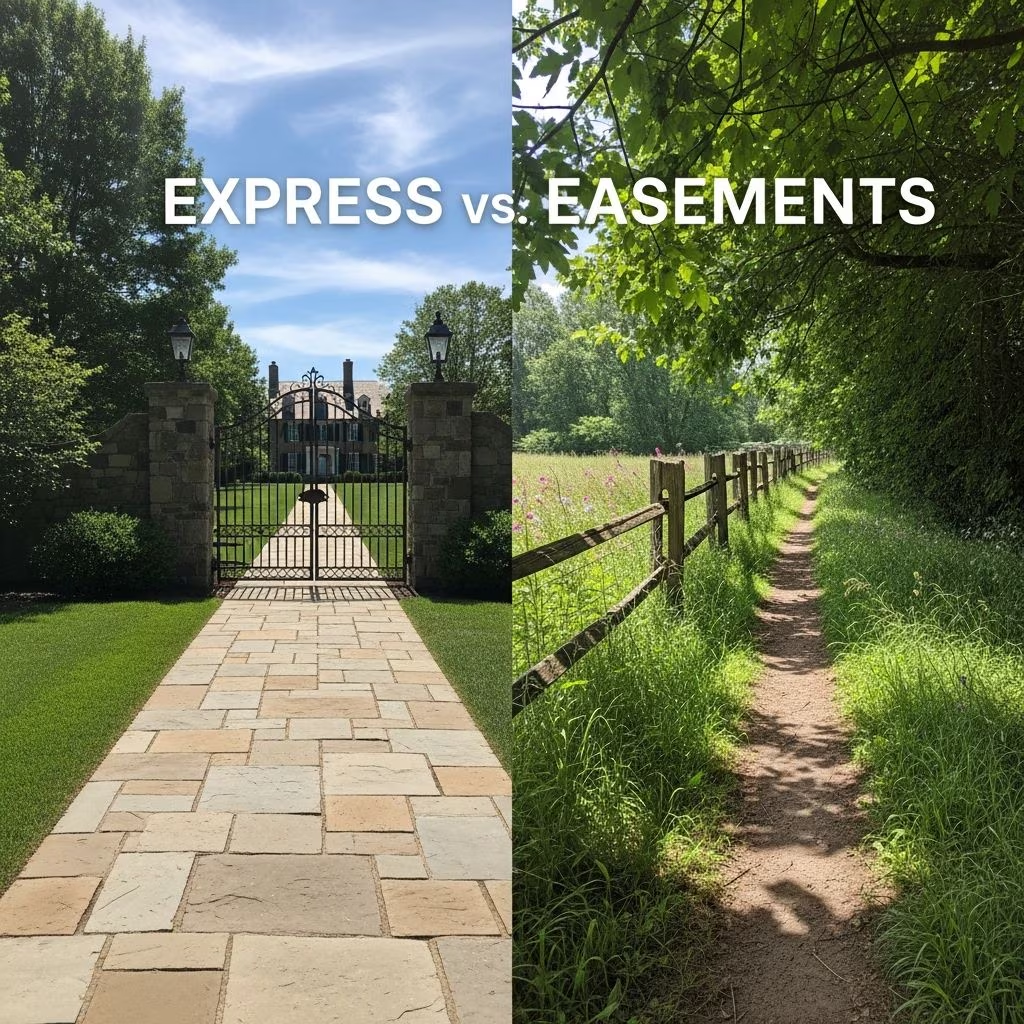
Understanding Easements in Real Estate
When people buy property, they often assume they have complete control over every inch of land they own. In reality, ownership can be shared or limited in important ways, especially when easements are involved. An easement is a legal right that allows one party to use another person’s land for a specific purpose, without taking ownership of it. These rights can affect access, utilities, views, and even future development plans. Among the most important distinctions in easement law are express easements and implied easements—two different ways these rights can be created, each with its own rules and consequences.
What Is an Easement?
An easement is a non-possessory interest in someone else’s land. That means the easement holder does not own the land but has the legal right to use it in a defined way. Common examples include:
- A driveway that crosses a neighbor’s yard to reach a landlocked property
- A utility company’s right to run power lines across a parcel
- A shared pathway for pedestrian access to a public beach or trail
- A sewer line that runs under a portion of adjacent land
Easements can benefit a specific person (personal easement) or run with the land, meaning they continue to benefit whoever owns the property in the future. Most easements discussed in real estate transactions are appurtenant easements, which are tied to the land rather than to an individual.
Express Easements: Rights Created by Agreement
An express easement is one that is intentionally and formally created through a written agreement. These easements are typically documented in deeds, contracts, or wills and are designed to clearly define the rights and responsibilities of each party.
How Express Easements Are Created
Express easements arise when:
- Two property owners agree that one will have a specific right to use part of the other’s land
- The agreement is put into writing and signed by the parties
- The document is recorded in the local land records (usually the county recorder’s office)
Because easements are interests in real property, they must generally satisfy the Statute of Frauds, which requires that agreements affecting land be in writing if they last longer than one year. This makes express easements relatively straightforward to identify and enforce.
Types of Express Easements
Express easements can be either affirmative or negative:
- Affirmative easement: Grants the right to do something on another’s land, such as drive across a driveway or install utility lines.
- Negative easement: Restricts what the landowner can do, such as blocking a view, building a structure that interferes with light or air, or interfering with a conservation easement.
Express easements can also be appurtenant (benefiting a specific piece of land) or in gross (benefiting a specific person or entity, like a utility company).
Key Features of Express Easements
Express easements are characterized by:
- Clear written documentation in a deed, contract, or will
- Specific description of the location and scope of the easement
- Identification of the dominant estate (the property benefiting from the easement) and the servient estate (the property burdened by the easement)
- Ability to be discovered through a title search or review of recorded documents
Because they are recorded, express easements are usually disclosed during real estate transactions and title insurance underwriting, making them less likely to surprise buyers after closing.
Implied Easements: Rights Based on Use and Necessity
Unlike express easements, implied easements are not created by a written agreement. Instead, they are recognized by law based on the circumstances surrounding the use of the land and the relationship between properties. Courts will imply an easement when it is necessary or when prior use makes it clear that the parties intended for the right to continue.
When Implied Easements Arise
Implied easements typically come into play when a single parcel of land is divided and sold, and one of the resulting parcels would be unusable or severely limited without access across the other. For example:
- A large lot is split into front and back parcels; the back parcel has no street access except by crossing the front parcel
- A property is subdivided, and one new lot relies on an existing driveway or path that crosses a neighbor’s land
- A utility line or drainage system has been in place for years before the land was divided
In these situations, even if no written easement exists, a court may find that an easement should be implied to make the property usable.
Requirements for an Implied Easement
For an implied easement to be recognized, certain legal conditions must be met. While exact requirements can vary by state, courts generally look for:
- Common ownership and subsequent division: The properties must have been owned by the same person before being divided and sold to different owners.
- Prior use: The use that forms the basis of the easement (like a driveway or path) must have existed before the division of the land and must have been apparent or known at the time.
- Reasonable necessity: The easement must be reasonably necessary for the enjoyment of the dominant estate. It does not have to be absolutely necessary, but it must be more than merely convenient.
These requirements help ensure that implied easements are not created lightly and are based on actual, long-standing use rather than speculation.
Types of Implied Easements
Implied easements can take several forms, including:
- Easement by prior use: Arises when a use (like a driveway or path) was in place before the land was divided and continues to be necessary after the division.
- Easement by necessity: Created when a parcel is landlocked and has no reasonable access except by crossing another’s land. Courts are more likely to imply an easement in these situations.
- Easement by estoppel: Occurs when one party reasonably relies on the promise or conduct of another (for example, building a house based on the belief that a driveway will remain open) and would suffer unfair harm if the easement were denied.
Unlike express easements, implied easements are not automatically recorded and may only become apparent when a dispute arises or a title issue is discovered.
Key Differences Between Express and Implied Easements
While both types of easements grant the right to use another’s land, they differ in several important ways:
| Feature | Express Easement | Implied Easement |
|---|---|---|
| Creation | By written agreement (deed, contract, will) | By operation of law based on use and necessity |
| Documentation | Clearly documented and recorded | Not formally written; inferred from circumstances |
| Discovery | Visible in title records and surveys | May only be discovered through inspection or litigation |
| Enforcement | Enforced based on the terms of the written document | Enforced only after a court determines the easement exists |
| Modification | Can be modified or terminated by agreement | Can only be changed or removed by court order or agreement |
These differences have practical implications for buyers, sellers, and lenders. Express easements are easier to identify and plan around, while implied easements can create uncertainty until a court resolves the issue.
How Easements Affect Property Ownership and Value
Whether express or implied, easements can significantly impact how a property can be used and its market value:
- Access and usability: An easement that provides necessary access can make a property usable; one that restricts building or landscaping can limit development options.
- Insurance and financing: Lenders and title insurers carefully review easements because they affect the marketability of the property. Unrecorded or disputed easements can complicate financing or require special endorsements.
- Future disputes: Ambiguities in the scope of an easement (how wide it is, what it can be used for, who maintains it) can lead to neighbor disputes, litigation, or restrictions on property improvements.
Buyers should always review the title commitment, survey, and any recorded easements before closing. Sellers should disclose known easements, including any informal arrangements that might support an implied easement claim.
Resolving Easement Disputes
Disputes over easements—especially implied ones—are common in real estate. Common issues include:
- Whether an easement exists at all
- How wide the easement is and what it can be used for
- Who is responsible for maintenance and repairs
- Whether the easement has been abandoned or modified by use
Resolving these disputes often requires:
- Reviewing deeds, surveys, and historical use of the property
- Consulting with a real estate attorney to assess the strength of an express or implied easement claim
- In some cases, filing a lawsuit to have a court declare the existence, scope, and terms of the easement
Mediation or negotiation between neighbors can sometimes resolve easement issues without litigation, especially when the parties are willing to compromise on access, maintenance, or boundaries.
Protecting Your Interests as a Buyer or Seller
Whether you are buying or selling real estate, understanding easements is crucial:
For Buyers
- Review the title commitment and any exceptions for easements
- Obtain a current survey to see the location and dimensions of any easements
- Ask the seller about any informal arrangements (like shared driveways or utility lines) that might support an implied easement
- Consider title insurance that covers easement-related risks
For Sellers
- Disclose all known easements, both express and informal
- Provide copies of any written agreements or deeds that create easements
- Be prepared to explain how easements are used and maintained
- Consult an attorney if there is any uncertainty about whether an implied easement exists
Frequently Asked Questions
Can an implied easement be removed?
Yes, but it usually requires a court order or mutual agreement between the affected property owners. If the circumstances that justified the easement no longer exist (for example, a new road provides access), a court may terminate the easement.
Does an express easement last forever?
Most express easements are intended to last indefinitely and run with the land, but they can be terminated by agreement, abandonment, merger of the properties, or by court order if the purpose no longer exists.
Can I build over an easement?
It depends on the type and terms of the easement. Building over a utility easement, for example, is usually prohibited or restricted. Always check the easement language and consult local zoning and utility rules before constructing anything on or near an easement.
How do I know if my property has an implied easement?
There is no simple public record for implied easements. You may need to review the property’s history, prior deeds, and physical use patterns. A real estate attorney or land use expert can help determine whether an implied easement is likely to exist based on the facts of the case.
Can an easement be created by verbal agreement?
Verbal agreements are generally not enforceable as express easements because they do not satisfy the Statute of Frauds. However, a long-standing, obvious use of land (like a driveway) may support a claim for an implied easement, even without a written agreement.
References
- Uniform Statute of Frauds — National Conference of Commissioners on Uniform State Laws. Adopted in various forms by U.S. states. https://www.uniformlaws.org/Acts/Statute%20of%20Frauds
- Restatement (Third) of Property: Servitudes — American Law Institute. 2000. https://www.ali.org/publications/restatement-third-of-property-servitudes/
- Real Estate Title and Escrow Practices — American Land Title Association (ALTA). 2023. https://www.alta.org/