
Exploring Derelict Sites: Legal Boundaries
Uncover the legal risks of venturing into forsaken structures and how to stay on the right side of the law while satisfying curiosity.
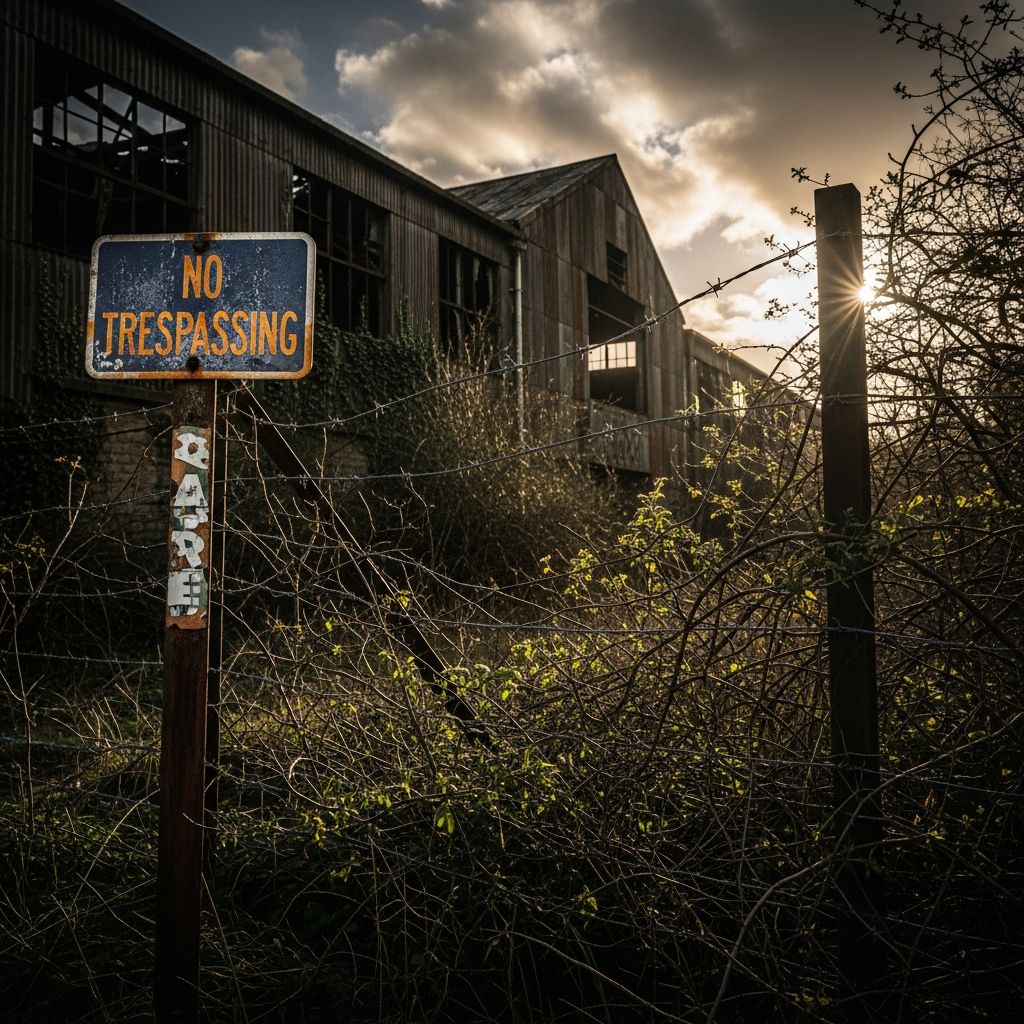
Urban exploration, often called urbex, captivates those drawn to forgotten corners of the world—crumbling factories, vacant hospitals, and overgrown estates. While the thrill of discovery beckons, these sites are rarely as free as they appear. Property ownership persists, and unauthorized entry typically constitutes trespassing, inviting a spectrum of legal repercussions from civil claims to criminal prosecution. This article dissects the legal framework surrounding such activities, highlighting risks, variations by jurisdiction, and prudent measures to mitigate trouble.
Defining Ownership in Forgotten Places
Appearances deceive when it comes to derelict properties. A site may stand vacant for decades, windows shattered and weeds encroaching, yet legal title remains with an individual, corporation, or government entity. Ownership does not evaporate with neglect; rights endure until formally relinquished through sale, demolition, or abandonment processes, which are rare and documented.
- Private Holdings: Most abandoned structures belong to private parties holding deeds, liable for taxes and maintenance despite disuse.
- Corporate Assets: Defunct businesses leave behind facilities under subsidiary or bankruptcy trustee control.
- Public Lands: Government-owned sites, like shuttered military installations, fall under federal or state statutes with heightened security protocols.
Without explicit permission, stepping onto these premises breaches fundamental property laws, underscoring the need for vigilance before any adventure begins.
Trespassing: Civil vs. Criminal Dimensions
Trespassing forms the cornerstone of legal issues in urban exploration, bifurcating into civil and criminal categories with distinct consequences.
Civil Trespass Explained
Civil trespass arises from unauthorized presence on another’s land, enabling owners to seek redress through lawsuits. Courts may award compensatory damages for any harm inflicted, such as trampled vegetation or structural aggravation, alongside punitive awards to deter repetition. Even absent damage, injunctions can bar future incursions, enforceable with contempt penalties including imprisonment if violated.
In practice, civil actions target persistent offenders. For instance, landowners have secured broad injunctions against “persons unknown,” capturing unidentified explorers in ongoing disputes.
Criminal Trespass and Escalations
Criminal trespass elevates when entry defies clear prohibitions like signage, fences, or verbal warnings. Penalties vary by state but often include misdemeanors with fines up to $1,000 and jail terms reaching six months. States like Texas classify such acts as Class B misdemeanors, while Florida escalates to felonies if weapons are present.
| State | Trespass Classification | Potential Penalties |
|---|---|---|
| Texas | Class B Misdemeanor | Fines, up to 180 days jail |
| California | Misdemeanor | Up to $1,000 fine, 6 months jail |
| Florida | Misdemeanor/Felony | Fines, jail; felony if armed |
Aggravating factors—nighttime entry, group activities, or prior notices—harden enforcement.
Beyond Trespass: Additional Criminal Exposures
Exploration can spiral into graver offenses. Breaking and entering, or unlawful entry with criminal intent, stands alone even sans physical force; explorers must disprove illicit motives in court. Mischief charges apply for inadvertent or deliberate damage, like graffiti or displaced artifacts, potentially yielding fines or incarceration.
Theft accusations loom if souvenirs are pocketed—anything from scrap metal to historical relics belongs to the owner. Juveniles face youth sanctions like community service, but adults risk adult court severity.
Physical Hazards Amplifying Legal Perils
Legal woes compound with safety threats. Collapsing floors, asbestos, mold, and unguarded hazards claim lives annually. Injuries not only imperil explorers but expose them to liability lawsuits if owners prove negligence invited the harm. Insurance rarely covers illicit ventures, leaving participants financially vulnerable.
- Unstable structures prone to cave-ins.
- Toxic exposures from industrial remnants.
- Unsecured wells or machinery.
Documenting visits via photos or videos, while popular, risks privacy invasions if interiors reveal personal data, inviting further civil claims.
State-Specific Legal Landscapes
U.S. trespass statutes diverge significantly, demanding location-specific awareness.
In stricter regimes, mere presence suffices for charges; others require posted notices. Federal properties invoke U.S. Code Title 18, with penalties up to a year imprisonment for military sites. International parallels, like Canada’s Criminal Code, mirror these with break-and-enter provisions.
Permission Pathways: Navigating Access Legally
The surest safeguard is owner consent. Public records, county assessors, or tax offices reveal ownership. Contacting entities—perhaps via certified mail—outlines exploration intent, proposing liability waivers. Some owners permit visits for documentation, fostering goodwill.
Government sites occasionally host public tours; verify via official channels. Rare adverse possession claims demand prolonged, open occupation under strict criteria, irrelevant for casual visits and legally dubious without counsel.
Spotting Prohibited Zones
Visual cues signal danger:
- Signage: “No Trespassing,” “Private Property,” or danger warnings.
- Barriers: Fences, chains, boarded entries.
- Security: Cameras, patrols, fresh repairs indicating monitoring.
Open gates or gaps tempt but do not confer rights; implied permission is a myth in law.
Encountering Authorities: Best Responses
Discovery by law enforcement or owners requires composure. Comply promptly, avoid debate, and exit without resistance. Provide ID if requested; contest citations later in court. Photography of exteriors from public spaces remains protected, but interiors demand caution.
Responsible Exploration Alternatives
Channel passion legally:
- Official tours of historical ruins.
- Guided urbex events with permissions.
- Virtual explorations via archives.
- Volunteering in site preservations.
These satisfy curiosity sans jeopardy.
Frequently Asked Questions
Is an unlocked door permission to enter?
No. Accessibility does not equate to invitation; it’s still trespass.
What if no one catches me?
Risk persists via cameras, neighbors, or later discoveries leading to charges.
Can minors face the same penalties?
Youth courts handle cases with rehabilitative focuses like service, but parents may face civil liability.
Does drone footage over sites count as trespass?
Yes, courts have ruled aerial incursions as violations, breaching injunctions.
Are there safe abandoned places to explore?
Only owner-approved or publicly designated sites qualify.
Conclusion: Curiosity with Caution
Urban exploration enchants, but legal realities demand respect for boundaries. Prioritize permissions, heed warnings, and weigh risks against rewards. Informed adventurers preserve adventures for all, evading courts while honoring property rights.
References
- Urbex: Exploring Abandoned Places Without Breaking the Law — Éducaloi. 2023. https://educaloi.qc.ca/en/understanding-the-law/urbex-exploring-abandoned-places-without-breaking-the-law/
- The Legality of Exploring Abandoned Places in the United States — Carte Urbex. 2024. https://carte-urbex.com/en/blogs/infos/the-legality-of-exploring-abandoned-places-in-the-united-states
- Urban exploration and trespass: a legal perspective — Higgs LLP. 2024-02-29. https://www.higgsllp.co.uk/articles/urban-exploration-and-trespass-a-legal-perspective
- The LEGAL Way to Enter Abandoned Buildings (Adverse Possession) — YouTube (Free Living Ep.7). 2023. https://www.youtube.com/watch?v=8b7nVUTSALo
- 8 Rules for Exploring Abandoned Places — Allianz Travel Insurance. 2024. https://www.allianztravelinsurance.com/travel/guides/tips-exploring-abandoned-places.htm
Similar Articles








Read full bio of Sneha Tete


