
The Expanding Fight for Gender Equity in the US
Explore the nationwide legal battles and policy shifts driving gender equity.
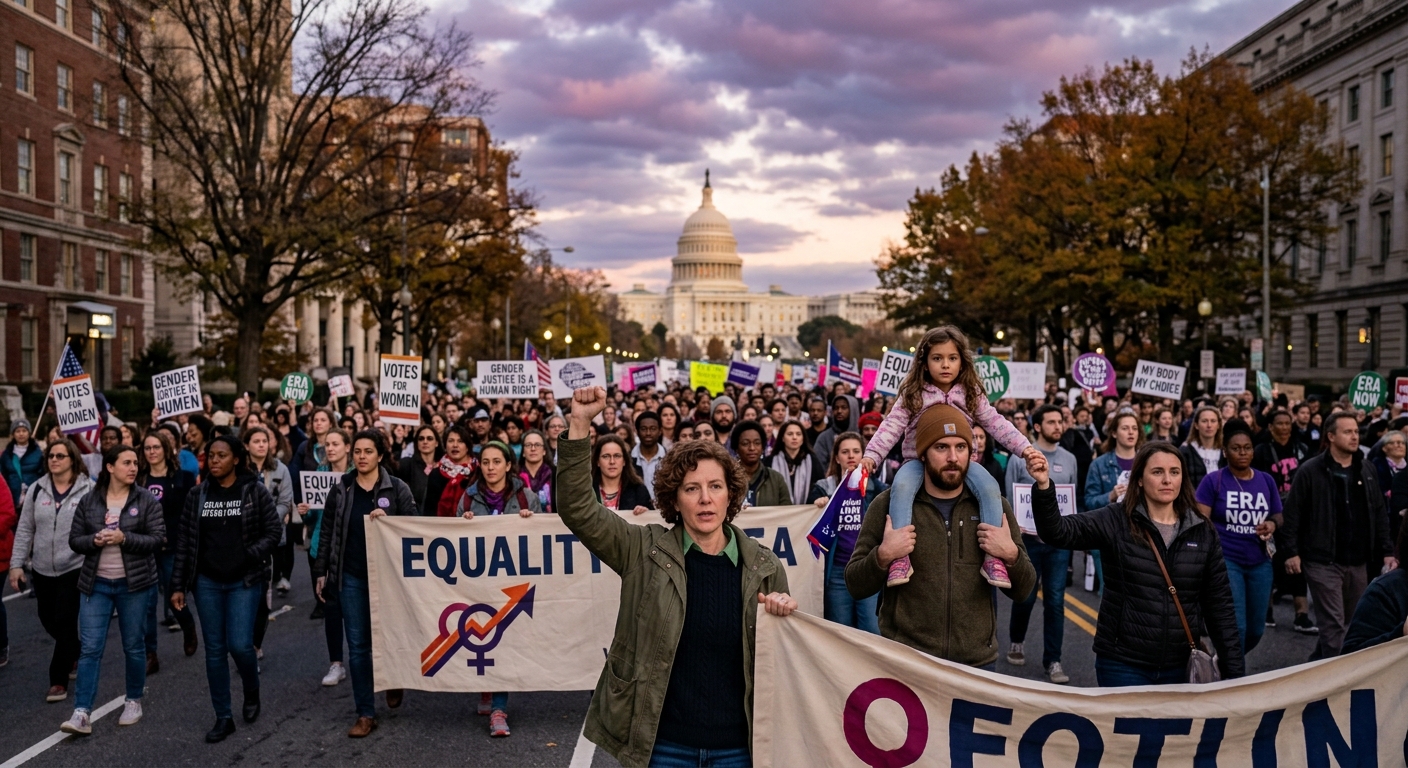
The pursuit of gender equity throughout the United States is not a relic of the past but an ongoing, complex struggle playing out across courtrooms, legislative assemblies, and corporate environments. While historical milestones have laid a strong foundation, modern advocates face a rapidly shifting legal landscape. Structural barriers continue to disproportionately affect women, transgender individuals, and marginalized communities, limiting everything from bodily autonomy to economic security. Today, the fight encompasses a broad spectrum of civil rights issues, including the enforcement of workplace accommodations for expectant mothers, the defense of comprehensive reproductive healthcare, the expansion of educational protections under Title IX, and the urgent push to safeguard gender-affirming medical care.
As new laws are enacted and older statutes are reinterpreted, the definition of systemic fairness continues to evolve. Understanding these contemporary battles requires examining the specific federal policies and Supreme Court decisions defining the boundaries of sex-based discrimination and civil rights in America today.
Championing Workplace Protections: The Pregnant Workers Fairness Act
For decades, employees experiencing pregnancy-related limitations often found themselves caught in a legal gray area. Before recent federal interventions, individuals who needed minor workplace adjustments to maintain a healthy pregnancy2014such as carrying a water bottle, taking extra bathroom breaks, or having access to a stool2014were frequently denied. This lack of accommodation forced many to choose between their livelihoods and their health, contributing to broader economic disparities.
The landscape shifted significantly with the implementation of the Pregnant Workers Fairness Act (PWFA). Enforced by the U.S. Equal Employment Opportunity Commission (EEOC), the PWFA establishes a nationwide mandate that employers with 15 or more employees must provide “reasonable accommodations” for known limitations related to pregnancy, childbirth, or related medical conditions, provided these accommodations do not impose an “undue hardship” on the business operations.
The EEOC’s final rule, which became effective in 2024, provides vital clarity for both employees and corporate entities. It broadly defines the scope of covered medical conditions and details what constitutes a reasonable request. Key aspects of the PWFA include:
- Preventing Retaliation: Employers cannot penalize, demote, or terminate an employee for requesting an accommodation.
- Mandatory Interactive Process: Companies must engage in a good-faith dialogue with the employee to determine an appropriate and effective modification.
- Prohibition on Forced Leave: Employers cannot force a pregnant employee to take paid or unpaid leave if another reasonable accommodation can keep them safely on the job.
By ensuring that individuals do not have to sacrifice their careers to have a family, the PWFA represents a monumental step forward in eliminating a pervasive form of sex discrimination in the workforce.
The Crisis of Bodily Autonomy: Reproductive Rights and Emergency Care
Perhaps the most visible and heavily contested front in the battle for gender equity concerns reproductive rights and bodily autonomy. Following the dismantling of long-standing federal protections for abortion access, a fractured system of state laws has emerged, creating widespread disparities in the availability of essential medical care. This legal chaos places healthcare providers in impossible situations, caught between their medical training and restrictive state bans.
A primary flashpoint in this ongoing crisis is the intersection of state abortion prohibitions and the federal Emergency Medical Treatment and Labor Act (EMTALA). Enacted in 1986, EMTALA requires hospitals that receive Medicare funding to provide stabilizing medical treatment to any individual experiencing a medical emergency, regardless of their ability to pay or local laws.
The conflict reached the Supreme Court in 2024 in cases such as Moyle v. United States. The core legal debate centers on whether EMTALA preempts state laws when terminating a pregnancy is the required medical intervention to stabilize a patient facing severe health risks, such as the potential loss of fertility or organ failure. While the Supreme Court temporarily permitted emergency abortions to continue in some jurisdictions by dismissing the case as improvidently granted, the underlying tension remains unresolved.
Medical associations warn that the ambiguity surrounding emergency care exemptions jeopardizes patient lives and forces obstetric providers to flee states with severe restrictions. The fight for gender equity is thus intrinsically linked to the demand that pregnant individuals possess the right to govern their own bodies and access life-saving healthcare without legal interference.
Defending Educational Equity Through Modernized Title IX
Since its passage in 1972, Title IX of the Education Amendments has been the bedrock of federal efforts to eliminate sex-based discrimination in educational programs and activities receiving federal financial assistance. Originally celebrated for its transformative impact on women’s athletics, Title IX has grown into a comprehensive tool for addressing sexual harassment, campus assault, and disparate treatment in science, technology, engineering, and mathematics (STEM) fields.
In 2024, the U.S. Department of Education introduced a comprehensive Final Rule to update and clarify Title IX regulations. These amendments were designed to better align the regulatory framework with the statute’s broad nondiscrimination mandate. The 2024 rule explicitly clarifies that the prohibition against sex discrimination encompasses discrimination based on pregnancy or related conditions, sexual orientation, and gender identity.
Crucial updates in the modernized framework include:
- Enhanced Protections for Pregnant Students: Schools are required to provide reasonable modifications, such as lactation spaces and flexible attendance policies, to ensure pregnant and parenting students have equal access to their education.
- Expanded Definition of Harassment: The rule broadens the definition of sex-based harassment to include unwelcome conduct that creates a hostile environment, compelling schools to respond swiftly to complaints.
- Supportive Measures: Educational institutions must offer supportive, individualized measures to complainants, such as schedule changes or counseling, regardless of whether a formal grievance process is initiated.
Despite these advancements, the 2024 Final Rule has faced intense legal scrutiny. Federal courts have issued injunctions blocking its enforcement in numerous jurisdictions, highlighting the deeply polarized nature of gender equity policies in educational settings.
Safeguarding Medical Interventions: The Defense of Transgender Healthcare
A deeply alarming trend in the national dialogue on gender equity is the proliferation of legislation targeting transgender individuals, particularly youth. Numerous states have introduced or passed laws that criminalize or severely restrict access to gender-affirming medical care, penalize parents who support their transgender children, and ban transgender athletes from participating in sports consistent with their gender identity.
The medical community has forcefully opposed these legislative interventions. The American Medical Association (AMA), along with every major medical and mental health organization in the United States, recognizes that treatments for gender dysphoria2014including social transition, puberty blockers, and hormone therapy2014are medically necessary and firmly grounded in evidence-based clinical practice.
Advocates argue that legislative bans on gender-affirming care represent a dangerous intrusion of the government into the sanctity of the physician-patient relationship. Research consistently demonstrates that access to supportive, affirming care dramatically reduces rates of anxiety, depression, and suicidal ideation among transgender individuals. By fighting these restrictive policies, civil rights organizations are defending the fundamental right to exist authentically.
Confronting Economic Injustice and the Persistent Wage Gap
While policy debates often focus on highly visible social and medical issues, the underlying fight for economic parity remains a critical component of gender equity. Decades after the passage of the Equal Pay Act, significant wage disparities continue to plague the American economy, disproportionately affecting women of color.
Wage gaps are sustained by factors including occupational segregation into lower-paying care roles, lack of universal paid family leave, and biases in corporate compensation. To combat these inequalities, advocates champion aggressive pay transparency laws. By requiring salary range disclosures in job postings and prohibiting inquiries into applicants’ salary histories, lawmakers aim to empower workers to negotiate fair compensation. Furthermore, economic equity demands dismantling the financial disadvantages faced by working mothers. Stronger enforcement of anti-discrimination laws and structural investments in affordable childcare are essential so that gender no longer dictates an individual’s economic trajectory.
The Critical Role of State-Level Advocacy
While federal statutes like Title IX and the PWFA provide an essential baseline for civil rights, much of the contemporary battle for gender equity is being waged at the state level. In the absence of comprehensive federal protections in certain areas, state legislatures have become primary battlegrounds for both advancing and restricting gender-based rights.
In states committed to expanding equity, lawmakers are proactively codifying abortion rights into state constitutions, expanding paid family and medical leave programs, and passing robust anti-discrimination laws that go beyond federal mandates. Conversely, other states are advancing legislation that severely restricts bodily autonomy, limits educational freedom, and curtails LGBTQ+ rights. This deeply polarized environment means that an individual’s civil rights and access to essential healthcare often depend heavily on their geographic location.
Advocacy groups are increasingly focusing their resources on local elections, state supreme court races, and grassroots organizing to combat these localized threats. By building strong coalitions at the community level, these organizations strive to create a patchwork of state-level protections that can eventually serve as models for future federal legislation, proving that the pursuit of gender equity requires vigilance at every level of government.
Frequently Asked Questions About Gender Equity Laws
What constitutes a “reasonable accommodation” under the Pregnant Workers Fairness Act?
A reasonable accommodation refers to changes in the work environment or the way things are usually done that help a pregnant employee perform their duties safely. This can include providing a stool to sit on, allowing closer parking, offering flexible hours to attend medical appointments, or temporarily transferring the employee to less physically demanding tasks.
Why is EMTALA central to the debate over reproductive rights?
The Emergency Medical Treatment and Labor Act (EMTALA) is a federal law requiring Medicare-funded hospitals to stabilize patients experiencing medical emergencies. Conflict arises when a state law bans abortion, but an emergency physician determines that terminating the pregnancy is the only way to stabilize a patient facing severe health complications. The legal debate focuses on whether the federal requirement supersedes state-level abortion bans.
How does the 2024 Title IX Final Rule address LGBTQ+ rights?
The 2024 Department of Education regulations clarify that Title IX’s prohibition against sex-based discrimination explicitly includes discrimination based on sexual orientation and gender identity. This means that federally funded schools cannot discriminate against LGBTQ+ students in their programs and must protect them from severe or pervasive harassment.
Why do medical associations support gender-affirming care?
Leading institutions like the American Medical Association (AMA) support gender-affirming care because it is an evidence-based, medically necessary treatment for gender dysphoria. Extensive clinical research shows that access to this care significantly improves the physical and mental health of transgender and gender-diverse individuals, drastically reducing the risks of depression and suicide.
Conclusion: The Path Forward
The struggle for gender equity is a multifaceted endeavor that touches upon the most intimate and fundamental aspects of human life: our bodies, our families, our education, and our livelihoods. As the legal framework continues to shift beneath our feet, the vigilance of advocates, healthcare professionals, and everyday citizens remains paramount. Whether through enforcing workplace fairness via the PWFA, battling for comprehensive reproductive care, expanding Title IX protections, or defending the rights of the transgender community, the fight for a truly equitable society demands sustained action.
References
- What You Should Know About the Pregnant Workers Fairness Act 2014 U.S. Equal Employment Opportunity Commission (EEOC). 2024-04-15. https://www.eeoc.gov/wysk/what-you-should-know-about-pregnant-workers-fairness-act
- Moyle v. United States, 603 U.S. ___ (2024) 2014 Supreme Court of the United States. 2024-06-27. https://www.supremecourt.gov/opinions/23pdf/23-726_8m59.pdf
- Title IX and Sex Discrimination 2014 U.S. Department of Education. 2024-04-19. https://www2.ed.gov/about/offices/list/ocr/docs/tix_dis.html
- Advocating for the LGBTQ community 2014 American Medical Association (AMA). 2024-06-01. https://www.ama-assn.org/delivering-care/population-care/advocating-lgbtq-community
Similar Articles








Read full bio of Sneha Tete


