
Expanding Domestic Military Use: A Threat to Democracy
Why domestic military deployment threatens our constitutional civil liberties.
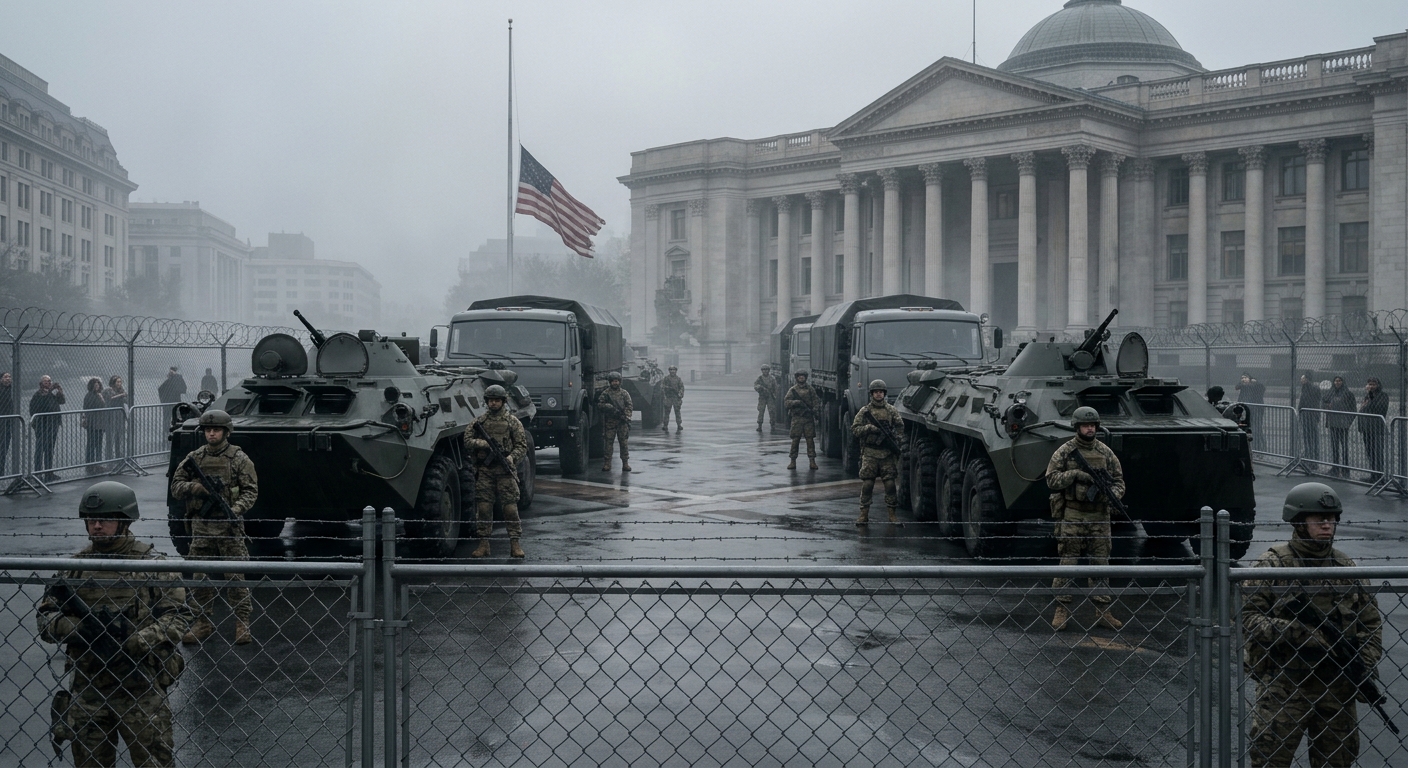
The Shadow of the Bayonet: Why the Expanding Domestic Use of the Military Threatens American Democracy
The deployment of armed forces within the borders of the United States to enforce the law is a concept that strikes at the very heart of American democratic principles. Throughout history, military personnel patrolling domestic streets has been synonymous with authoritarian regimes and martial law. However, in recent years, the discourse surrounding the domestic use of the military has shifted from an absolute taboo to a frequently debated political strategy. When leaders propose sending combat-trained soldiers into American cities to quell unrest, secure borders, or manage political protests, they are testing the foundational boundaries of the Republic. This growing comfort with militarized domestic intervention represents a profound threat to civil liberties. Blurring the lines between national defense and civilian policing fundamentally alters the relationship between the government and the governed. It endangers constitutional rights and risks weaponizing the armed forces against the very citizens they are sworn to protect. As rhetoric calling for military deployments on American soil escalates, understanding the legal frameworks, historical context, and devastating consequences is essential.
The Founding Vision: A Republic Skeptical of Standing Armies
To understand why the domestic deployment of troops is so concerning, one must look back to the origins of the United States. The framers of the Constitution harbored a deep suspicion of standing armies. Born out of the abuses suffered under the British Crown, the American Revolution was fueled in part by the tyranny of military forces enforcing civilian laws. The Declaration of Independence explicitly lists among its grievances that the King had “kept among us, in times of peace, Standing Armies without the consent of our legislatures.”
Consequently, the architects of the new republic constructed a system where civilian authority maintained absolute supremacy over military might. The Constitution divides military power, making the President the Commander-in-Chief while reserving the power to declare war and fund the military to Congress. The founders recognized that a military force is designed for the application of lethal force against foreign adversaries, not to mediate civil disputes. The early American tradition established a clear dichotomy: civilian police maintain domestic order, while the military defends the nation from external threats.
The Posse Comitatus Act: The Shield Against Military Policing
The most tangible legal expression of American resistance to domestic military policing is the Posse Comitatus Act. Enacted in 1878 following the Reconstruction era, this landmark criminal statute was designed to halt the use of federal troops to enforce civilian laws. The term “posse comitatus” translates roughly to “power of the county,” referring to the traditional authority of a sheriff to conscript citizens to keep the peace.
The Act explicitly states that whoever willfully uses any part of the Army or the Air Force to execute the laws—except in cases expressly authorized by the Constitution or an Act of Congress—faces fines and imprisonment. Over time, the Department of Defense extended these restrictions to the Navy and Marine Corps through administrative policy.
However, the Posse Comitatus Act is not an impenetrable shield. Over the decades, Congress has carved out statutory exceptions, and the executive branch has frequently interpreted the law narrowly. The military can provide logistical support, intelligence, and equipment to civilian law enforcement, particularly in counter-narcotics operations. Furthermore, the Act does not apply to the National Guard when operating under state control, allowing governors to deploy them for emergencies. Even with these exceptions, the Act remains a vital symbol against the unchecked militarization of American streets.
The Insurrection Act: A Presidential Blank Check?
While the Posse Comitatus Act serves as the general rule against domestic military deployment, the Insurrection Act of 1807 serves as its most significant and controversial exception. This centuries-old legislation grants the President extraordinary authority to deploy active-duty U.S. military troops and federalize the National Guard to suppress domestic disturbances. The language of the Act is remarkably broad, allowing intervention to suppress “any insurrection, domestic violence, unlawful combination, or conspiracy” that hinders the execution of state or federal laws.
Historically, the Insurrection Act has been invoked sparingly. Presidents Dwight D. Eisenhower and John F. Kennedy utilized it to enforce federal desegregation orders when state governments defied the law. In 1992, it was invoked at the request of California’s governor during the Los Angeles riots. These applications were generally aimed at enforcing federal law when local authorities were unable to do so.
The modern concern lies in the potential for unilateral abuse. The Insurrection Act does not require a governor’s consent. In an era of intense political polarization, the vague definitions within the Act present a glaring vulnerability. If a chief executive were to view political protests or ideological opposition as an “insurrection,” they could legally unleash the military against citizens. This gives the President a blank check to bypass the Posse Comitatus Act, transforming the military into a weapon against domestic dissent.
The Devastating Collateral Damage to Civil Liberties
When the military steps into the role of domestic law enforcement, constitutional rights are immediately jeopardized. The training, mindset, and operational protocols of military personnel are fundamentally different from civilian police. Soldiers are trained for combat zones; their primary objective is to overpower threats using lethal force. Civilian police are theoretically trained in de-escalation, conflict resolution, and applying the Constitution, particularly Fourth Amendment protections against unreasonable searches.
The Chilling Effect on First Amendment Rights
The presence of heavily armed military units creates an undeniable chilling effect on First Amendment rights. The right to peacefully assemble and protest is the bedrock of democracy. When protests are met with military force, the government sends a clear message: dissent is viewed as a threat to national security. Deploying troops to police protests intimidates citizens, suppresses free speech, and alters the dynamic between the state and the populace.
Eroding Due Process and the Fourth Amendment
Military intervention also threatens the due process guarantees of the Fifth and Fourteenth Amendments. Soldiers are not equipped to conduct constitutional arrests or preserve the chain of custody for evidence. When the military assumes police powers, the likelihood of excessive force and constitutional violations skyrockets. The justice system relies on civilian oversight, which is bypassed when domestic spaces are treated as military operations.
Creeping Militarization: Border Control and Beyond
The normalization of military presence in domestic affairs is often a gradual process. One of the most visible arenas of this creeping militarization is the United States border. Successive administrations have increasingly relied on the military to augment civilian border patrol agencies. While framed as logistical support, the deployment of active-duty troops and National Guard units to border regions normalizes the sight of military personnel conducting domestic operations.
This militarization extends beyond the physical border. Local communities subjected to military-style patrols experience heightened anxiety and a degradation of trust in government institutions. The presence of the military in domestic spheres blurs the lines between national defense and immigration enforcement, setting a dangerous precedent. If the military can be routinely used for border management, it becomes easier for political leaders to justify their use in other domestic arenas, such as combating drug cartels within U.S. cities, policing urban crime waves, or quelling labor strikes.
Why Every American Should Be Concerned
The expanding domestic use of the military is a fundamental threat to the American constitutional order. When the armed forces are drawn into domestic political disputes, the institution itself becomes politicized. The military relies on the trust and support of the entire American public. If a significant portion of the populace begins to view the military as a partisan tool used to suppress opposition, that trust will evaporate, severely damaging the military’s cohesion.
Moreover, relying on the military to solve domestic societal problems is a profoundly anti-democratic shortcut. Civil unrest, protests, and crime are complex issues that require community engagement, social reform, and civilian governance to address effectively. Utilizing the military is an attempt to force order through intimidation and superior firepower, ignoring the underlying causes of the disruption. It is a hallmark of failing democracies when leaders abandon the hard work of political consensus in favor of the swift, blunt instrument of military force.
Reforming the Rules: What Needs to Change
To safeguard the Republic against the misuse of military power, comprehensive legislative reforms are urgently required. Congress must reclaim its constitutional authority and establish strict boundaries on the executive branch’s ability to deploy troops domestically.
- Amend the Insurrection Act: Congress should modernize the Act to clearly define “insurrection” or “rebellion.” The President should be required to consult with state authorities before deploying troops, and expedited congressional approval must be mandatory for any deployment lasting beyond a brief emergency window.
- Strengthen the Posse Comitatus Act: The loopholes within the Posse Comitatus Act must be closed. Congress should explicitly expand the Act to cover all branches of the armed forces, including the Navy and Marine Corps, and strictly limit the exceptions that allow for “logistical support” to civilian law enforcement.
- Implement Strict Sunset Clauses: Any domestic military deployment must be subject to rigorous oversight and strict sunset clauses, ensuring that troops are withdrawn as soon as civilian authorities can resume control.
- Establish Judicial Review: Legislation should clearly establish the standing of citizens and local governments to challenge the legality of domestic military deployments in federal court.
Frequently Asked Questions (FAQs)
What is the Posse Comitatus Act?
The Posse Comitatus Act is an 1878 federal law that prohibits the use of the U.S. military for domestic law enforcement purposes, unless explicitly authorized by the Constitution or an act of Congress. It prevents federal troops from acting as police officers.
How does the Insurrection Act work?
The Insurrection Act of 1807 provides a major exception to the Posse Comitatus Act. It empowers the President to deploy U.S. military and federalize National Guard troops to suppress domestic violence or rebellions, potentially without a state governor’s request.
Can the President deploy the National Guard domestically?
Governors typically control their state’s National Guard for emergencies. However, the President can federalize the Guard under the Insurrection Act, placing them under federal command to enforce laws.
Why is military policing different from civilian policing?
Military personnel are trained for combat and neutralizing foreign enemies. Civilian police are trained to protect constitutional rights, de-escalate situations, and apprehend suspects. Mixing roles increases civil rights violation risks.
What happens to my civil liberties if the military is deployed?
When the military is used domestically, civil liberties face significant risks, particularly First Amendment rights to protest and Fourth Amendment protections against unreasonable searches. Military presence can chill free speech and lead to unlawful detentions without standard due process.
Conclusion
The preservation of liberty requires constant vigilance. The United States was built on the premise that military power must always remain subordinate to civilian authority. The increasing rhetoric surrounding the expansion of domestic military operations poses an existential threat to this foundational principle. By understanding the historical context, the legal frameworks of the Posse Comitatus and Insurrection Acts, and the severe risks to civil liberties, citizens can better advocate for necessary reforms. Allowing the military to become a routine domestic police force is a line that, once crossed, may be impossible to uncross, fundamentally altering the character of American democracy forever.
References
- Posse Comitatus Act and Related Matters — Naval History and Heritage Command. 2017-11-20. https://www.history.navy.mil/research/library/online-reading-room/title-list-alphabetically/p/posse-comitatus-act-and-related-matters.html
- Calling Forth the Military: A Brief History of the Insurrection Act — National Defense University Press. 2020-11-19. https://ndupress.ndu.edu/Media/News/News-Article-View/Article/2422204/calling-forth-the-military-a-brief-history-of-the-insurrection-act/
- Deluzio Introduces Bill to Limit Presidential Power to Deploy Troops on American Soil under the Insurrection Act — U.S. Congressman Chris Deluzio (PA-17). 2025-07-08. https://deluzio.house.gov/media/press-releases/deluzio-introduces-bill-limit-presidential-power-deploy-troops-american-soil
- National Guard, Presidential Power, and the Law: A Q&A with Stanford Law’s Bernadette Meyler — Stanford Law School. 2025-12-04. https://law.stanford.edu/2025/12/04/national-guard-presidential-power-and-the-law/
Similar Articles








Read full bio of medha deb


