
The Executive Blueprint: Championing Voting Rights from the Oval Office
Exploring how executive leadership and federal initiatives can protect and expand voter access across the nation.
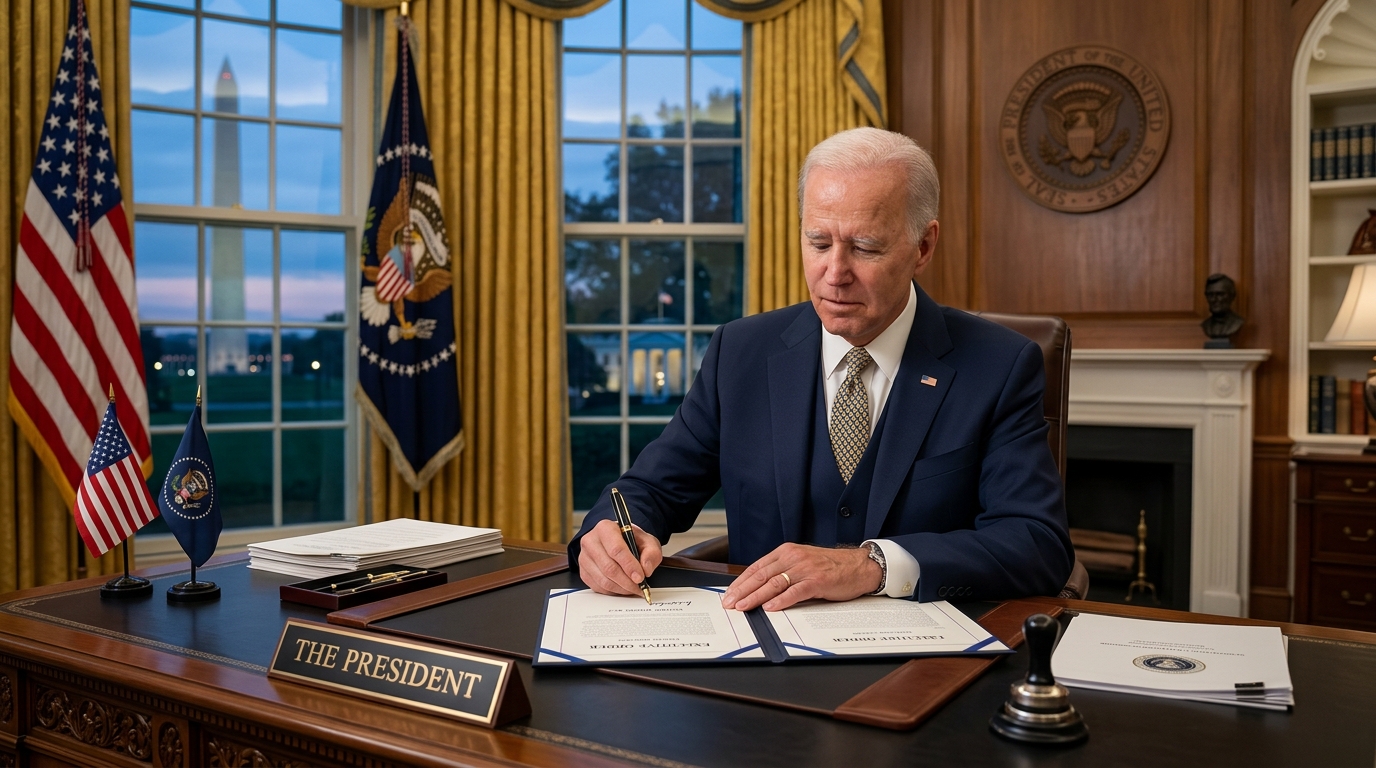
The Imperative for Executive Leadership in Voting Access
The cornerstone of American democracy relies entirely on the unrestricted ability of its citizens to cast their ballots. Throughout the history of the United States, the expansion and protection of this fundamental right have required rigorous oversight, legislative maneuvering, and decisive action from the highest levels of government. Leaders in the executive branch, including figures like Vice President Kamala Harris, have continuously emphasized the necessity of robust federal intervention to secure these rights for every eligible citizen. Advancing a pro-democracy agenda is not a passive endeavor; it demands a strategic blueprint that leverages the full weight of the presidency to combat voter suppression, streamline registration, and ensure equitable access to the ballot box.
In modern political landscapes, state legislatures frequently introduce measures that complicate the voting process. These range from stringent identification requirements to the reduction of early voting days and the limitation of mail-in ballot drop boxes. To counteract these localized restrictions, a pro-voting rights administration must employ a multi-faceted approach. This strategy includes issuing sweeping executive orders, aggressively advocating for protective federal legislation, and directing the Department of Justice to rigorously enforce existing civil rights statutes. By examining the historical precedents and current federal mechanisms, we can understand exactly how an executive administration can cement a legacy of democratic inclusion.
Building on Historical Foundations: The Legacy of 1965
To fully grasp the current battle for ballot access, one must look back to the landmark achievements of the civil rights movement. The Voting Rights Act of 1965 stands as one of the most significant statutory changes in the relationship between federal and state governments regarding elections. Signed into law by President Lyndon B. Johnson on August 6, 1965, the legislation was a direct response to the systemic and often violent disenfranchisement of Black Americans, particularly in the Jim Crow South.
The 1965 legislation achieved several immediate and transformative goals. It outlawed discriminatory practices such as literacy tests, which had been maliciously used to prevent minority citizens from registering to vote. Furthermore, Section 5 of the act established a “preclearance” requirement, mandating that specific jurisdictions with a documented history of discriminatory practices obtain federal approval before implementing any new voting procedures. For decades, this provision served as an incredibly effective shield against voter suppression.
However, the landscape shifted dramatically in 2013 with the Supreme Court’s ruling in Shelby County v. Holder. This decision functionally immobilized the preclearance formula, crippling the federal government’s preemptive ability to block discriminatory voting laws. In the aftermath of Shelby County, numerous states rushed to implement restrictive voting measures, highlighting an urgent need for renewed federal action. A pro-voting rights executive agenda must acknowledge this historical context, utilizing the presidency’s bully pulpit to demand that Congress restore these vital protections.
Expanding Federal Resources Under Executive Order 14019
While legislative action requires congressional cooperation, the president possesses immense unilateral authority to mobilize federal resources. A prime example of this is Executive Order 14019, titled “Promoting Access to Voting,” which was signed on March 7, 2021. This directive represents a paradigm shift in how the executive branch approaches electoral participation, operating on the principle that the federal government should actively facilitate civic engagement.
Executive Order 14019 mandates that federal agencies evaluate their existing programs and identify innovative ways to promote voter registration and participation. Instead of leaving the burden of registration entirely on the individual or state governments, the order turns federal touchpoints into registration hubs. For example, the directive explicitly addresses the need to improve voting access for Native American communities. It outlines plans to mitigate internet accessibility issues on tribal lands, enhance language assistance for Native voters, and facilitate the use of Tribal government identification cards as valid voter identification. Such targeted executive directives bypass partisan gridlock and deliver immediate, tangible benefits to marginalized voting populations.
Moreover, the implementation of this order has seen unprecedented cooperation across departments. The Department of Veterans Affairs (VA) took historic steps to seek designation as a voter registration agency under the National Voter Registration Act, a move designed to assist tens of thousands of inpatients, homebound veterans, and their families. By embedding voter registration into routine federal interactions—whether someone is seeking healthcare at a VA facility or applying for a government service—the executive branch can drastically reduce the administrative friction that traditionally suppresses turnout.
Legislative Advocacy: The Push for the John Lewis Voting Rights Advancement Act
Despite the power of executive orders, enduring structural change requires federal legislation. A pro-voting rights president must serve as the primary architect and advocate for comprehensive legislative reform. At the center of this legislative battle is the John Lewis Voting Rights Advancement Act. Named in honor of the late civil rights icon and congressman, this bill is designed to restore and modernize the protections that were hollowed out by the 2013 Shelby County decision.
The primary objective of the John Lewis Act is to establish a new, geographically neutral preclearance formula. This formula would require states and localities with a recent history of voting rights violations to seek federal approval before enacting any changes to their election laws. The legislation is intended to prevent discriminatory policies from taking effect, rather than relying on after-the-fact litigation to overturn them.
For an executive administration, pushing this legislation involves more than just signaling support; it requires aggressive political capital. The executive branch must continuously publicly highlight the real-world impact of state-level voter suppression schemes that have disenfranchised American citizens. By consistently linking the legacy of the civil rights movement to contemporary legislative efforts, a president can maintain public pressure on lawmakers to prioritize democratic infrastructure over partisan maneuvering.
The Role of the Department of Justice in Safeguarding the Ballot
An essential component of the executive blueprint is the enforcement mechanism wielded by the Department of Justice (DOJ). Under the direction of the Attorney General, the DOJ’s Civil Rights Division acts as the nation’s primary defender of ballot access. A pro-voting rights administration ensures that the DOJ is adequately funded, fully staffed, and directed to aggressively pursue litigation against entities that violate the constitutional rights of voters.
Even without the preclearance protections of Section 5, the DOJ continues to enforce other vital federal statutes, primarily Section 2 of the Voting Rights Act. This section prohibits any voting practice or procedure that discriminates on the basis of race, color, or membership in a language minority group. The Justice Department actively monitors state legislation and initiates lawsuits in federal court to challenge redistricting plans that dilute minority voting power or laws that impose undue burdens on specific demographic groups.
Furthermore, the DOJ plays a critical role in voter education and election security. The department issues guidance to states on compliance with federal statutes regarding post-election audits and the prevention of voter intimidation. By adopting a proactive litigation strategy, an executive administration sends a clear, deterrence-focused message: any attempt to disenfranchise voters will be met with the full legal authority of the federal government.
Analyzing Voter Turnout Trends and Challenges
To measure the success of pro-voting initiatives, administrations closely monitor voter turnout statistics, which serve as the ultimate barometer for the health of a democracy. According to data released by the U.S. Census Bureau, the 2024 presidential election saw substantial civic participation, though it revealed persisting demographic disparities. In 2024, approximately 73.6% of the citizen voting-age population (around 174 million people) were registered to vote, and 65.3% (approximately 154 million people) ultimately cast their ballots.
While an overall turnout rate of 65.3% indicates robust engagement, a deeper demographic dive highlights the very barriers executive actions attempt to dismantle. For instance, turnout varied significantly by educational attainment. The data shows that 82.5% of citizens with an advanced degree voted, compared to 77.2% of bachelor’s degree holders and only 52.5% of high school graduates. Furthermore, voting methodologies reflect a changing electorate; in 2024, 39.6% voted in person on Election Day, while a combined 59.7% opted for early in-person voting or mail-in ballots.
These statistics underscore why executive policies supporting early voting, mail-in ballots, and streamlined registration are paramount. Restricting flexible voting options disproportionately impacts working-class citizens and those with lower educational attainment, pulling down the aggregate participation rate. By interpreting this data, a pro-voting rights administration can target its resources effectively, deploying initiatives precisely where demographic turnout lags.
Summary of Major Voting Rights Milestones
The following table outlines the foundational laws, executive actions, and judicial decisions that define the modern struggle for ballot access.
| Initiative / Event | Year | Core Objective & Impact |
|---|---|---|
| Voting Rights Act of 1965 | 1965 | Outlawed discriminatory voting practices (like literacy tests) and established federal preclearance for historically discriminatory jurisdictions. |
| Shelby County v. Holder | 2013 | A Supreme Court decision that invalidated the preclearance formula of the VRA, leading to a resurgence of restrictive state voting laws. |
| Executive Order 14019 | 2021 | Directed federal agencies to promote voter registration and expand access to election information, particularly for marginalized and Native communities. |
| John Lewis Voting Rights Advancement Act | Ongoing | Proposed legislation aimed at restoring federal preclearance protections and modernizing the Voting Rights Act to combat modern suppression tactics. |
Frequently Asked Questions (FAQ)
What did the Voting Rights Act of 1965 achieve?
The Voting Rights Act of 1965 was a landmark piece of federal legislation that prohibited discriminatory voting practices designed to disenfranchise Black Americans. It successfully outlawed literacy tests and established federal oversight (preclearance) over election law changes in jurisdictions with a history of racial discrimination.
What is Executive Order 14019?
Signed on March 7, 2021, Executive Order 14019 directs all federal agencies to evaluate their programs and find ways to promote voter registration and participation. It leverages federal resources to make registering to vote easier, specifically targeting underserved populations such as Native Americans and veterans.
Why is the John Lewis Voting Rights Advancement Act necessary?
The John Lewis Act was introduced to restore the protections lost after the 2013 Supreme Court decision in Shelby County v. Holder. It seeks to establish a new, updated formula to determine which states must obtain federal approval before altering their voting laws, thereby preventing discriminatory restrictions before they can impact an election.
How does the federal government track voter turnout?
The U.S. Census Bureau tracks voter turnout through the Current Population Survey (CPS) Voting and Registration Supplement. This survey, conducted every two years since 1964, provides comprehensive demographic data on who is registering and voting in federal elections.
Can the President change state election laws directly?
No, the Constitution generally delegates the administration of elections to the states. However, the President can use executive orders to mobilize federal resources to assist voters, direct the Department of Justice to sue states that violate federal civil rights laws, and advocate for Congress to pass superseding federal legislation.
References
- Voting Rights Act (1965) — National Archives. 2022-02-08. https://www.archives.gov/milestone-documents/voting-rights-act
- Warner & Kaine Join Leahy in Introducing John Lewis Voting Rights Advancement Act — U.S. Senator Mark R. Warner. 2021-10-06. https://www.warner.senate.gov/public/index.cfm/2021/10/warner-kaine-join-leahy-in-introducing-john-lewis-voting-rights-advancement-act
- Promoting Access to Voting – Federal Register — Federal Register. 2021-03-10. https://www.federalregister.gov/documents/2021/03/10/2021-05087/promoting-access-to-voting
- Reflecting On the 10th Anniversary of Shelby County v. Holder — Department of Justice. 2023-06-23. https://www.justice.gov/crt/reflecting-10th-anniversary-shelby-county-v-holder
- VA promotes greater access to voter information to Veterans and families — Department of Veterans Affairs. 2022-03-24. https://www.va.gov/opa/pressrel/pressrelease.cfm?id=5776
- 2024 Presidential Election Voting and Registration Tables Now Available — United States Census Bureau. 2025-04-30. https://www.census.gov/newsroom/press-releases/2025/2024-presidential-election-voting-and-registration-tables.html
Similar Articles








Read full bio of Sneha Tete


