
The Evolving Landscape of Voting Rights in America
Explore the historical battles and modern challenges shaping US voting rights.
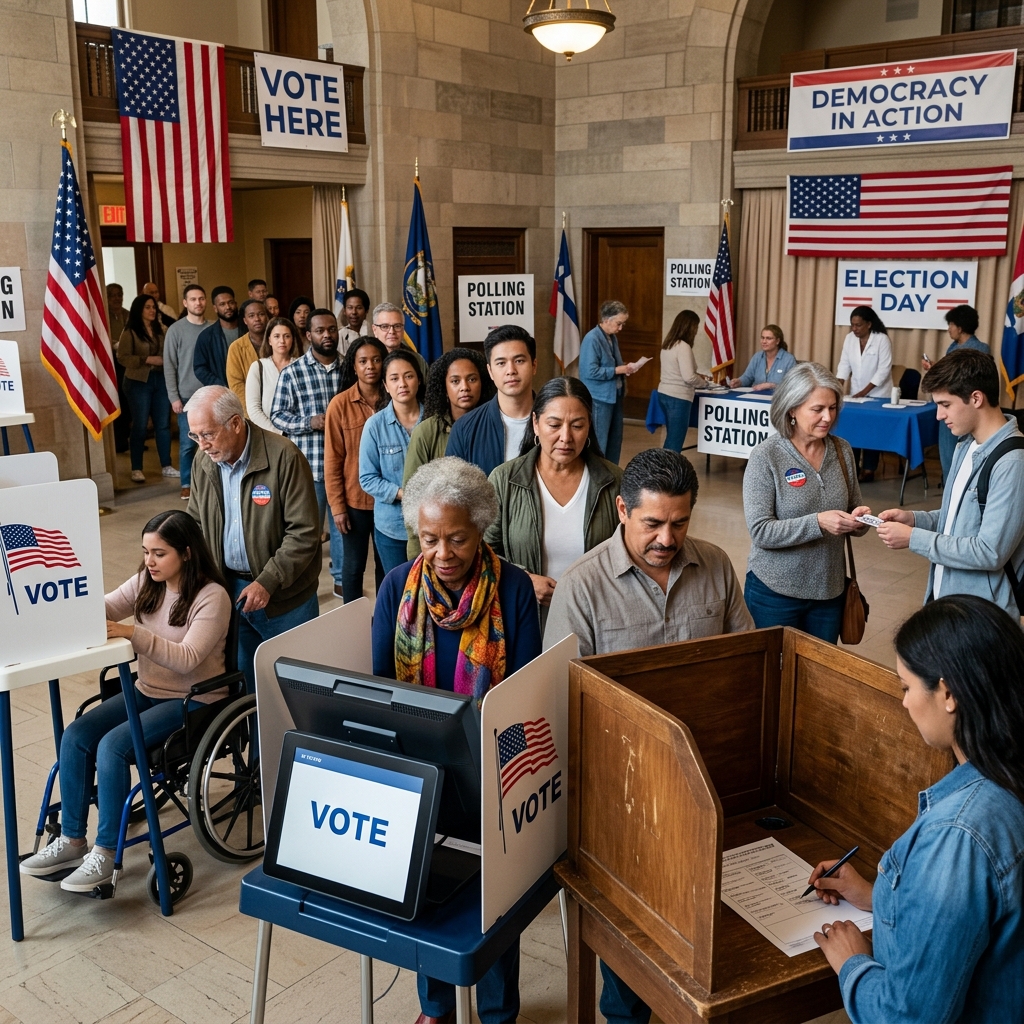
The foundation of any democratic society rests upon the principle that its citizens have an equal, unimpeded right to participate in the electoral process. In the United States, the concept of universal suffrage has not been a static reality but rather the subject of an ongoing, centuries-long struggle. While the American ideal celebrates the notion of “one person, one vote,” the historical reality reveals a deeply entrenched pattern of exclusion. For generations, marginalized communities have been forced to navigate a labyrinth of legal, bureaucratic, and physical barriers designed to dilute their political power. Understanding the modern electoral landscape requires a comprehensive examination of how historical discrimination has metamorphosed into contemporary, ostensibly neutral voting restrictions.
Historical Foundations of Electoral Access
Following the abolition of slavery, the United States Constitution underwent significant changes intended to establish a more equitable society. The ratification of the 15th Amendment in 1870 explicitly prohibited the federal government and individual states from denying a citizen the right to vote based on “race, color, or previous condition of servitude.” Decades later, the 19th Amendment extended the franchise to women. However, the theoretical protections offered by these constitutional amendments were swiftly undermined by state-level maneuvering, particularly in the post-Reconstruction South .
In a direct subversion of the 15th Amendment, state legislatures implemented a variety of disenfranchisement tactics that were racially neutral on paper but devastatingly discriminatory in practice. Poll taxes required citizens to pay a fee to cast a ballot, effectively barring low-income individuals, a disproportionate number of whom were Black, from voting. Literacy tests were administered subjectively by white registrars who consistently failed minority applicants regardless of their actual reading comprehension levels. Furthermore, “grandfather clauses” exempted individuals from these onerous requirements if their ancestors had been eligible to vote prior to the Civil War, creating a deliberate loophole exclusively for white voters . Through these mechanisms, minority voter participation was systematically suppressed for nearly a century.
The Transformative Power of the Voting Rights Act of 1965
The relentless activism of the Civil Rights Movement—culminating in watershed moments such as the Selma to Montgomery marches—forced the federal government to confront the widespread disenfranchisement occurring at the state level. In response, Congress passed the Voting Rights Act of 1965 (VRA), widely considered the most effective piece of civil rights legislation in American history . The VRA not only banned discriminatory practices like literacy tests but also introduced an unprecedented mechanism for federal oversight.
At the heart of the VRA’s success was the interplay between Section 4(b) and Section 5. Section 4(b) established a “coverage formula” that identified jurisdictions with a documented history of severe racial discrimination in voting. Section 5 required these covered jurisdictions to submit any proposed changes to their election laws or procedures to the U.S. Department of Justice or a federal court for approval—a process known as “preclearance” . Before a state could move a polling place, change voter identification rules, or redraw district lines, it had to prove that the change would not negatively impact minority voters.
The preclearance requirement functioned as a vital prophylactic measure, catching and blocking thousands of discriminatory voting changes before they could take effect. Within just a few years of the VRA’s passage, minority voter registration rates in the covered states skyrocketed, leading to a dramatic increase in the election of minority representatives at the local, state, and federal levels.
Judicial Shifts: The Aftermath of Shelby County v. Holder
The protective shield of the Voting Rights Act suffered a catastrophic blow in 2013 with the United States Supreme Court’s landmark decision in Shelby County v. Holder . The case centered on a challenge to the constitutionality of Section 4(b)’s coverage formula. In a 5-4 decision, the Court’s conservative majority ruled that the coverage formula was unconstitutional because it was based on decades-old data that no longer reflected current realities.
Chief Justice John Roberts, writing for the majority, acknowledged that voting discrimination still existed but argued that the extraordinary federal intervention of preclearance was no longer justified by the “current burdens” and that it infringed upon the equal sovereignty of the states . In her fierce dissent, Justice Ruth Bader Ginsburg famously likened throwing out the preclearance requirement when it had worked so well to “throwing away your umbrella in a rainstorm because you are not getting wet.”
By striking down the coverage formula in Section 4(b), the Supreme Court effectively rendered the preclearance requirement of Section 5 dormant . The immediate fallout was profound. States that had been subject to federal oversight for decades were suddenly free to implement sweeping changes to their election laws without advance federal approval. Within hours of the ruling, several previously covered states announced the implementation of strict voter identification laws and the aggressive redrawing of voting districts .
Modern Mechanisms of Disenfranchisement
Without the prophylactic protections of Section 5, the burden of fighting discriminatory voting laws shifted entirely to litigation under Section 2 of the VRA. However, Section 2 litigation is inherently reactive, expensive, and time-consuming. By the time a discriminatory law is successfully challenged in court, multiple elections may have already taken place under its illegitimate parameters. This environment has fostered the rise of modern, sophisticated tactics that disproportionately burden minority and low-income voters.
Strict Voter Identification Mandates
One of the most prominent trends post-Shelby County has been the proliferation of strict voter identification laws. Proponents of these laws argue they are necessary to prevent voter fraud, despite extensive investigations repeatedly demonstrating that in-person voter fraud is vanishingly rare. Critics emphasize that these laws are modern-day poll taxes, as obtaining the required government-issued ID often entails costs for obtaining underlying documents (like birth certificates) and taking time off work to visit a government agency.
Academic research provides a nuanced view of this tactic. While some economic studies, such as a comprehensive panel analysis by the National Bureau of Economic Research (NBER), suggest that strict ID laws may not always yield massive, measurable negative effects on aggregate turnout metrics , civil rights organizations and legal scholars emphasize the unconstitutional burden placed on specific communities. Even if aggregate turnout remains stable due to aggressive counter-mobilization efforts by advocacy groups, the fundamental cost of voting is drastically increased for marginalized communities . Minority voters, the elderly, and students are statistically less likely to possess the specific types of identification required by strict state statutes.
Polling Place Consolidations and Closures
Another profound consequence of the weakened Voting Rights Act has been the widespread closure and consolidation of polling places. According to a comprehensive 2018 report by the U.S. Commission on Civil Rights, previously covered jurisdictions closed hundreds of polling locations in the immediate years following the Shelby County decision .
When polling places are removed from minority neighborhoods, voters are forced to travel greater distances, often relying on inadequate public transportation. This consolidation inevitably leads to severe overcrowding at the remaining polling locations. Long lines—sometimes requiring voters to wait for hours—serve as a powerful deterrent. Hourly wage workers, individuals with childcare responsibilities, and the elderly are frequently unable to endure these wait times, resulting in de facto disenfranchisement. The U.S. Commission on Civil Rights highlighted that these structural barriers inherently create a disparate impact on voters of color, directly undermining the democratic process .
Aggressive Voter Roll Purging
Maintaining accurate voter registration rolls is a necessary component of election administration, as authorized by the National Voter Registration Act of 1993 (NVRA). However, in the absence of federal preclearance, many states have weaponized this administrative process through aggressive voter roll purges . Jurisdictions have implemented stringent “use-it-or-lose-it” policies, wherein registered voters who miss a certain number of consecutive elections are targeted for removal.
Flawed database matching systems, which sometimes flag individuals for removal based on slight variations in the spelling of a name or a hyphenated surname, disproportionately affect minority populations. Because states are no longer required to prove that these purging mechanisms are non-discriminatory prior to execution, eligible citizens frequently arrive at the polls on Election Day only to discover that their registration has been abruptly canceled, forcing them to cast provisional ballots that may never be counted.
Legislative Horizons: Protecting the Ballot
The contemporary erosion of voting rights has prompted a robust legislative response aimed at restoring and modernizing federal protections. The primary vehicle for this effort is the proposed John Lewis Voting Rights Advancement Act. Named in honor of the late civil rights icon, this legislation seeks to establish a new, updated coverage formula for Section 4 of the VRA. By relying on recent data regarding voting rights violations, the proposed law attempts to satisfy the Supreme Court’s constitutional concerns in Shelby County while reinstating the critical preclearance requirement for states with a documented, modern history of discrimination.
Additionally, broader democracy reform bills have been introduced to establish national baseline standards for voting access. These proposals include mandates for automatic voter registration, mandatory early voting periods, and protections against aggressive voter purging. While federal legislation faces intense partisan gridlock, several individual states have taken the initiative to pass their own state-level Voting Rights Acts, ensuring preclearance and explicit protections against vote dilution within their borders.
The trajectory of voting rights in the United States remains fiercely contested. The transition from explicit discrimination, such as literacy tests, to structural barriers, like polling place closures and strict ID requirements, demonstrates the evolving nature of voter suppression. As the legal landscape continues to shift, the fundamental question remains: whether the United States will fully realize the promise of a multi-racial, inclusive democracy, or whether systemic barriers will continue to dictate whose voices are heard.
Frequently Asked Questions (FAQs)
What was the primary purpose of the Voting Rights Act of 1965?
The VRA was enacted to enforce the 15th Amendment by outlawing discriminatory voting practices, such as literacy tests, that many states used to disenfranchise minority voters. It also established federal oversight over election law changes in jurisdictions with a history of discrimination.
How did Shelby County v. Holder change election laws?
The 2013 Supreme Court decision invalidated the coverage formula used to determine which states required federal “preclearance” before changing voting laws. This allowed previously restricted states to implement new voting regulations—like strict ID laws and polling closures—without proving in advance that the changes were non-discriminatory.
Why are polling place closures considered a voting rights issue?
Closing polling places disproportionately impacts low-income and minority communities. It forces voters to travel further and wait in excessively long lines, which deters participation for those who cannot afford to take time off work or lack reliable transportation.
What is the John Lewis Voting Rights Advancement Act?
It is proposed federal legislation designed to restore and strengthen the Voting Rights Act by creating a modern, constitutionally sound formula for determining which states and jurisdictions must seek federal preclearance for election changes based on recent patterns of discrimination.
References
- History Of Federal Voting Rights Laws — U.S. Department of Justice. 2017-07-28. https://www.justice.gov/crt/history-federal-voting-rights-laws
- Shelby County v. Holder, 570 U.S. 529 — Supreme Court of the United States. 2013-06-25. https://www.supremecourt.gov/opinions/12pdf/12-96_6k47.pdf
- Assessment of Minority Voting Rights Access — U.S. Commission on Civil Rights. 2018-09-12. https://www.usccr.gov/files/pubs/2018/Minority_Voting_Access_2018.pdf
- Strict ID Laws Don’t Stop Voters: Evidence from a U.S. Nationwide Panel, 2008–2018 — National Bureau of Economic Research. 2021-05-13. https://www.nber.org/papers/w25522
- The Effects of Shelby County v. Holder — Brennan Center for Justice. 2018-08-06. https://www.brennancenter.org/our-work/policy-solutions/effects-shelby-county-v-holder
Similar Articles








Read full bio of medha deb


