
The Evolution of Civil Liberties Advocacy
How advocacy groups are mobilizing voters to protect fundamental civil rights.
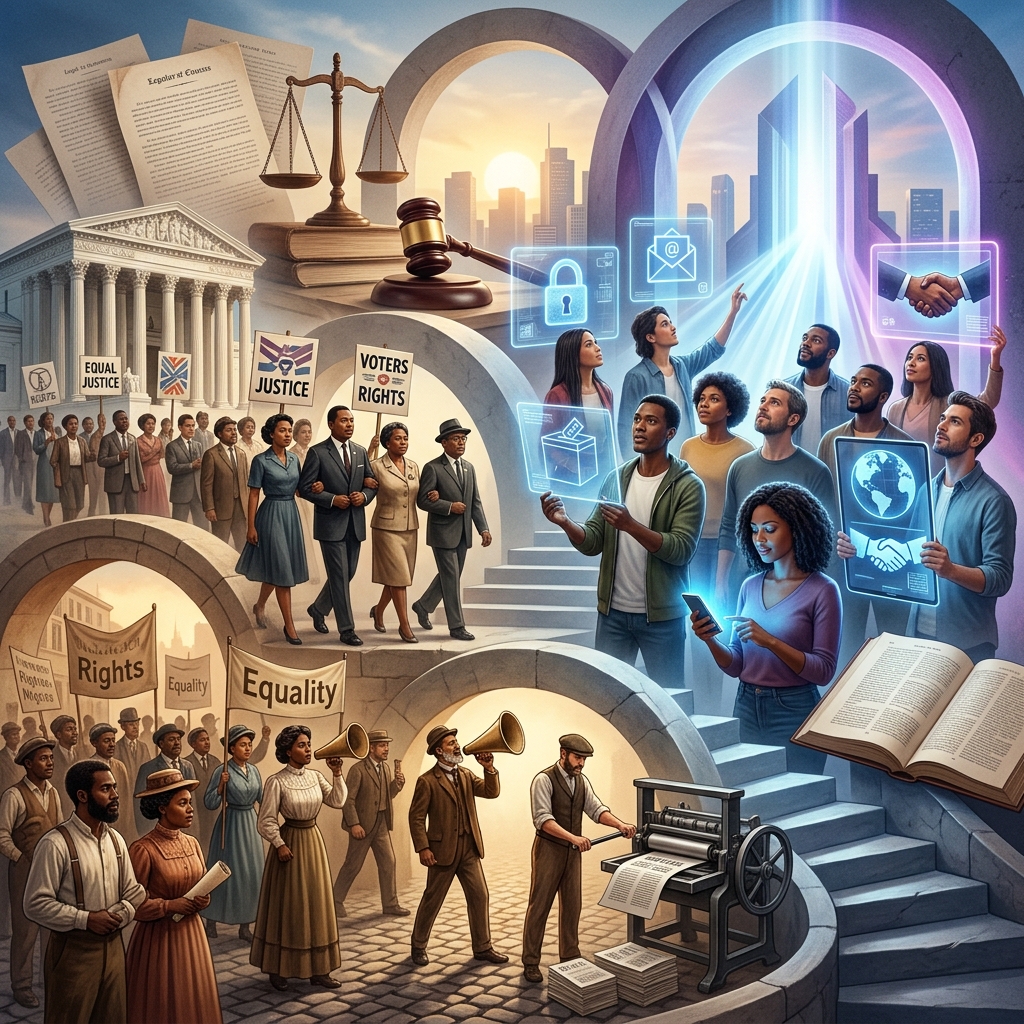
The Transformation of Rights-Based Advocacy
For generations, the defense of civil liberties in the United States was a battle fought predominantly within the solemn and insulated halls of the judiciary. Advocacy organizations relied on the slow, meticulous process of litigation to challenge unconstitutional laws, defend marginalized communities, and establish legal precedents that would echo through history. However, the modern political landscape has necessitated a profound strategic evolution. Recognizing that judicial victories can be circumvented by hostile legislation or shifting judicial appointments, civil rights organizations have increasingly turned their attention to the ballot box. By merging traditional legal strategies with massive, grassroots electoral mobilization, these groups are not just fighting for civil liberties after they are violated—they are working to elect representatives who will proactively protect them in the first place.
This paradigm shift from purely reactive courtroom battles to proactive electoral engagement represents one of the most significant developments in modern civil rights advocacy. It acknowledges a fundamental truth of democratic governance: the individuals who hold elected office, from local sheriffs to federal legislators, dictate the policies that govern everyday freedoms. By educating voters, mobilizing marginalized communities, and highlighting civil liberties as pivotal electoral issues, advocacy organizations are fundamentally reshaping how campaigns are run and won.
The Strategic Shift: From Courtrooms to the Campaign Trail
The transition toward electoral advocacy does not mean abandoning the courtroom; rather, it involves recognizing the limitations of litigation. Lawsuits are inherently backward-looking. They require a harm to have already occurred, and the resolution of these cases can take years, if not decades. During that time, communities continue to suffer the consequences of unjust policies. To address the root causes of civil rights violations, organizations have expanded their toolkits to include direct political action and voter education.
Under the Internal Revenue Code, non-profit organizations face specific regulations regarding political activity. While 501(c)(3) charitable organizations are strictly prohibited from intervening in political campaigns, 501(c)(4) social welfare organizations have the flexibility to engage in legislative lobbying and participate in certain political activities, provided that such interventions do not constitute their primary operational purpose . This legal framework allows advocacy groups to create dedicated political arms that can directly inform the public about where candidates stand on critical issues, mobilize volunteers to contact voters, and invest resources into ballot initiatives that directly impact civil liberties.
By leveraging this structure, civil liberties groups can launch comprehensive issue advocacy campaigns. They construct detailed voter guides, host non-partisan town halls, and deploy extensive media campaigns to ensure that voters understand the civil rights implications of their electoral choices. This proactive stance forces candidates to publicly address their positions on critical issues, thereby increasing transparency and accountability in the electoral process.
Safeguarding the Democratic Process
Before an electorate can vote on specific civil liberties issues, they must first be able to access the ballot box. Consequently, protecting the democratic process itself has become a foundational pillar of modern advocacy. The right to vote is the bedrock upon which all other civil liberties rest, yet it remains under constant threat from systemic suppression efforts.
Over the past two decades, numerous states have erected significant barriers to the ballot box. These measures include implementing strict voter identification laws, heavily purging voter registration rolls, reducing the availability of early voting days, and limiting access to mail-in ballots . These legislative maneuvers disproportionately disenfranchise minority voters, low-income communities, and young adults. In response, civil liberties organizations have mounted massive, multi-tiered defense strategies during election cycles.
This defense involves preemptive litigation to strike down restrictive voting laws before Election Day, alongside massive voter education campaigns designed to help citizens navigate complex new voting requirements. Organizations deploy thousands of poll monitors to ensure compliance with election laws and run comprehensive hotlines to assist voters who encounter issues at their polling locations. By combining legal expertise with on-the-ground volunteer networks, advocacy groups ensure that systemic barriers do not silence the voices of vulnerable communities.
Central Civil Rights Issues Defining Modern Elections
While voting rights form the foundation of electoral engagement, modern civil liberties advocacy focuses heavily on translating specific policy priorities into mobilizing forces. By clearly articulating how an election impacts everyday freedoms, organizations drive higher voter turnout.
Transforming the Criminal Justice System
One of the most profound shifts in recent electoral strategy has been the intense focus on local criminal justice races. Historically, positions such as district attorneys, county sheriffs, and local judges received little public scrutiny and were often uncontested. Yet, these local officials wield extraordinary discretionary power over the lives of citizens. District attorneys decide whether to pursue charges, recommend bail amounts, and seek mandatory minimum sentences—decisions that directly fuel or mitigate the crisis of mass incarceration.
Advocacy groups have launched targeted campaigns to educate voters about the immense power of local prosecutors. They advocate for platforms centered on ending cash bail, reducing racial disparities in sentencing, and increasing police accountability. Furthermore, these organizations have been instrumental in pushing for ballot initiatives that restore voting rights to formerly incarcerated individuals, arguing that post-incarceration civic participation builds stronger, safer communities and advances fundamental civil rights .
Protecting Immigrant Communities
Immigration policy is frequently weaponized in political discourse, making the protection of immigrant communities a critical electoral issue. Advocacy focuses on electing officials committed to humane integration policies and pushing back against state and local entanglement with federal immigration enforcement. By educating voters on the economic and social benefits of inclusive policies, civil liberties groups mobilize naturalized citizens and their allies to vote against xenophobic rhetoric and punitive detention policies.
Reproductive Freedom and Bodily Autonomy
The intersection of public health, bodily autonomy, and electoral politics has become acutely pronounced in recent years. With significant changes to the judicial landscape concerning reproductive rights, advocacy organizations have utilized ballot initiatives and issue-focused campaigns to mobilize voters. Recent election cycles have demonstrated that when reproductive freedom is directly on the ballot, voter turnout surges. The electorate has consistently shown up in record numbers to support access to reproductive healthcare and push back against hostile legislative efforts, proving that civil liberties are a primary driver of voter engagement .
The Mechanics of Grassroots Mobilization
Translating policy priorities into actual votes requires a sophisticated, meticulously organized mobilization infrastructure. Modern civil liberties organizations operate campaign apparatuses that rival those of major political parties, utilizing both traditional community organizing and cutting-edge digital technology.
- Peer-to-Peer Texting and Phone Banking: Volunteers utilize advanced software to contact millions of prospective voters. These personalized outreach efforts are highly effective in reminding citizens of registration deadlines, providing polling locations, and discussing the civil rights implications of the upcoming election.
- Digital Scorecards and Voter Guides: Organizations analyze the legislative records and public statements of candidates, compiling them into easily digestible scorecards. These guides empower voters to make informed decisions based strictly on a candidate’s commitment to civil liberties, free from partisan spin.
- Relational Organizing: This strategy encourages volunteers to mobilize their own networks—friends, family, and colleagues. Because individuals are more likely to trust information coming from someone they know, relational organizing dramatically increases the likelihood of voter follow-through.
- Multilingual Outreach: To ensure that language barriers do not impede democratic participation, organizations produce educational materials and run phone banks in multiple languages, ensuring that non-native English speakers can fully exercise their rights.
Maintaining a Non-Partisan Mandate in a Polarized Era
A critical component of this advocacy model is its strict adherence to non-partisanship. In an era defined by hyper-polarization, civil liberties organizations must maintain their credibility by focusing exclusively on issues rather than party affiliations. The objective is never to advance a specific political party, but rather to hold all candidates, regardless of their political label, accountable to the Constitution and the principles of equity.
This non-partisan approach means that advocacy groups will fiercely criticize a candidate from one party for supporting mass surveillance, while simultaneously challenging a candidate from the opposing party for endorsing restrictive voting laws. By centering the policies rather than the politicians, these organizations build broad, diverse coalitions of voters who are united by a shared commitment to fundamental freedoms.
Comparing Strategies: Litigation vs. Electoral Advocacy
To understand the comprehensive nature of modern civil rights defense, it is helpful to compare the traditional legal approach with the contemporary electoral strategy. Both are essential, but they operate on entirely different timelines and scales.
| Feature | Traditional Litigation | Electoral Advocacy |
|---|---|---|
| Primary Objective | Strike down unconstitutional laws and establish legal precedent. | Elect officials who will enact and protect civil rights policies. |
| Timeline | Often spans years or decades, moving through multiple appellate courts. | Concentrated around primary and general election cycles (months to a year). |
| Primary Actors | Lawyers, judges, plaintiffs, and legal scholars. | Voters, volunteers, community organizers, and field directors. |
| Scope of Impact | Can establish nationwide precedents but is limited by the specific facts of the case. | Can result in sweeping, immediate legislative reform across multiple issues simultaneously. |
| Nature of Action | Reactive (responding to a harm that has already occurred). | Proactive (preventing harm by changing the composition of government). |
Frequently Asked Questions (FAQs)
How do civil rights organizations influence elections without endorsing candidates?
Non-profit advocacy organizations, particularly 501(c)(4) entities, focus on issue advocacy rather than candidate endorsement. They educate the public on where candidates stand on key civil liberties issues through voter guides, scorecards, and targeted advertisements. By informing the electorate about the policy implications of their vote, these organizations empower voters to make choices aligned with their values without explicitly telling them who to vote for.
Why is there an increased focus on local elections like District Attorney races?
While federal elections dominate national news, local officials often have a more direct and immediate impact on an individual’s civil liberties. District attorneys possess immense prosecutorial discretion, deciding who gets charged, what sentences are sought, and whether to utilize cash bail. By focusing on these local races, advocacy groups can effectuate rapid, tangible changes in the criminal justice system and reduce mass incarceration at the community level.
What constitutes a 501(c)(4) organization?
A 501(c)(4) is a tax-exempt social welfare organization as defined by the Internal Revenue Service. Unlike 501(c)(3) charitable organizations, 501(c)(4) groups are permitted to engage in lobbying and limited political campaign activities, provided that promoting social welfare remains their primary operational focus. This structure allows civil liberties groups to actively advocate for policy changes and engage in the political process to defend human rights.
How do these organizations combat voter suppression?
Advocacy groups utilize a hybrid approach to combat voter suppression. Legally, they file lawsuits to block restrictive voting laws, such as extreme identification requirements or gerrymandered district maps. Practically, they deploy massive volunteer networks to educate voters on new election rules, staff election protection hotlines to resolve issues at the polls in real-time, and advocate for pro-voter reforms like expanded early voting and accessible mail-in balloting.
Conclusion
The evolution of civil liberties advocacy from the courtroom to the campaign trail represents a maturation of democratic engagement. Recognizing that the law is not an abstract entity but a reflection of the people in power, organizations have boldly stepped into the electoral arena. By educating the public, safeguarding the right to vote, and mobilizing millions of citizens around core issues like criminal justice reform and reproductive freedom, these groups are ensuring that civil rights are not merely defended after the fact, but are actively championed at the ballot box. This comprehensive approach guarantees that the fight for freedom remains as dynamic and resilient as the democracy it seeks to protect.
References
- Social welfare organizations — Internal Revenue Service (IRS). 2026-04-17. https://www.irs.gov/charities-non-profits/other-non-profits/social-welfare-organizations
- Voter Suppression — Brennan Center for Justice. https://www.brennancenter.org/issues/ensure-every-american-can-vote/voting-reform/voter-suppression
- Restoring the Right to Vote — Brennan Center for Justice. https://www.brennancenter.org/our-work/policy-solutions/restoring-right-vote
- 2025 Elections: Voters Came Out in Record Numbers to Defend Key Civil Liberties Issues Across the Country — American Civil Liberties Union (ACLU). 2025-11-12. https://www.aclu.org/news/civil-liberties/2025-elections-voters-came-out-in-record-numbers
Similar Articles








Read full bio of medha deb


