
Essential Rights in the U.S. Criminal Justice System
Understanding the constitutional protections every person has when facing criminal charges.
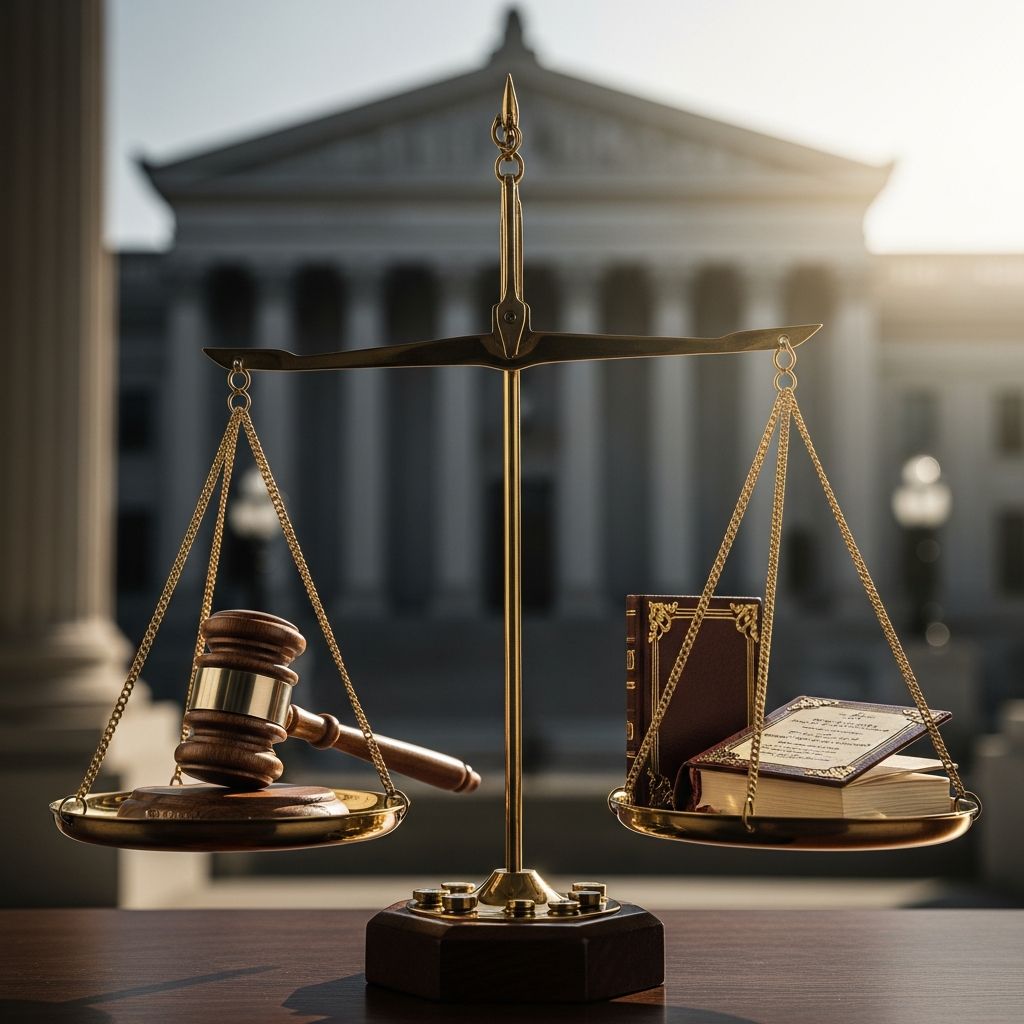
Foundations of Legal Protection in Criminal Cases
The U.S. criminal justice system is built on the principle that every person, regardless of the charges they face, is entitled to a set of fundamental legal protections. These rights are not privileges granted at the discretion of law enforcement or prosecutors; they are constitutional guarantees designed to ensure fairness, prevent abuse of power, and protect individual liberty. Understanding these rights is essential for anyone who may be questioned, arrested, or charged with a crime.
The Right to Remain Silent
One of the most well-known protections is the right to remain silent, rooted in the Fifth Amendment’s protection against self-incrimination. This right means that no person can be compelled to testify against themselves in a criminal case. In practical terms, it allows individuals to decline to answer questions from law enforcement during an investigation or interrogation.
Exercising this right is not an admission of guilt. It is a strategic and lawful decision to avoid making statements that could later be used in court. Law enforcement must inform suspects of this right before custodial interrogation, commonly referred to as the Miranda warning. If this warning is not given, or if a suspect is pressured into speaking after invoking their right to silence, any resulting statements may be excluded from evidence.
Right to Legal Representation
Every person accused of a crime has the right to be represented by an attorney. This right, guaranteed by the Sixth Amendment, applies at all critical stages of the criminal process, including police questioning, arraignment, pretrial hearings, trial, and sentencing. If a defendant cannot afford a private attorney, the court is required to appoint a public defender or other counsel at government expense.
Legal representation is not a formality; it is a critical safeguard. A defense attorney can:
- Advise the client on whether to speak with police
- Challenge the legality of arrests and searches
- Negotiate with prosecutors for reduced charges or plea agreements
- Prepare and present a defense at trial
- File motions to suppress evidence obtained unlawfully
- Advocate for fair sentencing if a conviction occurs
Without competent counsel, individuals are at a significant disadvantage when navigating complex legal procedures and evidentiary rules.
Presumption of Innocence
A cornerstone of the American legal system is the presumption of innocence. This principle means that a person is considered innocent until proven guilty beyond a reasonable doubt. The burden of proof rests entirely on the prosecution; the defendant does not have to prove their innocence.
This standard is intentionally high to minimize the risk of wrongful convictions. It requires the prosecution to present evidence that is so convincing that there is no reasonable doubt about the defendant’s guilt. If the evidence is weak, inconsistent, or fails to meet this threshold, the jury must return a not-guilty verdict.
The presumption of innocence also affects how a case is presented. Defense attorneys are not required to put on any evidence at all. They can simply argue that the prosecution has not met its burden, and that alone can be sufficient for an acquittal.
Protection Against Unreasonable Searches and Seizures
The Fourth Amendment protects individuals from unreasonable searches and seizures by the government. This means that, in most cases, law enforcement must obtain a warrant based on probable cause before searching a person’s home, vehicle, or personal belongings.
There are exceptions, such as searches incident to a lawful arrest, exigent circumstances, or the plain view doctrine, but even in those situations, the search must still be reasonable under the circumstances. If a search is conducted without a valid warrant or legal justification, any evidence obtained may be suppressed and cannot be used at trial.
Defendants and their attorneys can challenge the legality of searches through pretrial motions. If a judge agrees that a search violated the Fourth Amendment, the evidence may be excluded, which can significantly weaken or even collapse the prosecution’s case.
Right to a Fair and Speedy Trial
The Sixth Amendment guarantees the right to a fair and speedy trial. A fair trial includes several components:
- An impartial jury drawn from a representative cross-section of the community
- The right to be tried by a jury of peers
- The right to be present at all critical stages of the proceedings
- The right to have the trial conducted in a public courtroom
The “speedy” aspect of this right is designed to prevent prolonged pretrial detention and to ensure that cases are resolved without unnecessary delay. Excessive delays can prejudice a defendant’s ability to mount a defense, especially if witnesses become unavailable or memories fade.
While there is no fixed time limit that automatically violates the right to a speedy trial, courts consider factors such as the length of the delay, the reason for the delay, whether the defendant asserted their right, and whether the delay caused actual prejudice to the defense.
Right to Confront and Cross-Examine Witnesses
Another key Sixth Amendment protection is the right to confront and cross-examine witnesses who testify against the defendant. This right ensures that the prosecution cannot rely solely on written statements or hearsay evidence without giving the defense an opportunity to challenge the credibility and accuracy of those statements.
Cross-examination allows defense attorneys to:
- Test the reliability of a witness’s memory
- Expose inconsistencies in their testimony
- Reveal potential bias, motive to lie, or prior criminal history
- Challenge the methods used by expert witnesses
If a witness is unavailable and their statement is admitted without the defendant having had a prior opportunity to cross-examine them, that may violate the Confrontation Clause and result in the evidence being excluded.
Protection Against Double Jeopardy
The Fifth Amendment also protects individuals from being placed in double jeopardy, meaning they cannot be prosecuted twice for the same offense after an acquittal or conviction. This protection applies to both federal and state prosecutions for the same conduct.
There are limited exceptions, such as when a mistrial is declared due to a hung jury or when separate sovereigns (federal and state governments) prosecute for the same act under different laws. However, in most cases, once a person has been acquitted of a crime, the government cannot retry them for that same offense, even if new evidence later emerges.
Right to Be Informed of the Charges
Defendants have the right to be clearly informed of the charges against them. This includes knowing the specific criminal statute they are accused of violating and the factual basis for the accusation. This information is typically provided in a charging document such as a complaint, information, or indictment.
Being informed of the charges is essential because it allows the defendant and their attorney to:
- Understand the nature and severity of the allegations
- Prepare an appropriate defense strategy
- Challenge the sufficiency of the charges if they are legally defective
- Decide whether to negotiate a plea or proceed to trial
Without clear notice of the charges, a defendant cannot meaningfully participate in their own defense, which would violate due process.
Right to Present a Defense
The Constitution guarantees the right to present a defense, which includes the ability to:
- Call witnesses on the defendant’s behalf
- Introduce physical and documentary evidence
- Testify in one’s own defense (if the defendant chooses to do so)
- Have compulsory process to secure the attendance of favorable witnesses
Courts must allow defendants a meaningful opportunity to present their case. If rules of evidence or courtroom procedures are applied in a way that unfairly prevents the defense from presenting key evidence or witnesses, that may constitute a due process violation.
Protection Against Cruel and Unusual Punishment
The Eighth Amendment prohibits cruel and unusual punishment. This protection applies to both the conditions of confinement and the severity of the sentence imposed.
In terms of sentencing, courts must ensure that punishments are proportionate to the crime committed. Sentences that are grossly disproportionate to the offense may be struck down as unconstitutional. This principle also limits the use of certain penalties, such as the death penalty for certain categories of offenders or in cases where the evidence is insufficient to support such a severe punishment.
Right to Appeal
After a conviction, defendants generally have the right to appeal the judgment to a higher court. An appeal is not a new trial; it is a review of the trial record to determine whether legal errors occurred that affected the outcome.
Grounds for appeal can include:
- Improper admission or exclusion of evidence
- Jury instructions that were legally incorrect
- Prosecutorial misconduct
- Ineffective assistance of counsel
- Insufficient evidence to support the verdict
If an appellate court finds a reversible error, it may reverse the conviction, order a new trial, or modify the sentence. The right to appeal is a crucial safeguard against wrongful convictions and ensures that lower courts follow the law correctly.
Common Legal Defenses in Criminal Cases
While constitutional rights protect the process, legal defenses address the substance of the charges. Some of the most common defenses include:
| Defense | Description |
|---|---|
| Alibi | Showing that the defendant was in a different location when the crime occurred. |
| Self-Defense | Using reasonable force to protect oneself or others from imminent harm. |
| Insanity | Proving that the defendant lacked the mental capacity to understand their actions or to distinguish right from wrong. |
| Constitutional Violations | Challenging the legality of the arrest, search, or interrogation. |
| Lack of Intent | Arguing that the defendant did not have the required mental state (e.g., intent, knowledge) for the crime. |
These defenses are not mutually exclusive and are often used in combination depending on the facts of the case.
Role of the Defense Attorney
A criminal defense attorney plays a multifaceted role in protecting a client’s rights and interests. Key responsibilities include:
- Conducting a thorough investigation of the facts and evidence
- Identifying weaknesses in the prosecution’s case
- Filing pretrial motions to suppress evidence or dismiss charges
- Negotiating with prosecutors to reduce charges or secure favorable plea agreements
- Preparing and presenting a defense at trial
- Advocating for fair sentencing and pursuing appeals when appropriate
Effective representation requires not only legal knowledge but also strategic thinking, negotiation skills, and a deep understanding of courtroom procedures.
Frequently Asked Questions
Q: Can I be forced to answer police questions?
A: No. You have the right to remain silent and cannot be forced to answer questions that might incriminate you. You can politely decline to speak and request to speak with an attorney.
Q: What happens if my rights are violated during an arrest?
A: If law enforcement violates your constitutional rights (for example, by conducting an unlawful search or failing to read Miranda warnings), your attorney can file a motion to suppress the evidence obtained as a result. In some cases, this can lead to charges being reduced or dismissed.
Q: Do I still have rights if I cannot afford a lawyer?
A: Yes. If you cannot afford an attorney, the court must appoint a public defender or other counsel to represent you at no cost. This right applies in all cases where imprisonment is a possible penalty.
Q: What does “beyond a reasonable doubt” mean?
A: It is the highest standard of proof in the legal system. The prosecution must prove every element of the crime so clearly that there is no reasonable doubt in the mind of a reasonable person that the defendant is guilty.
Q: Can I represent myself in a criminal case?
A: Yes, you have the right to represent yourself (pro se), but it is generally not advisable, especially in serious cases. The legal system is complex, and an experienced attorney is far better equipped to protect your rights and achieve the best possible outcome.
References
- U.S. Constitution, Amendments IV, V, VI, VIII, and XIV — Legal Information Institute, Cornell Law School. Accessed 2025. https://www.law.cornell.edu/constitution
- Fifth Amendment: Self-Incrimination Clause — U.S. Department of Justice. https://www.justice.gov/criminal/criminal-ccips/reading-room/us-constitution-amendments-1-10
- Sixth Amendment: Right to Counsel and Fair Trial — U.S. Department of Justice. https://www.justice.gov/criminal/criminal-ccips/reading-room/us-constitution-amendments-1-10
- Miranda v. Arizona, 384 U.S. 436 (1966) — Supreme Court of the United States. https://supreme.justia.com/cases/federal/us/384/436/
- Strickland v. Washington, 466 U.S. 668 (1984) — Supreme Court of the United States. https://supreme.justia.com/cases/federal/us/466/668/
Similar Articles








Read full bio of Sneha Tete




