
Essential Legal Papers for Startup Success
Master the key legal documents that protect your startup, attract investors, and ensure long-term compliance and growth.
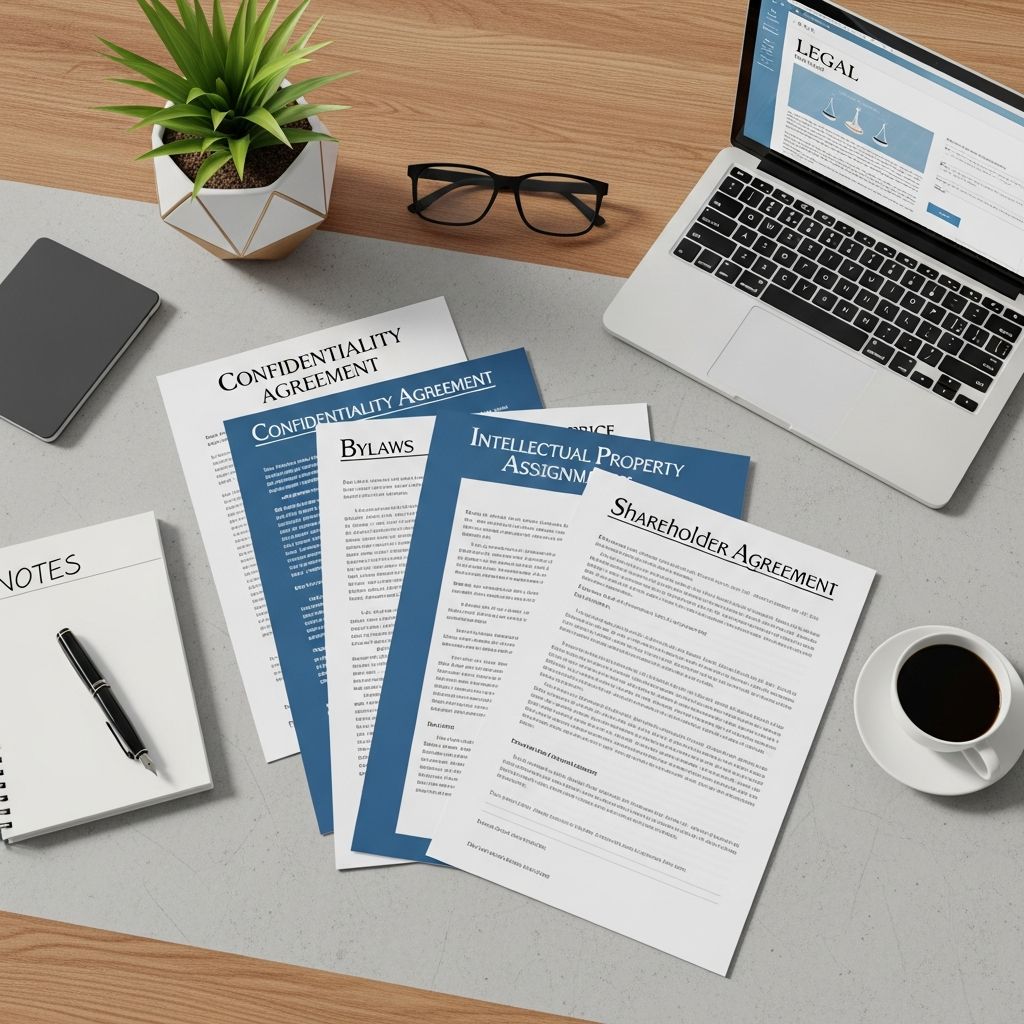
Launching a startup demands more than a brilliant idea; it requires a robust legal framework to shield assets, clarify ownership, and comply with regulations. These documents form the bedrock of your business, mitigating risks from disputes to regulatory penalties. This guide explores the indispensable legal papers, drawing from established practices to help founders navigate early-stage challenges effectively.
Building Your Business’s Core Structure
The first step in legitimizing your venture involves creating foundational documents that define its legal existence. These papers establish your entity’s type, governance rules, and operational guidelines, crucial for opening bank accounts, hiring staff, and securing funding.
Selecting the right structure—such as a corporation or LLC—impacts liability, taxation, and scalability. Corporations suit ventures eyeing venture capital due to their ability to issue stock, while LLCs offer flexibility for smaller teams.
- Formation Filings: Submit articles of incorporation for corporations or articles of organization for LLCs to your state’s Secretary of State. These outline the business name, address, purpose, and initial directors or members.
- Internal Governance Rules: Draft bylaws for corporations or an operating agreement for LLCs. These detail decision-making processes, officer roles, meeting requirements, and profit distribution.
- Tax Identification: Obtain an Employer Identification Number (EIN) from the IRS, essential for tax reporting, payroll, and banking.
Neglecting these can expose founders to personal liability or IRS issues. For instance, without bylaws, disputes over authority could halt operations.
Safeguarding Intellectual Property from Day One
Innovations drive startups, making IP protection paramount. Early documentation ensures that ideas, code, and brands belong to the company, not individuals, preventing future ownership battles.
IP assignment agreements transfer rights from founders and employees to the business. This is vital in tech startups where code or designs created on company time must be owned collectively.
| Document Type | Purpose | Key Elements |
|---|---|---|
| IP Assignment | Transfers personal IP to company | Inventions, copyrights, patents; perpetual, worldwide rights |
| Trademark Registration | Protects brand identity | Logo, name; file with USPTO |
| Provisional Patents | Secures invention priority | Temporary filing for 12 months |
Combine these with invention assignment clauses in employment contracts to cover all bases. According to Stripe’s resources, clear IP docs boost investor confidence by clarifying ownership.
Protecting Confidential Information with NDAs
Startups often share sensitive data during pitches or partnerships. Nondisclosure agreements (NDAs) legally bind recipients to secrecy, preserving competitive edges.
A strong NDA specifies confidential information, usage restrictions, and duration—typically 2-5 years. Use them for investor meetings, vendor talks, or prototype demos.
- Define ‘confidential’ broadly but reasonably to avoid disputes.
- Include non-use and non-disclosure obligations.
- Add remedies like injunctions for breaches.
Without NDAs, leaked ideas could undermine your market position. Taxfyle emphasizes NDAs as core contracts for compliance.
Structuring Founder and Shareholder Relationships
Co-founder disagreements derail many startups. Dedicated agreements outline equity splits, roles, vesting schedules, and exit scenarios to align incentives.
Founders’ agreements cover contributions, decision rights, and what happens if someone departs—often with repurchase rights for unvested shares. Shareholder agreements extend this to investors, governing share transfers, drag-along/tag-along rights, and board composition.
Vesting protects the company: standard is 4 years with a 1-year cliff, ensuring commitment. Angels Partners notes these docs streamline due diligence and signal professionalism to funders.
Employment and Contractor Agreements for Team Building
As your startup grows, formalizing hires prevents labor disputes. Offer letters and contracts detail compensation, duties, equity, and at-will status.
Distinguish employees from contractors: the latter need independent contractor agreements specifying scope, payment, and IP ownership. Include non-compete and non-solicit clauses judiciously, as enforceability varies by state.
- Offer Letters: Non-binding summaries of terms.
- Full Contracts: Binding with confidentiality and IP assignments.
- Equity Grants: Stock options or RSUs with vesting.
Compliance with employment laws like FLSA for wages and anti-discrimination is non-negotiable.
Equity and Investment Instruments for Funding
Fundraising requires precise docs like stock purchase agreements (SPAs), convertible notes, or SAFE agreements. These define investment terms, valuation caps, discounts, and rights.
Restated certificates of incorporation amend originals to add preferred stock classes with liquidation preferences. Board consents document approvals for issuances.
LegalNodes highlights state-specific nuances for US formations.
Privacy Policies and Compliance Mandates
With data-driven businesses, privacy policies disclose data practices, complying with CCPA, GDPR. They’re mandatory for websites collecting user info.
Include business licenses, permits, and ongoing tax registrations based on industry and location.
Common Pitfalls and Best Practices
DIY templates risk gaps; consult attorneys for customization. Update docs during pivots or funding rounds. Tools like Stripe Atlas offer Cooley-vetted starters.
Benefits include liability shields, investor appeal, and dispute prevention.
Frequently Asked Questions (FAQs)
What is the most important first legal document for a startup?
Articles of incorporation or organization to legally form the entity.
Do I need an NDA for every conversation?
No, but use for sharing proprietary info with outsiders.
How does vesting work in founder agreements?
Typically 4-year schedule with 1-year cliff; unvested shares return to company.
Can I use templates for these documents?
Yes, but customize with legal advice to fit your needs.
What if my startup is bootstrapped—no investors?
Still need formation, IP, and founder docs for protection.
References
- What legal documents do startups need in the US? — Stripe. 2023. https://stripe.com/resources/more/what-legal-documents-do-startups-need-in-the-us
- Essential Legal Requirements for Startup Founders in 2025 — Taxfyle. 2025. https://www.taxfyle.com/blog/startup-laws
- 6 Essential Legal Documents Every Startup Needs — Angels Partners. 2024. https://angelspartners.com/blog/6-essential-legal-documents-every-startup-needs
- Startup Legal Documents for US, UK, and Singapore Businesses — LegalNodes. 2024. https://legalnodes.com/article/startup-legal-documents
- The 6 Essential Legal Documents for a Startup — DBL Lawyers. 2023. https://www.dbllawyers.com/6-essential-legal-documents-for-a-startup/
Similar Articles








Read full bio of medha deb


