
Core Employee Rights In The Workplace: 2025 Essential Guide
Unlock the fundamental protections every worker deserves, from fair wages to safe conditions and anti-discrimination safeguards.
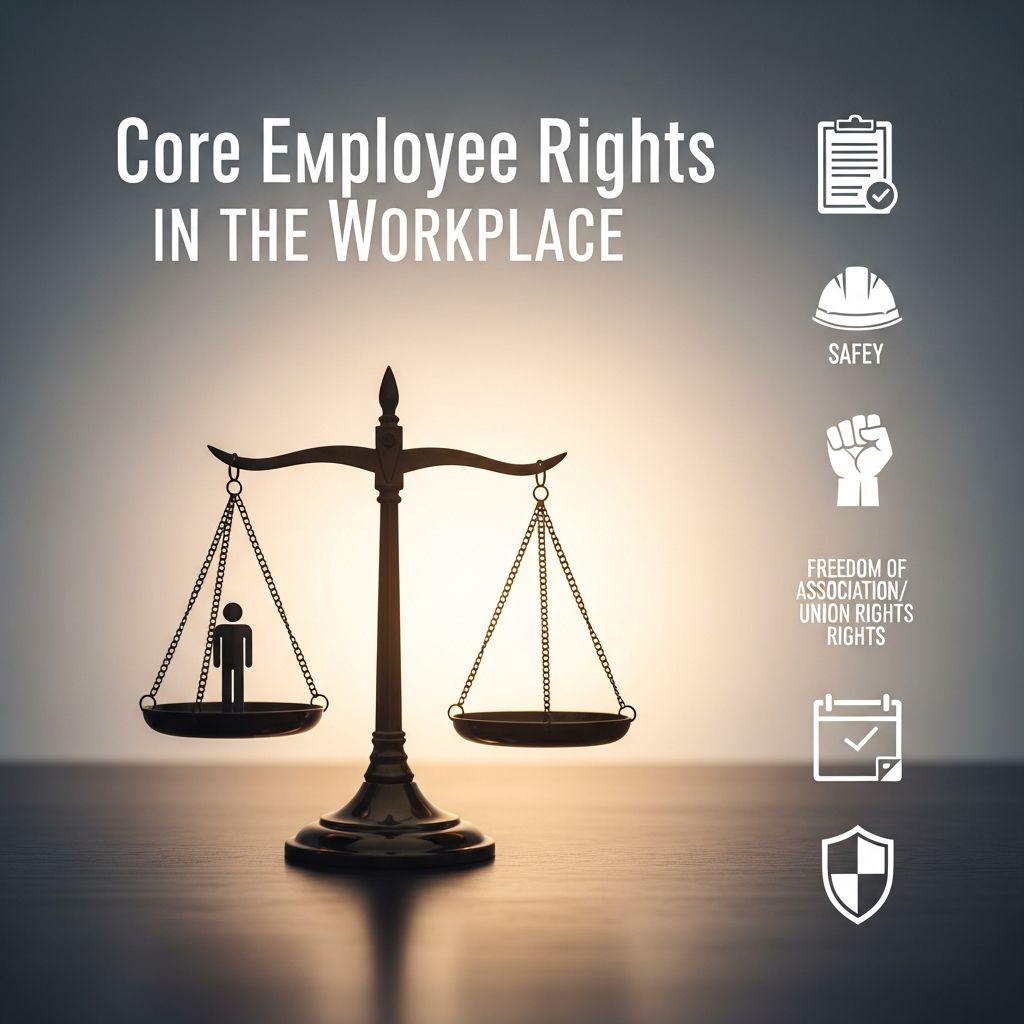
Understanding your rights as an employee is crucial for navigating the modern workforce effectively. Federal laws establish baseline protections that apply across most U.S. workplaces, ensuring fair treatment, compensation, and safe conditions. These statutes override less favorable contract terms and empower workers to challenge violations.
Foundational Wage and Hour Protections
The cornerstone of employee compensation rights stems from the Fair Labor Standards Act (FLSA) of 1938, which mandates minimum wage for all hours worked and overtime pay at 1.5 times the regular rate for hours exceeding 40 per week in a standard workweek. This applies to most private and public sector employees, excluding certain categories like executives, administrators, professionals, and some family-employed workers.
Employers must classify workers correctly as employees rather than independent contractors to ensure compliance. Enterprises under common control are treated as a single entity for coverage, broadening the law’s reach. Violations can lead to back wages, liquidated damages, and penalties, with claims filed through the U.S. Department of Labor.
| Employee Category | FLSA Coverage | Key Exemptions |
|---|---|---|
| Non-exempt hourly workers | Full minimum wage + overtime | None |
| Salaried executives/professionals | Overtime exempt if meeting salary threshold | Bona fide executive duties |
| Family business employees | Often exempt | Close relatives |
Family and Medical Leave Entitlements
Eligible employees gain up to 12 weeks of unpaid, job-protected leave annually under the Family and Medical Leave Act (FMLA) of 1993 for serious health conditions, newborn care, adoption, or family member illnesses. Coverage extends to employers with 50+ employees within 75 miles, with employees needing 12 months of service and 1,250 hours worked.
For military families, up to 26 weeks apply for servicemember care. Upon return, workers resume equivalent positions or benefits, barring top 10% earners where economic hardship is proven. States like California enhance this via the Family Rights Act (CFRA), covering smaller employers (5+) and more relatives. Damages include lost wages, benefits, and childcare costs, with a 2-3 year filing window.
- Birth, adoption, or foster placement of a child
- Care for spouse, child, or parent with serious health condition
- Employee’s own serious health condition
- Qualifying exigencies for military families
- Servicemember care (26 weeks)
Combating Workplace Discrimination
Federal laws prohibit bias based on protected characteristics, starting with the Civil Rights Act of 1964 banning race, color, religion, sex, and national origin discrimination. The Equal Pay Act of 1963 addresses sex-based wage disparities for equal work, while the Age Discrimination in Employment Act (ADEA) of 1967 protects those 40+ from age bias, including in benefits via the Older Workers Benefit Protection Act.
The Americans with Disabilities Act (ADA) of 1990, amended in 2008, covers employers with 15+ workers, requiring reasonable accommodations for qualified individuals unless causing undue hardship. Retaliation against those asserting rights is illegal across these statutes. California’s FEHA mirrors and expands federal protections to 5+ employee firms, including harassment bans even in tiny workplaces.
Recent additions like the Pregnant Workers Fairness Act (PWFA) of 2023 mandate accommodations for pregnancy-related conditions in 15+ employee firms. Claims yield back pay, reinstatement, and compensatory damages.
Safe and Healthy Work Environments
The Occupational Safety and Health Act (OSHA) of 1970 mandates hazard-free workplaces, enforced by professional inspectors. Employers must provide safety training, equipment, and report incidents. Workers rights include hazard reporting without retaliation, inspections requests, and protection from imminent dangers.
OSHA sets standards for industries, with state plans often exceeding federal minima. Violations trigger citations, fines up to $161,323 per willful breach (2024 adjustments), and criminal penalties.
Union and Collective Action Rights
Under the National Labor Relations Act (NLRA), overseen by the NLRB, employees can form unions, bargain collectively, and engage in concerted activities for better terms—even without a union. This protects discussions on wages, hours, and conditions.
Exclusions: government workers, agricultural/domestic laborers, supervisors (with exceptions), and true independents. Employers cannot interfere, discriminate, or dominate unions. Single employees acting for group benefit are shielded.
State Variations and Enhanced Protections
While federal laws set floors, states innovate. California, for instance, applies anti-discrimination to 5+ employee employers via FEHA and offers broader CFRA leave. Individual contracts or handbooks can grant superior rights, enforceable if promising job security.
Statutory rights supersede contracts unless more generous, positioning states as policy labs where Supreme Court hasn’t preempted.
Enforcement Mechanisms and Remedies
Agencies like DOL Wage and Hour Division handle FLSA/FMLA; EEOC manages discrimination; NLRB oversees unions; OSHA inspects safety. Private lawsuits allow damages, injunctions, and attorney fees. Time limits vary: 2-3 years for wages/leave, 180-300 days for EEOC charges.
Retaliation claims bolster all areas, protecting whistleblowers.
Frequently Asked Questions
Who qualifies for FMLA leave?
Employees of covered employers (50+ employees) with 12 months service and 1,250 hours worked in the prior year.
Does FLSA apply to salaried workers?
Many are exempt if meeting salary and duties tests for executive, administrative, or professional roles.
Can small businesses discriminate?
Federal no for 15+ (ADA/ADEA); states like CA ban for 5+.
What is concerted activity under NLRA?
Group or solo actions (on behalf of others) addressing work terms.
How do I report OSHA violations?
Contact OSHA anonymously; they investigate without retaliation.
This guide equips workers with knowledge to assert rights confidently. Consult legal experts or agencies for personalized advice, as laws evolve.
References
- United States labor law — Wikipedia. 2024. https://en.wikipedia.org/wiki/United_States_labor_law
- Employment Discrimination — California Civil Rights Department (ca.gov). 2024. https://calcivilrights.ca.gov/employment/
- Quick and Easy Guide to Labor & Employment Law: Federal — Baker Donelson. 2024. https://www.bakerdonelson.com/easy-guide-federal
- Employee Rights — National Labor Relations Board (nlrb.gov). 2024. https://www.nlrb.gov/about-nlrb/rights-we-protect/your-rights/employee-rights
- Worker Rights — U.S. Department of Labor (dol.gov). 2024. https://www.dol.gov/agencies/whd/workers
- Labor laws and worker protection — USAGov (usa.gov). 2024. https://www.usa.gov/labor-laws
- OSHA Worker Rights and Protections — Occupational Safety and Health Administration (osha.gov). 2024. http://www.osha.gov/workers
Similar Articles








Read full bio of Sneha Tete




