
Erosion of Democratic Ideals: Resisting Authoritarianism
How post-9/11 policies threatened the foundations of civil liberties.
Introduction
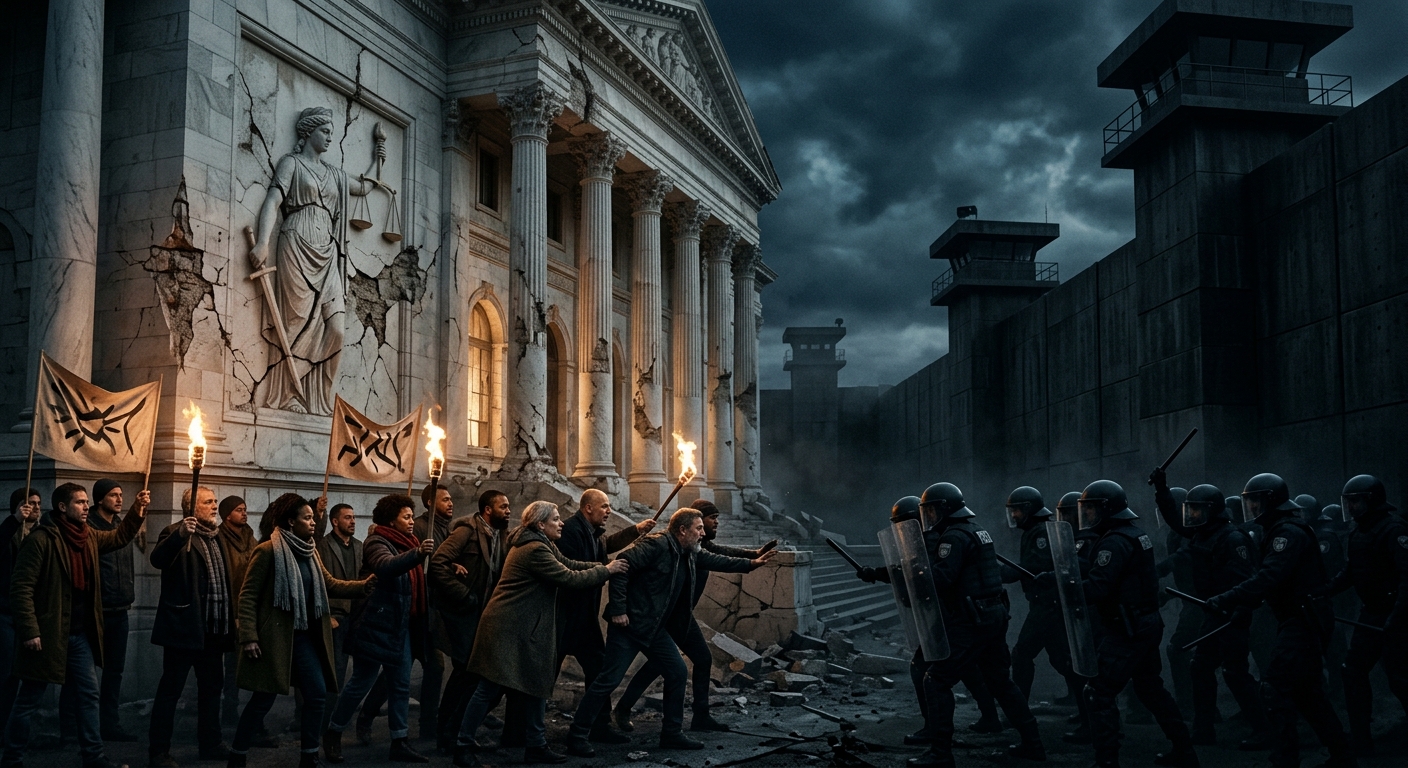
The fragility of democratic institutions is frequently masked by the monumental architecture of their legal frameworks. For centuries, constitutional democracies have positioned themselves as steadfast havens for those fleeing the arbitrary violence and persecution of authoritarian regimes. However, global history continually demonstrates that even the most robust legal systems are highly susceptible to reactionary backsliding, particularly during times of acute national crisis. The post-September 11 era in the United States served as a stark and sobering reminder of this inherent vulnerability, revealing how swiftly foundational civil liberties could be compromised under the expansive umbrella of national security.
When a nation begins to systematically dismantle established legal safeguards—such as the presumption of innocence, the fundamental right to legal counsel, and absolute protection from cruel and unusual punishment—it places itself in a precarious position. By abandoning these core tenets, a democratic state risks mirroring the exact oppressive systems and tyrannical methodologies it claims to stand against on the global stage. Understanding this regression requires a deep examination of historical human rights, the mechanisms of legal overreach, and the devastating consequences of sacrificing liberty for the illusion of total security.
The Promise of Sanctuary and the Weight of History
To fully grasp the gravity of eroding civil liberties, one must examine the unique perspective of political refugees and dissidents. Individuals escaping regimes where citizens routinely “disappear” into clandestine police networks often view democratic states as sanctuaries of absolute, unshakeable legal protection. This geopolitical dynamic is laden with deep historical ironies. Consider the Cyrus Cylinder, an ancient clay artifact dating back to 539 BC, which is widely recognized by international bodies—including the United Nations—as one of the world’s earliest declarations of human rights. Originating from ancient Mesopotamia, this artifact championed the concepts of religious tolerance, individual freedom, and the abolition of systemic oppression.
Yet, in a tragic twist of modern history, refugees frequently flee the very geographical regions where these ancient rights were first inscribed, seeking asylum in Western democracies built upon these foundational ideals. When individuals uproot their lives to escape the arbitrary terror of state-sanctioned disappearances, they place immense, foundational faith in the systemic checks and balances of their new democratic homes. They fundamentally believe that no individual can be spirited away in the middle of the night without rigorous due process.
The psychological sanctuary provided by a fully functional justice system is profound and transformative. It enables individuals to live without the pervasive, paralyzing dread that their private words might be used against them in a secret, extrajudicial tribunal. However, when the host country begins to flirt with extrajudicial practices in the name of security, that psychological sanctuary shatters entirely, replacing it with a haunting, terrifying familiarity of authoritarian state overreach.
The Paradigm Shift: National Security Post-9/11
The catastrophic terrorist attacks of September 11, 2001, triggered a seismic, unprecedented shift in global legal and political paradigms. In the immediate aftermath, an understandable public desire for physical security metamorphosed into a broad justification for extraordinary governmental power. The resulting legislative and executive frameworks often deliberately bypassed the traditional, transparent mechanisms of the justice system, heavily favoring secretive, preventative measures aimed at neutralizing perceived existential threats long before they could materialize.
This dramatic paradigm shift relied fundamentally on the deliberate dehumanization of suspected individuals. By applying broad, extra-legal classifications such as “unlawful enemy combatants” or simply “terrorists,” state apparatuses successfully stripped individuals of the standard legal protections normally afforded to criminal defendants or legitimate prisoners of war under international treaties. The dominant political rhetoric of the era frequently rationalized these aggressive actions through a strictly existential lens, explicitly arguing that adversarial forces despised democratic freedoms and would exploit the legal system if given the opportunity.
Consequently, the very constitutional freedoms ostensibly being defended were systematically and quietly curtailed. This created a tragic paradox where the aggressive defense of democracy actively facilitated its own internal erosion, normalizing extreme executive powers that previously belonged solely to the realm of fiction or dictatorship.
Dismantling the Great Writ: The Attack on Habeas Corpus
At the very heart of the Anglo-American legal tradition lies the essential writ of habeas corpus, a powerful legal mechanism explicitly designed to protect individuals from unlawful and arbitrary detention. Translated directly from Latin as “you shall have the body,” habeas corpus legally requires that a prisoner or detainee be brought physically before a recognized court to rigorously determine whether their ongoing imprisonment is lawful. According to legal scholars, this mechanism acts as the ultimate, non-negotiable safeguard against arbitrary state power, ensuring that no executive authority can hold a person in total secrecy or without issuing formal, public charges.
During the protracted “War on Terror,” this historically foundational right faced unprecedented, calculated assaults. Sweeping executive actions strategically sought to place specific overseas detention facilities outside the explicit jurisdiction of domestic federal courts. The underlying legal strategy was entirely deliberate: by detaining individuals in intentional jurisdictional black holes, the state could theoretically interrogate them indefinitely without the heavy burden of providing empirical evidence, granting access to defense counsel, or submitting to rigorous judicial oversight.
The systematic erosion of habeas corpus represents a critical crossing of the democratic Rubicon. Once a constitutional state successfully argues in court that certain classified individuals exist entirely outside the protective sphere of the law, the previously distinct boundary between democratic justice and arbitrary authoritarian fiat becomes dangerously blurred, threatening the liberty of all citizens.
The Shadow Network: Secret Prisons and Extraordinary Rendition
The aggressive circumvention of domestic constitutional law inevitably spilled over into the international arena, most notably through the deeply controversial practice of extraordinary rendition. Extraordinary rendition involves the extrajudicial, covert transfer of a captured person from one legal jurisdiction to another, frequently for the express purpose of aggressive interrogation and indefinite detention in nations internationally known for utilizing torture. This shadowy practice essentially outsourced severe human rights violations, allowing democratic nations to maintain a pristine veneer of domestic legality while covertly participating in horrific abuses abroad.
A comprehensive, highly detailed joint study conducted by United Nations human rights experts meticulously documented the extensive global network of secret detention facilities heavily utilized during this volatile period. The UN report explicitly and forcefully highlighted how secret detention completely renders international legal safeguards, including the crucial right of habeas corpus, entirely meaningless. The formal establishment of “black sites”—clandestine, off-the-books prisons operated by global intelligence agencies entirely outside the host country’s recognized penal system—allowed for the horrific, prolonged incommunicado detention of terror suspects.
In these deeply shadowy, unregulated environments, isolated individuals were routinely subjected to “enhanced interrogation techniques.” This heavily sanitized bureaucratic euphemism covered a range of brutal practices that clearly and undeniably violated the universally ratified UN Convention against Torture, fundamentally subverting established international humanitarian law.
The Psychological and Moral Toll of State-Sanctioned Torture
While the immediate physical trauma of state-sponsored torture is undeniably devastating, the deeply entrenched psychological scars often run much deeper and persist far longer in survivors. Numerous peer-reviewed medical and psychological studies published by major health institutes have extensively documented the catastrophic, life-altering health outcomes for survivors of organized torture and institutional violence. Victims frequently suffer from severe complex post-traumatic stress disorder (PTSD), debilitating clinical anxiety, deep depression, chronic sleep disturbances, and unexplained psychosomatic pain syndromes.
The core psychological intent of systematic torture is rarely merely to extract actionable intelligence—a practice widely proven to be highly unreliable by intelligence professionals—but rather to systematically destroy an individual’s core identity, personal autonomy, and fundamental psychological coherence. The prolonged exposure to terror effectively breaks the human spirit.
Beyond the tragic individual destruction, state-sanctioned torture inevitably inflicts a profound, lasting moral injury upon the perpetrating nation itself. When graphic images of systemic abuse from military facilities were suddenly broadcast globally, they immediately shattered the assumed moral high ground that democratic nations consistently claim to hold. The shocking revelation that trained soldiers and intelligence officers representing a constitutional republic actively engaged in deeply dehumanizing, sadistic behavior forced a painful societal reckoning with the systemic failures of legal oversight and command responsibility.
Comparing Judicial Norms vs. Extrajudicial Practices
To clearly and objectively illustrate the stark departure from established democratic norms, the following table contrasts standard constitutional protections with the controversial extrajudicial practices heavily employed during the height of the War on Terror:
| Legal Principle / Protection | Standard Constitutional Democracy | Post-9/11 Extrajudicial Practice |
|---|---|---|
| Habeas Corpus | Fundamental right to challenge detention in court. | Indefinite, unchallenged detention without trial or formal charges. |
| Interrogation Methods | Strictly regulated by law; torture universally prohibited. | “Enhanced interrogation,” physical coercion, and psychological abuse. |
| Jurisdiction & Custody | Transparent penal systems and legally recognized courts. | Unacknowledged secret “black sites” and extraordinary rendition. |
| Legal Representation | Immediate right to an attorney upon initial arrest. | Prolonged incommunicado detention with absolutely no legal counsel. |
| Presumption of Innocence | Individual is innocent until proven guilty beyond reasonable doubt. | Individual is presumed guilty based on classified intelligence or mere association. |
Reclaiming Civil Liberties and Democratic Accountability
Successfully restoring the absolute integrity of a democratic system after a prolonged period of intense executive overreach requires immense political courage and deep societal introspection. Reclaiming eroded civil liberties is not merely about formally closing specific, controversial detention centers; it fundamentally demands a comprehensive, institutional recommitment to the strict rule of law, governmental transparency, and the absolute, unwavering prohibition of torture in all circumstances.
It also strictly requires holding powerful institutions legally accountable for past human rights abuses to ensure that the hidden architecture of extrajudicial detention cannot be easily resurrected during the inevitable next national security crisis. A truly robust, confident democracy must always recognize that fundamental human rights are never conditional luxuries to be casually discarded when politically convenient. Rather, they are the very foundational mechanisms that ensure the state’s global legitimacy and domestic stability. By rigorously defending the constitutional rights of even the most marginalized and fiercely despised individuals within its custody, a nation definitively proves the enduring strength of its constitutional convictions.
Frequently Asked Questions (FAQs)
What exactly is extraordinary rendition?
Extraordinary rendition is the covert, state-sponsored extrajudicial transfer of a detained person from one sovereign country to another. It has historically been utilized to intentionally bypass strict domestic laws against torture by secretly sending suspects to allied nations where local intelligence agencies can ruthlessly interrogate them without irritating legal oversight, human rights protections, or media scrutiny.
Why is the writ of habeas corpus considered so crucial?
Habeas corpus is a foundational legal safeguard heavily designed against unlawful, arbitrary state imprisonment. It rigorously ensures that the ruling government cannot hold individuals in total secret without physically bringing them before an independent judge to legally justify their detention, thereby actively preventing terrifying authoritarian practices like unacknowledged political disappearances.
How do secret detentions critically impact global human rights?
Secret detentions entirely remove vulnerable individuals from the protective sphere of the law. Without publicly accessible records, fundamental access to defense lawyers, or independent judicial review, powerless detainees are exceptionally vulnerable to severe torture, cruel psychological treatment, and endless indefinite imprisonment, all of which directly violate core international human rights treaties.
What are the documented long-term effects of torture on surviving victims?
Survivors of systematic torture consistently experience severe, incredibly long-lasting physical and psychological consequences. Extensive clinical research repeatedly indicates alarmingly high rates of complex post-traumatic stress disorder (PTSD), severe generalized anxiety, major clinical depression, unrelenting chronic pain, and a fundamental, tragic loss of trust in humanity, frequently requiring highly specialized, multi-year psychiatric rehabilitation.
References
- Replica of “Edict of Cyrus” — United Nations Gifts. 1971-10-14. https://www.un.org/ungifts/replica-edict-cyrus
- UN experts issue extensive global study on secret detention linked to counter-terrorism — United Nations Office of the High Commissioner for Human Rights (OHCHR). 2010-01-26. https://www.ohchr.org/en/press-releases/2010/01/un-experts-issue-extensive-global-study-secret-detention-linked-counter
- The health of survivors of torture and organised violence — PubMed Central (PMC), National Institutes of Health. 2002-08-10. https://www.ncbi.nlm.nih.gov/pmc/articles/PMC1123842/
- habeas corpus — Legal Information Institute (LII), Cornell Law School. 2022-09-01. https://www.law.cornell.edu/wex/habeas_corpus
Similar Articles








Read full bio of medha deb


