
Eradicating State-Sponsored Cruelty: A Global Imperative
Honoring the advocates and whistleblowers who stand against systemic torture.
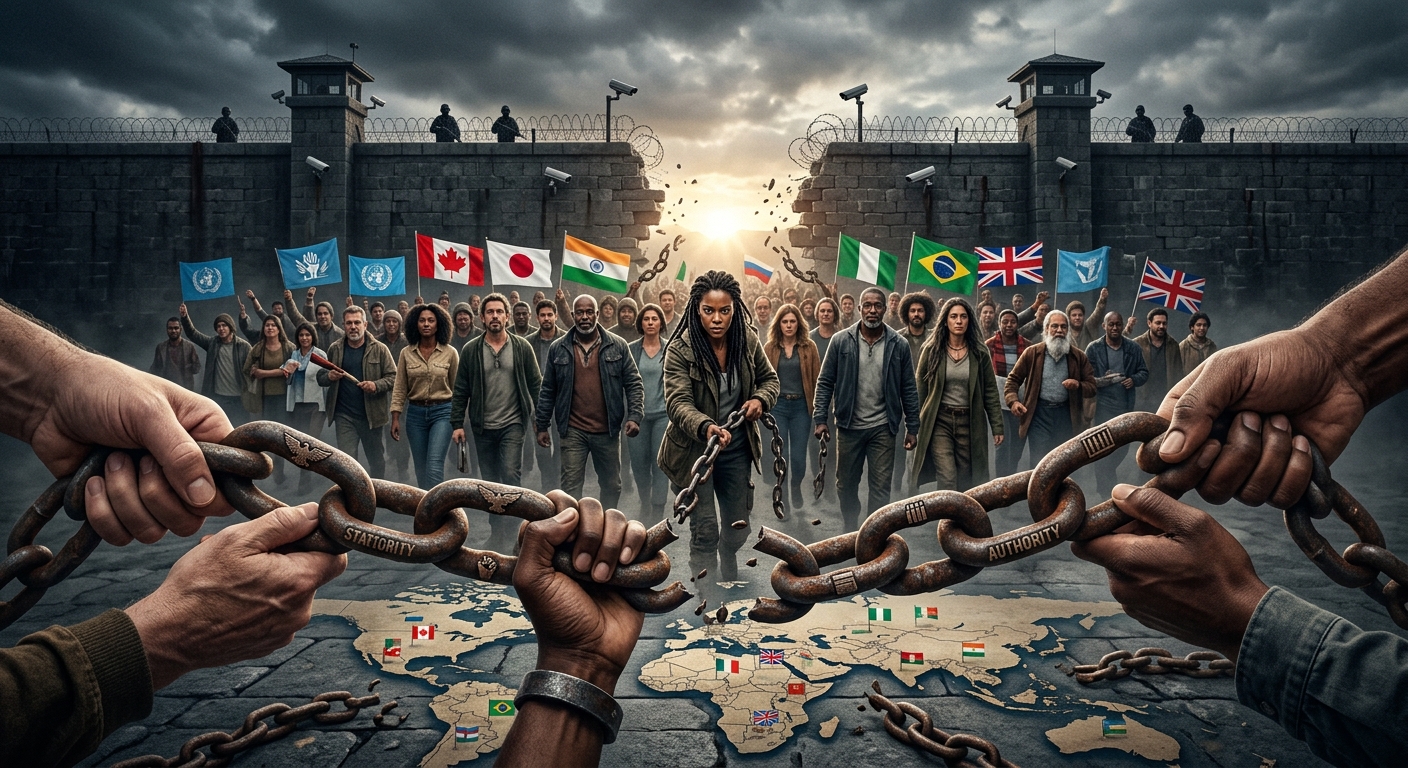
The Inviolable Line of Human Dignity
The foundation of modern democratic societies rests upon an unwavering commitment to the inherent dignity of the human person. When a state apparatus turns its vast resources toward the intentional infliction of severe physical or mental suffering, it does more than harm an individual; it fractures the very moral bedrock of civilization. The global imperative to eradicate state-sponsored cruelty is not merely a legal obligation but a profound ethical necessity. Throughout history, governments have occasionally succumbed to the temptation of utilizing extreme coercion, often justifying such measures under the guise of national security, public emergency, or the pursuit of critical intelligence. However, history and rigorous investigations have consistently demonstrated that such practices corrode the institutions that employ them.
Recognizing the dark legacy of systemic abuse requires a deep and unyielding look into how secret detention programs operate, the devastating toll they take on survivors, and the extraordinary courage required to dismantle them from within. Awareness initiatives dedicated to exposing these dark chapters serve as vital mechanisms for collective memory, ensuring that the atrocities of the past are neither forgotten nor repeated. By honoring those who actively resist and expose these illicit programs, societies reaffirm their commitment to transparency, justice, and the inviolable nature of human rights.
The observance of human rights milestones and dedicated awareness campaigns are not merely symbolic gestures. They function as crucial educational tools that illuminate the persistent dangers of unchecked executive power. By bringing the hidden machinations of state violence into the light, these global initiatives empower civil society to demand stricter adherence to international law. They remind citizens and policymakers alike that the true measure of a democracy is not how it behaves in times of peace and prosperity, but how it upholds its foundational values when under severe threat or existential pressure.
The Architecture of International Human Rights Law
Following the unprecedented devastation and state-sponsored atrocities of World War II, the international community recognized an urgent need to establish immutable rules governing the conduct of states. This realization gave birth to a robust architecture of international humanitarian and human rights law designed to prevent the recurrence of such horrors. Central to this legal framework are the Geneva Conventions of 1949 and their subsequent Additional Protocols . These treaties revolutionized the laws of armed conflict by explicitly mandating the humane treatment of non-combatants, prisoners of war, and civilians, strictly prohibiting any form of cruel, humiliating, or degrading treatment on the global stage.
Building upon this foundational legal bedrock, the United Nations formally adopted the Convention against Torture and Other Cruel, Inhuman or Degrading Treatment or Punishment (UNCAT) in 1984 . UNCAT represents a landmark achievement in international jurisprudence because it established a universally binding, absolute prohibition against extreme state coercion. Article 2 of the Convention explicitly and unequivocally states that no exceptional circumstances whatsoever—whether a state of war, internal political instability, or any other public emergency—can be invoked as a justification for such actions.
Furthermore, the treaty introduced the critical principle of non-refoulement. This principle legally forbids governments from deporting, extraditing, or returning any person to a jurisdiction where there are substantial grounds to believe they would be subjected to severe abuse. Together, these frameworks eliminate any legal gray areas, affirming that the ban on state-sponsored cruelty is absolute, universal, and non-negotiable under any political or military circumstances.
The Post-9/11 Era: A Dark Chapter of Evasions
Despite the absolute clarity of international law, the early 21st century witnessed a severe erosion of these foundational norms. In the aftermath of global terrorist attacks, the invocation of unprecedented national security crises tempted various governments to bypass established legal constraints. A primary mechanism for this evasion was the practice of extraordinary rendition—the extrajudicial transfer of individuals from one jurisdiction to another, often to secret detention facilities or ‘black sites’ located in third-party nations. This clandestine network was designed to operate entirely outside the boundaries of domestic and international legal oversight, effectively stripping detainees of fundamental due process rights.
During this period, established legal definitions were heavily manipulated by state lawyers to create a permissive environment for so-called ‘enhanced interrogation techniques.’ These methods, which included prolonged sleep deprivation, extreme temperature manipulation, stress positions, and simulated drowning, were systematically employed under a veil of total secrecy. The extent of these evasions was meticulously documented in the bipartisan United States Senate Select Committee on Intelligence report on the CIA’s Detention and Interrogation Program, whose executive summary was finally released to the public in 2014 .
The findings of this exhaustive 6,000-page investigation were staggering. It revealed that the clandestine program was far more brutal than previously acknowledged by government officials. Crucially, the investigation concluded that the harsh techniques were fundamentally ineffective at producing actionable, life-saving intelligence. The report decisively dismantled the persistent myth that extreme coercion is a necessary or effective evil for national defense, proving instead that it relies on deeply flawed logic that compromises international standing, legal integrity, and basic human morality.
The Profound Psychological and Physical Toll
The architecture of extreme coercion is explicitly designed to systematically dismantle a human being’s psyche and physical autonomy. The consequences of surviving such an ordeal extend far beyond the immediate cessation of the abuse, often leaving permanent scars that fundamentally alter the trajectory of a survivor’s life. Medical professionals, psychiatrists, and human rights researchers have extensively documented the catastrophic health impacts of systematic abuse, revealing a spectrum of chronic conditions that require highly specialized, long-term intervention.
Research published in leading psychiatric journals demonstrates that survivors frequently suffer from complex post-traumatic stress disorder (PTSD), severe anxiety, major depressive disorder, and intense dissociative states . The perpetrators’ goal is not merely the extraction of information, but the total subjugation of the victim’s identity and willpower. This profound loss of autonomy translates into deep-seated psychological trauma that makes reintegration into normal societal, familial, and economic functions incredibly difficult.
Below is a detailed overview of the multidimensional impacts commonly experienced by survivors of state-sponsored cruelty:
| Category of Impact | Common Symptoms and Presentations | Long-Term Consequences |
|---|---|---|
| Physical Health | Chronic musculoskeletal pain, neurological damage, cardiovascular stress, traumatic brain injuries. | Permanent physical disability, heavily reduced life expectancy, chronic reliance on complex pain management. |
| Psychological Health | Complex PTSD, persistent night terrors, severe clinical depression, cognitive fragmentation. | Loss of self-identity, chronic suicidal ideation, severe cognitive and short-term memory impairment. |
| Social and Economic | Extreme social isolation, inability to form trusting relationships, profound familial alienation. | Economic disenfranchisement, chronic unemployment, total fragmentation of community and support ties. |
The holistic destruction wrought by these programs highlights why specialized rehabilitation centers and comprehensive reparation frameworks are absolutely essential. Genuine healing requires not just medical and psychiatric intervention, but a societal and legal acknowledgment of the profound injustice inflicted upon the victims.
Honoring the Architects of Accountability
When institutional momentum drives a state toward the normalization of cruel practices, stopping the bureaucratic machine requires extraordinary personal and moral courage. The individuals who choose conscience over compliance—whistleblowers, military lawyers, investigative journalists, and relentless human rights advocates—serve as the ultimate firewalls against democratic decay. Exposing highly classified, illicit government programs is never an easy or safe endeavor. Those who step forward from within the system face immense personal and professional risks to bring the truth to light.
Whistleblowers who leak evidence of black sites, secret legal memos, or illegal interrogations frequently encounter devastating retaliation from the very institutions they seek to correct. They face the immediate threat of criminal prosecution under stringent national espionage and secrecy laws, abrupt career termination, total financial ruin, and coordinated campaigns of public vilification. Despite these severe deterrents, their actions are absolutely indispensable for the preservation of democracy.
Bureaucratic secrecy thrives in the dark, insulating the architects of illegal policies from any meaningful public or legal oversight. By bringing hard documentary evidence into the public domain, dissidents force a mandatory public reckoning. They compel legislative bodies, the judiciary, and the international community to confront the uncomfortable realities of what is being done in their names. Honoring these architects of accountability means recognizing that true patriotism and loyalty to the rule of law sometimes require direct, risky opposition to the illicit actions of one’s own government.
Rebuilding Trust: Steps Toward True Justice and Rehabilitation
Acknowledging past abuses is only the first step in a much longer journey toward systemic rehabilitation and the restoration of public trust. For a society to truly move past a dark chapter of state-sponsored cruelty, it must implement comprehensive mechanisms of accountability that address both the victims’ immediate need for justice and the structural flaws that allowed the abuses to occur in the first place. Without decisive and permanent action, the legal and moral frameworks designed to protect human dignity remain dangerously fragile.
First and foremost, radical transparency is required. Governments must commit to the sweeping declassification of records, legal memos, and operational directives related to past interrogation and rendition programs. Establishing an unvarnished historical record prevents future administrations from denying or minimizing the atrocities. Secondly, legal accountability must reach the upper echelons of leadership. Prosecuting only low-level operatives while shielding the policymakers and legal architects who authorized the abuses perpetuates a dangerous culture of high-level impunity.
Moreover, the process of healing must be deeply institutionalized. Security agencies and military branches must integrate comprehensive human rights training into their core curricula, ensuring that every operative understands their strict legal obligation to refuse unlawful orders. Independent oversight bodies with binding subpoena power must be established to monitor intelligence activities constantly, permanently removing the veil of absolute secrecy that historically breeds abuse. Only through such rigorous, multi-layered reforms can a nation guarantee that the dark machinery of extraordinary rendition and extreme coercion is permanently dismantled.
Frequently Asked Questions (FAQs)
What does the United Nations Convention Against Torture mandate?
The United Nations Convention Against Torture (UNCAT) is an international human rights treaty that strictly prohibits the use of severe physical or mental coercion by state actors. It requires all member states to take effective legislative, administrative, and judicial measures to prevent such acts within their territories and explicitly states that absolutely no exceptional circumstances, including war or public emergency, can ever justify the practice.
What is the exact difference between extradition and extraordinary rendition?
Extradition is a formal, highly regulated legal process governed by bilateral or international treaties and domestic laws. In extradition, one jurisdiction transfers a suspected or convicted criminal to another jurisdiction, subject to strict judicial review and due process protections. Extraordinary rendition, however, is an extrajudicial, clandestine process where individuals are kidnapped and transferred secretly—often to countries known for human rights abuses—completely bypassing any legal oversight, courts, or fundamental due process rights.
Why is the ban on state-sponsored cruelty considered absolute?
Under international law, the prohibition is considered a jus cogens norm, meaning it is a fundamental, overriding principle of international law from which no derogation is ever permitted. It is absolute because human dignity is recognized as an inherent, unalienable right that cannot be suspended or traded for political, military, or intelligence advantages, regardless of the severity of a national crisis.
How do whistleblowers help uphold international human rights law?
Whistleblowers act as a crucial internal check on unchecked executive power. When governments utilize excessive classification and secrecy to hide illegal operations, traditional oversight mechanisms often fail completely. Whistleblowers risk their own freedom to expose these hidden violations, bringing them to the attention of lawmakers, the press, and the public, thereby triggering legal accountability and forcing the cessation of unlawful programs.
References
- Geneva Conventions and the law — International Committee of the Red Cross (ICRC). 2026-05-27. https://www.icrc.org/en/war-and-law/treaties-customary-law/geneva-conventions
- Convention against Torture and Other Cruel, Inhuman or Degrading Treatment or Punishment — Office of the United Nations High Commissioner for Human Rights (OHCHR). 1984-12-10. https://www.ohchr.org/en/instruments-mechanisms/instruments/convention-against-torture-and-other-cruel-inhuman-or-degrading
- Backgrounder on Senate Intelligence Committee’s Report on CIA Torture — United States Senate Select Committee on Intelligence. 2014-04-03. https://www.intelligence.senate.gov/
- Psychological effects of torture: a comparison of tortured with nontortured political activists in Turkey — Başoğlu M, Paker M, Paker O, Ozmen E, Marks I. American Journal of Psychiatry. 1994-01-01. https://doi.org/10.1176/ajp.151.1.76
Similar Articles








Read full bio of medha deb


