
The Fight for Equitable Marijuana Legalization
How the movement for cannabis legalization is centering racial justice.
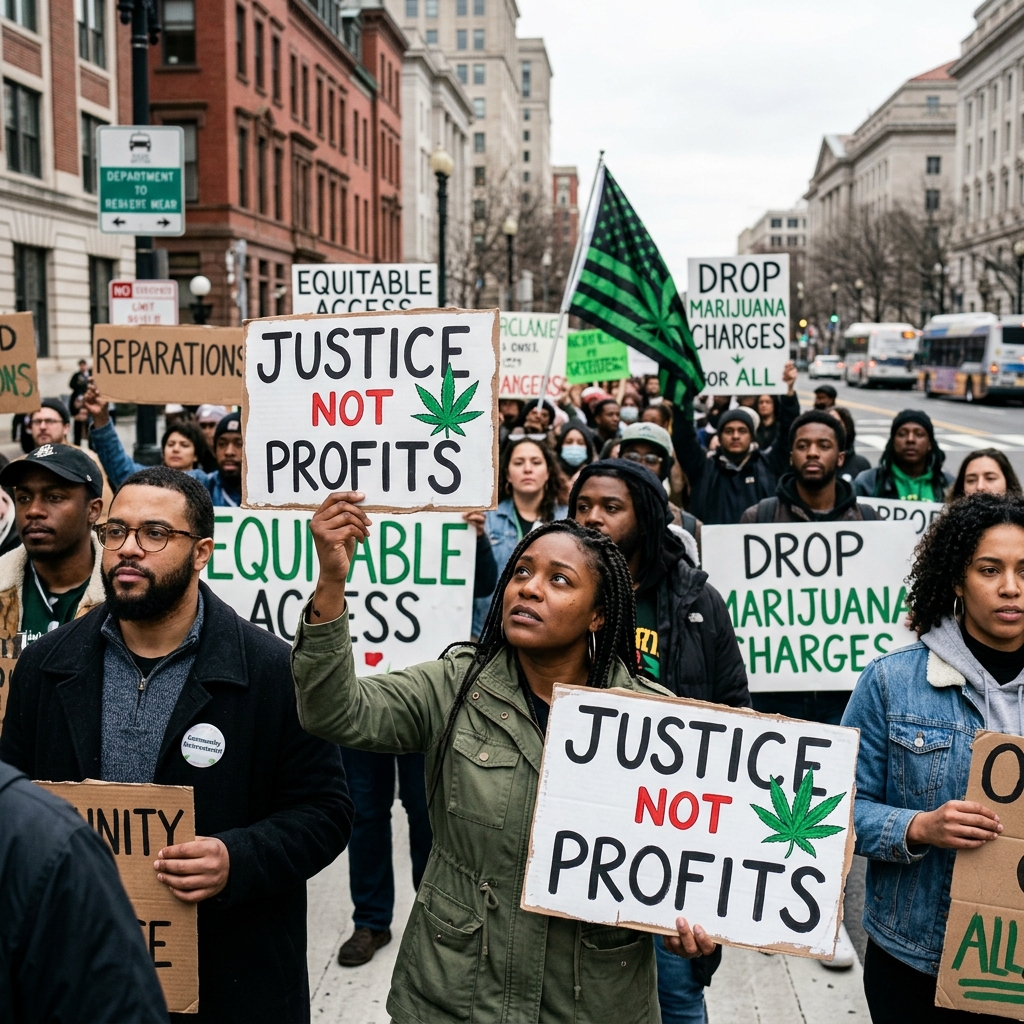
The landscape of marijuana legislation in the United States has undergone a tectonic shift over the last decade. What was once universally demonized and strictly prohibited under federal law is now entirely legal for adult recreational use in nearly half of the country. However, the path from prohibition to legalization is not simply a matter of changing public policy; it is deeply intertwined with a long, fraught history of systemic inequality and racial injustice. As the nation moves toward a more permissive stance on cannabis, the focus of the conversation must shift from merely legalizing the plant to repairing the profound harms inflicted by the decades-long War on Drugs. Advocacy groups and policymakers alike are recognizing that true reform requires intentional, equity-driven frameworks that actively dismantle the prejudiced systems of the past.
Unmasking the Roots of Prohibition and Racial Bias
To understand the current urgency for equitable legalization, one must first examine the historical context of cannabis prohibition. The aggressive enforcement of marijuana laws has never been applied uniformly across the American population. Instead, it has served as a mechanism that disproportionately targets and penalizes marginalized communities. Decades of strict enforcement have not successfully curbed marijuana use, but they have succeeded in ensnaring millions of individuals into the criminal justice system, devastating entire neighborhoods in the process.
Despite similar rates of use and distribution across different demographic groups, enforcement has historically targeted minority communities. Comprehensive national data analysis reveals that Black individuals are approximately 3.6 times more likely to be arrested for marijuana possession than white individuals. In some jurisdictions, this racial disparity is even more staggering, with arrest rates climbing significantly higher. This stark imbalance underscores that the prohibition of marijuana has functioned less as a public health imperative and more as a tool for racialized social control. The fallout from these racially targeted arrests extends far beyond a brief encounter with law enforcement, often resulting in lasting collateral consequences that devastate families and communities.
The historical origins of these disparities can be traced back to the deliberate political strategies of the late 20th century. Policymakers explicitly weaponized drug enforcement to disrupt minority communities and countercultural movements. This aggressive stance led to the militarization of local police forces and the implementation of mandatory minimum sentences, stripping judges of their discretion and ensuring that minor infractions resulted in severe, life-altering penalties. Recognizing this historical context is essential because it illustrates that the uneven enforcement of marijuana laws was not an accidental byproduct of a well-intentioned public health campaign, but a systemic feature of the justice system itself. Acknowledging this truth is the foundational step toward dismantling the prejudiced frameworks that still persist in many jurisdictions today.
The Illusion of Progress: Decriminalization vs. Comprehensive Legalization
As public opinion has shifted favorably toward cannabis, many states have taken incremental steps by decriminalizing possession of small amounts of marijuana. While decriminalization reduces the likelihood of serving prison time for minor possession, it is a half-measure that fundamentally fails to address the root of systemic injustice. Under decriminalization models, marijuana remains an illicit substance, and possession typically results in civil fines or citations rather than outright incarceration.
- Continued Police Interactions: Decriminalization still provides law enforcement with a legal pretext to stop, search, and cite individuals. Because systemic bias remains embedded in policing practices, this leaves the door wide open for persistent racial profiling.
- Financial Burdens: Civil fines disproportionately impact low-income individuals. An inability to pay these fines can quickly escalate into additional penalties, mandated court appearances, and eventually, the issuance of arrest warrants.
- Lack of Consumer Safety: Without a fully legalized and regulated market, consumers are forced to rely on the illicit market. This environment lacks product testing, quality control, and safety standards, posing ongoing public health risks.
Comprehensive legalization, on the other hand, entirely eliminates the civil and criminal penalties associated with marijuana, replacing the illicit market with a regulated, taxed industry. However, advocates emphasize that legalization alone is not a panacea unless it is explicitly paired with retroactive justice initiatives aimed at healing past wounds.
Clearing the Slate: The Critical Role of Record Expungement
One of the most devastating legacies of marijuana criminalization is the permanent criminal record that haunts individuals long after their sentence is served. A conviction for a low-level cannabis offense can act as a lifelong barrier, legally permitting discrimination in housing applications, employment opportunities, federal educational aid, and even child custody determinations. For legalization to be truly just, it must include robust mechanisms for clearing these past records and restoring full citizenship rights.
Historically, relying on a petition-based expungement process—where individuals must hire lawyers, pay exorbitant court fees, and navigate complex legal bureaucracy—has proven highly ineffective and exclusionary. True justice requires automatic expungement, placing the administrative burden on the state rather than the individual harmed by past policies. As a shining example of proactive policy, the state of Illinois successfully expunged nearly 500,000 non-felony cannabis arrest records four years ahead of its statutory deadline, significantly relieving a burden that disproportionately fell on communities of color. When states take decisive action to automatically clear these records, they restore essential civil liberties, economic mobility, and dignity to hundreds of thousands of citizens whose lives were derailed by outdated laws.
Cultivating Economic Justice in the Legal Cannabis Market
As the legal cannabis industry blossoms into a multi-billion dollar economic engine, a glaring paradox has emerged: the communities most devastated by marijuana criminalization are largely excluded from the economic windfall of its legalization. Due to exorbitant licensing fees, extreme lack of access to traditional banking, and strict regulations that frequently bar individuals with prior convictions from participating, the nascent industry is highly consolidated among wealthy investors.
Researchers have highlighted that in the early stages of legalization, up to 81% of legal cannabis businesses were owned by white entrepreneurs. The incredibly high barriers to entry effectively ensure that those who built the foundation of the cannabis market under the constant threat of incarceration are left watching from the sidelines while well-capitalized corporate entities profit. To combat this profound inequity, several states have begun implementing specialized social equity programs designed specifically to level the playing field.
Social Equity Programs Leading the Charge
Recognizing the urgent need for economic justice, progressive lawmakers have established frameworks to lower barriers for minority and justice-impacted entrepreneurs. For instance, New York’s Social Equity Cannabis Investment Program allocated an unprecedented $200 million to provide critical funding, licensing fee relief, and commercial real estate support for equity entrepreneurs entering the adult-use market. These programs are vital for ensuring that the legal market reflects the diversity of the general population and intentionally reinvests capital back into neighborhoods that suffered the brunt of the War on Drugs.
Evaluating State-Level Social Equity Initiatives
Different states have adopted varying approaches to address the specific harms of the War on Drugs through their legislative frameworks. Below is a comparative overview of how select regions are prioritizing social equity and criminal justice reform in the modern era.
| State | Expungement Approach | Social Equity Business Support |
|---|---|---|
| Illinois | Automatic state-level expungement for low-level offenses. | Provides extra points for equity applicants and established a restorative justice loan fund. |
| New York | Automatic expungement of records for acts that are no longer criminalized. | First-in-the-nation $200M investment fund to secure real estate and capital for equity owners. |
| California | Mandated automatic review and resentencing or dismissal of past convictions. | State grants provided to local jurisdictions to fund technical assistance and fee waivers. |
| Michigan | Clean Slate laws automating the expungement process after a waiting period. | Offers significant reductions in application and licensing fees for residents of disproportionately impacted communities. |
The Intersection of Culture and Activism: Reclaiming 4/20
Civil rights organizations and advocacy groups have ingeniously leveraged cultural phenomena to fuel their legal battles. The transformation of April 20th—widely recognized in popular culture as 4/20—serves as a prime example of this powerful synergy. What was once a niche countercultural observance has been reclaimed by serious activists as a potent day of action, awareness, and reflection. By launching targeted awareness campaigns and offering advocacy-themed merchandise, these organizations generate vital funding to support lobbying efforts, massive legal defense funds, and grassroots community organizing.
Purchasing merchandise from these advocacy groups is no longer just a fashion statement; it is a direct financial contribution to the ongoing fight for civil liberties. These critical funds empower elite legal teams to aggressively challenge discriminatory policing practices in court, draft highly equitable legislation, and amplify the voices of those who have historically been silenced by systemic oppression. The culture surrounding cannabis has evolved into a formidable political force, demanding strict accountability and comprehensive reform from lawmakers nationwide.
Frequently Asked Questions (FAQs)
Why is decriminalization not enough to solve racial disparities?
Decriminalization merely reduces criminal penalties to civil infractions, much like a traffic ticket. It does not legalize the market, establish safety standards, or eliminate the legal pretext for police stops. Because systemic bias still heavily exists within modern law enforcement, minority communities continue to be disproportionately stopped, searched, and financially penalized under decriminalized models. Only a fully regulated legal market paired with strict anti-discrimination policies can fundamentally alter this dynamic.
What is a social equity applicant in the cannabis industry?
A social equity applicant is an individual seeking a cannabis business license who meets specific, state-defined criteria designed to identify those harmed by past drug laws. This typically includes individuals who have prior cannabis-related convictions, have immediate family members with convictions, or have continuously lived in communities disproportionately targeted by police enforcement for a specified number of years.
Why do past marijuana convictions need to be expunged if the drug is now legal?
Even if a specific action is made legal today, past convictions for that action remain strictly on a person’s permanent criminal record unless legally removed. A criminal record creates immense, often insurmountable hurdles for securing meaningful employment, finding affordable housing, receiving federal financial aid, and obtaining professional licenses. Expungement is absolutely necessary to remove these discriminatory barriers and allow individuals to fully reintegrate into society as equal citizens.
How can everyday consumers support equity in the cannabis space?
Consumers can make a significant, tangible impact by consciously choosing to purchase products from minority-owned businesses and social equity licensees. Additionally, supporting civil rights organizations through direct donations or by purchasing their advocacy merchandise helps directly fund the complex legal and legislative work required to push for fairer, more equitable laws across the entire country.
Conclusion
The movement for marijuana legalization has achieved remarkable milestones over the past decade, dramatically transforming the cultural and legal fabric of the United States. However, true victory will not be measured simply by the sheer number of states that eventually permit recreational use. It will be explicitly measured by the extent to which we rectify the deep historical injustices of the War on Drugs. By demanding automatic record expungement, robustly funding social equity programs, and forcing an end to racially biased policing, we can build a modern cannabis industry that is not only highly profitable but profoundly just. Ultimately, the evolution of cannabis policy serves as a critical litmus test for America’s commitment to civil rights. As activists continue to mobilize, utilizing cultural touchstones like 4/20 to aggressively raise awareness and fund their initiatives, the immense pressure on legislators mounts. We must ensure that the transition into a legalized framework is a restorative process, actively dismantling the prejudiced systems of the past and constructing an equitable, inclusive future for everyone involved.
References
- A Tale of Two Countries: Racially Targeted Arrests in the Era of Marijuana Reform — American Civil Liberties Union (ACLU). 2020-04-16. https://www.aclu.org/publications/tale-two-countries-racially-targeted-arrests-era-marijuana-reform
- Pritzker Administration Announces Nearly 500,000 Cannabis Arrest Records to be Expunged Four Years Ahead of Schedule — State of Illinois. 2020-12-31. https://illinois.gov/news/press-release.22552.html
- State cannabis reform is putting social justice front and center — Brookings Institution. 2021-04-16. https://www.brookings.edu/blog/how-we-rise/2021/04/16/state-cannabis-reform-is-putting-social-justice-front-and-center/
- Governor Hochul Announces The Office of Cannabis Management Seeding Opportunity Initiative — New York State. 2022-03-10. https://www.governor.ny.gov/news/governor-hochul-announces-office-cannabis-management-seeding-opportunity-initiative
Similar Articles








Read full bio of medha deb


