
Enforcing Demand Promissory Notes Effectively
Master the art of collecting on demand promissory notes with proven demand letters, legal steps, and enforcement tactics for lenders.
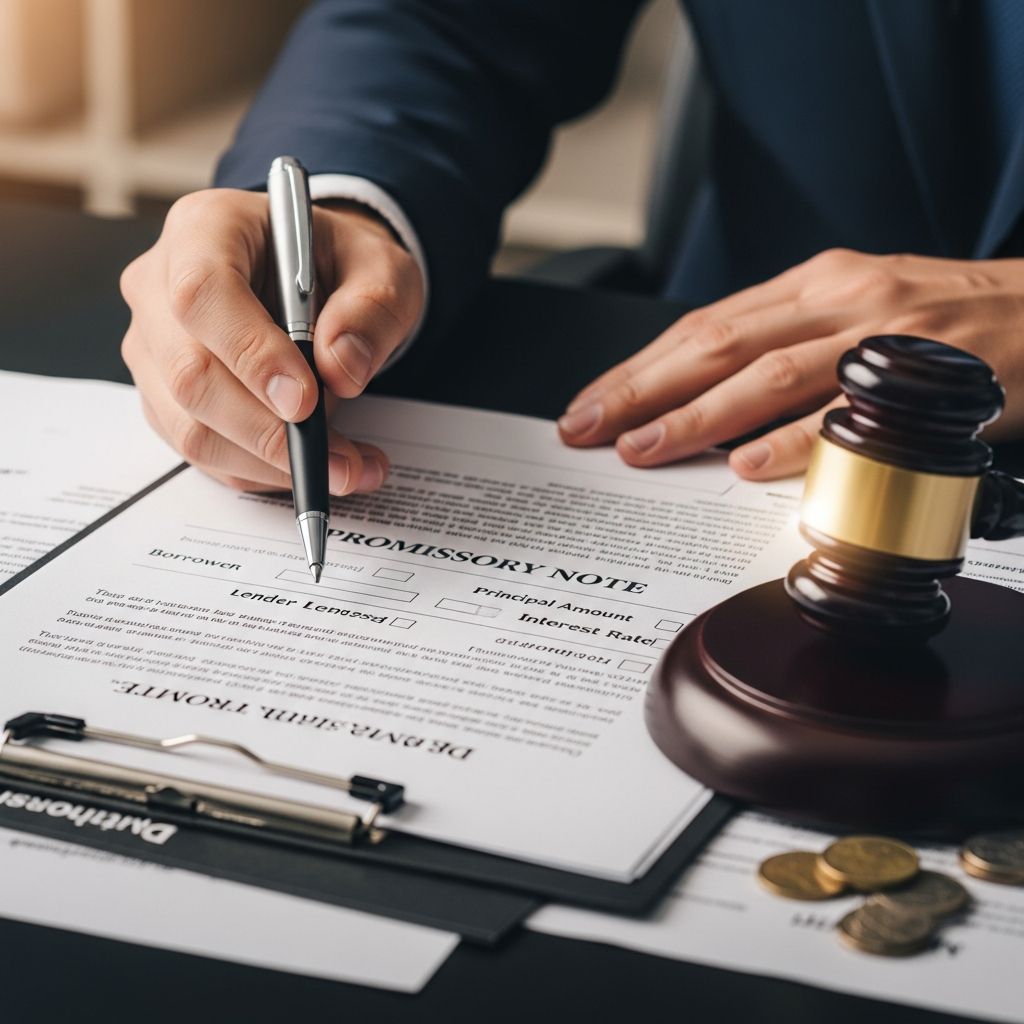
Demand promissory notes provide lenders with flexible tools to recover loaned funds at their discretion, distinguishing them from fixed-term agreements by allowing repayment requests anytime after issuance. These instruments are particularly valuable in personal, family, or short-term business lending scenarios where cash flow needs may arise unexpectedly.
Understanding the Core Mechanics of Demand Notes
A demand promissory note is a binding legal contract where the borrower promises to repay the principal, plus any interest, upon the lender’s request. Unlike installment notes with predefined schedules, demand notes lack a maturity date, granting the lender authority to initiate collection through formal notice. This flexibility empowers lenders but requires precise documentation to ensure enforceability.
Key components typically include the borrower’s and lender’s full legal names, contact details, principal amount, interest rate (if applicable), and explicit language stating repayment is ‘due on demand.’ The borrower’s signature is mandatory, and notarization or witnesses can bolster validity in disputes. Without these elements, courts may deem the note unenforceable.
Key Differences: Demand Notes vs. Traditional Promissory Notes
Demand notes offer unique advantages and risks compared to standard term notes. The table below highlights critical distinctions:
| Feature | Demand Note | Term Note |
|---|---|---|
| Repayment Trigger | Lender’s written demand | Fixed due date or schedule |
| Flexibility for Lender | High – anytime request | Low – bound by terms |
| Borrower Predictability | Low – sudden demands possible | High – known timeline |
| Ideal Use Cases | Family loans, short-term bridges | Business mortgages, long-term financing |
| Enforcement Speed | Immediate post-demand | At maturity or default |
This structure makes demand notes suitable for informal arrangements but demands clear terms to avoid challenges.
Essential Clauses for Robust Demand Notes
To maximize protection, incorporate these vital provisions:
- Repayment on Demand Clause: Explicitly state: ‘The entire principal balance, accrued interest, and fees become due upon written demand by the lender.’ This eliminates ambiguity.
- Acceleration Provision: Allows full payment demand if any term is breached, such as missed interest payments.
- Interest and Fees: Define rates (e.g., simple or compound) and late penalties, ensuring compliance with state usury laws.
- Default Remedies: Outline consequences like collection costs, attorney fees, and collateral seizure if secured.
- Governing Law and Jurisdiction: Specify the state whose laws apply and venue for disputes.
- Waiver of Notice: Borrower waives formal presentment or dishonor notices to streamline enforcement.
These elements, drawn from standard legal practices, fortify the note against borrower defenses.
Step-by-Step Guide to Issuing a Demand for Payment
Enforcement begins with a formal demand letter, serving as proof of notice and triggering the repayment obligation. Oral demands may suffice in some jurisdictions, but written notice is essential for court.
- Gather Documentation: Locate the original signed note, payment records, and any amendments.
- Calculate Balances: Tally principal, interest (using formula: Principal × Rate × Time), and fees.
- Draft the Letter: Use certified mail for proof. Include date, parties’ details, note reference, total due, repayment deadline (e.g., 10-30 days), and consequences of non-payment.
- Deliver Properly: Send via certified mail, return receipt requested, or process server.
- Document Everything: Retain copies and delivery confirmations.
A sample structure: Header with your details, borrower’s address, subject line (‘Demand for Payment on Promissory Note dated [Date]’), body detailing amounts and deadline, and closing with legal warnings.
Sample Demand Letter Template
Below is a customizable template in professional format:
[Your Name/Company]
[Your Address]
[City, State, ZIP]
[Date]
[Borrower's Name]
[Borrower's Address]
[City, State, ZIP]Re: Demand for Payment – Promissory Note dated [Original Date], Principal: $[Amount]
Dear [Borrower],
This letter demands immediate repayment of the above-referenced note. Outstanding balance: $[Total], including $[Principal], $[Interest], $[Fees]. Payment due within [X] days of receipt.
Failure to pay will result in legal action, including suit for full amount plus costs and fees.
Sincerely,
[Your Signature]
[Your Name]
Adapt to your specifics, consulting an attorney for state compliance.
What Happens After Sending the Demand?
Provide a reasonable grace period, typically 7-30 days, post-delivery. If unpaid:
- Negotiate: Offer settlements or payment plans to avoid litigation.
- Third-Party Collection: Assign to agencies, though this yields less (e.g., 50-80% of value).
- Lawsuit: File in small claims (for small amounts) or civil court. Prove note validity, demand issuance, and default.
- Judgment Enforcement: Garnish wages, levy bank accounts, or lien property post-judgment.
Statutes of limitations vary (3-10 years from demand or default); act promptly. Secured notes allow collateral repossession.
Legal Considerations and Common Pitfalls
Avoid usurious interest exceeding state caps (e.g., 10-18% annually). Ensure notes comply with the Uniform Commercial Code (UCC) Article 3 for negotiability. Pitfalls include vague language, improper notice, or ignoring defenses like fraud claims. In family loans, emotional dynamics may complicate enforcement—document professionally. For interstate issues, select favorable governing law.
Advanced Strategies for High-Value Debts
For larger sums, engage collections attorneys early. They can send attorney demand letters, boosting settlement rates by 30-50%. Consider factoring notes to third parties for quick liquidity, though at a discount. Monitor borrower’s assets via public records for enforcement leverage.
Frequently Asked Questions
Can I enforce a demand note without a written agreement?
No, a signed written note is required for enforceability; verbal promises lack provable terms.
How long after demand must repayment occur?
Typically 7-30 days, as specified in the letter or by reasonable custom; courts assess fairness.
What if the borrower disputes the amount?
Provide records; if unresolved, litigate with evidence like amortization schedules.
Is notarization mandatory?
Not always, but recommended for evidentiary weight, especially in secured notes.
Can demand notes charge attorney fees?
Yes, if the note explicitly states so; recoverable upon prevailing in court.
Protecting Yourself Before Lending
Prevent issues by using templates from reputable sources, running credit checks, securing collateral, and including personal guarantees. Educate borrowers on terms to foster compliance.
In summary, demand promissory notes offer powerful recovery tools when properly structured and enforced through methodical demand processes. Lenders who follow these steps minimize losses and maximize recoveries.
References
- Promissory Note Debt Collection in Brooklyn NY – Bukh Law Firm — Bukh Law Firm. Accessed 2026. https://bukhlaw.com/civil-law/promissory-note-collections/
- Demand for Payment on Demand Promissory Note Explained — UpCounsel. Accessed 2026. https://www.upcounsel.com/promissory-note-payable-on-demand
- Demand Promissory Note: A Complete Guide for Lenders — Certinal. Accessed 2026. https://www.certinal.com/blog/demand-promissory-note
- How To Collect On a Promissory Note — Webb Law Group. 2015-04. https://www.webblawgroup.com/blog/2015/april/how-to-collect-on-a-promissory-note/
- Legally Sound Promissory Notes in Colorado — Robinson and Henry. Accessed 2026. https://www.robinsonandhenry.com/blog/litigation/promissory-note/
Similar Articles








Read full bio of medha deb


