
The Enduring Public Health Crisis Behind Bars
How infectious diseases and Long COVID continue to devastate prisons.
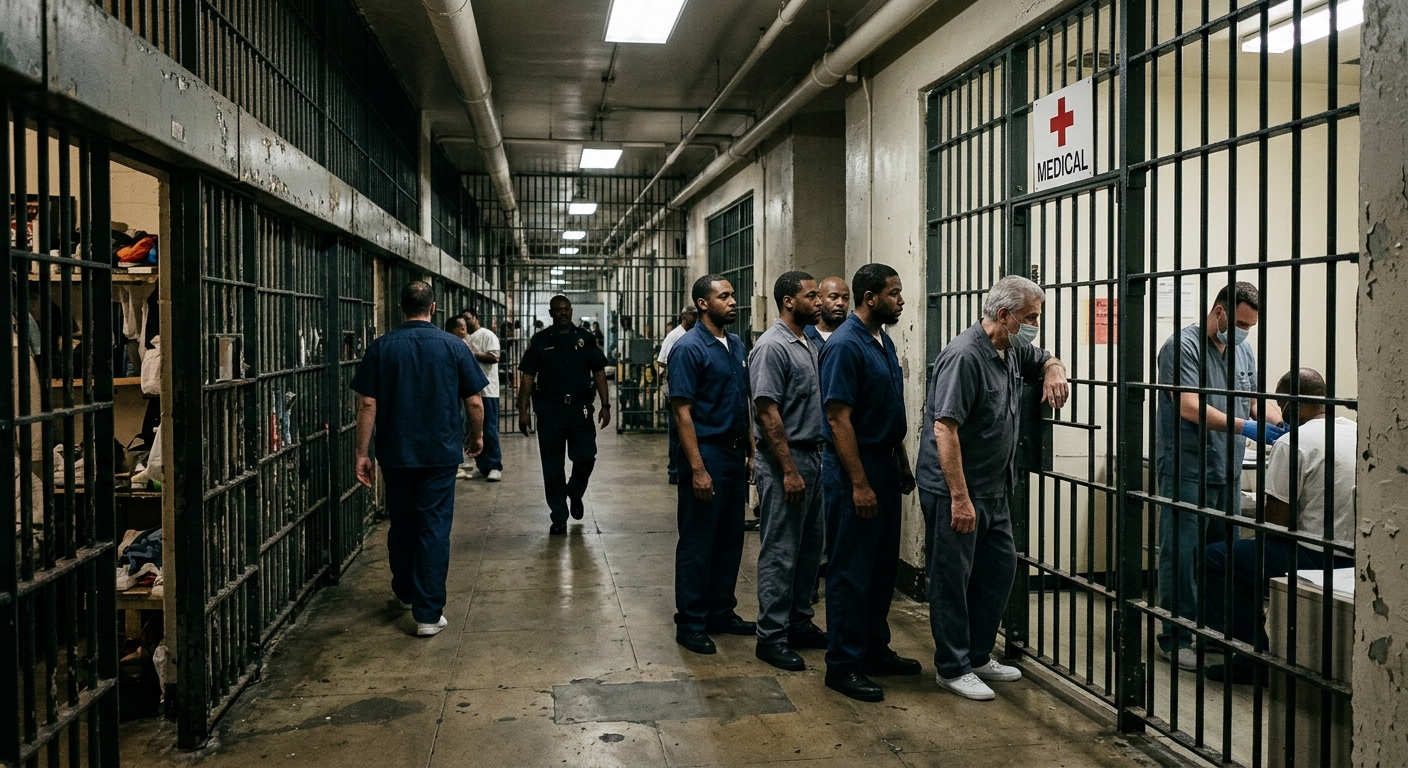
The Hidden Health Emergency in the Carceral System
The broader public has largely discarded the pandemic-era protocols that once dictated daily life. For many, infectious diseases like COVID-19 have shifted from a daily, existential emergency to a manageable, seasonal inconvenience. However, for the nearly two million individuals currently living within the United States carceral system, the threat of infectious disease remains a persistent, unyielding crisis. Prisons, jails, and detention centers are not just cut off from the rest of society; they are structurally designed in ways that amplify the spread of airborne and communicable viruses.
Historically, carceral health has always been a significant blind spot in national health policy. Human rights advocates and medical professionals have long warned that the physical layout and operational management of detention centers create perfect storm conditions for outbreaks. Recognizing this ongoing emergency is not merely an exercise in legal advocacy—it is a fundamental imperative for global public health. The illusion that the pandemic is definitively over is a privilege afforded only to those who have the freedom to navigate their own healthcare choices and environments. Behind bars, the legacy of COVID-19 and the persistent threat of other communicable diseases remain an inescapable reality of daily life. The carceral system’s handling of the pandemic exposed deep, preexisting fractures in how we view the human rights of detained individuals. If society is to build a resilient public health infrastructure, it must encompass the most vulnerable and marginalized populations, refusing to leave them behind closed doors.
Structural Failures and the Crisis of Overcrowding
The architectural and operational realities of the American prison system make basic public health measures virtually impossible to implement effectively. The World Health Organization (WHO) has highlighted that prisons are uniquely conducive to the spread of infectious diseases due to extreme overcrowding, poor ventilation, and the high prevalence of co-morbidities among incarcerated populations . During the height of the COVID-19 pandemic, the inability to socially distance was tragically evident, but this structural flaw persists today. Many facilities operate well above their designed capacity, housing individuals in vast, open dormitories or tightly packed double-occupancy cells where airborne pathogens encounter zero friction.
Standard public health guidance, such as frequent hand washing and sanitizing surfaces, is often mocked by the reality of broken sinks, rationed soap, and a complete ban on alcohol-based sanitizers due to security concerns. According to research published in the American Journal of Public Health, overcrowding is directly linked to worsened health outcomes through multiple mechanisms, including the rapid, density-dependent spread of infections and a severe reduction in access to limited healthcare resources . In these environments, respiratory viruses find the perfect incubation grounds.
Aging infrastructure often means that HVAC systems simply recirculate stagnant air rather than bringing in fresh outdoor air, undermining one of the most critical interventions for airborne disease control. The chronic understaffing of medical personnel within these facilities further compounds the problem. When individuals fall ill, they frequently wait days or even weeks to receive rudimentary care, allowing outbreaks to escalate unchecked while easily treatable conditions worsen into life-threatening emergencies.
The Chronic Toll: Long COVID and Exacerbated Illness
While the acute phases of respiratory viruses draw the most media attention, the long-term consequences of these infections—particularly the post-acute sequelae of SARS-CoV-2, commonly known as Long COVID—represent a looming catastrophe for the prison system. Incarcerated individuals are statistically more likely to suffer from pre-existing health conditions such as hypertension, diabetes, and respiratory ailments prior to their detention. The chronic stress of incarceration physically burdens the immune system, making these individuals even more susceptible to severe disease complications. When an infectious outbreak sweeps through a facility, this medically vulnerable demographic bears the absolute brunt of the severity.
Recent epidemiological research highlights the staggering prevalence of Long COVID within carceral settings. A comprehensive study analyzing California state prisons estimated that thousands of residents developed Long COVID following major outbreak waves, with many suffering from permanently disabling consequences . The rigid, physically demanding reality of prison life offers absolutely no respite for individuals battling chronic fatigue, severe cognitive impairment (brain fog), or persistent shortness of breath. Basic requirements, such as mandatory prison labor or standing for long counts, become torturous for those suffering from post-viral exhaustion.
Moreover, the medical units inside correctional facilities are completely ill-equipped to manage complex, multi-systemic chronic conditions. Long COVID requires specialized care, respiratory therapy, and customized pain management—services that are exceedingly scarce, if not entirely absent, behind bars. The failure to treat these post-acute conditions effectively constitutes a secondary health crisis, essentially transforming a temporary, court-mandated sentence into a lifetime of physical suffering, disability, and medical deterioration.
Psychological Impacts and the Misuse of Isolation
One of the most troubling aspects of infectious disease management in prisons has been the systematic conflation of medical quarantine with punitive solitary confinement. To control viral spread, many prison administrations resorted to locking down entire wings, restricting individuals to their small, poorly ventilated cells for twenty-three or more hours a day. While isolation is a standard public health tool for containing outbreaks, the carceral execution of this tool has often violated basic human rights and exacerbated trauma.
Under international standards, such as the United Nations’ Nelson Mandela Rules, prolonged solitary confinement is heavily restricted and recognized as a form of psychological torture. Yet, during the pandemic, this extreme isolation was normalized under the guise of “quarantine.” Being locked in a windowless cell with no access to educational programming, family visitation, or outdoor recreation takes a devastating toll on a person’s mental health. Psychological distress, intense anxiety, severe depression, and suicidal ideation skyrocket under these oppressive conditions.
Public health guidelines dictate that medical isolation should be comfortable, clinically supportive, and entirely distinct from punishment. Instead, incarcerated individuals were essentially penalized for falling ill. This punitive dynamic naturally disincentivized the reporting of symptoms. Contagious individuals frequently hid their illnesses to avoid being thrown into “the hole,” thereby accelerating the unseen, silent spread of the virus throughout the facility.
The Carceral-Community Health Connection
A persistent, dangerous myth regarding the penal system is that prisons are isolated silos, completely disconnected from the broader community. In reality, they are highly porous institutions with constant daily movement. Every single day, thousands of correctional officers, healthcare providers, maintenance workers, administrators, and visitors cross the threshold between the prison and the surrounding towns. This continuous human migration creates an active “epidemiological pump.”
As noted by the Centers for Disease Control and Prevention (CDC), staff movement is a highly critical vector for introducing viruses into correctional facilities and subsequently exporting them back out into the public . When a virus like COVID-19 or influenza surges through a crowded jail, the sheer volume of infection invariably spills over into the local community. This happens when guards return home to their families at the end of a shift, or when individuals are released following the completion of their sentences or pretrial detention.
Consequently, efforts to control infectious diseases in the general public are fundamentally undermined if they do not include aggressive, scientifically backed interventions inside detention centers. The WHO explicitly notes that prison health is an inseparable part of public health . Neglecting the medical needs of the incarcerated population inherently jeopardizes the safety, hospital capacity, and economic stability of the entire surrounding region. When outbreaks jump from prisons to the community, local healthcare systems become overwhelmed, affecting the quality of care for everyone.
Systemic Interventions: Reforming the Approach to Incarceration
Addressing the ongoing, deeply rooted health crises in detention centers requires a radical reimagining of how society administers justice and delivers healthcare. Incremental administrative changes, such as occasionally distributing hand sanitizer or temporarily mandating masks, are vastly insufficient when the core issue is structural density and medical neglect. The most effective public health intervention for a crowded, poorly ventilated space is simply reducing the sheer number of people forced to inhabit it.
Decarceration must be universally recognized as a legitimate, urgent, and permanent public health strategy. The American Journal of Public Health has published urgent priorities calling for accelerated population reduction combined with robust community reentry support . This involves significantly expanding compassionate release programs for elderly and medically vulnerable inmates who pose absolutely no risk to public safety. There is also a strong economic argument for this approach: it costs taxpayers vastly more to provide intensive hospital care for an aging, incarcerated individual than to grant compassionate release.
Furthermore, reforming cash bail systems can drastically reduce the rapid, dangerous churn of individuals cycling through county jails for minor, non-violent offenses. For those who remain incarcerated, independent facility oversight must be dramatically strengthened. External public health boards should have the unrestricted authority to inspect prison medical wards and enforce minimum, humane standards of care, completely independent of the prison administration’s budget or security priorities. Upgrading ventilation systems, increasing the wages and numbers of professional medical staff, and ensuring unfettered access to updated vaccines and treatments are not administrative luxuries; they are fundamental human rights that must be legally protected.
Frequently Asked Questions (FAQs)
- Why are infectious diseases more dangerous in prisons?
Prisons are characterized by severe overcrowding, poor ventilation, and shared sanitary facilities. These structural factors make physical distancing impossible, allowing airborne and droplet-based viruses to spread rapidly among a population that already has higher rates of underlying chronic health conditions. - What is compassionate release?
Compassionate release is a legal mechanism that allows for the early release or parole of incarcerated individuals who are suffering from terminal illnesses, extreme old age, or severe medical vulnerabilities, recognizing that their continued confinement poses a severe threat to their life without benefiting public safety. - How does prison health affect the general public?
Prisons are not closed systems. Thousands of staff members commute between these facilities and their local communities every day. An outbreak inside a prison easily spills over into the surrounding area, straining local hospital resources and increasing the infection risk for the general public. - Can Long COVID be adequately treated in prison?
Currently, prison healthcare systems are generally unequipped to handle complex, multi-systemic chronic conditions like Long COVID. The lack of specialized care, physical therapy, and customized pain management leaves many incarcerated individuals suffering from long-term disabilities without proper medical intervention.
References
- Creating supportive conditions to reduce infectious diseases in prison populations — World Health Organization (WHO). 2023-11-06. https://www.who.int/publications/i/item/WHO-EURO-2023-8182-47950-70944
- Health-Focused Arguments for Eliminating Overcrowding in Prisons, Jails, and Other Detention Facilities — American Journal of Public Health (AJPH). 2025-05-14. https://ajph.aphapublications.org/doi/10.2105/AJPH.2024.307998
- COVID-19 Reproduction Numbers and Long COVID Prevalences in California State Prisons — National Institutes of Health (NIH) / PubMed. 2024-12-23. https://www.ncbi.nlm.nih.gov/pmc/articles/PMC11703306/
- COVID-19 in Correctional and Detention Facilities — United States, February–April 2020 — Centers for Disease Control and Prevention (CDC). 2020-04-22. https://www.cdc.gov/mmwr/volumes/69/wr/mm6919e1.htm
- Ensuring prevention and control of COVID-19 in prisons and other places of detention — World Health Organization (WHO). 2026-05-06. https://www.who.int/europe/news/item/06-05-2026-ensuring-prevention-and-control-of-covid-19-in-prisons-and-other-places-of-detention
- Ten Urgent Priorities Based on Lessons Learned From More Than a Half Million Known COVID-19 Cases in US Prisons — American Journal of Public Health (AJPH). 2021-05-05. https://ajph.aphapublications.org/doi/10.2105/AJPH.2021.306221
Similar Articles








Read full bio of medha deb


