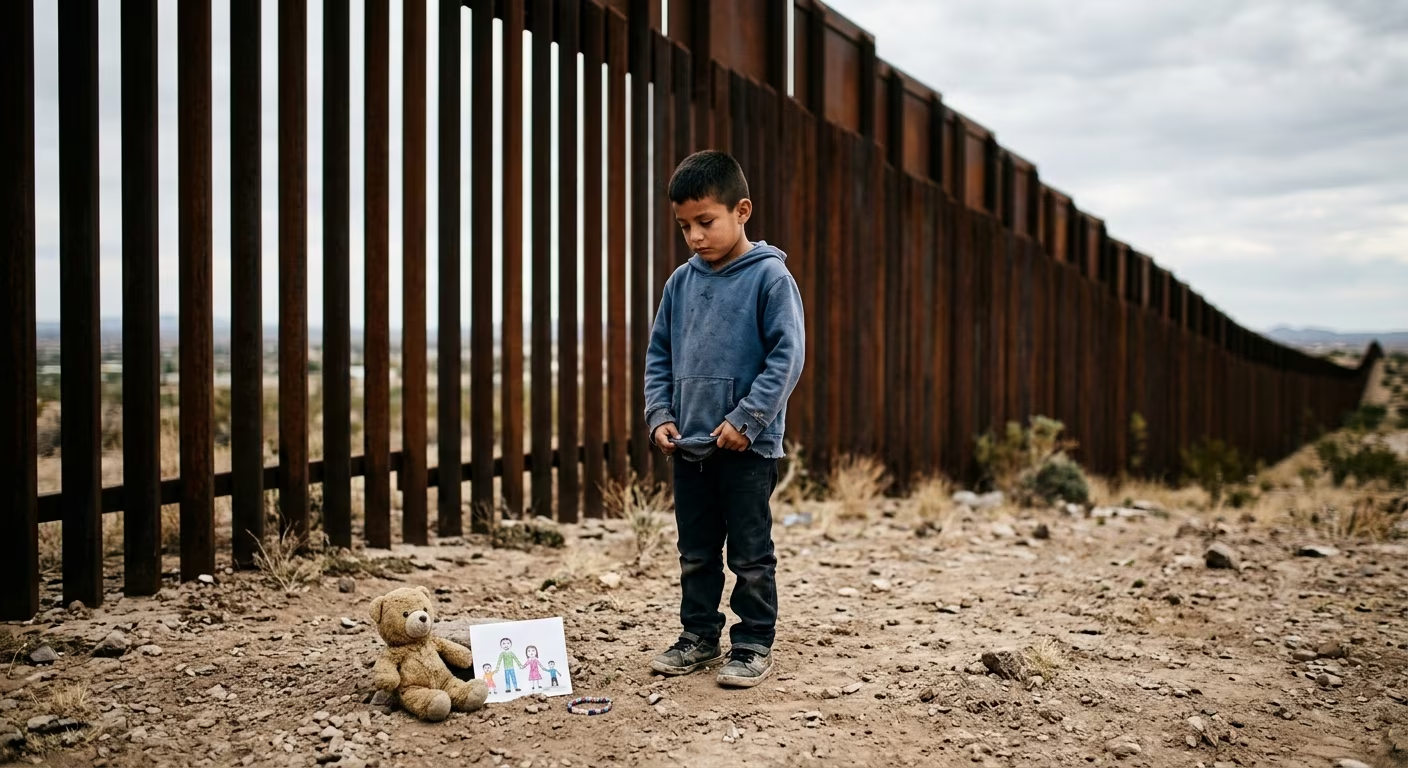
The Enduring Fallout of Family Separation: Legal, Psychological, and Systemic Repercussions
The implementation of widespread family separation at the United States-Mexico border represents one of the most contentious and widely debated immigration enforcement strategies in modern American history. Formulated as a strict deterrence mechanism, the policy was designed to discourage undocumented migration and asylum seeking by prosecuting adult migrants for illegal entry, a decision that inherently required the removal of accompanying children. While the practice has officially been halted by executive action and judicial injunctions, the reverberations of this policy continue to be felt across the legal, psychological, and geopolitical landscapes.
To understand the magnitude of this humanitarian event, it is crucial to examine the bureaucratic mechanics that facilitated it, the ensuing legal battles that ultimately dismantled it, and the ongoing trauma inflicted upon thousands of vulnerable families. The mass separation of parents from their minor children did not merely represent a temporary administrative hurdle; it triggered a cascading human rights crisis that exposed glaring deficiencies within federal immigration agencies and their record-keeping systems. Years after the height of the crisis, advocates, attorneys, and medical professionals continue to grapple with the multifaceted fallout.
This comprehensive analysis delves into the systemic origins of the forced separation strategy, the profound psychological wounds sustained by the affected children and parents, and the complex, ongoing struggle to reunite fractured families. Furthermore, it explores the broader implications for international human rights law and the urgent need for systemic reforms to ensure that such a tragedy is never replicated.
The Bureaucratic Mechanics of a Deterrence Strategy
Historically, immigration enforcement at the U.S. border relied on a mixture of administrative deportations and civil processing, particularly when dealing with family units and asylum seekers. Migrants arriving with children were generally processed together, often released into the interior of the United States to await immigration court hearings, or held collectively in specialized family residential centers. However, a stark shift occurred when federal authorities adopted a blanket policy of criminal prosecution for all unauthorized border crossings, regardless of a migrant’s intent to seek asylum or the presence of minor children.
Under federal law, specifically 8 U.S.C. § 1325, improper entry by an alien is classified as a misdemeanor. By directing federal prosecutors to adopt a “zero tolerance” approach, all adults apprehended crossing between ports of entry were referred for criminal prosecution. Because children cannot be held in federal criminal detention facilities with their parents, this prosecutorial mandate necessitated the immediate physical separation of the family unit. The adults were remanded to the custody of the U.S. Marshals Service, while the children were reclassified as “Unaccompanied Alien Children” (UACs).
Once reclassified, these children were transferred from the custody of the Department of Homeland Security (DHS)—specifically Customs and Border Protection (CBP)—to the Department of Health and Human Services (HHS), which oversaw the Office of Refugee Resettlement (ORR). The ORR was then responsible for placing the children in federal shelters or foster care across the country. This operational shift was executed rapidly, bypassing the establishment of necessary logistical frameworks to track the familial connections between the prosecuted adults and the newly designated unaccompanied children.
Systemic Failures and the Information Vacuum
The most catastrophic operational failure during the height of the family separation crisis was the absence of an integrated tracking system linking DHS and HHS databases. When CBP agents separated children from their parents, the tracking numbers assigned to the adults (Alien Registration Numbers, or A-Numbers) were rarely cross-referenced accurately with the children’s newly generated files. Consequently, as parents were processed through the criminal justice system and subsequently transferred to Immigration and Customs Enforcement (ICE) for deportation, the bureaucratic link to their children was effectively severed.
This systemic disconnect created an unprecedented logistical nightmare. Parents were frequently deported back to their countries of origin without their children, often lacking any contact information for the shelters where their children were being held. Similarly, shelter workers and ORR officials struggled to identify the parents of the children in their care, particularly infants and toddlers who were too young to communicate their parents’ names or origins.
Jurisdictional Roles in Migrant Processing
| Federal Agency | Primary Responsibility During the Policy | Systemic Failure Point |
|---|---|---|
| Customs and Border Protection (CBP) | Initial apprehension and holding of families. Executed the physical separation of parents and children. | Failed to generate joint tracking numbers or provide documentation linking the separated family members. |
| Department of Justice (DOJ) | Prosecuted adults for misdemeanor illegal entry under the zero-tolerance directive. | Processed adults rapidly through federal courts without mechanisms to address family reunification post-conviction. |
| Immigration and Customs Enforcement (ICE) | Held adults in immigration detention post-prosecution and executed deportation orders. | Deported parents rapidly without ensuring they had been reunited with their children in HHS custody. |
| Department of Health and Human Services (HHS) | Sheltered reclassified “unaccompanied” children via the Office of Refugee Resettlement (ORR). | Lacked the investigatory resources to locate deported parents and struggled to manage the sudden influx of traumatized infants. |
Judicial Intervention and the Constitutional Defense of Families
As the scale of the separations became public, civil rights organizations and legal advocates mobilized to challenge the legality of the practice. A series of federal class-action lawsuits were filed, asserting that the government’s actions violated the Due Process Clause of the Fifth Amendment. Central to these legal arguments was the longstanding constitutional principle that parents possess a fundamental right to the care, custody, and control of their children, a right that cannot be arbitrarily terminated without a demonstration of parental unfitness.
Federal courts recognized the gravity of these constitutional violations. In a landmark decision, a federal judge issued a nationwide preliminary injunction, effectively halting the blanket practice of family separation and ordering the immediate reunification of thousands of affected families. The court noted that the government’s practice of separating families without any system to track them or reunite them shocked the conscience and constituted a clear violation of substantive due process.
However, the judicial mandates exposed the sheer inadequacy of the government’s records. Because the data linking parents and children had been lost, corrupted, or never created, the government was unable to meet the court-imposed deadlines for reunification. This necessitated the creation of complex, multi-agency task forces and the reliance on non-governmental steering committees to manually review tens of thousands of case files to identify separated families.
The Invisible Wounds: Psychological Toll on Migrant Children
Beyond the legal and logistical chaos, the most profound and lasting impact of the family separation policy is the severe psychological trauma inflicted on the victims. Medical professionals, pediatricians, and psychologists have extensively documented the devastating effects of forcibly removing a child from their primary caregiver, particularly in high-stress environments such as border detention facilities.
When a child is suddenly separated from their parent, their body’s stress response system is activated. Without the buffering presence of a trusted caregiver, this biological response can become prolonged, resulting in a condition known as “toxic stress.” Toxic stress disrupts the development of brain architecture and other organ systems, increasing the risk for stress-related disease and cognitive impairment well into adulthood.
The observable symptoms in separated children have been widely documented and include:
- Severe Attachment Disorders: Many children exhibited an inability to trust adults, presenting with severe separation anxiety or, conversely, profound emotional detachment upon reunification.
- Developmental Regressions: Toddlers and young children frequently experienced a loss of acquired skills, such as toilet training and speech, reverting to behaviors typical of younger infants.
- Post-Traumatic Stress Disorder (PTSD): Older children and adolescents manifested classic PTSD symptoms, including night terrors, flashbacks, hyperarousal, and severe depression.
- Somatic Symptoms: Psychological distress often manifested physically, with children suffering from chronic stomach aches, headaches, and unexplained pain.
The trauma was not limited to the children. Parents who were deported without their offspring endured immense psychological suffering, characterized by intense grief, helplessness, and the agonizing uncertainty regarding their children’s safety and whereabouts. The American Academy of Pediatrics has forcefully condemned the practice, noting that no amount of subsequent mental health intervention can fully erase the developmental damage caused by such traumatic separations.
The Long Road to Reunification and the Quest for Accountability
The process of locating and reuniting the remaining separated families has evolved into a global humanitarian mission. Because hundreds of parents were deported to remote, rural regions of Central America—often areas lacking reliable telecommunications or postal services—human rights defenders and volunteer lawyers were forced to launch physical search operations. These advocates scoured mountainous terrains in Guatemala, Honduras, and El Salvador, relying on fragmentary data from ICE deportation logs and local radio broadcasts to locate missing parents.
Even when parents are successfully located, the path to reunification remains legally and emotionally fraught. Reintegrating a child who has spent years in the U.S. foster care system with a parent they barely remember requires intensive psychological support and careful transition planning. Furthermore, advocates argue that mere physical reunification is insufficient justice for the trauma endured.
There is a robust movement demanding comprehensive accountability and restorative justice for the affected families. Legal advocates have filed claims under the Federal Tort Claims Act (FTCA), seeking financial compensation for the emotional distress and medical costs resulting from the government’s negligence. Additionally, there is a strong push for Congress and the executive branch to grant permanent legal status to separated families, ensuring they are not subjected to future deportation proceedings and can access the necessary behavioral health resources in the United States.
Looking Forward: Safeguarding Human Rights
The enduring legacy of the family separation policy serves as a stark warning about the consequences of utilizing human suffering as a tool for immigration deterrence. The bureaucratic indifference to familial bonds resulted in a tragedy that will require decades of restorative efforts to mitigate. Ensuring that this chapter of history is not repeated requires stringent legislative safeguards, robust oversight of immigration enforcement agencies, and a fundamental recommitment to the principles of international human rights and child welfare.
Moving forward, immigration policy must be untangled from punitive criminalization. Protecting the sanctity of the family unit must be recognized not merely as an administrative preference, but as an inviolable human right. Until the last separated family is reunited and provided with the resources needed to heal, the true closure of this dark chapter remains an unrealized goal.
Frequently Asked Questions (FAQs)
What was the core objective of the family separation policy?
The policy was explicitly designed as a deterrence measure. By prosecuting all adult border crossers and consequently separating them from their children, authorities hoped to create a severe consequence that would discourage other migrants from attempting to cross the border, even those seeking legal asylum.
Why couldn’t parents and children be kept together in detention?
Due to the Flores Settlement Agreement and federal child welfare laws, children cannot be detained in adult criminal holding facilities. When the government chose to prosecute parents criminally rather than processing them through civil immigration proceedings, the parents were moved to federal jails, mandating the removal of their children to separate HHS facilities.
Are there still children separated from their parents?
Yes. While thousands have been reunited through court orders and interagency task forces, efforts are still ongoing to locate a small percentage of parents who were deported without accurate contact information. Locating them requires complex, on-the-ground investigative work in their home countries.
What legal remedies are available to separated families?
Families are currently seeking multiple avenues of recourse, including pursuing civil lawsuits for damages under the Federal Tort Claims Act (FTCA) for the severe emotional distress inflicted upon them. Advocates are also lobbying for legislation that would grant these families permanent residency in the U.S. to prevent further trauma.
References
- Review of the Department of Justice’s Planning and Implementation of Its Zero Tolerance Policy and Its Impact on Prosecutions and U.S. Marshals Service Operations — U.S. Department of Justice Office of the Inspector General. 2021-01-14. https://oig.justice.gov/reports/review-department-justices-planning-and-implementation-its-zero-tolerance-policy-and-its
- Care Provider Facilities Described Challenges Addressing Mental Health Needs of Children in HHS Custody — U.S. Department of Health and Human Services, Office of Inspector General. 2019-09-04. https://oig.hhs.gov/oei/reports/oei-09-18-00431.asp
- Report of the Interagency Task Force on the Reunification of Families — U.S. Department of Homeland Security. 2023-06-08. https://www.dhs.gov/sites/default/files/2023-06/23_0608_family_reunification_task_force_report.pdf
- Advocacy for Children in Immigrant Families — American Academy of Pediatrics. 2024. https://www.aap.org/en/advocacy/child-and-adolescent-health-advocacy-issues/immigrant-children/