
The Enduring Battle for Trans Civil Rights in America
Explore the legal battles and resilience of the transgender community.
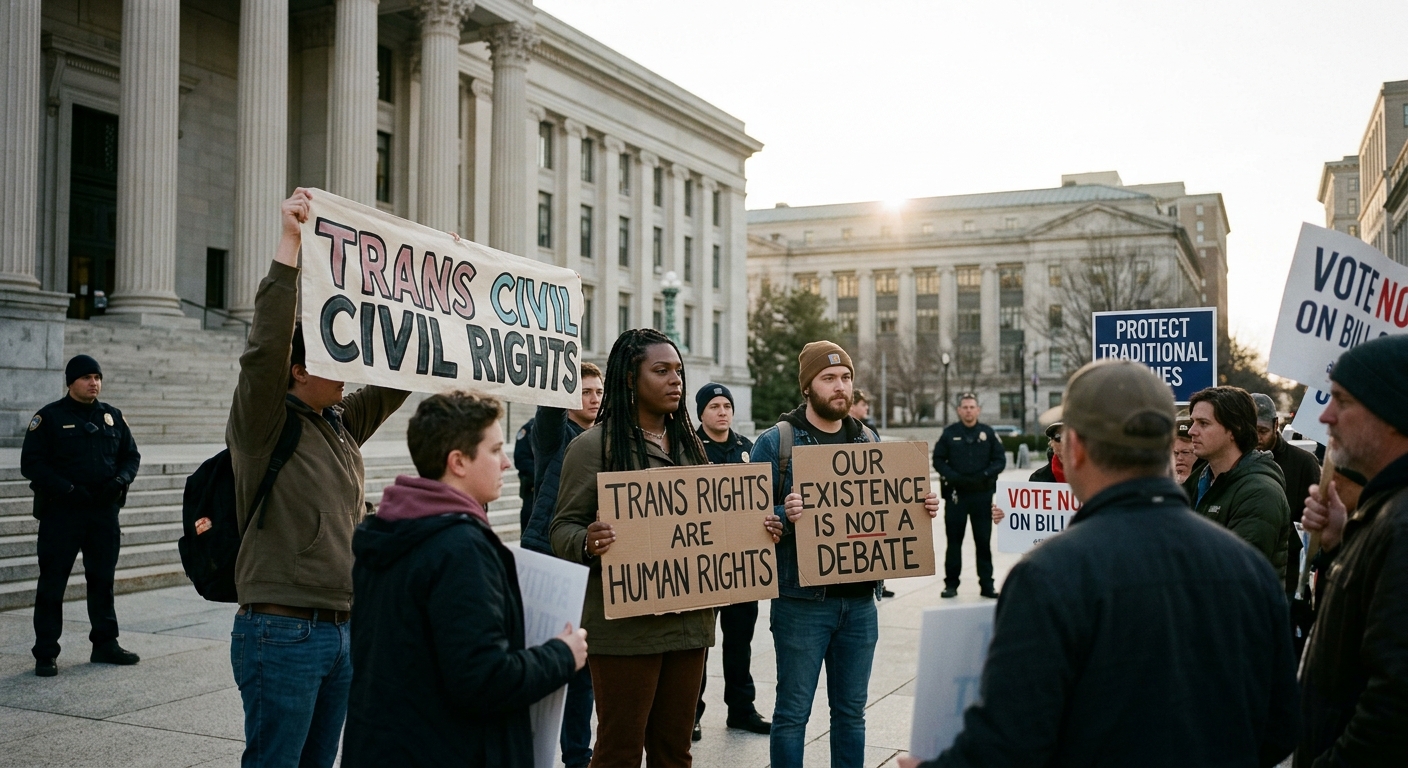
The Complex Landscape of Transgender Advocacy
The quest for civil rights in the United States has never followed a simple, linear progression, and the modern movement for transgender equality is a powerful testament to this historical reality. Over the past decade, transgender Americans have stepped into the public sphere with unprecedented visibility, rightfully claiming their space in society, culture, the workplace, and public office. However, this profound increase in visibility has been met with a formidable and highly organized wave of political, legal, and social resistance. The fight for transgender civil rights is not merely a niche cultural debate; it is a fundamental test of the nation’s commitment to equal protection under the law, bodily autonomy, and freedom of expression. To comprehend why this advocacy remains as vital—and as challenging—as ever, one must delve into the intricate web of state-level legislative actions, mainstream medical consensus, federal judicial precedents, and the steadfast, unyielding resilience of the transgender community.
At its core, the transgender rights movement seeks to ensure that individuals whose gender identity differs from the sex they were assigned at birth can live authentically, free from systemic discrimination, physical violence, and institutional barriers. Today’s advocacy landscape is characterized by a stark duality: profound cultural breakthroughs occurring alongside aggressive statutory crackdowns. While corporate diversity initiatives, media representation, and general public awareness have fostered a more inclusive environment in many sectors, this same visibility has galvanized political opposition. Advocacy organizations find themselves constantly playing defense, fighting a myriad of bills designed to curtail the fundamental rights of transgender people, particularly youth.
A Historical Lens on Gender Identity and the Law
The modern legal framework surrounding gender identity is built upon decades of hard-fought, often dangerous advocacy that went largely unrecognized by the mainstream public. For many years, transgender people were explicitly or implicitly excluded from standard anti-discrimination statutes. Early legal battles did not focus on marriage or corporate equality, but rather on the right to simply exist in public spaces without facing criminal charges for defying rigid gender norms. As the broader LGBTQ+ movement gained momentum in the late twentieth and early twenty-first centuries, transgender activists continuously pushed to ensure their specific needs were not sidelined.
A crucial turning point occurred when legal scholars and advocates successfully began arguing that discrimination against transgender individuals is fundamentally a form of sex discrimination. This strategic pivot transformed the legal landscape, providing advocates with a powerful constitutional and statutory foundation to challenge discriminatory laws and protect some of the most vulnerable populations in the country.
Legislative Headwinds in the Modern Era
Rather than focusing solely on broad, overarching federal bans, opponents of transgender equality have adopted a hyper-localized strategy in recent years. This has resulted in the introduction of hundreds of highly restrictive bills in state legislatures across the country, transforming local statehouses into the primary battlegrounds for civil rights.
The Surge in Restrictive State Legislation
According to data compiled by civil liberties organizations, recent legislative sessions have witnessed record-breaking numbers of anti-transgender bills, with hundreds of pieces of legislation debated nationwide annually. These legislative efforts are not random; they are highly coordinated and generally fall into specific, targeted categories:
- Criminalizing Healthcare: Bills that seek to ban or criminalize the provision of gender-affirming medical care for minors, with some states attempting to extend these bans to young adults.
- Educational Gag Orders: Policies that restrict teachers from using a student’s preferred pronouns, mandate the outing of students to their parents, or forbid the discussion of gender identity in the classroom entirely.
- Sports Participation: Laws categorically banning transgender girls and women from participating in female sports leagues at the K-12 and collegiate levels.
- Public Accommodations: Renewed legislative efforts to restrict public bathroom and locker room access strictly based on the biological sex assigned at a person’s birth.
These laws do much more than restrict daily actions; they send a chilling, state-sanctioned message to transgender youth and adults that their identities are invalid or inherently dangerous. The psychological and emotional toll of living in a state where one’s basic rights are constantly debated on the legislative floor is immense. Consequently, an increasing number of families are making the difficult decision to uproot their lives and relocate to more protective “sanctuary” states where their civil rights are enshrined in state law.
Healthcare Access and Medical Consensus
Perhaps the most contentious and emotionally fraught battleground in the current fight for transgender rights is access to gender-affirming medical care. Political opponents frequently frame these treatments as experimental, irreversible, or harmful, particularly when applied to adolescents. However, this political rhetoric stands in stark, direct opposition to the established, evidence-based consensus of the mainstream medical and psychiatric community.
Major, highly respected medical associations—including the American Medical Association (AMA), the American Academy of Pediatrics, and the American Psychological Association—have unequivocally stated that gender-affirming care is medically necessary and often life-saving for individuals experiencing gender dysphoria. The AMA, for instance, formally supports public and private health insurance coverage for gender dysphoria treatment and strongly opposes any laws or policies that criminalize or prohibit the provision of this evidence-based care.
Despite this overwhelming scientific and medical consensus, state legislatures have aggressively passed bans, effectively substituting political ideology for specialized medical expertise. This unprecedented interference in the private doctor-patient relationship represents a profound infringement on bodily autonomy. Families are left navigating a chaotic and frightening legal landscape, often forced to travel long distances across state lines or rely on telehealth services from out-of-state providers simply to secure necessary medical treatments for their children.
Legal Milestones: The Anchor of Civil Rights Defenses
While the legislative arena has been fraught with severe setbacks, the federal judicial system has periodically provided crucial, stabilizing victories that anchor the modern transgender rights movement. Legal advocates have successfully utilized existing, decades-old civil rights frameworks to defend the transgender community against systemic state discrimination.
Title VII and the Bostock Precedent
The most monumental legal victory for transgender rights in recent American history is the United States Supreme Court’s 2020 decision in Bostock v. Clayton County. In a landmark 6-3 ruling, the Court determined that Title VII of the Civil Rights Act of 1964—the landmark law prohibiting employment discrimination based on race, color, religion, sex, or national origin—inherently protects employees against discrimination on the basis of sexual orientation and gender identity.
The legal logic underpinning the Bostock decision, articulated by the conservative majority, is profoundly important: it is impossible to discriminate against a person for being transgender without inherently taking that person’s sex into account. For example, if an employer fires a transgender woman for presenting as a woman, but would not fire a cisgender woman for the exact same presentation, the employer is illegally penalizing the employee for traits or actions it tolerates in individuals of another sex. This ruling established an unshakeable federal precedent that validates the legal standing of transgender Americans. While it specifically addressed employment, lower courts are now heavily utilizing the Bostock framework to evaluate and strike down discriminatory state laws concerning housing, education, and healthcare access.
Societal Impact and Demographics
Understanding the gravity of the fight for transgender rights requires acknowledging the real, everyday people behind the intense political debates. The transgender population in the United States is deeply integrated into communities across the nation, far larger and more diverse than historically presumed by the general public.
A Closer Look at the Data
Rigorous demographic research provides vital insights into the scope of this civil rights issue. According to demographic estimates, millions of Americans identify as transgender, with a significant portion being youth who are currently bearing the brunt of state-level legislative attacks. The data reveals a generational shift toward greater societal acceptance and understanding of gender diversity, but it simultaneously highlights extreme vulnerabilities. A disproportionate number of transgender individuals reside in regions that have passed highly restrictive laws, severely impacting their physical safety, economic stability, and mental health.
| Metric / Category | Estimate / Legal Reality | Context / Source |
|---|---|---|
| Total Transgender Population (Ages 13+) | Approximately 2.8 Million | Williams Institute at UCLA (2025 Data) |
| Transgender Youth (Ages 13-17) | Approximately 724,000 | Williams Institute at UCLA (2025 Data) |
| Primary Targets of Restrictive State Legislation | Healthcare, K-12 Education, Youth Sports | Monitored by major civil rights organizations |
| Official Medical Stance on Care | Deemed medically necessary and evidence-based | American Medical Association (AMA) Consensus |
| Federal Employment Protections | Protected under Title VII of the Civil Rights Act | Supreme Court Ruling: Bostock v. Clayton County |
The Intersections of Freedom: Bodily Autonomy and Expression
The ongoing fight for transgender rights cannot be siloed as an isolated cultural issue; it is intrinsically and undeniably linked to the broader civil liberties that affect all American citizens. At the very heart of the transgender rights movement is the foundational democratic principle of bodily autonomy—the fundamental right of an individual to govern their own body and make private medical decisions without coercive, politically motivated interference from the state. When lawmakers grant themselves the authority to dictate what standard medical treatments a person can receive, or how they must present themselves in public spaces, they severely infringe upon a basic constitutional liberty.
Furthermore, the crusade against transgender rights routinely bleeds into direct violations of the First Amendment. Educational gag orders that outright prohibit the classroom discussion of gender identity, or state-mandated bans on library books featuring LGBTQ+ characters, represent aggressive assaults on the freedom of speech and the public’s right to information. By framing transgender existence as inherently explicit, controversial, or inappropriate, these laws attempt to erase an entire demographic from public life and cultural memory. Therefore, defending transgender rights is absolutely synonymous with defending the constitutional principles of free expression, medical privacy, and equal protection under the law for everyone.
Strategies for Sustained Progress and Resilience
Because the institutional pushback against transgender rights is multi-faceted, the strategies employed to defend and advance these fundamental rights must be equally dynamic and comprehensive. The legal, political, and cultural arenas all require sustained, coordinated engagement from advocates and allies alike.
In the federal courts, civil liberties organizations continue to file critical injunctions against state-level healthcare bans and educational restrictions. These legal challenges typically argue that such laws violate the Equal Protection Clause of the Fourteenth Amendment and contravene established federal precedents like Bostock. While the judicial process is often slow and grueling, these protracted legal battles are absolutely essential for stalling the implementation of harmful legislation and establishing permanent, protective case law.
Mobilizing Grassroots Advocacy
Beyond the courtroom, grassroots mobilization remains the vibrant lifeblood of the civil rights movement. Community organizations, mutual aid networks, and local neighborhood activists work tirelessly on the ground to support those most directly and immediately impacted by discriminatory policies. This essential work includes helping vulnerable families navigate the logistics of interstate travel for healthcare, providing emergency mental health resources, and organizing massive voter registration drives to elect representatives who prioritize human equality.
Ultimately, the resilience of the transgender community is its most potent and enduring weapon. Despite navigating a climate of heightened hostility and intense political vitriol, transgender individuals continue to bravely share their personal stories, run for public office, create paradigm-shifting art, and demand a seat at the table. This unwavering visibility is steadily eroding the fear and ignorance that fuel discriminatory legislation. The fight will undoubtedly continue, demanding vigilance and deep empathy, but the overarching trajectory of civil rights history suggests that equality, once fiercely and loudly demanded, cannot be indefinitely denied.
Frequently Asked Questions (FAQs)
What was the significance of the Bostock v. Clayton County Supreme Court ruling?
In 2020, the United States Supreme Court delivered a landmark ruling in Bostock v. Clayton County, determining that Title VII of the Civil Rights Act of 1964 protects employees from discrimination based on their sexual orientation and gender identity. This decision affirmed that firing someone simply for being transgender constitutes a form of illegal sex discrimination under federal law.
Do major medical organizations support gender-affirming care?
Yes. The overwhelming consensus among leading national medical bodies, including the American Medical Association (AMA), the American Academy of Pediatrics, and the American Psychological Association, is that gender-affirming care is a highly researched, medically necessary, and evidence-based treatment for individuals experiencing gender dysphoria.
Why are state legislatures suddenly introducing so many anti-transgender bills?
The recent surge in state-level legislation is largely driven by coordinated, well-funded political campaigns that utilize gender identity as a wedge issue to energize voter bases. These bills typically target highly emotional, highly debated areas such as youth medical healthcare, public school sports participation, and public bathroom access.
How does the fight for transgender rights relate to broader American civil liberties?
Transgender rights are deeply and inextricably intertwined with fundamental constitutional liberties, including the right to bodily autonomy, the right to medical privacy, freedom of speech, and equal protection under the law. Legal scholars warn that laws targeting the transgender community often set dangerous judicial precedents that can subsequently be used to undermine the civil rights of all citizens.
References
- How Many Adults and Youth Identify as Transgender in the United States? — Williams Institute at UCLA School of Law. 2025-08-15. https://williamsinstitute.law.ucla.edu/publications/trans-adults-united-states/
- Advocating for the LGBTQ community — American Medical Association. 2026-06-01. https://www.ama-assn.org/delivering-care/population-care/advocating-lgbtq-community
- Bostock v. Clayton County, 590 U.S. 644 — Supreme Court of the United States. 2020-06-15. https://www.supremecourt.gov/opinions/19pdf/17-1618_hfci.pdf
- Mapping Attacks on LGBTQ Rights in U.S. State Legislatures in 2024 — American Civil Liberties Union (ACLU). 2024. https://www.aclu.org/legislative-attacks-on-lgbtq-rights
Similar Articles








Read full bio of medha deb


