
The Enduring Battle for Constitutional Rights
Defending our freedoms demands relentless nonpartisan vigilance.
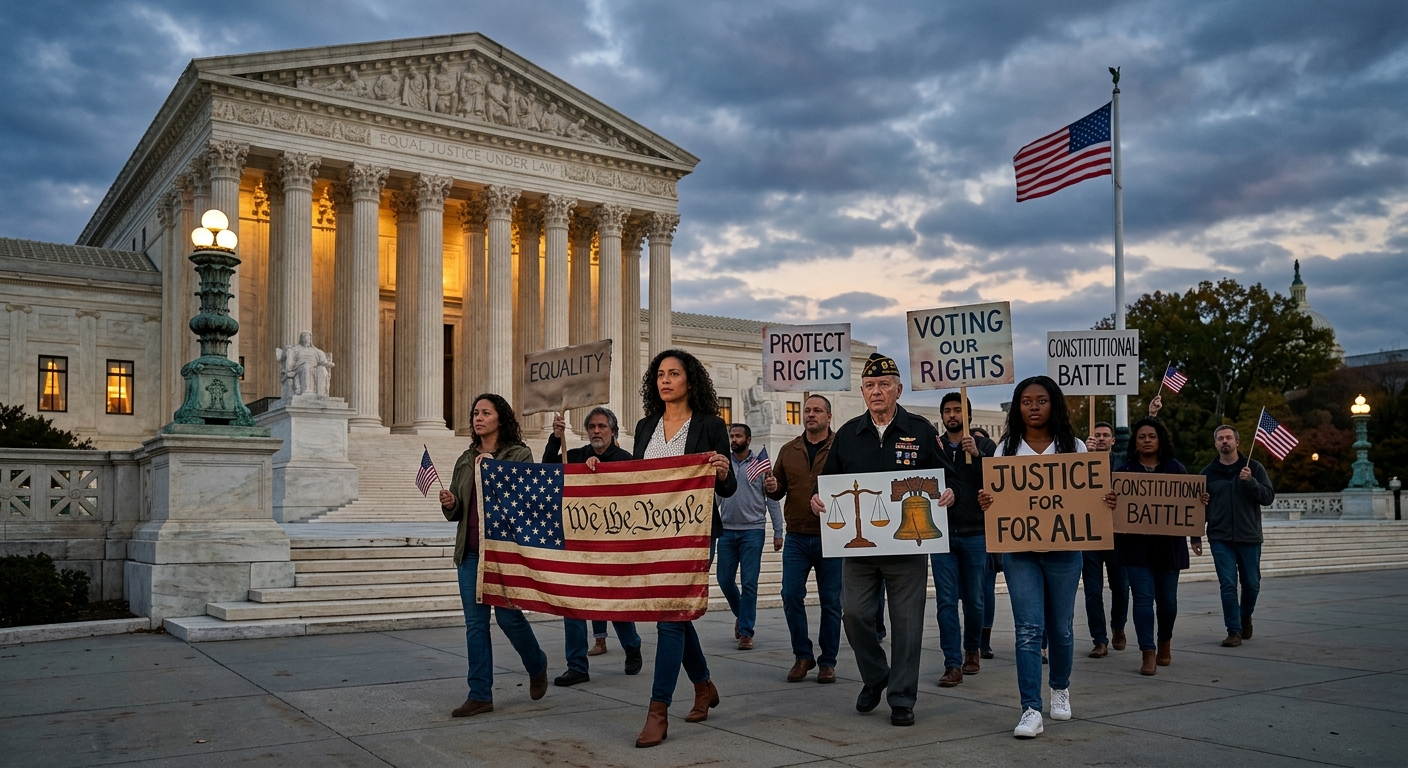
Elections are momentous events that shape the immediate policy trajectory of a nation. When administrations shift, the rhetoric, priorities, and legislative agendas inevitably pivot. However, the foundational civil liberties that undergird a functioning democracy are not contingent upon the occupant of the Oval Office. Human rights, constitutional freedoms, and legal protections are enduring principles that require relentless defense, regardless of the political party in power. Advocacy organizations, civil rights lawyers, and vigilant citizens operate on the core philosophy that freedom is an ongoing, continuous battle rather than a static achievement.
This comprehensive analysis delves into the systemic, strategic, and philosophical architecture of defending civil liberties in a nonpartisan manner. We will explore why the fight for justice remains uninterrupted by election cycles, analyzing the complex mechanisms used to hold government institutions accountable, safeguard minority rights, and preserve the delicate balance of power. By understanding the multi-tiered approach to constitutional defense—ranging from federal litigation to grassroots mobilization and state-level advocacy—we can better appreciate the resilience of democratic institutions and the perpetual effort required to sustain them against encroaching authoritarianism.
Institutional Safeguards vs. Political Cycles
The framers of the United States Constitution intentionally designed a complex system of checks and balances to prevent any single branch of government from accumulating unchecked authority. This architectural framework serves as the very first line of defense for civil liberties. When a new president assumes power, they inherently bring an executive agenda that may seek to expand administrative power, sometimes at the direct expense of individual rights. Legal advocacy groups do not simply wait to see if these expansions will cross the constitutional line; they proactively prepare to challenge them the moment rights are threatened.
The Limitations of Executive Branch Policies
The executive branch possesses immense operational capability through federal agencies, executive orders, and administrative rulemaking. A sudden change in leadership can mean a dramatic shift in how federal laws are interpreted, enforced, or even ignored. For instance, federal departments can alter their stance on civil rights enforcement, environmental regulations, or immigration policies practically overnight. In response to such volatile shifts, independent legal organizations act as a vital counterweight. They rely heavily on the judiciary to compel the executive branch to strictly adhere to established constitutional boundaries and statutory mandates.
The Judiciary as the Constitutional Arbiter
The courts serve as the ultimate arbiter in these high-stakes disputes. While the appointment of judges has become a deeply political process, the judiciary remains nominally independent and bound by legal precedent and constitutional text. Civil liberties advocates utilize federal courts to secure emergency injunctions against unconstitutional executive orders, boldly challenging policies that threaten free speech, due process, or equal protection under the law. This inherently adversarial system ensures that civil rights are not merely suggestions subject to the whims of a newly elected president, but rather binding obligations that must be respected and enforced by the state. The reliance on the courts underlines a fundamental truth: while political cycles are temporary and fleeting, constitutional jurisprudence builds a lasting firewall against executive overreach.
Key Battlegrounds for Civil Rights Defenders
The defense of freedom encompasses a wide, intersectional spectrum of issues. While the specific legal battles and tactical approaches may evolve over time, the core areas of concern remain relatively consistent across different presidential administrations.
Electoral Integrity and Voting Access
The undeniable cornerstone of any functioning democracy is the unencumbered right to vote. Without equitable access to the ballot box, citizens completely lose their ability to hold their leaders accountable, rendering all other civil rights deeply vulnerable. Civil rights advocates work tirelessly to dismantle insidious barriers to voting, such as partisan gerrymandering, highly restrictive voter ID laws, and the systemic purging of eligible voter rolls. The historical context of this fight is rooted deeply in legislative milestones. Enacted over half a century ago, the Voting Rights Act of 1965 was designed to effectuate the 15th Amendment’s explicit guarantee that no citizen be denied the right to vote on account of race. Despite its historical success, ongoing, vigorous litigation is required to enforce its provisions and adapt to modern, sophisticated methods of voter suppression. Regardless of whether a progressive or conservative administration currently holds the presidency, the struggle to ensure equal access to the electoral process is a perpetual legal and grassroots battle that cannot be paused.
Bodily Autonomy and Medical Privacy
Personal freedom intrinsically dictates that individuals possess the fundamental right to make deeply personal decisions about their own bodies without experiencing undue governmental interference. This broad umbrella encompasses reproductive rights, access to contraception, and gender-affirming medical care. When federal protections for these critical rights are eroded or overtly threatened by shifts in the ideological makeup of the Supreme Court or aggressive executive branch mandates, the defense intensifies. Advocacy groups aggressively challenge state and federal bans that infringe upon medical privacy and personal liberty, arguing that bodily autonomy is a non-negotiable human right. This specific arena is fraught with intense ideological polarization, making nonpartisan, strictly rights-based advocacy absolutely crucial for protecting the vulnerable populations who are disproportionately affected by restrictive, intrusive healthcare laws.
Protecting Vulnerable Communities: Immigrants and Minorities
Regardless of the administration in power, immigration policies frequently become an intense flashpoint for civil liberties disputes. The executive branch historically asserts broad authority over border control and immigration enforcement, which can predictably lead to severe due process violations, systemic family separations, and the mistreatment of vulnerable asylum seekers. Defenders of civil liberties strongly argue that human rights are universal and are not strictly confined by a person’s citizenship status. They continuously file complex class-action lawsuits to ensure humane, dignified treatment in detention centers, forcefully demand fair legal hearings for migrants, and protect marginalized communities from discriminatory policing practices. The central assertion is uncompromisingly simple: the Constitution’s firm guarantees of due process and equal protection naturally apply to all individuals within the nation’s borders, acting as an essential shield against xenophobic, politically motivated, or racially discriminatory executive directives.
The Strategic Evolution: Federal to State-Level Advocacy
For several decades, civil rights advocates primarily looked toward the federal judiciary and the United States Constitution as the ultimate mechanisms for expanding and rigorously protecting individual liberties. However, as the ideological composition of federal courts continues to shift and the Supreme Court selectively alters long-standing judicial precedents, a major strategic pivot has become utterly necessary. Modern civil rights defense increasingly relies on localized, state-level advocacy and the robust utilization of state constitutions.
State constitutions frequently offer much broader and far more explicit protections for individual rights than the federal Constitution does. Legal scholars commonly refer to this vital phenomenon as “judicial federalism.” Because the federal Constitution essentially serves as a foundational floor rather than an absolute ceiling for civil liberties, individual states are entirely free to grant their own citizens significantly greater protections. For example, numerous state constitutions explicitly outline an undeniable right to privacy, strict equal rights across genders, and concrete guarantees to a high-quality public education—provisions that are either conspicuously absent or very weakly interpreted at the federal level. By strategically redirecting crucial litigation to state supreme courts, civil rights advocates can effectively insulate civil liberties from hostile federal administrations and an increasingly conservative federal judiciary.
Comparison of Federal vs. State Civil Rights Strategies
| Strategic Element | Federal Strategy | State Strategy |
|---|---|---|
| Constitutional Basis | U.S. Constitution (Acts as a baseline/floor for rights) | State Constitutions (Can serve as a higher ceiling for rights) |
| Scope of Privacy | Implied through the 1st, 4th, 9th, and 14th Amendments | Often explicitly stated directly in the state constitutional text |
| Vulnerability to Executive Action | Highly vulnerable to federal executive orders and DOJ shifts | Insulated from the President; subject only to state governors/legislatures |
| Judicial Appointments | Lifetime appointments heavily influenced by national politics | Often elected or subject to retention elections, keeping them locally accountable |
Preparing for Future Executive Overreach
The modern era of the presidency has witnessed a gradual, continuous, and deeply concerning expansion of executive power. This distinct trend persists vigorously regardless of the political party currently occupying the White House. From the unilateral use of military force and the unchecked expansion of digital surveillance apparatuses to the highly creative use of emergency declarations designed to intentionally bypass congressional funding, the executive branch continually tests the outer limits of its constitutional authority. This relatively unchecked growth actively poses a systemic, long-term threat to democratic governance and baseline civil liberties.
To proactively combat this phenomenon, specialized legal defense organizations meticulously prepare for potential overreach well before a new president is even inaugurated. They diligently develop comprehensive, multi-scenario litigation playbooks, preemptively draft emergency legal motions, and closely monitor administrative agencies for subtle regulatory changes that could efficiently strip away environmental protections, labor rights, or digital privacy safeguards. By maintaining a constant, rigorous posture of legal readiness, these dedicated groups can immediately and aggressively challenge executive orders that deliberately overstep legal boundaries. This proactive, defense-oriented strategy ensures that the modern presidency does not slowly morph into an elected autocracy, keeping raw executive ambition firmly tethered to the unyielding rule of law.
The Role of the Citizen: Grassroots Mobilization
While strategic litigation and organized lobbying are absolutely essential tools for structural defense, they are not entirely sufficient on their own. The absolute ultimate check on unchecked governmental power is an informed, fiercely mobilized, and highly vocal citizenry. Grassroots movements continually play an indispensable, on-the-ground role in the broad defense of civil liberties by aggressively shifting public opinion, organizing massive protests, and directly applying sustained pressure to elected officials at the local, state, and federal levels.
When institutional, structural guardrails ultimately fail, it is the mobilized public that must step up to demand accountability. Grassroots organizations tirelessly register voters, facilitate community education regarding fundamental legal rights, and meticulously ensure that deliberately marginalized voices are loudly amplified in the silent halls of power. A successfully mobilized populace explicitly demonstrates to political leaders that violations of baseline civil liberties will inevitably carry steep, unavoidable electoral and social consequences, effectively reinforcing the highly technical legal battles currently being fought in the nation’s courtrooms.
Frequently Asked Questions (FAQs)
- Why do civil rights organizations often sue presidential administrations they theoretically align with ideologically?
Civil liberties organizations base their actions on strict legal principles and constitutional text, not partisan loyalty. If any administration—regardless of political affiliation—enacts a policy that actively violates constitutional rights or heavily oversteps executive bounds, advocacy groups are ethically and legally obligated to challenge it. This ensures that executive power remains consistently checked and prevents dangerous precedents from being quietly established. - How precisely do state constitutions provide more robust rights than the federal Constitution?
The U.S. Constitution effectively sets the absolute minimum baseline standard for human rights strictly nationwide. State constitutions can easily build upon this foundational floor, explicitly guaranteeing additional, broader liberties—such as environmental protections, more robust digital privacy protections, and much stricter equal protection clauses. State courts can interpret and fiercely enforce these state-level rights completely independently of restrictive federal Supreme Court rulings. - What ongoing role does the Voting Rights Act of 1965 play in modern elections today?
Despite being historically passed in 1965, the Voting Rights Act functionally remains a vital, heavily utilized legal tool for actively combating racial discrimination within local and federal elections. Although some of its original enforcement provisions have been notably weakened by recent Supreme Court decisions, determined civil rights lawyers continue to creatively use its remaining active sections to successfully challenge partisan gerrymandering, highly restrictive voting laws, and discriminatory ballot-access policies across the nation.
References
- Introduction To Federal Voting Rights Laws — U.S. Department of Justice. 2015-08-06. https://www.justice.gov/crt/introduction-federal-voting-rights-laws
- Universal Declaration of Human Rights — United Nations. 1948-12-10. https://www.un.org/en/about-us/universal-declaration-of-human-rights
- State Constitutions as the Future for Civil Rights — Erwin Chemerinsky / UNM Law Repository. 2018-01-01. https://digitalrepository.unm.edu/nmlr/vol48/iss2/5
- Is the growth of executive power a threat to constitutional democracy? — Brookings Institution. 2025-07-02. https://www.brookings.edu/articles/is-the-growth-of-executive-power-a-threat-to-constitutional-democracy/
Similar Articles








Read full bio of Sneha Tete


