
Dismantling the Dynasty: Why Ending Legacy Admissions is Essential for Higher Education Equity
Eradicating hereditary preferences in college admissions is the critical next step toward a truly meritocratic academic landscape.
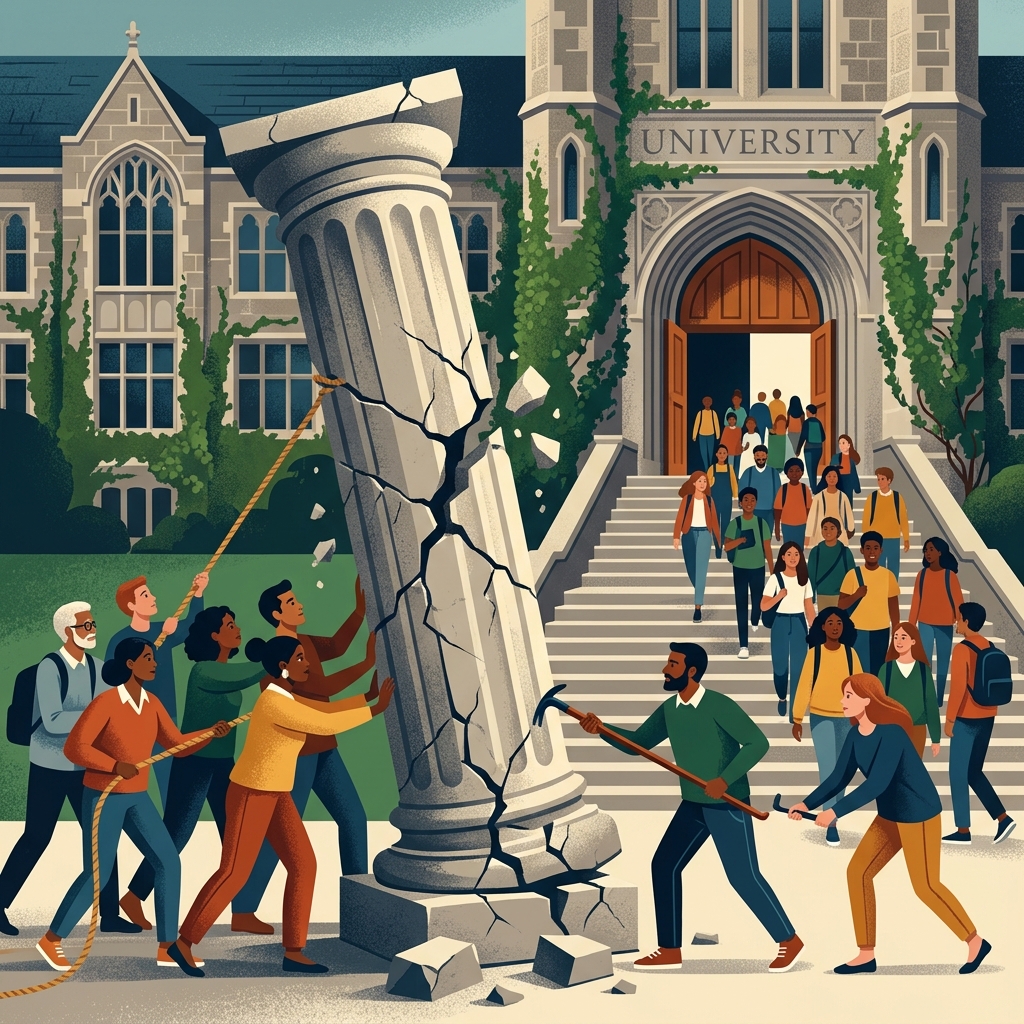
The landscape of American higher education is currently undergoing a seismic structural shift. For decades, the college admissions process at the nation’s most selective institutions has been fiercely competitive, operating under the theoretical banner of academic meritocracy. However, behind the glossy brochures and mission statements championing equal opportunity, a quiet engine of inherited privilege has been running uninterrupted: legacy admissions. Following the 2023 Supreme Court decision that struck down race-based affirmative action, the national spotlight has intensely and rightfully pivoted toward this entrenched practice. As lawmakers, civil rights advocates, and academic leaders scrutinize the mechanics of college acceptance, the consensus is growing clearer. Eradicating hereditary preferences is no longer just a progressive talking point; it is a fundamental prerequisite for achieving genuine education equity in the United States.
The Architecture of Inherited Advantage
To understand the urgency of abolishing legacy preferences, one must first dissect how the system functionally operates behind closed admissions doors. Legacy admission is the institutional practice of granting a distinct competitive advantage to applicants whose parents, and sometimes grandparents, either attended the university or have been substantial financial donors. Instead of evaluating a candidate purely on their individual academic rigor, extracurricular achievements, and personal resilience, institutions factor in their bloodline.
The statistical reality of this advantage is staggering. Elite universities often report that their legacy acceptance rates are exponentially higher than the general applicant pool. A comprehensive 2023 study by Opportunity Insights, a research group based at Harvard University and published through the National Bureau of Economic Research (NBER), revealed the sheer magnitude of this systemic boost. The data indicated that legacy students hailing from the top 1% of the income distribution were dramatically more likely to be admitted to “Ivy Plus” colleges compared to non-legacy applicants with identical test scores and academic credentials. In practice, this means that highly qualified, first-generation students are frequently edged out of limited enrollment spots by applicants whose primary differentiating factor is their ancestry.
This architecture of inherited advantage stands in direct contradiction to the foundational American ideal that hard work and intellect should dictate one’s trajectory. When institutions function as gatekeepers to the upper echelons of corporate leadership, governmental influence, and economic stability, allowing a hereditary fast-track fundamentally corrupts the promise of upward mobility.
A Historical Engine for Racial and Economic Disparity
The persistence of legacy admissions cannot be fully understood without examining its troubling historical roots. Legacy preference was not a founding principle of American higher education. Instead, the practice gained widespread institutional traction in the 1920s as a deliberate, exclusionary tactic. During that era, selective universities faced an influx of high-achieving Jewish immigrant students. To cap these numbers and preserve the predominantly white, Anglo-Saxon Protestant demographic of their campuses, universities implemented “holistic” admissions criteria, heavily weighting family ties and perceived “character” to justify maintaining their traditional student body.
A century later, the demographic makeup of the legacy pool has evolved, but its exclusionary impact remains profoundly intact. Because generations of Black, Hispanic, and Indigenous students were systematically barred from attending prestigious universities due to overt segregation and discriminatory policies, the modern pool of alumni children remains disproportionately white and affluent.
When universities grant a legacy boost today, they are effectively compounding historical injustices. According to a 2024 analysis by the Brookings Institution, while legacy admissions are most prevalent among selective private institutions, a significant minority of public universities also utilize the practice. Across the board, this mechanism functionally serves as affirmative action for the wealthy. It locks in generational wealth and restricts access for historically marginalized communities, ensuring that the sins of past educational segregation continue to dictate modern collegiate demographics.
The End of Race-Conscious Admissions Demands Structural Consistency
The debate over legacy admissions reached a boiling point following the Supreme Court’s ruling in Students for Fair Admissions v. Harvard, which effectively dismantled race-conscious admissions policies nationwide. The ruling dictated that universities could no longer utilize a student’s race as a factor to promote campus diversity. This decision created an immediate, glaring paradox within the higher education ecosystem.
How can universities legally and ethically justify turning a blind eye to a student’s race—a factor deeply intertwined with systemic societal barriers—while simultaneously rewarding a student’s proximity to historic privilege? Critics, including top federal officials, were quick to point out the hypocrisy. The Associated Press reported widespread bipartisan backlash against legacy admissions in the immediate wake of the ruling, noting that protecting ancestral privilege while stripping away tools for racial equity is intellectually and morally indefensible.
The fallout from the Supreme Court decision is already materializing. Early enrollment data from several highly selective institutions indicates a concerning backslide in the enrollment of Black and Hispanic freshmen. While ending legacy admissions is not a magical panacea that will single-handedly restore racial diversity to these campuses, it is a crucial step in leveling the playing field. Removing the unearned legacy advantage forces universities to look closer at first-generation and low-income students who have demonstrated extraordinary academic potential despite facing significant socioeconomic headwinds.
The Financial Fallacy: Do Universities Really Need Legacy Donors?
When pressed to defend legacy preferences, university administrators almost exclusively retreat to a financial justification. The prevailing institutional narrative argues that admitting the children of alumni fosters deep generational loyalty, which in turn drives robust alumni giving and bulks up university endowments. These endowments, universities claim, are strictly necessary to fund financial aid packages for lower-income students. Therefore, the argument suggests, legacy admissions indirectly benefit marginalized students.
However, empirical economic research severely undermines this defense. Multiple studies analyzing higher education finance have found no reliable, causal relationship between a university’s legacy admission policy and its total volume of alumni donations. While ultra-wealthy alumni may occasionally condition massive capital gifts on their child’s acceptance, the broader base of alumni giving remains largely unaffected by the presence or absence of a legacy boost.
Furthermore, real-world institutional precedents prove that financial ruin does not follow the abolition of legacy preferences. Highly selective and massively endowed institutions such as the Massachusetts Institute of Technology (MIT), Johns Hopkins University, and Amherst College have explicitly banned the consideration of legacy status. These universities continue to boast some of the highest alumni engagement rates and largest endowments in the world, proving that academic excellence and institutional loyalty do not require the sacrifice of meritocratic admissions.
Legislative Momentum: States Taking the Lead
Frustrated by the sluggish pace of voluntary reform among elite private institutions, state legislatures across the country have begun taking decisive action. A powerful, bipartisan legislative momentum is currently reshaping the boundaries of college admissions, proving that the demand for educational equity transcends political lines.
Several states have successfully enacted laws prohibiting public universities from considering a student’s legacy or donor status. However, a new wave of legislation is pushing these boundaries even further by targeting private institutions.
| State | Scope of Legacy Admission Ban | Year Enacted |
|---|---|---|
| Colorado | Public Universities Only | 2021 |
| Virginia | Public Universities Only | 2024 |
| Maryland | Public and Private Universities | 2024 |
| California | Public and Private Universities | 2024 (Effective Fall 2025) |
In September 2024, California made headlines by becoming the second state, after Maryland, to ban legacy and donor-based admissions at both public and private universities, a move heavily documented by major news outlets. The law directly impacts prestigious private institutions like Stanford University and the University of Southern California, forcing them to pivot their admissions rubrics toward true meritocracy. Concurrently, the federal government has intensified its scrutiny, with the U.S. Department of Education launching civil rights investigations into how legacy preferences disproportionately favor white applicants at Ivy League institutions.
Reimagining the Future of College Admissions
Abolishing legacy admissions is just the first step in a much larger journey toward redefining merit in higher education. If universities are to truly fulfill their role as engines of social mobility, they must proactively redesign their admissions criteria to identify talent across all socioeconomic strata. Reimagining this future involves several critical shifts:
- Evaluating “Distance Traveled”: Admissions officers must place a heavier emphasis on a student’s socioeconomic context. A student who achieves academic excellence while working a part-time job or attending an underfunded public high school demonstrates exceptional resilience and potential that raw test scores often fail to capture.
- Expanding Geographic Recruitment: Elite universities historically concentrate their recruitment efforts on a handful of affluent zip codes and private feeder schools. True equity requires expanding outreach to rural communities, inner-city public schools, and community colleges.
- Enhancing First-Generation Support: Institutions should actively prioritize applicants who will be the first in their families to attend college, effectively creating a counter-balance to the historical advantages previously afforded to legacy families.
- Redefining Holistic Review: Moving away from superficial markers of “character” that often favor wealthy students—such as expensive niche sports or costly international volunteering trips—and instead valuing community leadership, family responsibilities, and sustained commitment to local issues.
Conclusion: Forging a Truly Equitable Academic Future
The continued existence of legacy admissions is an unacceptable anomaly in a society that claims to value equality of opportunity. It is a system that actively hoards educational resources for the already privileged while placing invisible ceilings over the heads of the marginalized. As the legal mechanisms for race-conscious diversity are stripped away, the moral imperative to eliminate unearned, hereditary advantages becomes absolute. Dismantling the dynasty of legacy admissions is not merely about punishing the privileged; it is about restoring integrity to higher education. By ensuring that college acceptance letters are earned through individual brilliance and hard work rather than the luck of birth, we can finally begin to build a collegiate landscape that reflects the true diverse potential of the nation.
Frequently Asked Questions (FAQs)
What exactly is a legacy admission?
Legacy admission is a college enrollment practice where applicants are given a competitive advantage because they have a familial connection to the university. This usually means one or both of their parents, and sometimes grandparents, graduated from that specific institution.
Why was the legacy admission system originally created?
While often defended today as a tool for alumni community building, the practice was largely popularized in the 1920s by selective universities specifically to limit the enrollment of Jewish immigrants and maintain a predominantly white, Protestant student body.
Does ending legacy admissions harm a university’s financial endowment?
Research indicates it does not. Extensive economic studies have found no causal link between legacy admission policies and total alumni giving. Several highly endowed universities, such as MIT and Johns Hopkins, do not consider legacy status and still maintain immense financial backing from their alumni.
Which states have made legacy admissions illegal?
As of late 2024, states like Colorado, Virginia, and Illinois have banned legacy admissions at public universities. Maryland and California have gone a step further, enacting legislation that bans the practice at both public and private non-profit universities within their state borders.
References
- Diversifying Society’s Leaders? The Determinants and Causal Effects of Admission to Highly Selective Private Colleges — National Bureau of Economic Research (NBER). 2023-07-01. https://www.nber.org/papers/w31492
- Who uses legacy admissions? — Brookings Institution. 2024-03-12. https://www.brookings.edu/articles/who-uses-legacy-admissions/
- California bans universities from admitting students based on ‘legacy’ — The Guardian. 2024-09-30. https://www.theguardian.com/us-news/2024/sep/30/california-legacy-admissions-ban
- Affirmative action for white people? Legacy college admissions come under renewed scrutiny — AP News. 2023-06-30. https://apnews.com/article/supreme-court-affirmative-action-legacy-admissions-f4e3c1503c5132a0cda802778a48fc1a
Similar Articles








Read full bio of medha deb


