
The End of the Electric Chair: A Legal Turning Point
Exploring the historic 2008 Nebraska ruling banning the electric chair.
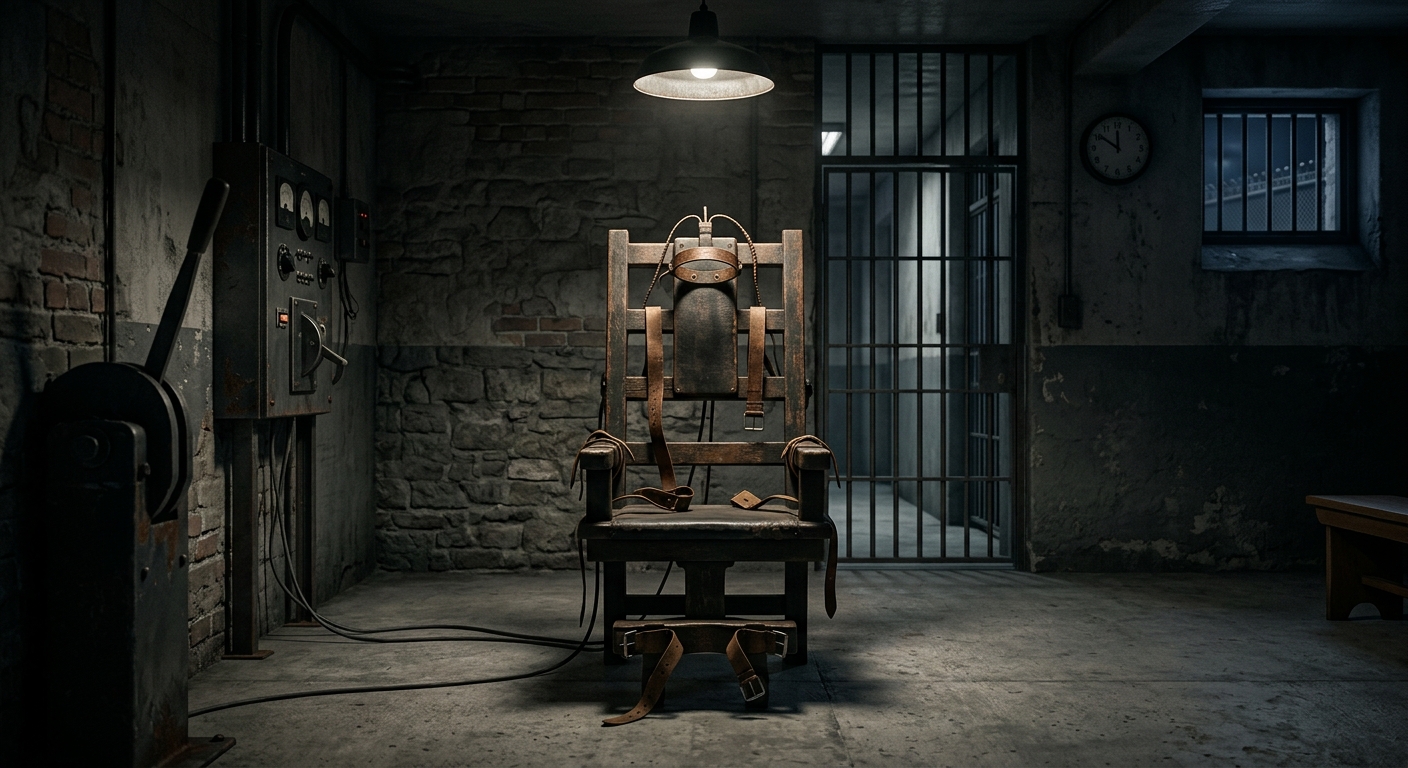
The history of capital punishment in the United States is a long, complex narrative marked by a continuous search for more “humane” methods of ending human life. For over a century, the electric chair served as a dominant mechanism for state-sanctioned executions. However, the legal and ethical landscape shifted dramatically in 2008 when the Nebraska Supreme Court issued a landmark ruling. By declaring electrocution inherently unconstitutional, the state closed a gruesome chapter in American judicial history. This article explores the legal foundations of this pivotal decision, the evolution of constitutional standards surrounding execution, and what the end of the electric chair signifies for the broader debate regarding the death penalty in the United States.
The Transformation of American Execution Methods
In the late 19th and early 20th centuries, hanging was the primary method of execution across the United States. However, botched hangings014which often resulted in slow strangulation or decapitation014prompted public outcry and a legislative push for a modernized, scientifically advanced alternative. The invention of the electric chair during the infamous “War of the Currents” between Thomas Edison and George Westinghouse introduced electrocution in the 1890s as a purportedly painless, instantaneous, and technologically superior method. For decades, it became the standard in numerous states, a symbol of a justice system attempting to align capital punishment with the rapid technological progress of the era.
Yet, as the 20th century progressed, the horrifying realities of electrocution became impossible to ignore. Accounts of prolonged executions, burning flesh, power surges, and unimaginable physical suffering surfaced with alarming regularity. The narrative of a swift, sterile death quickly eroded in the face of eyewitness testimonies. As societal awareness grew and medical understanding deepened, legal challenges to the electric chair began to mount. The transition away from electrocution did not happen overnight; it was a gradual retreat driven by relentless legal advocacy, shocking accounts from within execution chambers, and a slow transformation in judicial interpretations of what constitutes an acceptable punishment in a civilized society.
Defining the Eighth Amendment and “Evolving Standards of Decency”
The core of the legal debate over the electric chair rests on the Eighth Amendment to the United States Constitution, which strictly prohibits the infliction of “cruel and unusual punishments.” However, the Constitution does not provide a static, definitive list of what is considered cruel or unusual. Instead, the interpretation of these words has changed dramatically over time, reflecting the shifting moral compass of the nation.
The critical framework for this shifting interpretation was established by the United States Supreme Court in the landmark 1958 case Trop v. Dulles. In his plurality opinion, Chief Justice Earl Warren declared that the Eighth Amendment “must draw its meaning from the evolving standards of decency that mark the progress of a maturing society.” This profound legal doctrine acknowledged that punishments widely accepted in the 1700s014such as branding, public flogging, or the stockades014are no longer permissible today because societal morals and human rights standards have advanced significantly.
When applied to execution methods, the “evolving standards of decency” doctrine forces courts to look beyond historical practices and examine contemporary norms. If a method of execution inflicts unnecessary agony or is overwhelmingly rejected by the vast majority of states, it risks falling afoul of these evolving standards. This dynamic doctrine would eventually serve as the crucial legal underpinning for the Nebraska Supreme Courts historic evaluation of the electric chair.
The Medical and Physical Realities of Electrocution
To understand why the electric chair was eventually deemed cruel and unusual, one must examine the clinical and physical realities of the procedure. Death by electrocution is far from the instantaneous shut-down of the central nervous system that its early proponents promised.
During an execution, an inmate is strapped securely into a heavy wooden chair. Electrodes, often moistened with a conductive saline solution, are fastened to the crown of a shaved head and to the calf of one leg to create a continuous circuit. When the executioner engages the switch, an initial jolt of roughly 2,000 volts surges through the body. This massive electrical charge is intended to render the prisoner immediately unconscious and induce cardiac arrest. However, biological resistance varies wildly among individuals. The alternating current causes violent, involuntary muscle contractions, requiring the inmate to be tightly restrained with heavy leather straps to prevent them from breaking their own bones or lunging entirely out of the chair.
- Severe Tissue Damage: The intense electrical current rapidly heats the body’s internal organs, sometimes causing internal temperatures to approach boiling levels.
- Visible Burns and Charring: Severe third-degree burns frequently occur at the sites where the electrodes make direct contact with the skin, leaving grotesque physical scarring.
- Prolonged Agony: In numerous documented instances, the initial jolt failed to immediately stop the heart, requiring a second or even third application of deadly current, leaving the inmate to suffer in a partially conscious, immobilized state.
Such gruesome realities made it increasingly difficult for state governments to defend electrocution as a civilized procedure. It was these exact medical and physical horrors that prompted legal scholars, human rights advocates, and medical professionals to classify the electric chair as a form of legalized torture, ultimately influencing judicial review across the country.
Nebraskas Landmark Ruling: State v. Mata (2008)
By the early 2000s, almost every state that retained the death penalty had transitioned away from the electric chair, heavily favoring lethal injection. Nebraska, however, remained a glaring anomaly. It was the only state in the entire country that still utilized the electric chair as its sole, mandatory method of execution. This unique, isolated status set the perfect stage for a dramatic legal confrontation in the case of State v. Mata.
Raymond Mata Jr. had been convicted of murder and sentenced to death. His appellate legal team aggressively challenged the constitutionality of the electric chair under the Nebraska Constitution, which, mirroring the federal Constitution, expressly prohibits cruel and unusual punishment. On February 8, 2008, the Nebraska Supreme Court issued a comprehensive 6-1 ruling that sent shockwaves through the American legal community.
In a powerfully worded and unsparing opinion, Justice William Connolly wrote that the overwhelming empirical evidence irrefutably showed electrocution inflicts “intense pain and agonizing suffering.” The court explicitly rejected the notion that the state holds the right to torture inmates to death, regardless of the severity or heinous nature of their crimes. Justice Connolly famously noted that electrocution “has proven itself to be a dinosaur more befitting the laboratory of Baron Frankenstein” than a modern state prison system. With this definitive ruling, the Nebraska Supreme Court officially banned the electric chair, temporarily leaving the state without a legal method to execute its death row inmates.
Why Nebraska Stood Alone
It is worth exploring why a Midwestern state became the final battleground for the electric chair. Unlike states in the South and West that had rapidly adopted lethal injection to avoid intense federal scrutiny and incoming constitutional challenges, Nebraskas unique unicameral legislature had remained deeply deadlocked on the issue. Several legislative attempts to switch the state’s execution protocol to lethal injection had repeatedly stalled or failed over the preceding decades, often caught between death penalty abolitionists who wanted no executions at all and hardliners who refused to alter the status quo.
This prolonged legislative inertia ultimately forced the state’s highest court to intervene. By 2008, the sheer isolation of Nebraskas practice weighed heavily against it. The overwhelming consensus across the United Statesboth among state legislatures and the general publicwas that the electric chair was an obsolete and brutal relic of a darker era. Because the “evolving standards of decency” doctrine relies heavily on measuring national consensus, Nebraskas status as the sole remaining holdout provided a compelling, undeniable legal argument that electrocution was not only cruel but factually “unusual.”
The Transition to Lethal Injection and Its Emerging Flaws
While the historic Nebraska ruling was hailed by human rights advocates and legal scholars as a massive victory against torture, it did not spell the end of capital punishment in the state or the broader country. Instead, it accelerated the nationwide homogenization of execution methods toward lethal injection. Lethal injection was heavily marketed to the public and lawmakers as a medicalized, peaceful transitiona clinical way to put inmates to sleep without the grisly optics of the electric chair, the gas chamber, or the firing squad.
However, history quickly repeated itself. Just as the electric chair failed to live up to its initial promise of a swift and painless death, lethal injection soon revealed profound, systemic flaws of its own. The standard three-drug protocol (typically an anesthetic, a paralytic, and a heart-stopping agent) requires extremely precise administration. Because ethical guidelines and the Hippocratic Oath bar licensed medical doctors from actively participating in executions, the procedure is frequently carried out by prison personnel with limited medical training.
Consequently, the United States has witnessed an escalating string of horrifyingly botched lethal injections involving blown veins, improperly mixed chemicals, and inmates visibly gasping, coughing, and writhing in pain for extended periods. The paralytic drug, pancuronium bromide, has been particularly criticized because it artificially masks outward signs of physical distress. If the initial anesthetic fails to render the inmate fully unconscious, the prisoner may experience the agonizing sensation of chemical burning and suffocation, yet remain utterly unable to move, scream, or alert observers to their suffering.
Systemic Disparities and the Abolition Movement
The abolition of the electric chair in Nebraska highlighted a broader, more uncomfortable truth about the American justice system: the intense public and legal focus on the specific method of execution often serves to distract from the fundamental, underlying flaws in the application of the death penalty itself. Civil rights organizations and legal advocacy groups have long argued that no method of executionno matter how seemingly clinicalcan cure a justice system plagued by deep-seated systemic inequities.
Statistical evidence consistently demonstrates that the application of capital punishment in the United States is overwhelmingly arbitrary and severely tainted by racial bias. A defendant is significantly more likely to receive a death sentence if the victim is white rather than a person of color. Furthermore, the quality of a defendant’s legal representation, which is almost always tied directly to their socioeconomic status, remains one of the strongest predictors of whether they will end up on death row. Since 1973, nearly 200 individuals have been fully exonerated from death row across the United States, revealing a terrifying margin of error in a legal system where the final punishment is completely irreversible. Furthermore, the financial burden of capital trials and prolonged death row appeals drastically exceeds the cost of sentencing individuals to life imprisonment without the possibility of parole. These undeniable systemic issues continue to fuel the modern movement pushing for the complete abolition of the death penalty, rather than simply searching for an alternative way to carry it out.
A Brief Historical Overview of U.S. Execution Methods
To provide context for the ongoing evolution and debate surrounding these practices, the following table outlines the primary methods of execution historically used in the United States, their general timeframe of prominence, and their current legal standing.
| Execution Method | Era of Prominence | Current Legal Status |
|---|---|---|
| Hanging | 18th to late 19th Century | Largely obsolete; rarely used as a backup in a few jurisdictions. |
| Electrocution | Late 19th Century to late 20th Century | Ruled unconstitutional as a sole method; available only as a secondary alternative in a few states. |
| Lethal Gas | 1920s to 1980s | Highly restricted due to severe cruelty concerns; mostly replaced. |
| Lethal Injection | 1980s to Present | The primary method in all death penalty states, though currently facing severe drug shortages and legal challenges. |
| Nitrogen Hypoxia | Emerging (2020s) | Recently authorized in a select few states as an untried alternative to lethal injection. |
Conclusion: What the Fall of the Electric Chair Means Today
The 2008 ruling in State v. Mata by the Nebraska Supreme Court remains a massive watershed moment in the complex jurisprudence of capital punishment. It forced the state’s legal system to finally confront the horrific physical realities of its actions and powerfully reaffirmed that the constitutional protection against cruel and unusual punishment is not a dead letter, but an active, evolving safeguard of human dignity. The demise of the electric chair was not merely about discarding an outdated, malfunctioning machine; it was a profound legal admission that state-sponsored torture has absolutely no place in a civilized society.
As the United States continues to grapple today with the ethical, financial, and logistical failures of lethal injection, the lessons drawn from the era of the electric chair remain highly relevant. The ongoing, desperate search for a completely “humane” way to kill a human being against their will may ultimately be a paradox that no chemical or machine can solve. The steady historical abandonment of older execution methods suggests a societal trajectory that may eventually force the nation to question not just how the state executes its citizens, but whether it should legally retain the immense power to do so at all. The historic Nebraska ruling acts as a critical stepping stone in that long, ongoing national dialogue.
Frequently Asked Questions (FAQs)
What was the central ruling in the 2008 Nebraska Supreme Court case?
In the case of State v. Mata, the Nebraska Supreme Court ruled 6-1 that electrocution inherently inflicts unnecessary pain and agonizing suffering, thereby violating the state constitution’s firm ban on cruel and unusual punishment. This decision effectively ended the legal use of the electric chair in Nebraska.
Why was Nebraska’s 2008 ruling on the electric chair unique?
At the time of the ruling, Nebraska was the only state in the United States that still mandated the electric chair as its sole, primary method of execution. All other death penalty states had already transitioned to lethal injection, making Nebraska an isolated outlier in its penal practices.
What is the “evolving standards of decency” doctrine?
Established by the U.S. Supreme Court in the 1958 case Trop v. Dulles, this doctrine dictates that the Eighth Amendment’s prohibition on cruel and unusual punishment must be interpreted based on the moral progress and contemporary standards of society, rather than solely relying on historical practices from the 18th century.
Is the electric chair still used anywhere in the United States?
While no state uses the electric chair as its sole or primary method of execution anymore, a small number of states still technically retain electrocution as an alternative or backup option. This usually occurs either at the direct request of the inmate or as a legal contingency if lethal injection drugs are entirely unavailable.
Did the Nebraska ruling permanently end the death penalty in the state?
No. The court’s ruling only invalidated the specific method of execution (electrocution). The Nebraska state legislature subsequently passed a bill in 2009 officially adopting lethal injection, allowing capital punishment to legally resume, although the state has seen intense, ongoing political and voter-driven battles over the death penalty since then.
References
- State v. Mata, 275 Neb. 1, 745 N.W.2d 229 Nebraska Supreme Court. 2008-02-08. https://law.justia.com/cases/nebraska/supreme-court/2008/s-05-1268-1.html
- Trop v. Dulles, 356 U.S. 86 (1958) United States Supreme Court. 1958-03-31. https://supreme.justia.com/cases/federal/us/356/86/
- Methods of Execution Death Penalty Information Center. 2024-01-01. https://deathpenaltyinfo.org/executions/methods-of-execution
- Evolving Standard: Eighth Amendment Legal Information Institute (Cornell Law School). 2024-01-01. https://constitution.congress.gov/browse/essay/amdt8-2-1-2/ALDE_00013217/
Similar Articles








Read full bio of medha deb


