
Empowering Jurors: The Debate on Questioning Witnesses
Exploring the pros, cons, and evolving practices of allowing jurors to pose questions to witnesses in civil and criminal trials.
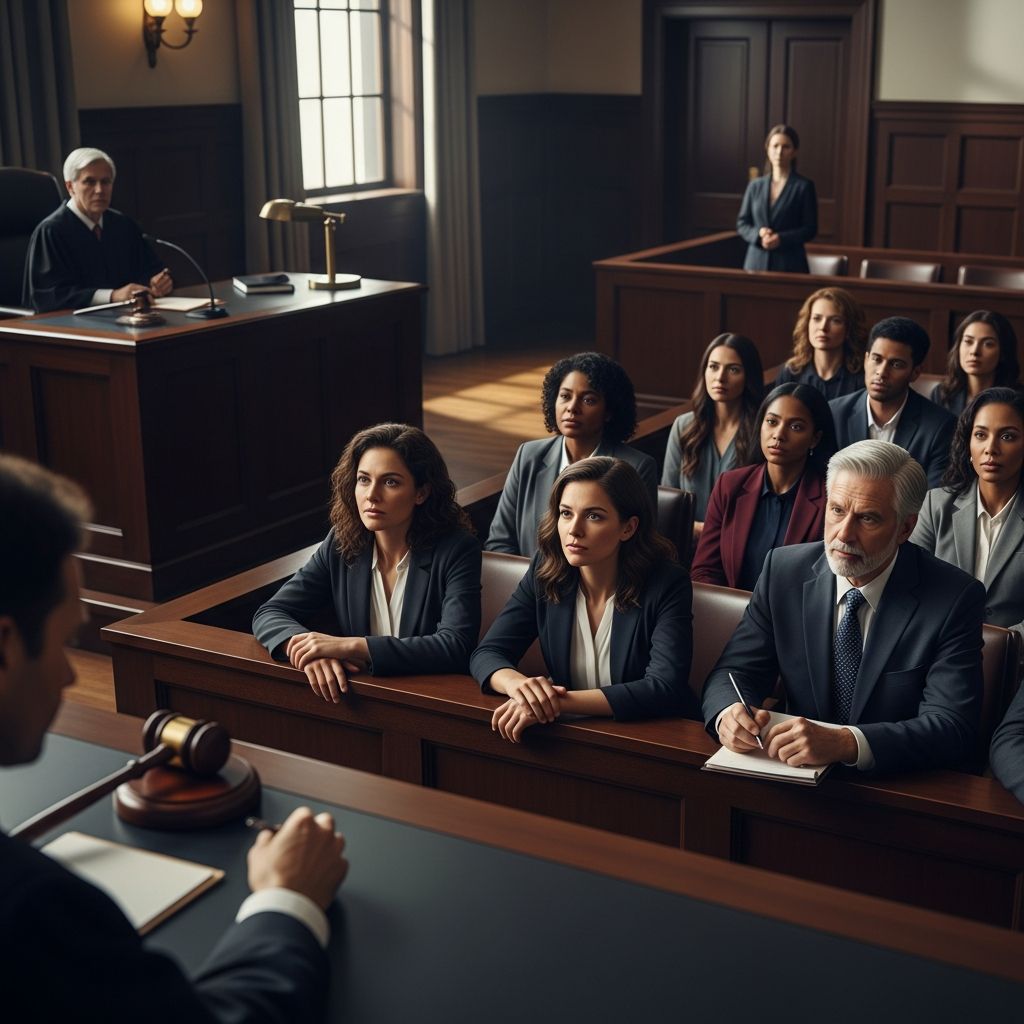
In the heart of the American courtroom, jurors sit as the ultimate fact-finders, tasked with sifting through testimony, evidence, and arguments to deliver justice. Traditionally, they remain silent observers, relying on attorneys to elicit crucial details from witnesses. However, a growing movement challenges this passivity: should jurors be allowed to submit questions directly to those on the stand? This practice, once rare, now divides legal scholars, judges, and practitioners. Proponents argue it fosters deeper understanding and active participation, while critics warn it undermines the adversarial system’s core principles of neutrality and controlled advocacy.
Historical Context of Jury Roles in American Trials
The jury’s evolution reflects broader shifts in legal philosophy. Early common law positioned jurors as community investigators, actively gathering information beyond courtroom walls. Over time, the U.S. system emphasized the adversarial model, where attorneys duel to present facts, and judges instruct on law. Jurors became passive recipients, a change aimed at curbing bias and ensuring structured evidence presentation.
Today, this passivity faces scrutiny. Studies show jurors often struggle with complex testimony, leading to confusion during deliberations. Allowing questions could bridge this gap, aligning the jury more closely with its fact-finding mandate. Yet, historical precedents caution against blurring lines between judge, advocate, and juror roles.
Core Arguments in Favor of Juror Questioning
Advocates highlight tangible benefits backed by empirical data. When jurors pose questions, comprehension skyrockets. Research from mock trials indicates participants grasp evidence 20-30% better, reducing misinterpretations. Real-world judges report fewer post-trial complaints about unclear testimony.
- Clarity and Engagement: Questions clarify ambiguities while witnesses are available, preventing reliance on faulty memory.
- Juror Satisfaction: Post-trial surveys reveal higher confidence in verdicts among questioning juries.
- Efficiency: Targeted inquiries streamline proceedings, focusing on pivotal issues.
In civil cases, where stakes involve disputes rather than liberty, benefits appear pronounced. Judges like those in Texas note no disruptions after years of implementation. Criminal contexts demand caution, but evidence suggests safeguards mitigate risks.
Potential Drawbacks and Criticisms
Opponents fear juror questions erode impartiality. By querying witnesses, jurors risk becoming mini-advocates, pursuing personal theories over presented evidence. This could shift the prosecution’s burden in criminal trials, subtly pressuring defendants.
Other concerns include:
- Bias Amplification: Jurors might overweight answers to their own questions.
- Judicial Overreach Scrutiny: Rejected questions could breed resentment toward the bench.
- Time Delays: Sidebars for objections prolong trials.
Justice Black’s framework underscores the adversarial system’s reliance on party-driven evidence, warning that juror intervention disrupts this balance. In high-stakes criminal matters, Fifth Amendment protections loom large, as questions might inadvertently elicit self-incriminating responses.
State-by-State Landscape: A Patchwork of Policies
No uniform federal rule governs juror questioning; practices vary widely by jurisdiction. As of recent analyses:
| Category | Number of States | Examples |
|---|---|---|
| Mandate in Civil Cases | 7 | Arizona, Colorado, Florida |
| Mandate in Criminal Cases | 3 | select states with full mandates |
| Permissive (Both Civil & Criminal) | Numerous | Texas, Illinois (civil only mandated) |
| Prohibited (Both) | 5 | Maine, Nebraska, Louisiana (partial) |
| Criminal Prohibition Only | 4 | Various |
Illinois exemplifies evolution: Supreme Court Rule 243 mandates written questions in civil trials since 2012, sparking calls for criminal extension. Federal courts remain discretionary, with handbooks emphasizing juror passivity. This patchwork invites reform debates, balancing local traditions with national fairness standards.
Implementing Juror Questions: Best Practices and Safeguards
Successful programs employ strict protocols to harness benefits while minimizing harms. Pretrial, judges outline procedures: jurors submit written questions post-attorney examination, screened at sidebar for relevance and propriety.
- Announce policy early to set expectations.
- Require written submissions for review.
- Allow party objections before posing questions.
- Permit follow-up re-direct by attorneys.
- Admonish jurors against advocacy.
Judges report near-universal attorney acceptance once explained. In criminal cases, protocols protect defendants—no questions implying guilt or shifting burdens. Research confirms jurors rarely pose inappropriate queries, with judges vetoing under 10%.
Empirical Evidence: What Studies Reveal
Rigorous studies bolster the case for measured adoption. A Northwestern analysis of Arizona trials found juror questions enhanced understanding without biasing outcomes. Duke’s Judicature review cites improved verdicts via clarified evidence. Critics note limited long-term data, but no widespread miscarriages emerge.
Tables from key studies:
| Study Source | Key Finding | Context |
|---|---|---|
| Judicature (Duke) | Neutrality preserved with procedures | Civil/Criminal |
| Northwestern Law | 20% comprehension boost | Civil mandated |
| Vanderbilt Review | Need for safeguards | Adversarial impact |
These affirm juror questioning’s viability when structured properly.
Criminal Trials: Heightened Stakes and Protections
Criminal proceedings intensify debates due to constitutional safeguards. Opponents invoke due process, arguing questions could prove elements, easing state burdens. Yet, judges like Herndon counter that vetted procedures safeguard rights—no instance of Fifth Amendment violations in extensive practice.
Illinois Law Review urges rule expansion with safeguards, noting historical allowances in sound discretion. As states experiment, data will guide whether criminal mandates follow civil precedents.
Judicial Perspectives: Voices from the Bench
Experienced judges overwhelmingly endorse the practice. One notes: ‘Jurors clarify confusion on the spot, averting deliberation fog.’ No objections in decades of criminal use. Attorneys adapt quickly, viewing it as mutual benefit. Dissenters prioritize systemic purity over gains.
Future Directions: Toward National Standards?
As evidence mounts, pressure builds for uniformity. Federal adoption could standardize via judicial conferences. Pilot programs in hesitant states offer testing grounds. Ultimately, empowering jurors without compromising advocacy defines progress. Balancing act requires ongoing evaluation, ensuring juries evolve as informed arbiters of truth.
Frequently Asked Questions (FAQs)
What percentage of states allow juror questions?
Over 40 states permit in civil cases; fewer mandate or allow in criminal.
Do juror questions bias verdicts?
Studies show no significant bias with proper screening.
How are questions handled in court?
Written, reviewed at sidebar, posed if appropriate.
Is it required federally?
No; discretionary per judge.
Can it violate defendant rights?
Safeguards prevent this; no recorded cases.
References
- Point-Counterpoint: Jurors Asking Questions — Judicature, Duke University. 2023. https://judicature.duke.edu/articles/jurors-asking-questions/
- Juror Questions in Civil Cases — Alston & Bird. 2023-02-01. https://www.alston.com/en/insights/publications/2023/02/juror-questions-in-civil-cases
- Juror Questioning of Witnesses in Criminal Trials: The “Jury’s Still Out” — Illinois Law Review. 2014. https://illinoislawreview.org/wp-content/ilr-content/articles/2014/1/Sweat.pdf
- The Practice of Allowing Jurors to Question Witnesses During Trial — Vanderbilt Law Review. 2002. https://scholarship.law.vanderbilt.edu/cgi/viewcontent.cgi?article=1803&context=vlr
- Juror Questions During Trial: A Window on Juror Thinking — Northwestern Law. N/A. https://www.law.northwestern.edu/faculty/fulltime/diamond/papers/JurorQuestionsDuringTrailAWindowJurorThinking.pdf
- Handbook for Trial Jurors Serving in the United States District Courts — United States Courts (.gov). 2023. https://www.uscourts.gov/sites/default/files/trial-handbook.pdf
Similar Articles








Read full bio of medha deb


