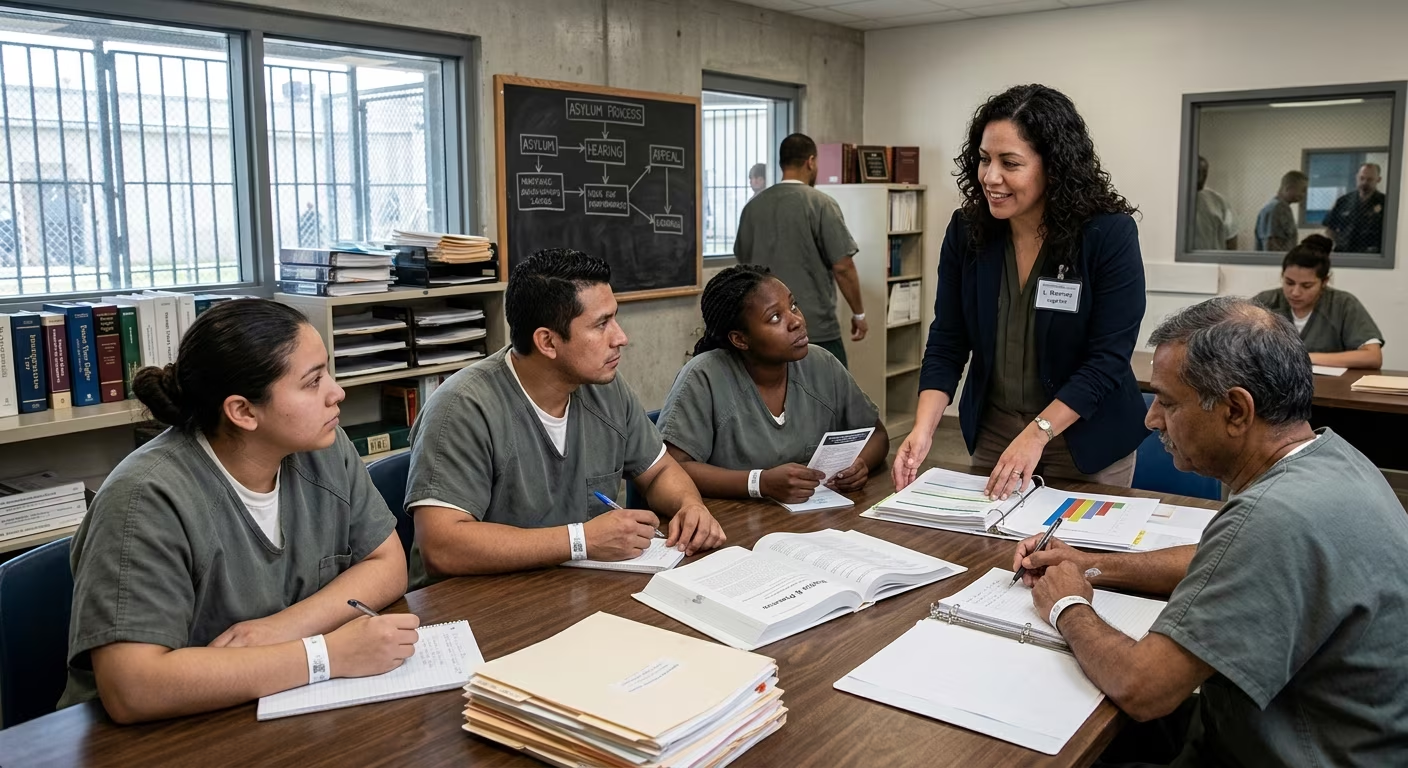
Navigating the United States legal system is an inherently complex endeavor, but doing so while physically confined within an immigration detention facility elevates the challenge to a seemingly insurmountable height. Every year, tens of thousands of noncitizens are held in immigration detention centers across the country, awaiting hearings that will determine whether they can legally remain in the United States or face deportation. Unlike the domestic criminal justice system, where the Sixth Amendment guarantees the right to an attorney, the United States immigration system operates almost entirely under a civil legal framework. This crucial procedural distinction means that the federal government is not constitutionally obligated to provide legal counsel to those who cannot afford it. Consequently, a vast majority of detained immigrants are forced to navigate convoluted immigration statutes, rigid procedural rules, and highly adversarial court hearings entirely on their own—a legal practice known as pro se representation.
To mitigate this profound imbalance of power, extensive grassroots and institutional efforts are required to ensure that individuals in civil immigration confinement are armed with the foundational knowledge of their basic legal rights. Providing comprehensive legal education materials is not merely an act of charity; it is a fundamental prerequisite for basic due process. When people are accurately informed about their constitutional rights, the intricate mechanisms of the immigration court system, and the official avenues for reporting institutional abuse, they transition from passive subjects of a bureaucratic machine into active, empowered participants in their own legal defense.
The Complex Reality of Civil Confinement
Distinguishing Civil Detention from Criminal Incarceration
The legal foundation of immigration detention in the United States is fundamentally administrative rather than punitive. Under U.S. law, standard immigration violations—such as overstaying a tourist visa or entering the country without official border inspection—are largely classified as civil matters. As such, the facilities operated by or contracted out to U.S. Immigration and Customs Enforcement (ICE) are nominally designed to hold individuals merely to ensure their appearance at future hearings before the Executive Office for Immigration Review (EOIR), or to facilitate their physical removal from the country once a final order is issued.
Despite this legal classification, the physical, emotional, and psychological reality of immigration detention is nearly indistinguishable from traditional criminal incarceration. Detainees are frequently housed in county jails operating under Intergovernmental Service Agreements (IGSAs) or in massive private prison facilities. In these environments, they are subjected to daily headcounts, highly restricted physical movements, mandatory uniform policies, and sometimes punitive isolation. This paradox—being held in penal conditions for a civil infraction—creates profound confusion and despair among detainees. Many falsely believe they are serving a criminal sentence and are completely unaware that they have the right to fight their deportation, apply for asylum, or request a bond hearing. Empowering detainees begins with demystifying their environment. They must explicitly understand that their confinement is an administrative hold, and that they possess specific constitutional protections, including the right to fundamental due process, protection against cruel and unusual punishment, and the uninhibited right to seek legal relief.
The Representation Gap in Immigration Proceedings
Navigating Proceedings Pro Se
The absolute cornerstone of the crisis in American immigration detention is the acute, systemic lack of legal representation. Because immigration proceedings are categorized as civil matters handled by the EOIR (a sub-agency of the Department of Justice), the constitutional guarantee of a public defender does not apply. If an immigrant cannot afford to hire a private immigration attorney or secure elusive pro bono representation from a non-profit legal organization, they must represent themselves against a highly trained government prosecutor representing the Department of Homeland Security.
Data consistently highlights the severity of this representation gap. According to extensive court records analyzed by the Transactional Records Access Clearinghouse (TRAC) at Syracuse University, the logistical and financial hurdles of securing counsel while locked behind bars are staggering. TRAC’s comprehensive analyses reveal that only about 14% of detained immigrants are able to secure legal representation. This effectively means an overwhelming 86% of detained individuals are forced to fight their high-stakes deportation cases pro se.
The Impact of Legal Counsel on Case Outcomes
The presence of an attorney is unequivocally the single most determinative factor in the outcome of an immigration case. Navigating the Immigration and Nationality Act (INA)—a statute widely considered second only to the U.S. tax code in its sheer complexity—is virtually impossible for an untrained layperson, let alone someone concurrently facing severe language barriers and the psychological trauma of confinement. Historical data indicates that immigrants with legal representation are up to five times more likely to successfully secure relief from deportation compared to those who are unrepresented.
| Challenge Area | Pro Se Detainee Experience | Represented Detainee Experience |
|---|---|---|
| Evidentiary Filings | Struggles to gather supporting documents (e.g., foreign police reports, medical records) while restricted to a cell. | Attorney subpoenas documents, translates evidence, and compiles comprehensive legal briefs prior to deadlines. |
| Procedural Deadlines | Frequently misses rigid filing deadlines or submits forms in the wrong format, risking automatic case dismissals. | Counsel navigates the EOIR electronic filing systems to ensure all deadlines and formatting rules are strictly met. |
| Courtroom Advocacy | Faces the terrifying task of cross-examining government witnesses and articulating complex legal arguments to an Immigration Judge. | Attorney handles all direct and cross-examinations, raising formal legal objections to protect the client’s rights. |
The Mechanics of Legal Empowerment Behind Bars
Essential Knowledge: Bond, Asylum, and Deportation Defense
In the absence of universal legal representation, the widespread distribution of comprehensive “Know Your Rights” materials becomes an essential lifeline. These educational resources must painstakingly break down highly complex legal concepts into accessible, actionable information. To be truly effective, legal education inside detention centers must cover several critical areas of immigration law:
- Custody and Bond Hearings: Detainees must understand exactly how to request a custody redetermination hearing before an immigration judge. They need to know the specific criteria judges use to grant release on bond—namely, proving that the individual is neither a flight risk nor a danger to the community. Educational materials guide them on how to compile letters of support from U.S. citizen family members, proof of deep community ties, and evidence of rehabilitation if any past criminal records exist.
- Asylum and Related Relief: For those actively fleeing persecution, understanding the strict statutory criteria for Asylum, Withholding of Removal, and relief under the United Nations Convention Against Torture (CAT) is paramount. Detainees must learn how to articulate their “credible fear” of persecution based on one of the five protected grounds: race, religion, nationality, membership in a particular social group, or political opinion.
- Cancellation of Removal: Long-term permanent residents or undocumented individuals who have lived in the U.S. for extended periods may qualify for a defense known as cancellation of removal. This requires legally proving continuous physical presence, exhibiting good moral character, and demonstrating that their sudden deportation would cause “exceptional and extremely unusual hardship” to a qualifying U.S. citizen or permanent resident spouse, parent, or child.
- Voluntary Departure vs. Deportation: Unrepresented detainees must be taught the severe, long-term legal consequences of receiving a formal order of removal—such as automatic ten-year bars on legally returning to the U.S.—versus the sometimes preferable, albeit difficult, option of requesting Voluntary Departure.
Overcoming Linguistic and Systemic Barriers
Drafting legally accurate guides is only half the battle; ensuring those materials are linguistically accessible and culturally competent is equally vital. The detained immigrant population in the United States is incredibly diverse, comprising individuals from Central and South America, sub-Saharan Africa, Southeast Asia, and the Caribbean. Providing legal materials solely in English or Spanish routinely leaves out thousands of native speakers of Indigenous languages (such as K’iche’ or Mam), Haitian Creole, French, Arabic, and Mandarin. Legal empowerment initiatives must prioritize high-quality translation and literacy-friendly formatting, heavily utilizing plain language and visual aids to bridge the comprehension gap for individuals with limited formal education.
Furthermore, systemic geographical barriers often prevent detainees from accessing even the most basic legal resources. A significant percentage of ICE facilities are intentionally located in remote, rural areas, located hours away from urban centers where pro bono legal service providers typically operate. Facility law libraries are frequently under-resourced, featuring hopelessly outdated legal texts, broken typewriters, or highly restricted computer access. Advocacy groups must constantly pressure facility administrators to fully comply with federal detention standards that explicitly mandate access to updated legal materials and private, unmonitored phone lines for confidential attorney consultations.
Combating Abuses Within the System
Establishing Avenues for Grievances
Legal empowerment crucially extends beyond the walls of the courtroom; it encompasses the fundamental right to safe and humane treatment while in physical custody. The agency’s official guidelines, such as the Performance-Based National Detention Standards (PBNDS 2011) and the National Detention Standards (NDS 2019), explicitly outline the expected conditions of confinement. These federal guidelines mandate access to adequate medical care, nutritious food, outdoor recreation, religious accommodations, and strict protection from physical or sexual abuse.
However, practical compliance with these standards varies wildly from facility to facility, particularly in county jails operating under ICE contracts. Detainees are all too frequently subjected to severe medical neglect, arbitrary and punitive use of solitary confinement, and unlawful retaliation from facility guards. When detainees are formally educated about the specific standard operating procedures governing their facility, they can quickly recognize rights violations and utilize formal grievance procedures without fear.
Comprehensive rights awareness initiatives teach detainees exactly how to formally document detailed complaints regarding medical neglect or unsafe living conditions. They provide instructions on how to safely contact the Department of Homeland Security’s Office of the Inspector General (OIG) or the Office for Civil Rights and Civil Liberties (CRCL). More importantly, these materials empower detainees to communicate effectively with outside advocacy organizations that legally monitor facility conditions and actively litigate against systemic abuses.
The Broader Impact of Rights Awareness Initiatives
Equipping detained immigrants with actionable legal knowledge fundamentally transforms the power dynamics of the immigration system. It forces a necessary degree of procedural accountability onto government prosecutors and immigration judges, ensuring that constitutional corners are not simply cut because the respondent happens to be unrepresented. While a paper “Know Your Rights” manual can never fully replace the nuanced, strategic, and reactive counsel of a licensed immigration attorney, it successfully provides a crucial, life-saving baseline of legal defense.
The aggressive push for comprehensive legal education in detention centers also highlights the broader, systemic need for universal legal representation. As non-profit advocates distribute these educational materials and witness the sheer determination of pro se individuals fighting valiantly to keep their families together, it builds a compelling evidentiary record for sweeping policy reform. The ultimate goal of the immigrants’ rights movement remains the statutory establishment of a publicly funded defender system for civil immigration proceedings. Until that legislative milestone is successfully achieved, comprehensive legal education will remain the primary shield protecting marginalized individuals from an opaque, complex, and highly unforgiving deportation machine.
Frequently Asked Questions (FAQs)
Do immigrants in civil detention have the right to a free, state-appointed lawyer?
No. Because immigration proceedings are legally classified as civil administrative matters rather than criminal prosecutions, there is no Sixth Amendment right to state-appointed counsel. Immigrants must either hire their own private attorneys at their own expense or seek out pro bono (free) representation from highly impacted non-profit legal organizations.
What exactly is “pro se” representation?
Pro se is a Latin legal term meaning “on one’s own behalf.” In the American legal context, it refers to an individual representing themselves in a court of law without the assistance of a licensed attorney. In the immigration court system, a vast majority of detained individuals are forced to proceed pro se due to severe financial constraints and a systemic lack of access to pro bono legal services.
Are ICE detention centers the same as criminal prisons?
Legally speaking, immigration detention is a form of civil confinement designed exclusively to ensure an individual appears for their future immigration court hearings. However, practically speaking, ICE detention centers closely resemble criminal prisons. A large portion of detainees are held in local county jails or massive private prison facilities, enduring the exact same physical restrictions, uniform mandates, lockdowns, and security protocols as criminal inmates.
What kind of legal relief can an individual seek in immigration court?
Depending on their specific personal circumstances and background, an individual may seek various forms of relief from deportation. Common types of legal relief include Asylum (for those fearing persecution in their home country), Withholding of Removal, protection under the Convention Against Torture (CAT), Cancellation of Removal for qualifying long-term U.S. residents, or a formal request for Voluntary Departure.
How do language barriers impact a detainee’s immigration case?
Language barriers severely hinder an immigrant’s ability to navigate the complex legal system, read vital court documents, and communicate effectively with an Immigration Judge. While immigration courts are required to provide interpreters for official merits hearings, detainees often struggle daily to communicate with facility staff, gather foreign evidence, or understand dense legal rights materials if they are not provided in their native language.
References
- Executive Office for Immigration Review | Learn About Legal Representation — Department of Justice. 2025-12-14. https://www.justice.gov/eoir/legal-representation-and-pro-bono-programs
- Who is Represented in Immigration Court? — Transactional Records Access Clearinghouse (TRAC), Syracuse University. 2017-10-16. https://trac.syr.edu/immigration/reports/485/
- Detention Management and National Detention Standards — U.S. Immigration and Customs Enforcement (ICE). 2026-04-09. https://www.ice.gov/detain/detention-management