
Empowering Civic Participation During Presidential Transitions
A comprehensive guide to defending civil liberties and sustaining advocacy during political transitions.
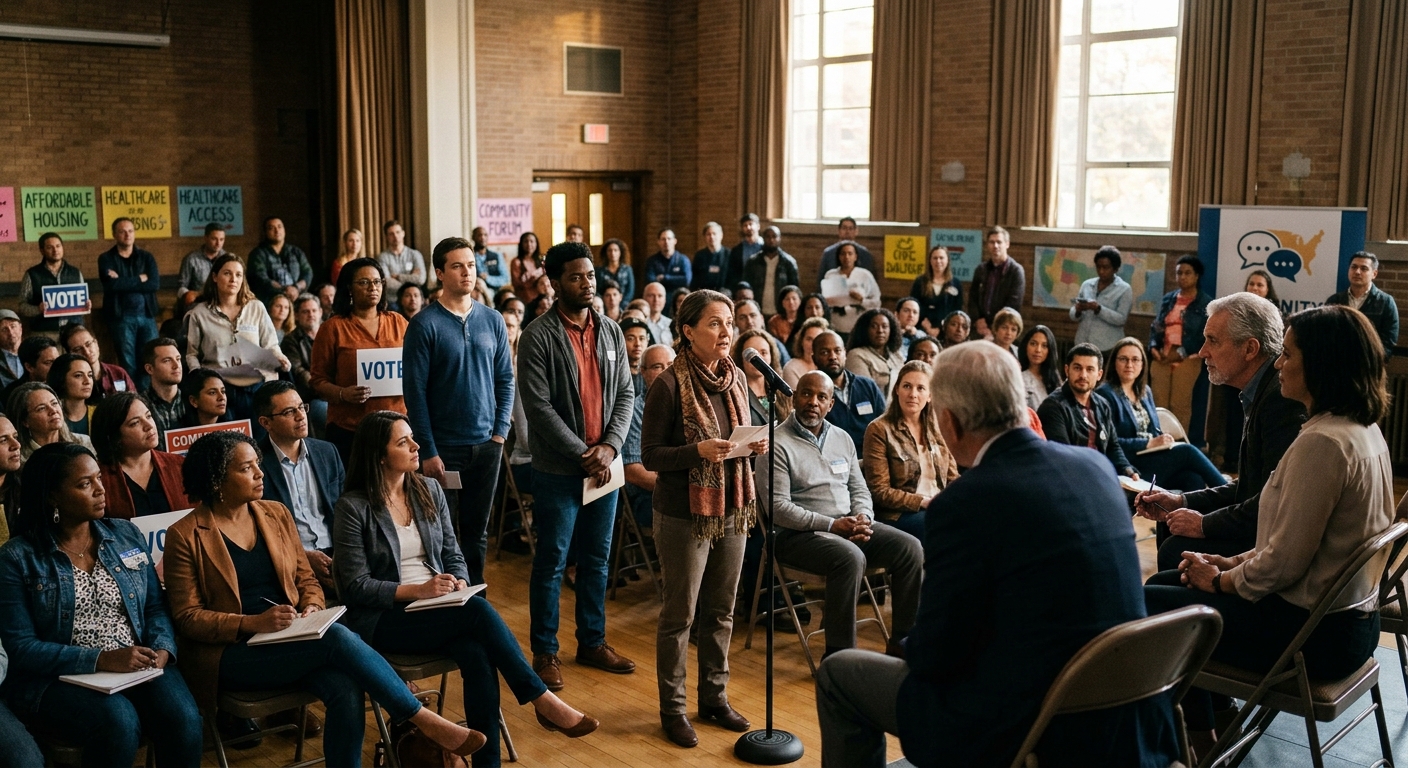
The Crucial Role of Citizen Action During Political Transitions
Political transitions, particularly those culminating in an Inauguration Day, often serve as a powerful catalyst for heightened civic awareness and mass participation. When presidential administrations change, the rapidly shifting political landscape can spark widespread concern, enthusiasm, or profound uncertainty regarding the future of civil liberties, environmental protections, and social justice initiatives. While the peaceful transfer of executive power is a hallmark of democratic societies, the role of the citizen unequivocally does not end at the ballot box. Active, ongoing engagement is absolutely essential to hold elected officials accountable and to continuously safeguard the fundamental rights enshrined in the Constitution. For those looking to make their voices heard during a presidential transition and in the ensuing years, understanding the core mechanics of effective, lawful, and secure advocacy is paramount. Moreover, an active civic body creates a ripple effect, inspiring younger generations and marginalized communities to step into the political arena and demand fair representation. Ultimately, maintaining momentum after a highly publicized transfer of power ensures that elected officials govern with the constant awareness that they are being monitored by an engaged and educated public. This guide explores the multifaceted ways individuals can mobilize safely and strategically.
The Imperative of Civic Engagement in Shifting Political Landscapes
Civic engagement encompasses a incredibly broad spectrum of activities where individuals unite to address matters of pressing public concern and purposefully influence the trajectory of their communities. During a transfer of executive power, the public often experiences a rapid influx of new executive orders, legislative proposals, and controversial cabinet appointments. This period of rapid, sometimes unpredictable change demands vigilant participation from the electorate. The foundation of a resilient, functioning democracy is built directly upon the active involvement of its citizens, who must continuously advocate for governmental transparency, systemic equity, and the explicit protection of vulnerable populations.
Historical precedents repeatedly demonstrate that presidential inaugurations frequently act as a focal point for mass public mobilization. However, the true, lasting measure of an electorate’s power lies not merely in a single day of demonstration or outrage, but in the sustained pressure applied to governmental institutions over the entire course of an administration’s tenure. Research and demographic data underscore that communities exhibiting high levels of continuous civic participation—whether through regularly attending town hall meetings, strategically circulating petitions, or engaging in highly coordinated grassroots organizing—are significantly more successful in securing favorable policy outcomes and holding local and federal representatives accountable . Therefore, Inauguration Day must be viewed not as the climax of political action, but rather as the inaugural moment for a deeply renewed, long-term commitment to civic health.
Understanding Your First Amendment Protections in the Public Square
The First Amendment of the United States Constitution explicitly guarantees the fundamental right of the people peaceably to assemble and to aggressively petition the government for a redress of grievances . However, the practical, real-world application of these rights during public protests and demonstrations is heavily subject to specific legal parameters that activists must navigate with care and situational awareness.
The constitutional right to protest is undoubtedly most robust in what the law refers to as “traditional public forums,” such as city streets, public sidewalks, and designated public parks . In these specific spaces, individuals are generally free to express their political opinions, distribute advocacy literature, and chant organizational slogans. However, local municipal governments are legally permitted to impose reasonable “time, place, and manner” restrictions. For example, a city may strictly require a predetermined permit for a massive march that actively obstructs vehicular traffic or significantly involves the use of heavy audio amplification equipment. It is critically important to clearly distinguish between constitutionally protected free speech and specific actions that fall completely outside of legal protections. The First Amendment strictly does not protect acts of civil disobedience that involve unlawful trespassing on private property, physically blocking public access to government buildings, or engaging in outright physical violence or the destruction of private and public property . Intimately understanding these distinct boundaries ensures that modern activists can express their political dissent effectively while drastically minimizing the very real risk of lawful arrest or legal prosecution.
Navigating Highly Charged Interactions with Law Enforcement
When participating in massive public demonstrations, tense interactions with local or federal law enforcement are exceedingly common. Activists should always approach these potentially volatile encounters with a crystal clear understanding of their baseline legal protections. If temporarily stopped by the police, individuals absolutely have the legal right to remain completely silent and must clearly and verbally state their direct intention to do so. It is generally highly advisable to immediately ask if one is “free to leave”; if the officer’s answer is affirmative, calmly and quietly walking away is overwhelmingly the best course of action. If physically detained, individuals should immediately and explicitly request legal counsel and completely refrain from discussing the incident, motivations, or associations without a qualified attorney actively present .
Furthermore, American citizens possess a clearly established First Amendment right to openly record law enforcement officers performing their official duties in public spaces, provided strictly that the act of recording does not physically or operationally interfere with the officers’ ongoing activities. Keeping a visibly safe distance while actively filming can effectively provide objective documentation of the unfolding events without escalating tensions. It is also highly recommended to purposefully write down the direct contact information for local legal aid organizations or the National Lawyers Guild on your arm with a permanent marker before actively attending a large demonstration. If your communication devices are swiftly confiscated, having immediate, physical access to a specialized legal hotline can drastically expedite the complex process of securing legal representation and bail, if deemed necessary.
Safeguarding Digital Footprints: A Modern Prerequisite for Activism
In the highly interconnected contemporary era, physical political mobilization is inextricably linked with digital communication infrastructures. Modern organizers heavily rely on global social media platforms, private messaging applications, and encrypted email networks to seamlessly coordinate complicated logistics, rapidly disseminate critical information, and strategically build massive cross-country coalitions. However, this absolute reliance on modern technology naturally exposes activists to highly significant risks, heavily including unwarranted government surveillance, aggressive corporate data harvesting, and malicious doxxing campaigns orchestrated by ideological opponents. Actively safeguarding one’s digital footprint is fundamentally no longer an optional precaution; it is an absolutely critical, foundational component of modern civic engagement.
Long before physically attending a demonstration or actively engaging in deeply sensitive advocacy work, individuals must proactively implement highly robust digital security protocols. The widespread, normalized use of end-to-end encrypted messaging platforms is a totally fundamental step in directly protecting the baseline privacy of critical organizational communications. Unlike standard, easily accessible SMS text messages, which can be seamlessly intercepted or legally subpoenaed from major telecommunications providers with relative ease, proper end-to-end encryption technologically ensures that only the original sender and the explicitly intended recipient possess the unique cryptographic keys mathematically necessary to read the transmitted messages.
Essential Device Protection Strategies for the Frontlines
Local law enforcement agencies across various domestic jurisdictions have increasingly deployed highly sophisticated cell-site simulators to quietly intercept communications and continuously track the precise locations of mobile phones operating within a specific physical radius. To effectively mitigate these intense technological risks, activists must aggressively consider implementing the following device protection strategies before stepping outside:
- Disable All Biometric Unlocking: Features such as modern facial recognition algorithms and hardware fingerprint scanners can be legally or physically bypassed much more easily during a physical detention. Rapidly transitioning your device to a highly complex, strong, alphanumeric passcode provides a vastly higher level of both legal and technical security against swift unauthorized access.
- Rigorously Utilize Airplane Mode: When actively participating in a massive demonstration, temporarily placing your mobile device in strict airplane mode severely limits its ability to silently connect to surrounding cellular towers, thereby drastically reducing the overall efficacy of deployed location tracking technologies.
- Aggressively Minimize Data Retention: Proactively remove highly sensitive applications, purposefully logout of all primary personal social media accounts, and permanently delete any unnecessary, highly sensitive organizational data from the mobile device before physically entering any high-risk, volatile environments to best protect your broader advocacy network.
Common Digital Security Practices vs. Mitigated Risks
| Core Security Practice | Primary Mitigated Risk | General Implementation Difficulty |
|---|---|---|
| Utilizing End-to-End Encryption | Covert interception of direct messages by third parties or internet service providers. | Low (Merely requires downloading a highly specific, vetted application) |
| Enabling Strong Alphanumeric Passcodes | Unauthorized physical access to the device’s contents if lost or forcefully confiscated. | Low (Easily changed in base settings) |
| Strictly Disabling Location Services | Preventing massive corporate entities and sophisticated cell-site simulators from geographically tracking movements. | Medium (May temporarily impact the core functionality of needed map or ride-sharing apps) |
| Employing Dedicated Burner Devices | Total, physical compartmentalization of all high-risk protest activities from one’s personal and professional digital life. | High (Necessitates actively purchasing separate physical hardware and securely managing multiple numbers) |
Beyond the Protest: Institutionalizing Grassroots Organization
While massive, visually striking mass demonstrations are highly visible, deeply emotional expressions of overarching public sentiment, the truly arduous, grinding work of sustainable policy change typically occurs quietly outside the glaring spotlight of mainstream media coverage. To fundamentally ensure that the immense political energy generated during events like Inauguration Day functionally translates into truly tangible, lasting results, individuals must seamlessly integrate themselves into the deep fabric of existing grassroots organizations and formally established advocacy networks.
Rather than exhaustively attempting to artificially build a massive movement from the bare ground up, newly energized activists are often significantly most effective when they intelligently channel their boundless enthusiasm into established organizations that already possess incredibly deep, historically tested roots within the local community. Historically established civic organizations, robust legal defense funds, and hardened environmental coalitions have spent literally decades carefully cultivating complex relationships with local elected officials, mastering the obscure nuances of complex municipal codes, and structurally building highly responsive infrastructure for rapid political response . By eagerly joining these established groups, individual citizens can immediately benefit from massive collective institutional knowledge, highly specialized direct-action training, and a massive pre-existing platform capable of dramatically amplifying their individual voices.
Crucially, civic action also broadly extends far beyond the strict realm of traditional legislative political advocacy directly into the deeply personal sphere of mutual aid. Mutual aid networks are entirely community-led, horizontally organized initiatives structurally designed to directly meet the immediate, pressing material needs of highly vulnerable local populations entirely outside of formal, often bureaucratic state structures. Actively participating in grassroots food distribution drives, fiercely protecting local tenant unions, and deeply supporting neighborhood defense committees inherently builds the profound interpersonal solidarity inherently required to continuously sustain long-term, highly stressful political campaigns and directly protect the most highly vulnerable community members from systemic neglect.
Translating Outrage into Enduring Legislative Change
The ultimate, overarching objective of all intense civic engagement is to permanently codify core democratic values into highly enduring, actionable public policy. Continuously holding elected officials directly accountable functionally requires highly persistent, highly strategic, and deeply informed public communication. While casually signing massive online petitions and blindly sending automated mass emails undeniably serve a base purpose in mathematically demonstrating aggregate public interest, deeply personalized, sustained engagement virtually always yields far greater political influence. Actively calling a state representative’s local district office, purposefully scheduling in-person, detailed meetings with key legislative aides, and vividly providing highly specific, deeply localized personal narratives about exactly how proposed policies will directly affect the local constituency are profoundly highly effective, proven political tactics.
Furthermore, new activists must absolutely not overlook the incredibly profound, daily impact of seemingly mundane local government. While massive national media attention is naturally and constantly drawn directly to the federal presidency and the United States Congress, deeply impactful decisions regarding localized policing practices, specific educational curricula, deeply entrenched zoning laws, and massive municipal budgets are primarily made by local city councils, regional school boards, and quiet county commissions. Consistently attending late-night city council meetings, fiercely providing well-researched public comments, and courageously running for local community advisory boards are absolutely critical, highly effective avenues for functionally translating massive political advocacy into incredibly concrete, deeply systemic change directly at the foundational community level. Additionally, monitoring complex legislative tracking systems and proactively subscribing to key updates from highly nonpartisan civic organizations can effectively help activists stay deeply informed about obscure bill proposals long before they ever reach the final voting floor. Early, coordinated intervention in the complex legislative process—such as bravely testifying during preliminary committee hearings—is incredibly often the absolute most strategic moment to actively shape a proposed bill’s language or aggressively halt its progression.
Frequently Asked Questions (FAQ) About Civic Activism
Q: Do I definitively need a government permit to legally protest on public city sidewalks?
A: In the vast majority of municipal jurisdictions, individuals strictly do not need a formal permit to peacefully march or legally assemble on standard public sidewalks, provided that they absolutely do not completely block regular pedestrian traffic or physically obstruct the primary entrances to public or private buildings. However, if the planned demonstration heavily requires official street closures or massively involves the heavy use of loud sound amplifying equipment, local city ordinances typically require the organizers to formally secure a designated permit well in advance.
Q: What exactly should I do if a law enforcement officer aggressively demands to search my mobile phone during a protest?
A: The Fourth Amendment of the U.S. Constitution fiercely protects individuals from completely unreasonable searches and seizures. In general legal practice, law enforcement absolutely cannot search the private digital contents of a citizen’s cell phone without a highly specific warrant authorized by a judge, even if the search is incident to a perfectly lawful arrest. You should always clearly, respectfully, and extremely calmly state that you absolutely do not consent to any physical or digital search of your private device.
Q: How can I highly effectively engage in ongoing activism if I am physically unable to attend crowded in-person protests?
A: Physical bodily presence at massive demonstrations is only one small facet of comprehensive civic engagement. Individuals can consistently exert highly significant political influence by making targeted financial contributions to active legal defense funds, routinely calling and forcefully writing to elected local officials, fiercely engaging in massive digital organizing campaigns, skillfully drafting highly persuasive op-eds for local town newspapers, and deeply participating in critical local mutual aid networks that directly feed and support the surrounding community.
References
- First Amendment | Resources | Constitution Annotated — Congress.gov. 2024-01-01. https://constitution.congress.gov/browse/amendment-1/
- Attorney General Schwalb Issues Guidance on Your Right to Protest in the District Of Columbia — Office of the Attorney General for the District of Columbia. 2025-10-17. https://oag.dc.gov/release/attorney-general-schwalb-issues-guidance-your
- Youth Are Taking Civic Action, But Need Opportunities and Support to Overcome Socioeconomic Barriers — Tufts CIRCLE. 2025-09-30. https://circle.tufts.edu/latest-research/youth-are-taking-civic-action-need-opportunities-and-support-overcome
- What Does Free Speech Mean? — United States Courts. 2024-01-01. https://www.uscourts.gov/about-federal-courts/educational-resources/about-educational-outreach/activity-resources/what-does
Similar Articles








Read full bio of Sneha Tete


