
Employment-Based Green Card: A Complete Timeline
Navigate the employment-based green card process with detailed timelines and requirements.
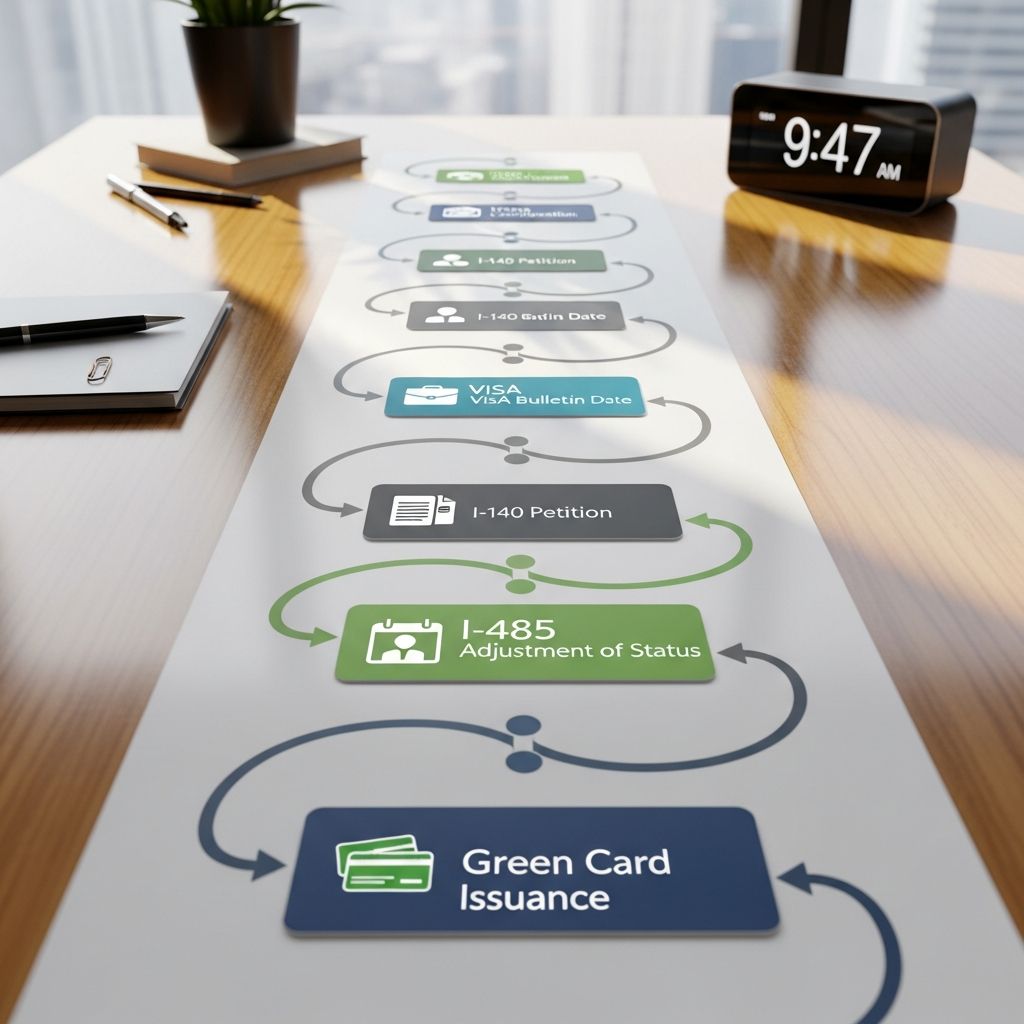
Understanding the Employment-Based Green Card Sponsorship Journey
Obtaining permanent residence in the United States through employer sponsorship represents a significant milestone for international professionals seeking to build a career in America. The process, while structured and governed by clear regulations, involves multiple stages requiring coordination between the employee, employer, and various government agencies. Understanding the timeline and requirements of this journey is essential for anyone considering this pathway to permanent residency.
The employment-based green card process is fundamentally different from other immigration pathways. Unlike immediate family sponsorship or diversity visas, employer-sponsored permanent residency requires employers to demonstrate that hiring a foreign national will not adversely affect the American workforce. This protective mechanism necessitates several procedural steps, each with its own timeline and documentation requirements.
The Foundation: Initial Preparation and Eligibility Assessment
Before any official applications are submitted, both the employer and prospective employee must engage in thorough preparation. This prefiling stage is critical, as it establishes whether the sponsorship pathway is feasible and gathers essential documentation that will be required throughout the process.
The employer must first confirm that the position qualifies for employment-based sponsorship and that the prospective employee possesses the necessary qualifications. During this phase, employers should assess which visa category—typically either EB-2 or EB-3—best suits the position and the employee’s background. This determination influences the subsequent labor certification requirements and overall processing timeline.
Documentation gathering occurs simultaneously and includes comprehensive materials related to both the employee’s qualifications and the employer’s financial capacity. The employee must compile diplomas, degrees, transcripts, work experience letters detailing specific job duties and tenure, birth certificate, passport biographic page, and marriage certificate if applicable. The employer simultaneously prepares tax returns demonstrating financial stability and capacity to pay the offered wage.
Step One: Securing Prevailing Wage Determination
The first official step in the employment-based green card process involves obtaining a prevailing wage determination (PWD) from the State Workforce Agency located in the state where the employer operates. This determination establishes the standard wage for the specific position and geographic location, ensuring that the employer offers a salary meeting or exceeding the prevailing wage for that occupation.
The prevailing wage determination serves a dual purpose: it protects American workers by establishing a wage floor and demonstrates to the Department of Labor that the foreign worker will not depress wages in the labor market. Employers obtain this determination through filing Form ETA 9141 with the National Prevailing Wage Center. The prevailing wage must equal or exceed 100 percent of the published wage for the position in question, a standard implemented to strengthen worker protections.
Typical processing time for prevailing wage determination ranges from one to two months, though this can vary depending on the complexity of the position and state-specific processing standards. Once obtained, this determination remains valid for a specified period, allowing employers to proceed with recruitment efforts.
Step Two: Labor Certification and Recruitment Requirements
Following prevailing wage determination, the employer must conduct extensive recruitment efforts to demonstrate that no minimally qualified American workers are available for the position. This labor certification process, also known as PERM (Program Electronic Review Management), requires employers to advertise the position and document all recruitment activities.
The recruitment phase typically includes multiple recruitment methods designed to reach potential American applicants. Employers must place job advertisements in appropriate venues, such as local newspapers, industry publications, and online job boards. Additionally, employers document the recruitment timeline, the number of applicants received, and reasons why American applicants were not selected for the position.
The labor certification application, Form ETA 9089, is then filed with the Department of Labor. This application contains employer attestations made under penalty of perjury, affirming several critical points:
- The position is for full-time permanent employment
- The job opportunity does not involve unlawful discrimination
- The position is open to any qualified U.S. worker
- The employer will pay the foreign national the prevailing wage
- The employer possesses sufficient financial resources to pay the offered wage
Processing time for the labor certification application typically ranges from two to three months after filing with the Department of Labor. However, if the DOL initiates an audit of the application—which occurs when discrepancies or additional clarification is needed—the processing time can extend to approximately seven months. During this period, the DOL reviews all recruitment documentation to ensure the employer complied with recruitment requirements and honestly evaluated applicants.
Employers demonstrate financial capacity to pay the prevailing wage through various methods, including recent tax returns showing net income equal to or exceeding the offered salary, tax returns demonstrating net current assets meeting or surpassing the salary offer, or paystubs and W-2 forms showing the employer has already paid the beneficiary the prevailing wage or higher.
Step Three: Immigrant Petition Filing with USCIS
Once the labor certification application receives approval from the Department of Labor, the employer may proceed with filing the immigrant petition. This petition, Form I-140 (Application to Register Permanent Residence or Adjust Status), is submitted to U.S. Citizenship and Immigration Services (USCIS). The petition must be accompanied by comprehensive supporting documentation establishing the employee’s qualifications and the employer’s ability to pay the offered wage.
The I-140 petition serves as formal notification to USCIS that the employer is seeking to sponsor a foreign national for permanent residence. USCIS reviews the petition to verify that the beneficiary meets the qualifications specified in the labor certification and that the employer possesses adequate financial resources to fulfill the wage commitment.
Processing time for the I-140 petition typically ranges from five to eight months. Employers have the option to pay a premium processing fee of $2,805 (compared to the standard filing fee of $715), which expedites review to approximately fifteen days, though this expedited timeline may extend if the government issues a request for additional evidence (RFE). If an RFE is issued during standard processing, the case timeline may extend by an additional three to six months while the employer gathers and submits the requested documentation.
Once USCIS approves the I-140 petition, the employee receives a priority date. This date is crucial for the subsequent steps and determines when the employee may proceed with adjustment of status or immigrant visa processing, depending on visa availability and the employee’s current immigration status.
Step Four: Adjustment of Status or Consular Processing
Following I-140 approval, the employee must determine whether to apply for adjustment of status (if already in the United States and eligible) or proceed through consular processing (if residing outside the United States). The employee’s priority date must be current before either application can be filed, meaning sufficient visa numbers must be available in the visa bulletin for their preference category and country of origin.
Adjustment of status applications, filed using Form I-485, allow employees already present in the United States to obtain their green card without traveling abroad. This pathway is available to those in lawful immigration status or eligible under certain statutory provisions. Processing time for adjustment of status applications typically ranges from six to eight months after filing with USCIS.
Alternatively, employees residing outside the United States must pursue consular processing through the Department of State. This pathway requires applying at a U.S. embassy or consulate and undergoing visa interview procedures. Consular processing typically takes five to seven months from application to visa issuance.
Upon approval of either adjustment of status or consular processing, the employee receives their physical green card, officially becoming a permanent resident of the United States. This status permits the employee to live and work anywhere in the country without employer sponsorship restrictions.
Comprehensive Timeline Overview
Understanding the aggregate timeline across all procedural stages helps prospective employees and employers plan accordingly. The total timeline from initial preparation through green card receipt varies significantly based on multiple factors, including whether premium processing is selected, whether audits occur during labor certification, and visa availability for the employee’s preference category and country of origin.
| Process Stage | Standard Processing Time | Notes |
|---|---|---|
| Prevailing Wage Determination | 1-2 months | Varies by state and position complexity |
| Recruitment and Labor Certification Filing | 2-3 months (without audit) | Up to 7 months if Department of Labor audit occurs |
| I-140 Immigrant Petition | 5-8 months | 15 days with premium processing; +3-6 months if RFE issued |
| Adjustment of Status | 6-8 months | Applies to beneficiaries already in U.S. |
| Consular Processing | 5-7 months | Applies to beneficiaries outside U.S. |
| Total (Estimated) | 2-3 years | Varies significantly; can exceed 3 years depending on visa availability |
Critical Documentation Requirements
Throughout the employment-based green card process, specific documentation supports the applications and petitions filed with government agencies. Incomplete or insufficiently detailed documentation frequently results in requests for additional evidence, thereby extending overall processing timelines.
The beneficiary must provide comprehensive educational documentation, including original diplomas or certified copies, official transcripts from all educational institutions attended, and degrees from accredited programs. Work experience letters from previous employers are particularly important, as they must detail specific job duties, responsibilities, dates of employment, and the applicant’s tenure in each position. These letters establish the applicant’s experience and qualifications for the sponsored position.
The employer must submit recent tax returns establishing financial capacity, ideally for the most recent fiscal year. Additionally, if the employer has already hired the beneficiary and paid wages, paystubs and W-2 tax forms may demonstrate the employer’s historic ability to pay the offered wage. For newly proposed positions, tax returns showing net income or assets exceeding the prevailing wage amount are essential.
Recruitment documentation collected during the labor certification phase must be organized and submitted with the ETA 9089 application. This includes copies of all job advertisements placed, documentation of where advertisements appeared (publications, websites, dates), records of all applicants received, and detailed explanations of why qualified American applicants were not selected for the position or were found to lack minimum qualifications.
Financial Considerations and Employer Obligations
Sponsoring an employee for permanent residence involves not only significant time commitments but also financial obligations. The employer must pay all government filing fees associated with the labor certification application, prevailing wage determination, I-140 petition, and other procedural components. Additionally, the employer must pay for recruitment activities required during the labor certification phase.
Most importantly, the employer assumes a binding obligation to pay the beneficiary the prevailing wage for the position throughout the duration of employment. This obligation supersedes any employment contract terms and cannot be circumvented through reduced pay or diminished benefits. The prevailing wage determination establishes a wage floor that the employer is legally bound to maintain.
Employers may also incur costs for immigration legal counsel to navigate the complex procedural requirements. Immigration attorneys help ensure all documentation is properly prepared, applications are accurately completed, and employer interests are protected throughout the process.
Factors Affecting Processing Timelines
Multiple variables influence how quickly an employment-based green card case progresses through the system. Geographic location plays a significant role, as different states have varying processing standards and prevailing wage determination procedures. The complexity of the position also matters; positions requiring specialized skills may take longer to advertise and justify labor certification.
The beneficiary’s country of origin significantly impacts overall timeline, particularly in the final adjustment of status or consular processing stages. Nationals of countries with high visa demand, including China and India, face substantial delays due to per-country visa limitations. These delays can add months or years to the total processing time, as visa numbers become available more slowly for nationals of these countries.
Requests for additional evidence at any stage extend processing timelines considerably. Incomplete applications, insufficient documentation, or discrepancies between forms and supporting materials trigger RFEs, requiring employers and beneficiaries to gather and submit additional information before cases resume processing.
The decision to pursue premium processing for the I-140 petition significantly reduces that stage’s timeline, though it does not affect labor certification or adjustment of status/consular processing stages. Employers weighing the $2,805 premium processing fee against the benefit of faster I-140 processing must consider their business needs and timeline constraints.
Frequently Asked Questions
Q: How long does the entire employment-based green card process typically take?
A: The complete process generally takes two to three years from initial labor certification filing through green card receipt. However, cases involving nationals of countries with per-country visa limitations may take significantly longer, and timelines vary based on complexity and whether audits occur during labor certification.
Q: Can the beneficiary work while the green card application is pending?
A: This depends on the beneficiary’s current immigration status. Those on valid work visas like H-1B may continue working. Those pursuing adjustment of status must typically be in lawful status or eligible under certain statutory exceptions. Consular processing applicants outside the U.S. cannot work until receiving their immigrant visa.
Q: What happens if the Department of Labor audits the labor certification application?
A: If audited, the employer must provide additional documentation supporting recruitment efforts and justifications for rejecting American applicants. Audits extend labor certification processing from the standard two to three months up to approximately seven months.
Q: Is premium processing available for all stages of the employment-based green card process?
A: Premium processing is available for the I-140 petition stage, reducing processing time to approximately fifteen days. It is not available for labor certification or adjustment of status/consular processing stages.
Q: What is a priority date and why is it important?
A: The priority date, established when the labor certification or I-140 petition is filed, determines when the beneficiary may proceed with adjustment of status or consular processing. The priority date must be current according to the visa bulletin before filing these final applications.
Q: Can an employee transfer sponsorship to a different employer?
A: Once the I-140 petition is approved, some flexibility exists for employment changes. However, employment-based green card sponsorship remains tied to the original petitioner employer until the beneficiary receives their physical green card.
Q: What documentation is most critical for labor certification approval?
A: Comprehensive recruitment documentation proving good-faith recruitment efforts and the absence of minimally qualified American applicants is most critical. Additionally, clear employer attestations regarding the permanent nature of the position and commitment to paying the prevailing wage are essential.
References
- Employer Sponsored Green Card Process — Ashoori Law. Accessed January 2026. https://www.ashoorilaw.com/employer-sponsored-green-card/
- Employer-Sponsored Green Card Processing Takes 3.4 Years, All Time High — Cato Institute. 2025. https://www.cato.org/blog/employer-sponsored-green-card-processing-takes-34-years-all-time-high
- Employment-Based Immigrant Visas — U.S. Department of State Travel.gov. Accessed January 2026. https://travel.state.gov/content/travel/en/us-visas/immigrate/employment-based-immigrant-visas.html
- How To Sponsor Employee Green Cards as a US Company — Deel. Accessed January 2026. https://www.deel.com/blog/how-to-sponsor-employee-green-cards-us-company/
- Getting a PERM: An Employment-based Green Card — Immigrants Rising. Accessed January 2026. https://immigrantsrising.org/resource/getting-a-perm/
- Immigrant visa to work in the U.S. — USA.gov. Accessed January 2026. https://www.usa.gov/immigrant-work-visa
Similar Articles








Read full bio of Sneha Tete




