
Can Employers Prohibit Vaping in the Workplace?
Understand the legal landscape for restricting e-cigarettes in workplaces to ensure compliance, safety, and a healthy environment for all employees.
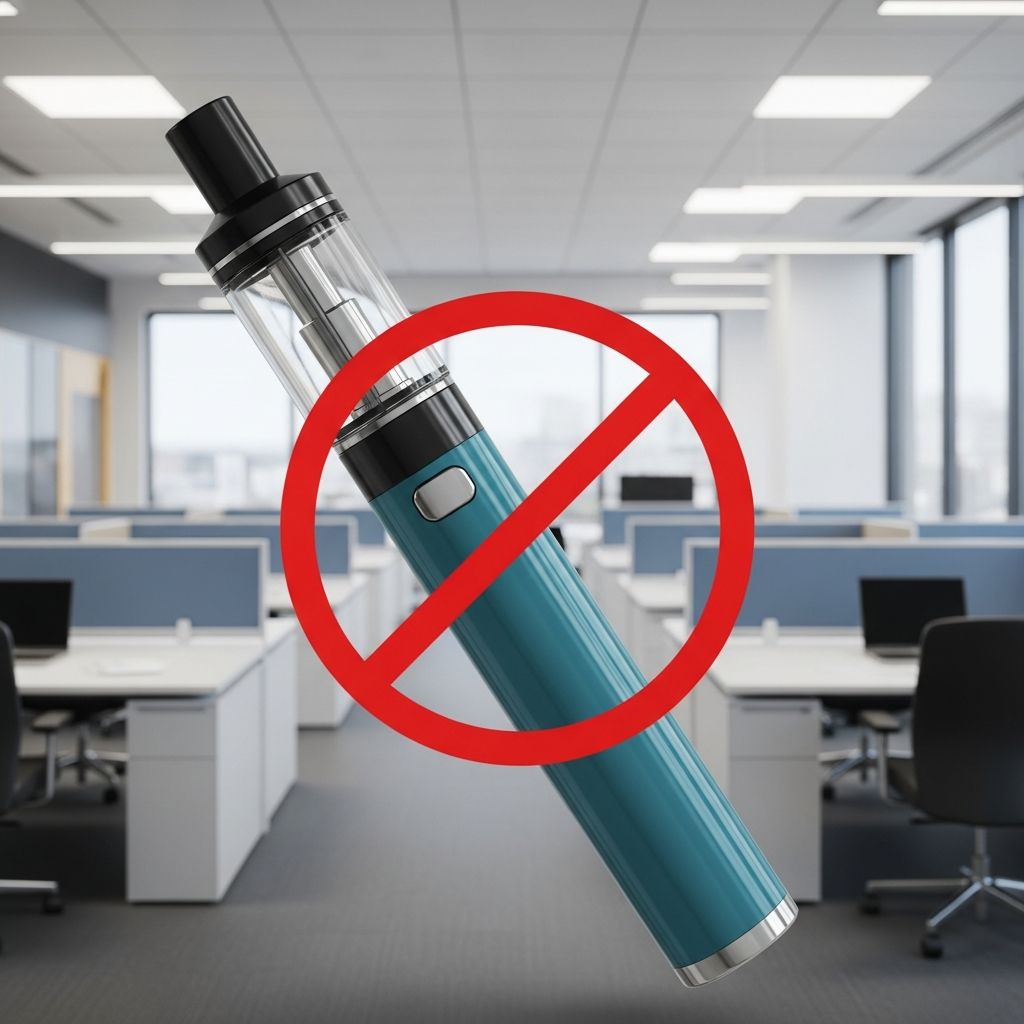
Employers across the United States hold significant discretion to restrict e-cigarette use, commonly known as vaping, in private workplaces where no specific state or local laws mandate otherwise. While federal regulations do not impose a blanket prohibition, agencies like OSHA recommend treating vaping akin to traditional smoking due to potential health and safety concerns. This authority stems from private property rights and the need to maintain a productive, hazard-free environment, allowing business owners to craft policies that align with their operational goals and employee well-being.
Understanding Vaping Devices and Their Workplace Presence
E-cigarettes encompass a range of battery-operated devices designed to heat liquids into an aerosol that users inhale, often containing nicotine, flavorings, and other chemicals. These devices vary in appearance from cigarette-like sticks to discreet pen-shaped units, making them less conspicuous than combustible cigarettes. In workplaces, vaping has surged as smoking bans became ubiquitous, yet many policies overlook these alternatives, leading to ambiguity. Employees may vape indoors assuming no visible smoke equates to permission, inadvertently exposing colleagues to secondhand aerosol laden with ultrafine particles and volatile compounds.
The rise in vaping correlates with broader tobacco trends; surveys indicate substantial employee support for restrictions, with over 70% of non-users and more than half of users favoring vape-free zones. This consensus underscores the urgency for clear guidelines, particularly as hybrid work models evolve and in-person interactions resume post-pandemic.
Federal Guidelines Shaping Employer Decisions
No comprehensive federal law bans vaping in private sector workplaces as of 2026, distinguishing it from public spaces under certain Clean Indoor Air Acts. However, the Occupational Safety and Health Administration (OSHA) advises employers to evaluate e-cigarette emissions similarly to tobacco smoke, citing risks like impaired air quality and fire hazards from lithium batteries. OSHA’s stance during safety audits emphasizes voluntary policies that prohibit use in enclosed areas to mitigate respiratory irritants and ensure compliance with general duty clauses requiring hazard-free conditions.
The Centers for Disease Control and Prevention (CDC) tracks state-level adoptions, noting that comprehensive laws in select jurisdictions extend smoke-free protections to e-cigarettes. Recent FDA updates, effective from 2025, mandate detailed disclosures on e-liquid compositions, potentially influencing future OSHA interpretations of occupational exposures. Employers should monitor these developments, as they could prompt stricter federal recommendations.
State and Local Variations in Vaping Restrictions
Workplace vaping regulations fragment across states, with approximately 13 jurisdictions enforcing broad indoor bans that encompass e-cigarettes wherever smoking is prohibited. These include California, Colorado, Delaware, Florida, Hawaii, Maine, New Jersey, New York, North Dakota, Oregon, Rhode Island, Utah, and Vermont, plus Washington, D.C., and Puerto Rico. In these areas, private employers must comply, typically barring use in offices, break rooms, and shared facilities.
| State/District | Ban Scope | Key Venues Covered |
|---|---|---|
| California | Comprehensive indoor air law | Workplaces, restaurants, bars |
| New York | Extends smoke-free rules | Private worksites, public buildings |
| Florida | Indoor workspaces prohibited | Offices, childcare, schools |
| Utah | Full e-cigarette inclusion | All smoke-free indoor areas |
| Others (e.g., Hawaii, Oregon) | Similar broad prohibitions | Enclosed private and public spaces |
In non-regulating states, employers enjoy flexibility but face local ordinances in cities like those prohibiting indoor vaping in government or educational settings. Multi-state operations require tailored policies per location, often consulting legal experts to navigate discrepancies.
Health and Safety Risks of Workplace Vaping
Vaping introduces aerosols containing nicotine, heavy metals, and flavor-derived toxins, posing risks to bystanders via secondhand exposure. Studies highlight elevated ultrafine particles that penetrate deep into lungs, exacerbating conditions like asthma amid poor ventilation. Post-COVID emphases on clean air amplify concerns, as vaping undermines disinfection efforts and ventilation standards recommended by health authorities.
- Respiratory Impacts: Aerosol irritants trigger coughing, wheezing, and reduced lung function in sensitive individuals.
- Fire Hazards: Device batteries can overheat or explode, especially if damaged or improperly charged.
- Air Quality Degradation: Lingering odors and particulates affect productivity and comfort.
- Normalization Effect: Permissive environments may erode anti-tobacco norms, increasing overall use.
These factors contribute to higher absenteeism and healthcare costs; employers banning vaping report improved morale and fewer complaints.
Crafting an Effective No-Vaping Policy
A robust policy begins with explicit definitions: prohibit all electronic nicotine delivery systems, heated tobacco products, and similar devices indoors and near entrances. Align vaping rules with existing smoke-free protocols for consistency, specifying designated outdoor areas if permitted.
- Conduct a Review: Audit current handbooks for gaps and benchmark against industry peers.
- Define Scope: Cover all company property, vehicles, and events; include contractors.
- Outline Enforcement: Implement progressive discipline—warnings, suspensions, termination.
- Provide Resources: Offer cessation programs, as 85% of employees support quit aids.
- Train Managers: Equip supervisors to address violations neutrally.
Sample policy language: “The use, possession, or distribution of e-cigarettes and vaping devices is prohibited in all indoor areas, outdoor seating, and within 15 feet of building entrances to protect air quality and safety.” Regular updates ensure alignment with laws like the 2025 FDA rules.
Enforcing Policies and Handling Violations
Disciplinary consistency prevents discrimination claims; document incidents with witnesses and issue verbal warnings first, escalating as needed. Termination is viable for repeat offenders if policies are clear and progressive steps followed. Address employee pushback by communicating health data and legal bases, fostering buy-in through town halls and FAQs.
Unions may negotiate vaping clauses, mirroring tobacco bans in sectors like healthcare. For remote or field workers, extend rules to client sites and company travel. Waste management is crucial—discarded pods contribute to litter; provide receptacles to avoid environmental fines.
Benefits of Vape-Free Workplaces
Implementing bans yields tangible gains: enhanced productivity from fewer disruptions, reduced insurance premiums via lower claims, and stronger employer branding as health-conscious. Surveys show 73% non-vaper support and 54% vaper endorsement, signaling broad acceptance. Amid 2026’s focus on wellness, such policies attract talent prioritizing clean environments.
Cessation integration boosts ROI; only 31% of workplaces offer programs despite 63% user quit intentions. Partnerships with resources like 1-800-QUIT-NOW amplify impact.
Frequently Asked Questions (FAQs)
What states ban vaping in private workplaces?
Thirteen states plus D.C. and Puerto Rico prohibit e-cigarettes in indoor areas where smoking is banned, including offices.
Can I terminate an employee for vaping at work?
Yes, if your policy or local law forbids it, following established disciplinary processes.
Does OSHA require vaping bans?
No federal mandate exists, but OSHA urges restrictions comparable to smoking for safety.
How should I communicate a new vaping policy?
Use emails, meetings, posters, and intranets; repeat messages for awareness.
Are there health risks from secondhand vaping?
Yes, aerosols carry irritants, metals, and particles affecting bystanders.
Future Outlook on Vaping Regulations
By 2026, expect tighter scrutiny; FDA’s 2025 ingredient mandates and potential OSHA updates may standardize approaches. Local bans proliferate, and court challenges could clarify ambiguities. Proactive employers will integrate compliance training and monitor via HR software, positioning for resilience.
In conclusion, banning vaping empowers employers to safeguard health, comply with patchwork laws, and cultivate positive cultures. Consult attorneys for jurisdiction-specific advice to implement seamlessly.
References
- Vaping in the Workplace: Do You Have a Policy? — International Foundation of Employee Benefit Plans (IFEBP). 2018-10 (updated context). https://blog.ifebp.org/vaping-in-the-workplace/
- Vaping In The Workplace: Addressing Health, Safety, and Environmental Risks — HETI Services. 2025-07 (recent FDA updates). https://hetiservices.com/vaping-in-the-workplace-addressing-health-safety-and-environmental-risks/
- Vaping in the Workplace — Truth Initiative. 2026 (post-2020 data). https://truthinitiative.org/research-resources/emerging-tobacco-products/vaping-workplace
- Vaping in the Workplace FAQs — TriNet. 2026 (CDC-aligned). https://www.trinet.com/insights/vaping-in-the-workplace-faqs
- Smoking Policy Guidelines for 2026 — SixFifty. 2026-01. https://www.sixfifty.com/blog/smoking-policy/
Similar Articles








Read full bio of medha deb




