
Eligibility for U.S. Green Card via Adjustment of Status
Discover who qualifies to apply for permanent residency through adjustment of status without leaving the U.S.
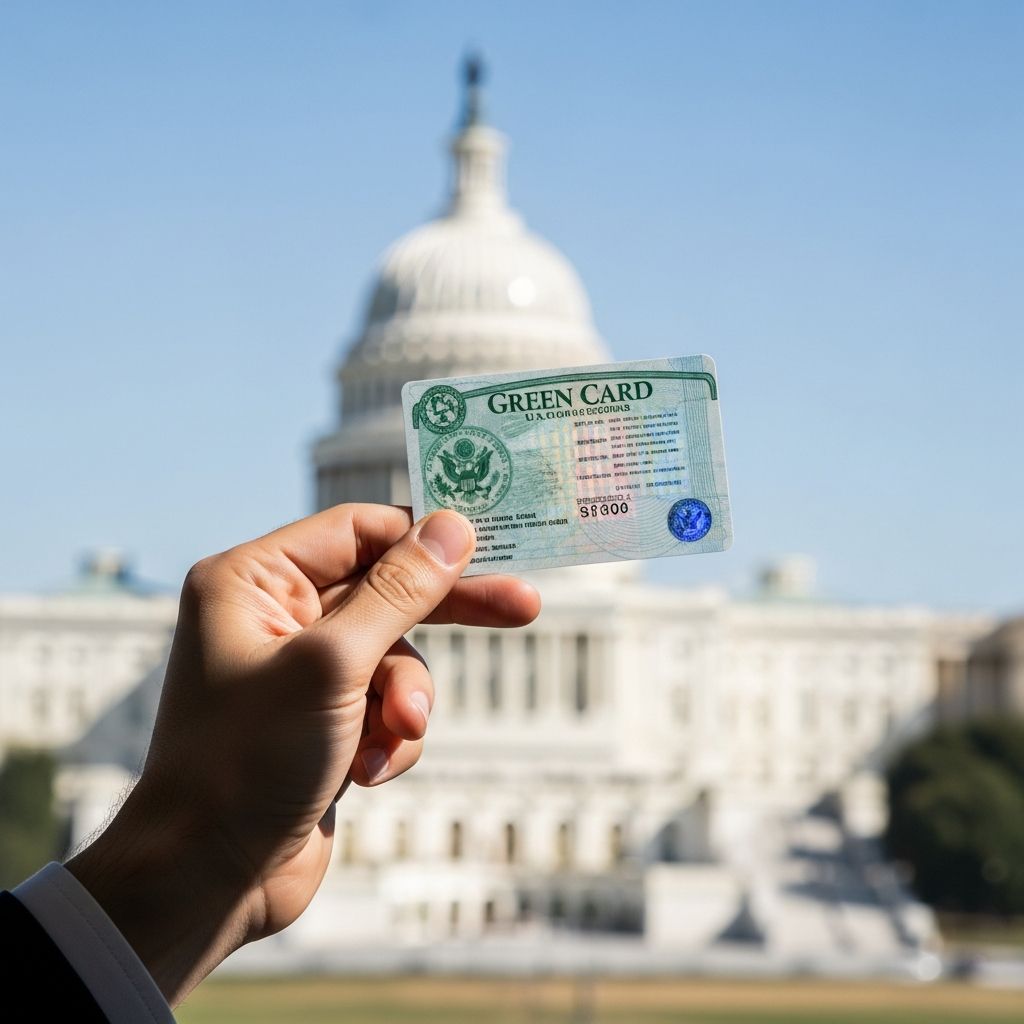
Adjustment of status provides a pathway for certain non-citizens physically present in the United States to transition to lawful permanent resident status, commonly known as obtaining a green card, without needing to depart for consular processing abroad. This process, governed by Section 245 of the Immigration and Nationality Act (INA), requires meeting specific statutory criteria including lawful entry, visa availability, and absence of inadmissibility grounds.
Fundamental Prerequisites for Filing
To initiate an adjustment of status application using Form I-485, applicants must satisfy core conditions outlined in federal regulations. First, physical presence in the U.S. at the time of filing is mandatory; those outside the country must pursue immigrant visas through U.S. consulates.
Second, a lawful admission or parole upon entry is essential. This means the individual was inspected by a U.S. immigration officer, as evidenced typically by Form I-94. Entries without inspection, such as crossing borders unlawfully, generally bar adjustment unless rare exceptions apply.
Third, eligibility for an immigrant visa category must be established via an approved underlying petition, such as Form I-130 for family-based cases or I-140 for employment-based ones. A visa number must be immediately available according to the Department of State’s Visa Bulletin, based on the applicant’s priority date.
Family-Based Adjustment Opportunities
Family sponsorship forms the largest category for adjustment applicants. Immediate relatives of U.S. citizens—spouses, unmarried children under 21, and parents—face no visa quotas and can apply once the I-130 is approved.
Preference categories include:
- F1: Unmarried adult children (21+) of U.S. citizens.
- F2A: Spouses and unmarried children under 21 of lawful permanent residents (LPRs).
- F2B: Unmarried adult children of LPRs.
- F3: Married children of U.S. citizens.
- F4: Siblings of U.S. citizens.
Derivative beneficiaries, such as minor children, may adjust alongside the principal applicant.
Employment-Based Pathways to Permanent Residency
Workers qualifying under employment preferences can adjust if their I-140 petition is approved and a visa is current. Key categories are presented in the table below:
| Preference | Petitioner | Eligible Individuals | Form |
|---|---|---|---|
| EB-1 | Beneficiary or employer | Extraordinary ability, outstanding professors/researchers, multinational executives | I-140 |
| EB-2 | Beneficiary or employer | Advanced degrees or exceptional ability | I-140 |
| EB-3 | Employer | Skilled/unskilled workers, professionals | I-140 |
| EB-4 | Beneficiary or employer | Special immigrants (e.g., religious workers) | I-360 |
| EB-5 | Beneficiary | Investors creating jobs | I-526 |
Applicants must maintain lawful status or qualify for exemptions like INA §245(k), which forgives certain status violations for employment-based cases within 180 days.
Special Categories and Humanitarian Relief
Beyond family and employment, diverse groups qualify:
- Asylees and Refugees: Eligible one year after asylum grant or U.S. entry as refugees.
- VAWA Self-Petitioners: Abused spouses/children of U.S. citizens or LPRs.
- U Visa Holders: Victims of certain crimes assisting law enforcement, after three years.
- T Visa Holders: Trafficking victims.
- Special Immigrant Juveniles: Abused/neglected youth via state court orders.
These categories often provide waivers for inadmissibility grounds tied to humanitarian needs.
Overcoming Inadmissibility and Common Bars
Even eligible applicants may face inadmissibility under INA §212, including health issues, crimes, misrepresentation, or public charge likelihood. Waivers are available for many, but not all, grounds—e.g., no waiver for certain security-related issues.
Statutory bars specific to adjustment include:
- Unauthorized employment or failure to maintain status (exceptions for immediate relatives and technical violations).
- Marriage fraud or changes invalidating petitions (e.g., petitioner’s death).
- Public charge: Applicants must demonstrate self-sufficiency via affidavits of support (Form I-864).
Discretionary nature means USCIS weighs positive (e.g., family ties) against negative factors.
Proving Lawful Entry and Documentation Needs
Proof of lawful entry is critical, primarily via I-94, passport stamps, or boarding foils. Missing documents require secondary evidence like travel records or witness statements.
Full application packages include:
- Form I-485 with fees.
- Approved petition copy.
- Form I-693 medical exam.
- Birth/marriage certificates.
- Passport photos, biometrics appointment.
Filers physically present undergo biometrics and possible interviews.
Exceptions for Past Violations: 245(i) and LIFE Act
Section 245(i) allows adjustment despite unlawful entry or status violations for those with petitions filed by specific deadlines (e.g., April 30, 2001), upon paying a $1,000 penalty. Eligible if a qualifying family/employer petition named them before the cutoff.
Current Processing and Costs
As of late 2025, USCIS fees for I-485 start at $1,440 (adult), plus biometrics. Processing times vary by category, often 12-24 months; premium processing unavailable for most adjustments.
Monitor the Visa Bulletin monthly for priority dates.
Frequently Asked Questions
Can I adjust status if I entered without inspection?
Generally no, unless qualifying under 245(i) or specific humanitarian programs.
What if my visa priority date is not current?
You must wait until a visa is available per the Visa Bulletin before filing or approval.
Does TPS still allow adjustment after the Supreme Court ruling?
No, TPS no longer excuses unlawful entry for adjustment purposes.
Can derivatives adjust separately?
Yes, but they must file concurrently or follow principal approval if visas allow.
What happens if I’m in removal proceedings?
You may adjust defensively before an immigration judge if eligible.
This comprehensive guide equips prospective applicants with essential knowledge. Consult an immigration attorney for case-specific advice, as rules evolve.
References
- What Are the Requirements for Adjustment of Status? — Rosina Law. 2023. https://www.rosinalaw.com/blog/what-are-the-requirements-for-adjustment-of-status/
- Eligibility to File an Adjustment of Status (AOS) — Anwari Law. 2024. https://anwarilaw.com/immigration-services/green-cards/adjustments-of-status/eligible-file-adjustment-status-aos/
- Adjustment of Status – Employment Based — Serotte Reich Walters Law. 2024. https://srwlawyers.com/adjustment-of-status-employment-based/
- Who Can Apply for a Green Card Through Adjustment of Status? — Nolo. 2025. https://www.nolo.com/legal-encyclopedia/who-can-apply-green-card-through-adjustment-status.html
- Adjustment of status: Get a Green Card if you are in the United States — USA.gov (USCIS). 2025-11-13. https://www.usa.gov/adjustment-of-status
- 8 CFR Part 245 — Adjustment of Status to That of Person Admitted — eCFR (Official U.S. Government). 2026. https://www.ecfr.gov/current/title-8/chapter-I/subchapter-B/part-245
Similar Articles








Read full bio of medha deb


