
When Electronic Monitoring Technicalities Lead to Jail
Minor tech failures in ankle monitors lead to severe, unjust jail time.
Introduction
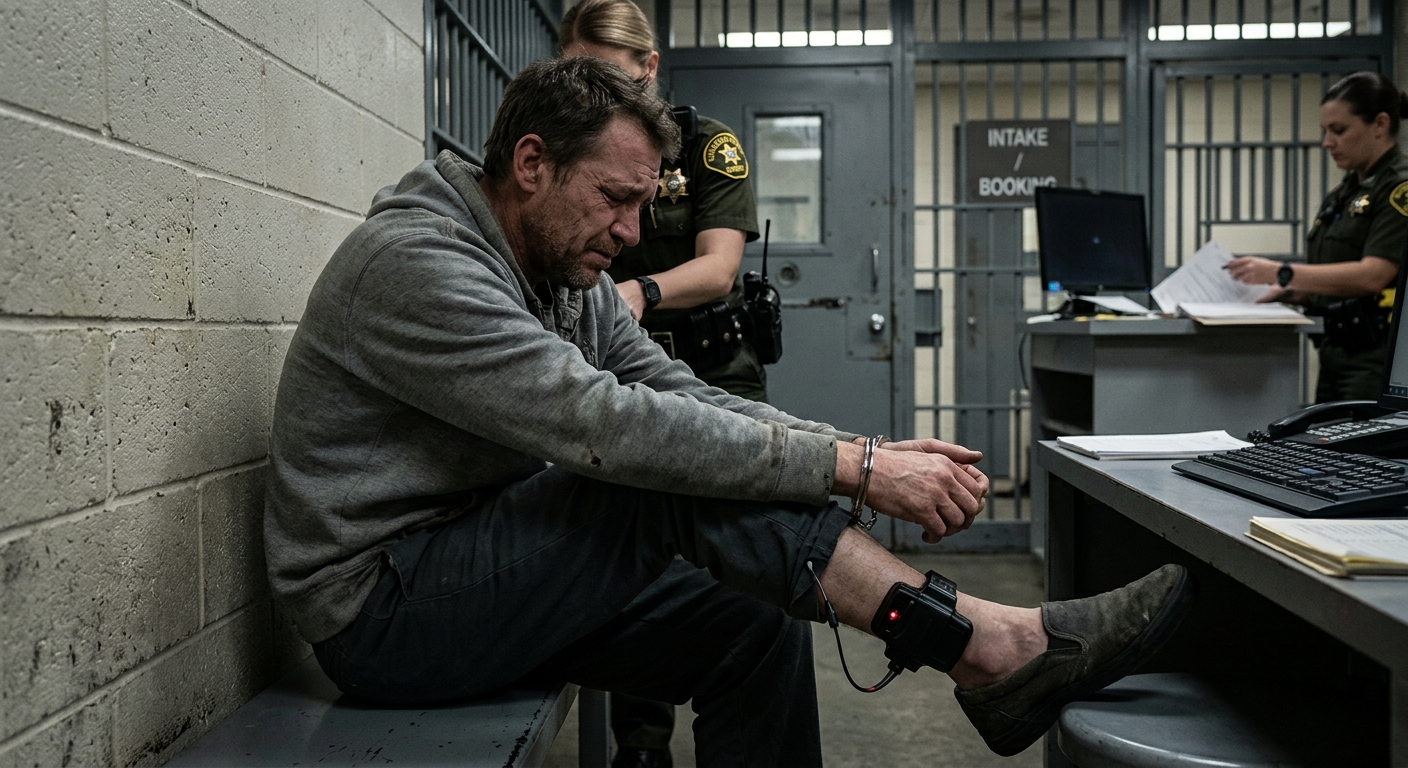
Championed as a cost-saving and humane alternative to traditional incarceration, electronic monitoring (EM) ankle monitors are ostensibly designed to allow individuals to remain in their communities. In theory, these devices let people maintain their employment, secure housing, and support their families while awaiting trial or serving a probationary sentence. However, a darker picture emerges upon closer examination of operational realities. Instead of serving as a supportive bridge, electronic monitoring frequently acts as a digital tether setting marginalized individuals up for failure.
Minor technical glitches, such as a rapidly degrading battery or a temporary loss of GPS signal, are routinely classified by the courts as ‘technical violations.’ These infractions, completely devoid of new criminal activity, trigger immediate arrest and re-incarceration. This transformation of a simple hardware failure into a deeply punitive event exposes individuals to immense distress and severe physical health risks a reality undeniably stark during the spread of infectious diseases like COVID-19 within correctional facilities. What is pitched as an alternative to jail often becomes a direct pipeline right back into it.
The Promise versus the Reality of Electronic Monitoring
When jurisdictions rolled out electronic ankle monitors, the stated goal was clear: reduce overcrowded jail populations and save taxpayer money. The state saves on the recurring costs of housing inmates, while the accused gets the privilege of sleeping at home. However, the reality is hyper-surveillance and zero tolerance. Unlike a physical jail cell where boundaries are concrete, EM boundaries are defined by invisible GPS coordinates and the demanding beep of a device requiring frequent charging. Individuals subjected to these monitors live in perpetual anxiety, acutely aware that their freedom depends on technology highly prone to malfunction. The surveillance actively dictates the rhythm of daily existence, demanding that individuals structure their lives around proximity to electrical outlets and reliable cellular towers.
Anatomy of a Technical Violation: When Hardware Fails
A technical violation occurs when an individual breaks a procedural rule of their release, rather than committing a new crime. With electronic monitoring, these violations are overwhelmingly tied to technology failures.
Battery and Connectivity Flaws
The most common catalyst for a technical violation is battery failure. EM devices have batteries that degrade significantly over time. Individuals must physically plug themselves into a wall to charge their monitors for hours daily.
- Employment conflicts: For someone working a physically demanding job like construction or landscaping, finding an accessible electrical outlet for hours is nearly impossible.
- Automatic penalties: If the battery dies while commuting or working, the automated system flags this as an ‘absconding’ event or a deliberate attempt to evade state surveillance.
Similarly, GPS connectivity issues are rampant. Low-income neighborhoods, rural areas, or thick-walled apartments suffer from inconsistent cellular reception. When the monitor loses connection, an automated alert is generated. The individual has no control over local telecommunications infrastructure, yet they are held legally responsible when the signal drops.
False Alarms and Administrative Errors
False tampering alerts are a widespread problem. These monitors are hyper-sensitive. Everyday actions like accidentally bumping the device against furniture, exercising, or natural leg swelling can trigger a false alert. Furthermore, administrative errors by the private monitoring company or the supervising officer or the supervising officer such as failing to log a pre-approved doctor’s appointment and result in automated violation reports. The burden of proof unfairly falls on the monitored individual to prove a glitch occurred, often after they have already been taken into custody.
The Immediate Consequences: Returning to a Dangerous Environment
When a technical violation is logged, the response is swift and uncompromising. Warrants are issued, and individuals are abruptly removed from their homes, pulled from workplaces, and thrown back into jail. This reaction is grossly disproportionate to the ‘offense’ of a dead battery.
The Public Health Threat of Jails
The consequences of sudden re-incarceration pose a lethal threat to physical health. Jails are inherently dangerous environments for the spread of infectious diseases. Facilities are frequently overcrowded, poorly ventilated, and lack adequate sanitation. Inmates are forced into close quarters, making social distancing impossible.
During the height of the COVID-19 pandemic, correctional facilities emerged as primary epicenters for the virus. Individuals jailed for minor EM technical violations found themselves trapped where the virus spread uncontrollably. Even outside a global pandemic, local jails serve as notorious breeding grounds for influenza, tuberculosis, and staph infections. Medical care is often substandard and heavily delayed, meaning a brief stint in jail for a faulty battery can result in long-term health complications.
Disruption of Livelihood and Family
The collateral damage of being jailed for a technical violation thoroughly devastates an individual’s livelihood and family stability. Sudden arrest means missing scheduled work shifts, frequently leading to immediate termination. The loss of income quickly translates to an inability to pay rent, leading to eviction notices and potential homelessness. Families are deeply traumatized by the sudden removal of a parent by law enforcement. By the time the individual clears up the technical misunderstanding in front of a judge, their life may have completely unraveled.
A System Rooted in Deep Inequality
The heavy reliance on EM and the harsh penalization of technical violations do not impact all communities equally. The system is rooted in systemic economic and racial inequality, disproportionately harming those already marginalized.
Financial Burdens and Out-of-Pocket Fees
In many jurisdictions, the cost of the monitor is entirely borne by the individual wearing it. This predatory system treats surveillance as a privatized enterprise. Individuals are charged daily or weekly setup and monitoring fees for the ‘privilege’ of not being locked in a physical jail cell, which can amount to hundreds of dollars a month.
If an individual falls behind on payments, it is recorded as another technical violation, leading directly to arrest. For someone struggling to maintain employment while wearing a stigmatizing ankle monitor, fees create an inescapable cycle of debt. Wealthier individuals comfortably afford monitoring fees, while low-income individuals are systemically set up to fail.
Disproportionate Impact on Marginalized Groups
The inflexible requirements of EM inherently disadvantage marginalized groups. Individuals in impoverished neighborhoods may experience frequent power outages, making daily charging a logistical nightmare. Those relying exclusively on public transportation find it impossible to adhere to rigid geographical boundaries due to delayed transit schedules. Furthermore, the societal stigma associated with wearing an ankle monitor is heavily racialized. In communities of color, already subjected to disproportionate police surveillance, the visible presence of a monitor increases the likelihood of adversarial interactions with law enforcement. The system wrongfully assumes a baseline of stability and wealth, turning poverty into a punishable technical violation.
Re-evaluating the Use of Punitive Surveillance
The fundamental flaw in the current EM paradigm is its overwhelming reliance on punitive surveillance rather than proactive support. If the ultimate goal is rehabilitation and public safety, a drastic shift in policy is urgently required.
Transitioning to Supportive Models
Jurisdictions must move away from the assumption that every technical glitch is a malicious attempt to evade justice. When a battery dies, the default response should never be an automatic arrest warrant. Instead, supervision should be grounded in case management. If an individual is struggling to keep their device charged, the supervising officer should investigate the root cause whether unstable housing, a demanding work schedule, or a faulty device and offer practical solutions. The focus should be on helping the individual succeed, rather than waiting for them to trip over an invisible digital wire.
Legislative and Policy Recommendations
Significant legislative reforms are necessary to curb the ongoing abuses of electronic monitoring:
- Eliminate Incarceration for Tech Failures: Caps must be placed on using incarceration as a sanction for technical violations. A dead battery should never legally result in a jail sentence.
- Abolish User Fees: The financial burden must shift away from the individual. If the state mandates surveillance, the state must bear the full cost, eliminating predatory fee structures.
- Mandate Independent Oversight: Rigorous auditing of the technology used by private monitoring companies is needed. Vendors must be held accountable for high failure rates and poor battery life.
- Reduce Reliance on EM: Judges need to significantly reduce the overall use of EM, reserving it strictly for rare cases where there is a clear, evidence-based need.
Conclusion
Electronic monitoring has long been sold as a progressive, cost-saving alternative to incarceration. However, when the technology predictably fails, the progressive facade crumbles, revealing a punitive system trapping vulnerable individuals in an endless cycle of surveillance and imprisonment. The draconian practice of jailing people for minor technical violations is a profound, systemic failure of justice. It exposes individuals to life-threatening public health conditions in overcrowded jails and destabilizes their families. True, lasting reform requires dismantling the perverse financial incentives behind digital incarceration, recognizing inherent flaws in the technology, and shifting our collective approach from punitive surveillance to genuine, community-based support. Until these fundamental changes are made, the electronic ankle monitor will remain a digital trap designed to ensure failure.
Frequently Asked Questions (FAQs)
What exactly is a technical violation in electronic monitoring?
A technical violation occurs when an individual fails to comply with a procedural condition of their supervision, rather than committing a new criminal offense. This includes hardware issues like a dead battery, loss of GPS signal, false tampering alerts, or failing to pay privatized monitoring fees.
Can you go to jail just because your ankle monitor battery dies?
Yes. In many jurisdictions, allowing the battery to die is considered a serious breach of release conditions. It is treated as ‘absconding,’ triggering an immediate arrest warrant and subsequent jail time.
Why are jails high-risk environments for public health?
Jails are characterized by severe overcrowding, poor ventilation, and highly inadequate medical care. Individuals cannot practice social distancing, making these facilities prime environments for the rapid transmission of infectious diseases such as COVID-19, tuberculosis, and influenza.
How do electronic monitoring fees impact low-income individuals?
Many jurisdictions require the individual to pay daily fees for the device, accumulating to hundreds of dollars a month. For low-income individuals, this causes crippling debt. The inability to pay is deemed a technical violation, directly resulting in re-incarceration.
Are ankle monitors highly accurate and reliable pieces of technology?
No. Studies show electronic monitors frequently suffer from severe technological shortcomings, including rapidly degrading batteries, poor cellular connectivity, and false tampering alerts caused by everyday activities or minor physical impacts.
References
- COVID-19 in Correctional and Detention Facilities >United States, February Centers for Disease Control and Prevention (CDC). 2020-05-15. https://www.cdc.gov/mmwr/volumes/69/wr/mm6919e1.htm
- Policy Reforms Can Strengthen Community Supervision
- 2025 Quarter 4 Electronic Monitoring Report (IN.gov). 2025-01-15. https://www.in.gov/idoc/files/2025-Quarter-4-Electronic-Monitoring-Report.pdf
- COVID-19 and the Correctional Environment: The American Prison as a Focal Point for Public Health
Similar Articles








Read full bio of medha deb




