
Electoral Equity and the Fight for Racial Justice in Voting
Examining how ballot rejection rates and election laws impact minority voters.
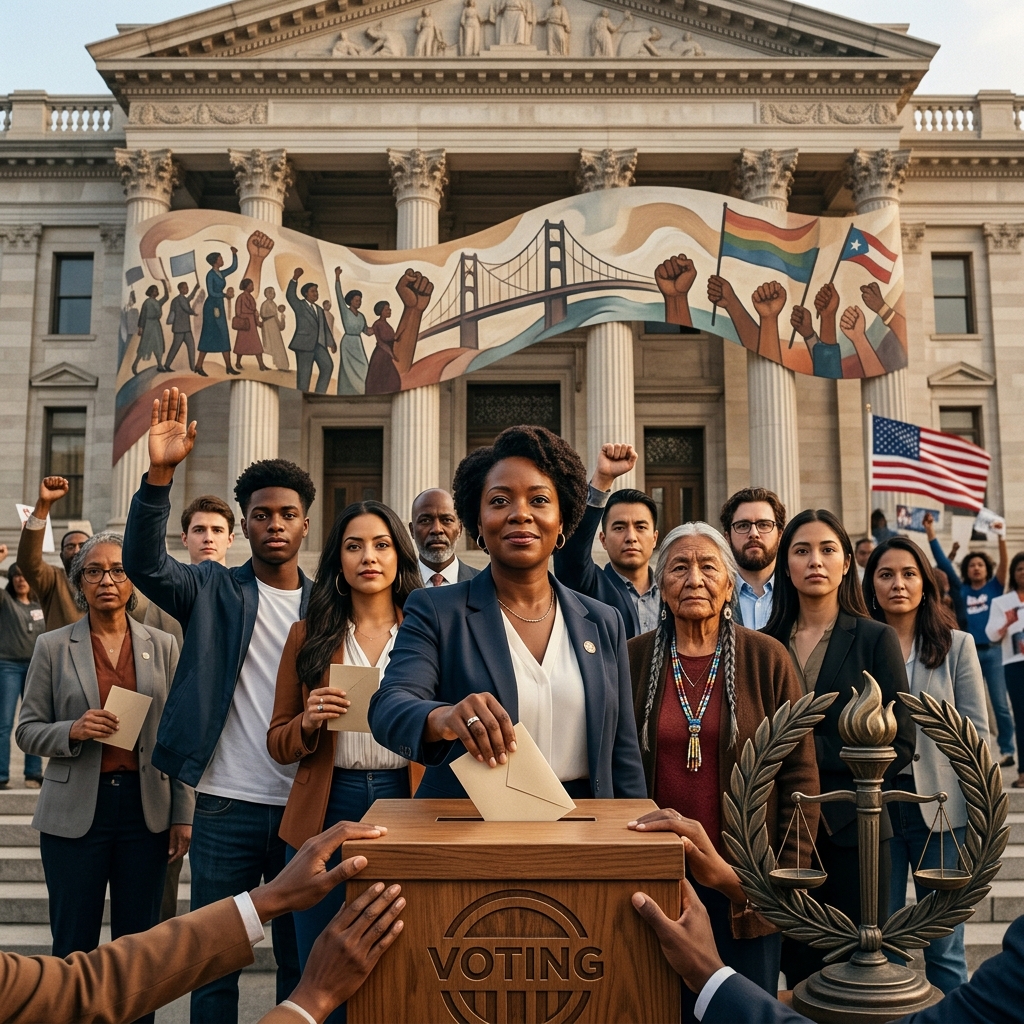
The Foundational Struggle for Electoral Equality
The right to vote is universally recognized as the bedrock of modern democratic societies, functioning as the primary mechanism through which citizens exercise their political power. However, the theoretical guarantee of the franchise does not automatically translate to equitable access at the ballot box. For generations, the mechanics of voting—encompassing how individuals register, how ballots are cast, and crucially, how those votes are counted—have been inextricably linked to the broader pursuit of racial justice. While the blatant, legally codified disenfranchisement of the past has largely been eradicated, contemporary barriers often manifest in subtle, administrative forms. Today, the conversation surrounding voting rights must move beyond mere access to the polling place; it must scrutinize the intricate web of election administration, ballot validation procedures, and systemic inequalities that disproportionately impact voters of color.
Understanding the modern landscape of voting rights requires a deep dive into the administrative procedures that govern elections. In the United States, elections are highly decentralized, administered primarily at the county and state levels. This patchwork system means that a voter’s experience—and the likelihood that their ballot will ultimately be counted—can vary dramatically wildly depending on their zip code. When viewed through the lens of racial equity, this localized administration often yields disparate outcomes, demanding a critical examination of how seemingly neutral policies can inadvertently disenfranchise marginalized communities.
The Surge in Mail-In Voting and Its Unintended Consequences
In recent years, particularly accelerated by public health concerns during the COVID-19 pandemic, the utilization of mail-in and absentee voting has surged to unprecedented levels. This transition was initially heralded as a triumph for civic participation, providing a safe, convenient alternative to waiting in long, crowded lines at polling places. Proponents argued that expanding vote-by-mail options would democratize access for working-class citizens who could not easily take time off work on Election Day.
However, the rapid expansion of absentee voting also exposed critical flaws within the ballot processing infrastructure. While overall turnout increased across demographic groups, the rate at which mail-in ballots were rejected illuminated stark racial disparities. Research underscores that the administrative hurdles associated with mail-in voting do not affect all populations equally. According to an extensive study conducted by the Evans School of Public Policy & Governance at the University of Washington, which analyzed ballot data spanning a decade, structural inequities are deeply embedded in ballot rejection rates. The study found that voters of color face significantly higher rejection rates than their White counterparts; specifically, Hispanic and Asian voters experienced rejection rates double those of White voters, while Black voters faced rejection rates that were 50% higher .
Signature Verification and Administrative Hurdles
The primary catalysts for ballot rejection typically involve strict procedural requirements, most notably signature verification. In many jurisdictions, election officials or automated software must compare the signature on the outside of a ballot return envelope with the signature on the voter’s original registration record. If the signatures are deemed to be a mismatch, the ballot is flagged for rejection.
This process is highly subjective and fraught with systemic biases. Younger voters, individuals with physical disabilities, and those whose primary language does not utilize the Latin alphabet frequently experience variations in their signatures over time. Furthermore, voters from minority and vulnerable populations are more likely to be first-time absentee voters. Academic analysis highlights that minority communities and newly enfranchised voters consistently see their mail-in ballots rejected at disproportionately higher rates due to strict adherence to these technicalities without adequate voter education . A minor administrative oversight—such as forgetting to date the envelope or missing a witness signature in states that require it—can entirely nullify a citizen’s constitutional right to participate in the democratic process.
Historical Context: The Long Battle for Ballot Access
To fully grasp the gravity of modern administrative disenfranchisement, it is essential to contextualize these issues within the historical continuum of the United States. The fight for voting rights has been a protracted, generational struggle. The ratification of the 15th Amendment in 1870 technically prohibited the federal government and individual states from denying a citizen the right to vote based on “race, color, or previous condition of servitude.” Yet, for nearly a century thereafter, states utilized legal loopholes, violence, and intimidation to suppress the minority vote, engineering mechanisms such as literacy tests, poll taxes, and grandfather clauses.
The Efficacy and Erosion of the Voting Rights Act
The passage of the Voting Rights Act (VRA) of 1965 represented a watershed moment in the civil rights movement, establishing robust federal oversight over election practices in jurisdictions with a documented history of racial discrimination. For decades, the VRA served as an effective bulwark against voter suppression. However, the legal landscape shifted dramatically in 2013 with the Supreme Court’s ruling in Shelby County v. Holder, which invalidated the coverage formula used to determine which states required federal “preclearance” before altering their election laws.
In the absence of preclearance, the burden of protecting minority voting rights has largely shifted to Section 2 of the Voting Rights Act. Section 2 is a nationwide provision that prohibits any voting standard, practice, or procedure that results in the denial or abridgment of the right of any citizen to vote on account of race or color . While Section 2 remains a critical tool for civil rights litigators, enforcing it requires complex, time-consuming, and expensive post-enactment litigation. A comprehensive 2018 report by the U.S. Commission on Civil Rights evaluated the state of minority voting access post-Shelby County and concluded grimly that racial discrimination in voting remains “pernicious and endures today,” emphasizing that the right to vote remains fragile and necessitates robust statutory protection .
Systemic Barriers in Modern Election Administration
Beyond the challenges of absentee voting, the administration of in-person voting continues to present significant hurdles for communities of color. The allocation of election resources—ranging from the distribution of voting machines to the recruitment of trained poll workers—is frequently inequitable. Following the elimination of the VRA’s preclearance requirements, numerous jurisdictions engaged in widespread polling place consolidations and closures. These closures frequently target neighborhoods with high concentrations of minority and low-income residents.
The Consequences of Polling Place Consolidations
When polling places are closed or relocated without adequate public notice or transportation alternatives, the immediate consequence is significantly longer wait times. Lengthy lines at the polls function as a de facto poll tax. Hourly workers, parents without access to reliable childcare, and individuals relying on underfunded public transit systems cannot easily forfeit hours of their day to cast a ballot. Consequently, the systemic under-resourcing of polling locations in minority neighborhoods directly depresses voter turnout and dilutes the political power of those communities.
Disinformation and Voter Intimidation
In the digital age, voter suppression has also evolved to encompass coordinated disinformation campaigns. Bad actors frequently leverage social media and targeted text messaging to disseminate false information regarding polling locations, voting hours, and ballot requirements, often zeroing in on minority demographics. The Federal Bureau of Investigation explicitly classifies intentionally deceiving qualified voters to prevent them from voting as a federal crime, noting that these tactics are frequently designed to exploit vulnerabilities and sow confusion in the electoral process . Protecting electoral equity thus requires not only administrative reform but also proactive measures to secure the information ecosystem surrounding elections.
The Intersection of Public Health, Socioeconomics, and Voting
The mechanics of voting cannot be divorced from the broader socioeconomic realities that shape the lives of the electorate. Systemic inequities in housing, employment, and healthcare directly impact civic participation. For instance, residential segregation often determines the quality and funding of local election administration. Similarly, socioeconomic disparities dictate a voter’s ability to navigate complex registration requirements, secure necessary identification, or afford the postage required to mail a ballot in states that do not provide pre-paid envelopes.
Despite the challenges associated with signature verification and rejection rates, expanding voting options remains critical for ensuring broad participation. The Brookings Institution has noted that universal vote-by-mail systems, when implemented with appropriate safeguards and equitable administration, carry a remarkably low risk of fraud while offering substantial benefits to tens of millions of voters . The objective is not to curtail alternative voting methods, but to refine them so that they serve all communities equally.
Ensuring Equitable Ballot Access Moving Forward
Achieving true racial justice in the electoral process demands comprehensive, systemic reform at the federal, state, and local levels. Legislators and election administrators must prioritize policies that actively dismantle barriers to the ballot box and ensure that every cast vote is accurately counted.
Implementing Robust Notice and Cure Procedures
One of the most effective reforms for mitigating disparate ballot rejection rates is the implementation of mandatory “notice and cure” procedures. Under these policies, election officials are required to promptly notify a voter if their absentee ballot has been flagged for a technical deficiency, such as a missing signature or a perceived signature mismatch. The voter is then granted a specified grace period to verify their identity and “cure” the defect, ensuring their ballot is counted. States that have adopted comprehensive notice and cure laws have seen a dramatic reduction in the number of discarded ballots, significantly protecting the franchise of first-time and minority voters.
Standardizing Election Administration
Furthermore, standardizing election administration protocols can alleviate the inequities born from hyper-localization. Providing state-funded, pre-paid postage for all mail-in ballots removes financial barriers. Expanding the availability of secure ballot drop boxes in minority neighborhoods offers voters a reliable alternative to the postal service without the risks of in-person voting lines. Additionally, establishing rigorous, standardized training for election workers tasked with signature verification can help minimize the implicit biases that lead to disproportionate rejection rates.
Ultimately, a functional democracy relies on the bedrock principle that every eligible citizen has an equal voice. Addressing the racial disparities inherent in ballot rejection rates and election administration is not a partisan issue; it is a fundamental mandate of civil rights. Until the mechanisms of voting are equitable, accessible, and transparent for all demographics, the promise of true electoral equality remains unfulfilled.
Frequently Asked Questions (FAQs)
What is ballot curing?
Ballot curing is a legal procedure that allows voters to correct administrative mistakes on their mail-in or absentee ballots. If an election official identifies an error—such as a missing signature or a signature that does not match the one on file—the official must notify the voter. The voter is then given a specific timeframe to provide documentation or sign an affidavit to “cure” the error, ensuring their vote is officially counted. Not all states currently mandate notice and cure processes.
How does Section 2 of the Voting Rights Act protect minority voters?
Section 2 of the Voting Rights Act is a permanent, nationwide provision that prohibits any voting practice, standard, or procedure that results in racial discrimination. It allows the Department of Justice or private citizens to sue states or local jurisdictions if their election laws disproportionately deny or abridge the right to vote for racial or language minority groups. It is frequently used to challenge discriminatory redistricting plans, strict voter ID laws, and unequal polling place distribution.
Why are mail-in ballots rejected more frequently for minority voters?
Data indicates that mail-in ballots from minority voters are rejected at higher rates due to a combination of factors. Minority voters are more likely to be first-time mail-in voters, making them less familiar with the specific technical requirements of the return envelope. Additionally, subjective signature verification processes can disproportionately flag signatures from non-native English speakers or those with variable handwriting. Lack of access to resources for ballot curing also contributes to the disparity.
Why is election administration decentralized in the United States?
The U.S. Constitution grants individual states the authority to dictate the “Times, Places and Manner” of holding elections. Consequently, election administration is largely delegated to thousands of individual counties and municipalities. While this decentralization protects the system from a single point of failure, it also results in vastly different voting experiences, resources, and rules depending on where a voter lives, often leading to unequal access to the ballot.
What constitutes a federal election crime?
Federal election crimes include activities designed to corrupt the electoral process or deliberately disenfranchise voters. This encompasses voter fraud (such as voting twice), campaign finance violations, civil rights violations (such as threatening or intimidating voters at the polls), and intentionally spreading disinformation to deceive qualified voters about the time, place, or manner of voting to prevent them from casting a ballot.
References
- NOVA Highlights Research by EPIC on Ballot Rejection Rates — Evans School of Public Policy & Governance, University of Washington. https://evans.uw.edu/nova-highlights-research-by-epic-on-ballot-rejection-rates/
- Minority and Vulnerable Populations Voting by Mail: A Convenience or a Disadvantage — Washington and Lee Journal of Civil Rights and Social Justice. 2022. https://scholarlycommons.law.wlu.edu/crsj/vol28/iss1/9
- Section 2 Of The Voting Rights Act — U.S. Department of Justice. 2023-04-05. https://www.justice.gov/crt/section-2-voting-rights-act
- An Assessment of Minority Voting Rights Access in the United States — U.S. Commission on Civil Rights. 2018-09-12. https://www.usccr.gov/files/pubs/2018/Minority_Voting_Access_2018.pdf
- Election Crimes and Security — Federal Bureau of Investigation (FBI). 2025-11-18. https://www.fbi.gov/scams-and-safety/common-scams-and-crimes/election-crimes-and-security
- Mail voting fraud: Data points to low risk and high benefits for voters — Brookings Institution. 2025-11-06. https://www.brookings.edu/articles/mail-voting-fraud-data-points-to-low-risk-and-high-benefits-for-voters/
Similar Articles








Read full bio of medha deb


