
Protecting the Educational Rights of Detained Youth in Jail
A landmark federal ruling enforces special education rights for incarcerated youth, challenging the systemic inequalities of the justice system.
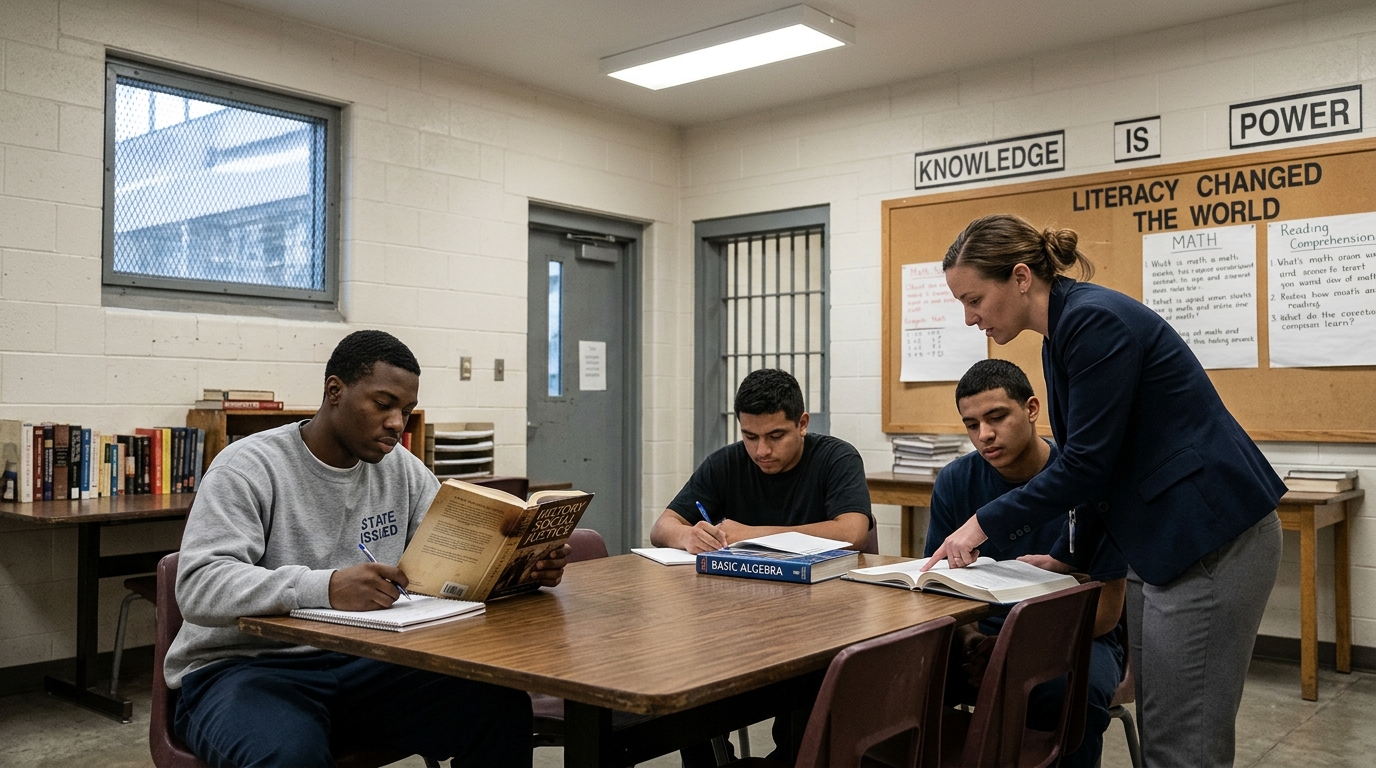
When society discusses the rights of the incarcerated, the conversation rarely centers on the school desk. Yet, for thousands of young people locked inside adult jails and juvenile detention centers across the United States, access to education is a critical, often denied, lifeline. The intersection of youth incarceration and educational deprivation creates a devastating cycle, particularly for students with learning and cognitive disabilities. For decades, correctional facilities have operated with a punitive focus, allowing educational servicesndmdash;specifically special educationndmdash;to fall by the wayside. However, recent legal battles are shifting this paradigm, enforcing the reality that constitutional and federal educational rights do not simply vanish behind jailhouse doors.
At the heart of this evolving legal landscape is the mandate that eligible, incarcerated young adults are legally entitled to special education services. Driven by advocacy groups and robust federal laws, courts are increasingly holding state and local agencies accountable for systemic educational failures. This article explores the legal foundations protecting detained youth, the disproportionate impact of educational neglect on marginalized communities, and how landmark federal rulings are forging a new path toward rehabilitation, equity, and justice.
The Hidden Crisis: Disabilities and the School-to-Prison Pipeline
To understand the magnitude of educational deprivation in carceral settings, one must first examine the demographics of the incarcerated population. There is a profound and undeniable overlap between systemic educational failure, disability, and incarceration. According to the Bureau of Justice Statistics, individuals in local jails are more than four times as likely to report having a cognitive or physical disability compared to the general, non-incarcerated population. Furthermore, nearly 40% of state and federal prisoners report living with at least one disability, with cognitive impairments being the most frequently cited.
For young people, this statistical reality is the direct manifestation of the “school-to-prison pipeline.” This pipeline refers to the systemic policies and practices that push marginalized students out of public schools and into the juvenile and adult criminal justice systems. Students with unaddressed special education needs, such as emotional, cognitive, or behavioral disorders, frequently face zero-tolerance disciplinary policies rather than receiving the therapeutic and educational interventions they require. Once these young individuals are pushed out of the classroom through suspensions or expulsions, their likelihood of encountering law enforcement skyrockets.
Furthermore, these systemic failures are inextricably linked to stark racial disparities. In many states, Black youth and other youth of color are drastically overrepresented in detention centers. When youth of color with disabilities are denied adequate educational support, they bear the absolute brunt of carceral discipline. Enforcing educational rights inside detention centers is therefore not just an administrative duty; it is an urgent matter of racial and disability justice that demands immediate societal attention.
A Landmark Federal Decision: Setting a New Legal Standard
The fight to secure educational services for incarcerated youth gained monumental momentum through pivotal federal lawsuits, most notably seen in jurisdictions like Georgia. Class-action litigation initiated by advocacy groups and legal clinics recently exposed a glaring systemic failure: hundreds of eligible youth detained in large county jails were being blatantly denied their federally mandated special education services.
In these precedent-setting cases, the plaintiffs are often incarcerated young people between the ages of 17 and 21 who have qualifying learning disabilities. Despite their age, their pre-trial status, and their physical confinement within adult facilities, these individuals inherently retain their right to educational support. Recent federal court rulings have explicitly granted summary judgment in favor of such plaintiffs, unequivocally stating that a lengthy trial is not necessary to prove that educational rights have been violated when the absence of programming is evident. The courts have definitively ruled that federal educational protections apply fully within the concrete walls of adult jails.
This judicial stance dismantles the long-standing excuse utilized by many local jurisdictions that logistical challenges or security concerns supersede educational rights. By establishing that local sheriffs, state departments of education, and school districts share the legal burden of providing education, the courts have created an unavoidable mandate: being incarcerated is absolutely no justification for denying a young person the chance to learn, grow, and rehabilitate.
The Legal Framework: IDEA and Section 504 Behind Bars
The legal victories securing education for detained youth are anchored in two robust pieces of federal civil rights legislation: the Individuals with Disabilities Education Act (IDEA) and Section 504 of the Americans with Disabilities Act (ADA). Together, these laws provide a comprehensive and enforceable framework that protects the educational rights of youth with disabilities, regardless of their physical location.
The Individuals with Disabilities Education Act (IDEA)
IDEA is a powerful federal law that ensures students with a disability are provided with a Free Appropriate Public Education (FAPE) tailored specifically to their individual needs. Under IDEA, states that accept federal funding must identify, evaluate, and provide special education services to eligible children and young adults up to the age of 21. Crucially, the U.S. Department of Justice and the Department of Education have issued joint guidance clarifying that IDEA’s protections explicitly extend to youth confined in juvenile justice and adult correctional facilities. If a young person has an Individualized Education Program (IEP) prior to their incarceration, the host facility or the local educational agency is legally obligated to continue providing those tailored services.
Section 504 and the ADA
While IDEA focuses heavily on special education curricula, Section 504 of the Rehabilitation Act and Title II of the ADA broadly prohibit discrimination on the basis of disability by any program receiving federal financial assistance or by any public entity. In a carceral context, this mandates that detention centers must provide reasonable accommodations to ensure that disabled youth have equal access to whatever educational and rehabilitative programming is available to the general population. The failure to evaluate a detained youth’s physical or cognitive needs, or to provide accessible learning materials, constitutes a direct and actionable violation of these federal statutes.
| Legal Statute | Primary Focus in Detention | Key Requirement |
|---|---|---|
| IDEA | Special Education Services | Mandates a Free Appropriate Public Education (FAPE) and the continuation of Individualized Education Programs (IEPs). |
| Section 504 / ADA | Anti-Discrimination & Accessibility | Requires reasonable accommodations to ensure equal access to general educational programming and facility resources. |
The Societal and Economic Imperative of Correctional Education
Enforcing the educational rights of detained youth is not merely a strict legal obligation; it is a profound societal imperative that yields measurable economic and public safety benefits. The traditional punitive model of incarceration isolates individuals, often releasing them back into society with fewer skills, deeper psychological trauma, and diminished prospects. Comprehensive correctional education directly disrupts this cycle of despair.
Research consistently demonstrates that access to high-quality education is one of the single most effective tools for reducing recidivism. Landmark studies, including comprehensive reviews by the RAND Corporation, have shown that inmates who participate in educational programs while incarcerated are over 40% less likely to return to prison compared to those who do not. By equipping young people with essential literacy, numeracy, and vocational skills, society provides them with the foundational tools necessary to secure gainful employment and build stable, productive lives post-release.
Beyond the moral imperative, the macroeconomic logic is undeniable. The annual cost of incarcerating an individual far exceeds the cost of providing specialized educational services. By actively reducing recidivism rates, state and local governments can save millions of taxpayer dollars that would otherwise be spent on repeated arrests, court proceedings, and long-term confinement. Investing in the education of detained youth transforms a persistent financial drain into an invaluable investment in human capital, fostering safer communities and breaking generational cycles of poverty.
Overcoming Systemic Barriers to Implementation
Despite clear federal mandates and the threat of litigation, the practical implementation of special education programs within jails and detention centers remains fraught with deep systemic barriers. Jails are inherently designed for security, containment, and controlndmdash;not for pedagogy or therapeutic intervention. This structural reality creates significant hurdles for educators, administrators, and advocates striving to deliver comprehensive educational services.
- Information and Identification Gaps: One of the most immediate challenges is accurately identifying which youth require services. Because jail populations are highly transient, with individuals moving frequently between court dates and different facilities, transferring educational records and IEPs from public school districts to county jails often falls through the administrative cracks.
- Chronic Staffing Shortages: Recruiting and retaining highly qualified special education teachers to work in correctional facilities is notoriously difficult. The environment is inherently high-stress, and educators frequently lack the specialized resources, modern technology, and collaborative support systems available in traditional public school settings.
- Security Trumping Education: In many facilities, rigid security protocols dictate all daily schedules. Institutional lockdowns, disciplinary segregations, and prolonged headcounts routinely interrupt critical instructional time. When a facility is understaffed or faces security threats, educational programming is almost always the first essential service to be canceled or suspended indefinitely.
Overcoming these entrenched barriers requires deliberate, court-monitored restructuring. Legal settlements often force disjointed agencies to build entirely new administrative bridges between sheriff’s departments and local school districts, ensuring that dedicated space, secure technology, and specialized personnel are permanently allocated exclusively for youth education.
Broader Implications: A Catalyst for National Reform
The ripple effects of federal rulings supporting detained youth extend far beyond the specific local jurisdictions in which they are decided. The clear articulation by a federal court that the IDEA applies forcefully within adult jails sets a compelling and unavoidable legal precedent. It sends a loud warning shot to sheriff’s departments and state educational agencies nationwide: the systemic neglect of incarcerated students with disabilities carries immense legal, public relations, and financial liability.
As a result, advocacy groups across the country are increasingly utilizing this legal roadmap to audit local county jails and file sweeping class-action lawsuits where compliance is lacking. This modern wave of litigation serves as a critical oversight mechanism, forcing historically opaque carceral systems to open their doors to educational experts and independent court monitors. Ultimately, these legal victories act as a powerful catalyst for sweeping policy reforms, prompting proactive legislative changes at the state level to ensure that funding and infrastructure are solidly in place before a lawsuit is even filed.
Frequently Asked Questions (FAQs)
Does the IDEA apply to youth in adult jails?
Yes. The Individuals with Disabilities Education Act (IDEA) requires that eligible youth with disabilities receive a Free Appropriate Public Education (FAPE) up to their 22nd birthday. Federal guidance clarifies that this right applies to youth confined in both juvenile detention centers and adult correctional facilities.
What is the school-to-prison pipeline?
The school-to-prison pipeline refers to national trends wherein children are funneled out of public schools and into the juvenile and criminal justice systems. This is often driven by zero-tolerance disciplinary policies that disproportionately impact marginalized students and those with untreated learning or behavioral disabilities.
Why is education in detention centers so difficult to provide?
Providing education in a carceral setting involves overcoming significant structural hurdles. Facilities prioritize security over programming, leading to frequent lockdowns that disrupt class time. Additionally, there are severe challenges in recruiting qualified special education teachers to work in jail environments and in transferring necessary educational records (like IEPs) from local school districts.
How does providing education in jail reduce crime?
Access to education directly addresses many of the root causes of criminal behavior, such as lack of economic opportunity and unaddressed cognitive challenges. Studies show that inmates who participate in educational programs are significantly less likely to reoffend, as education provides them with the critical skills needed to reintegrate into the workforce and society successfully.
The Path Forward for Juvenile Justice and Educational Equity
The movement to secure comprehensive educational rights for detained youth marks a critical juncture in the broader push for criminal justice reform. For too long, society has treated incarceration as a space where basic human rights and developmental needs are suspended. Federal rulings affirming the applicability of the IDEA and the ADA within adult jails decisively reject this premise. They affirm that vulnerable young people, particularly those grappling with cognitive and physical disabilities, do not forfeit their right to a future simply because they are behind bars.
Moving forward, the challenge lies not only in winning legal battles but in ensuring rigorous, day-to-day implementation. It requires a fundamental cultural shift within correctional institutionsndmdash;from prioritizing punitive containment to embracing rehabilitative education. As more jurisdictions are held accountable, there is genuine hope that the school-to-prison pipeline can eventually be dismantled, replacing a cycle of incarceration with genuine pathways to opportunity and restorative justice.
References
- Disabilities Among Prison and Jail Inmates, 201112 ndmdash; Bureau of Justice Statistics. 2015-12-14. https://bjs.ojp.gov/content/pub/pdf/dpji1112.pdf
- Evaluating the Effectiveness of Correctional Education ndmdash; RAND Corporation. 2013-08-01. https://www.rand.org/pubs/research_reports/RR266.html
- Guidance Package on Providing Quality Education Services to America’s Confined Youth ndmdash; U.S. Department of Justice & U.S. Department of Education. 2014-12-08. https://www.justice.gov/opa/pr/attorney-general-holder-secretary-duncan-announce-guidance-package-providing-quality
- Individuals with Disabilities Education Act (IDEA) Overview ndmdash; U.S. Department of Education. 2024-05-01. https://sites.ed.gov/idea/
Similar Articles








Read full bio of medha deb




