
eDiscovery Essentials for Modern Legal Practice
A practical guide to understanding, planning, and executing eDiscovery for litigation and investigations.
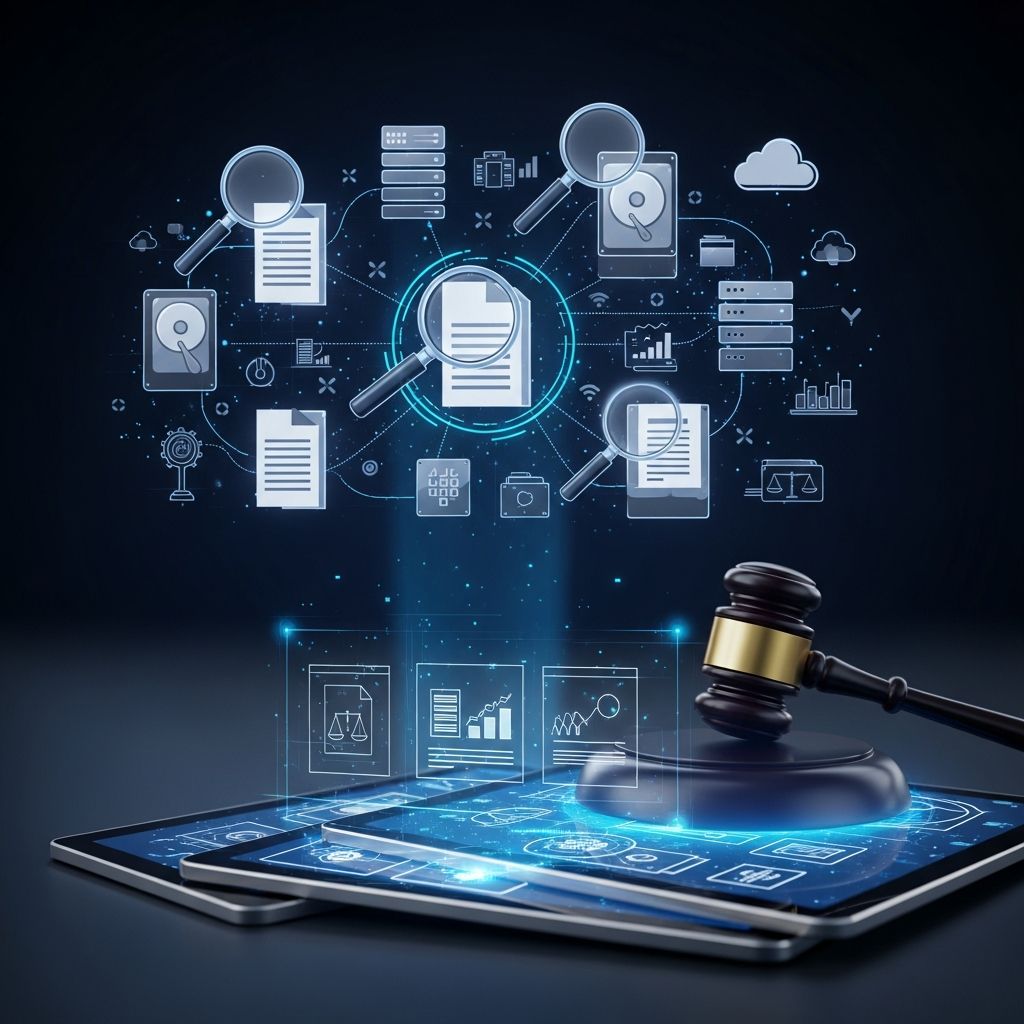
Electronic information now sits at the center of almost every dispute, regulatory investigation, or internal inquiry. Effective eDiscovery—the process of finding, preserving, reviewing, and producing that data—is no longer optional; it is a foundational litigation skill for any modern legal team.
What Is eDiscovery?
eDiscovery (electronic discovery) is the part of the discovery process that deals with electronically stored information (ESI). It covers all activities required to identify, preserve, collect, review, and produce digital data in connection with litigation, government investigations, or similar legal matters.
Common types of ESI include:
- Emails and attachments
- Word processing files and PDFs
- Spreadsheets and databases
- Messaging and collaboration content (chat apps, team platforms)
- Social media posts and direct messages
- Mobile device data (texts, photos, app data)
- System logs, metadata, and backup files
Unlike traditional paper discovery, eDiscovery must tackle huge data volumes, complex file formats, and constantly changing technology. As a result, it is tightly connected to information governance, IT infrastructure, and organizational policies on data retention and security.
Why eDiscovery Matters in Litigation and Investigations
Courts and regulators now expect parties to manage electronic evidence competently and in line with applicable rules. The consequences of doing it poorly can be severe, ranging from adverse inference instructions to monetary sanctions and, in extreme cases, disciplinary action against counsel.
Key reasons eDiscovery is critical
- ESI is often the most probative evidence – Emails, chats, and documents can directly show who knew what, and when.
- Procedural rules explicitly cover ESI – In the United States, the Federal Rules of Civil Procedure (FRCP) recognize ESI as discoverable and set expectations for preservation, production, and proportionality.
- Sanctions risk for mishandling data – Courts may impose sanctions for spoliation (loss or destruction) of relevant ESI when parties fail to take reasonable preservation steps.
- Cost and efficiency – Discovery is frequently the most expensive phase of litigation; a structured eDiscovery approach helps control scope, time, and cost.
- Client expectations – Sophisticated clients expect counsel to understand digital evidence and to leverage technology to manage risk.
Core Legal Frameworks and Standards
While specifics vary by jurisdiction, a few frameworks shape how eDiscovery is approached globally.
Practitioners should also understand the impact of landmark case law on legal holds and preservation. In the U.S., for example, courts have emphasized the need to issue timely, written legal hold notices when litigation is reasonably anticipated.
A Practical eDiscovery Lifecycle
While many models exist, most eDiscovery workflows include the following core stages. The concepts below align with commonly used industry frameworks and best practices.
1. Early assessment and planning
As soon as a dispute, regulatory inquiry, or internal investigation appears likely, counsel should begin scoping potential eDiscovery implications.
- Identify key issues, claims, and defenses.
- Determine likely data custodians (people) and systems (email, file shares, cloud apps).
- Evaluate applicable laws and rules (civil procedure, privacy, cross-border data transfer limits).
- Discuss preservation needs, timing, and cost with the client and relevant stakeholders.
2. Identification of relevant ESI
The identification phase aims to locate potentially responsive information wherever it resides.
- Interview custodians and IT staff to map data sources.
- Document systems such as email servers, document management platforms, mobile devices, and cloud services.
- Pinpoint date ranges, file types, and subject areas aligned with legal issues.
- Note any at-risk data (routine deletion schedules, departing employees, system migrations).
3. Preservation and legal holds
Once relevant sources are identified, they must be preserved to avoid alteration or destruction. Courts generally require parties to take reasonable steps to preserve ESI when litigation is anticipated.
Typical preservation steps include:
- Issuing a written legal hold notice to custodians, instructing them not to delete or modify relevant data.
- Suspending automatic deletion or overwriting processes where feasible.
- Coordinating with IT to preserve backups, logs, or snapshot copies where appropriate.
- Monitoring compliance with the hold and re-issuing or updating notices as the matter evolves.
4. Collection
Collection involves obtaining preserved data in a defensible manner so that it can be processed and reviewed. The goal is to avoid spoliation and maintain a clear chain of custody.
- Use tools or forensic methods appropriate to the system (email exports, disk imaging, API-based collection from cloud apps).
- Record when, how, and by whom each dataset was collected.
- Respect privacy, labor, and data protection laws during collection, especially for cross-border data.
- Avoid self-help techniques that may alter metadata or compromise authenticity.
5. Processing and culling
Processing converts raw data into reviewable formats and narrows the dataset to what is likely relevant.
- De-duplicate files to remove exact copies across custodians.
- Filter by date range, file type, and basic criteria aligned with the case.
- Apply keyword searches or concept clustering to reduce noise.
- Normalize file formats (e.g., converting to text-searchable images or standard viewer formats).
6. Review and analysis
Review is often the most resource-intensive phase. Lawyers and reviewers assess documents for relevance, responsiveness, privilege, confidentiality, and strategic value.
- Use review platforms that support tagging, issue coding, and work allocation.
- Consider technology-assisted review (TAR), predictive coding, or analytics to prioritize likely relevant material.
- Implement quality control checks to confirm consistency of coding decisions.
- Maintain clear logs for privileged and withheld documents.
7. Production and presentation
Finally, relevant, non-privileged ESI is produced to opposing parties or regulators in agreed formats and may later be presented in hearings or at trial.
- Negotiate production formats (native files, TIFF/PDF images, load files, metadata fields) early, ideally at or before the initial case management conference.
- Apply redactions for privilege, confidentiality, or personal data where appropriate.
- Maintain a record of what was produced, when, and to whom.
- Prepare exhibits and demonstratives that keep electronic evidence understandable for judges, juries, and non-technical stakeholders.
Best Practices for Conducting eDiscovery
Beyond the basic workflow, several practical habits can significantly improve outcomes and defensibility.
1. Collaborate early and often
- Engage IT, records management, and security teams at the outset.
- In complex matters, consider involving external eDiscovery or forensic specialists.
- Use the initial meet-and-confer or case management conference to discuss ESI sources, scope, formats, and privilege protocols with opposing counsel.
2. Emphasize proportionality
- Focus efforts on sources and time periods most likely to yield relevant evidence.
- Document why certain sources are too burdensome, inaccessible, or marginally relevant if you propose excluding them.
- Use sampling and staged discovery to refine search strategies over time.
3. Build repeatable processes
- Develop standard templates for legal holds, custodian interviews, and data maps.
- Create playbooks for common case types (employment, contracts, regulatory responses).
- Train legal and support staff on how to recognize triggers for preservation duties.
4. Integrate eDiscovery with information governance
Good information governance makes later eDiscovery cheaper and more predictable. Organizations should:
- Adopt clear retention policies and schedules for key systems.
- Reduce data hoarding by eliminating redundant, obsolete, or trivial (ROT) information consistent with legal and regulatory requirements.
- Maintain an up-to-date inventory of critical business systems and data repositories.
5. Focus on defensibility and documentation
- Document key decisions: why certain data sources were included or excluded, search terms chosen, and methods used.
- Retain logs of collections, processing steps, and review workflows.
- Be prepared to explain the reasonableness of your approach to the court if challenged.
Common eDiscovery Challenges
Even well-managed matters can encounter difficulties. Anticipating typical challenges helps you plan mitigation strategies.
- Sheer volume of data – Modern organizations produce enormous quantities of ESI. Without careful scoping and use of analytics, review costs can quickly escalate.
- Emerging data sources – Collaboration platforms, cloud tools, and mobile messaging apps pose collection and preservation challenges as usage grows.
- Legacy systems and backups – Older systems or backup tapes may be technically accessible but extremely burdensome to restore and search.
- Privacy and data protection – Cross-border transfers, employee data, and sensitive personal information must be handled in compliance with local and supranational privacy rules.
- Short timelines – Regulatory inquiries and emergency motions may compress discovery timelines, requiring triage and prioritization.
- Budget constraints – Parties must balance the duty to preserve and produce with the need to avoid disproportionate cost and effort.
Role of Technology in eDiscovery
Technology does not replace legal judgment, but it is indispensable to managing complex eDiscovery projects.
- Collection tools – Purpose-built solutions can extract data from email servers, endpoints, and cloud systems while maintaining metadata and chain of custody.
- Processing platforms – These tools ingest large data volumes, perform de-duplication, and prepare content for review.
- Review and analytics solutions – Modern platforms support keyword search, clustering, near-duplicate detection, email threading, and technology-assisted review to prioritize likely relevant material.
- Case management integration – Linking discovery data to case timelines, issues, and witnesses helps teams keep the bigger litigation picture in view.
Frequently Asked Questions (FAQs)
Q1: How is eDiscovery different from traditional discovery?
Traditional discovery focused largely on paper records. eDiscovery deals with digital information, which is far more voluminous, diverse, and dynamic. It requires specialized tools and processes to preserve metadata, handle complex file types, and search at scale, but it follows the same overall purpose: exchanging information relevant to a dispute or investigation.
Q2: When does the duty to preserve ESI begin?
The preservation duty generally arises when litigation is reasonably anticipated, not only when a complaint is filed. At that point, organizations and counsel must take reasonable steps to stop routine deletion and to preserve relevant ESI, often through written legal hold notices and technical safeguards.
Q3: What happens if relevant ESI is lost?
Consequences depend on the jurisdiction, the importance of the missing data, and whether the loss was intentional or negligent. Courts may order additional discovery, cost-shifting, evidentiary sanctions (such as adverse inference instructions), or monetary penalties if they find a party failed to take reasonable preservation steps.
Q4: Do small cases really need formal eDiscovery?
Yes, but on a proportional scale. Even in smaller matters, email, text messages, and electronic documents are often central. Courts typically expect parties to cooperate, tailor the scope to the needs of the case, and avoid unnecessary expense, but they do not exempt smaller cases from basic preservation and production duties.
Q5: How can law firms start improving their eDiscovery capabilities?
Firms can begin by mapping common client systems, creating standard legal hold and custodian interview templates, selecting one or two review platforms suited to their caseload, and training lawyers and support staff on eDiscovery fundamentals. Building relationships with reputable eDiscovery vendors or consultants can also provide capacity for large or complex matters.
References
- Electronic discovery — Wikipedia. 2024-08-29. https://en.wikipedia.org/wiki/Electronic_discovery
- What is eDiscovery? — AIIM International. 2023-05-10. https://www.aiim.org/what-is-ediscovery
- Understanding Legal eDiscovery: What is It and Why is It Important? — GoldFynch. 2024-10-25. https://goldfynch.com/blog/2024/10/25/understanding-legal-ediscovery-what-is-it-and-why-is-it-important.html
- An Introduction to eDiscovery: The Basics — Smokeball. 2023-02-14. https://www.smokeball.com/blog/an-introduction-to-ediscovery-the-basics
- E-Discovery for Law Firms: What is it and How Does it Work? — Clio. 2023-03-09. https://www.clio.com/blog/ediscovery-law-firms/
- What Is E-Discovery? Definition & How it Works — Proofpoint. 2024-01-18. https://www.proofpoint.com/us/threat-reference/e-discovery
- What Is Ediscovery? Learn the Basics of Ediscovery — Everlaw. 2023-11-07. https://www.everlaw.com/what-is-ediscovery/
Similar Articles








Read full bio of Sneha Tete


