
DUI On Private Property: What You Need To Know
Discover if your driveway or private lot shields you from DUI charges—state laws often extend enforcement to protect public safety.
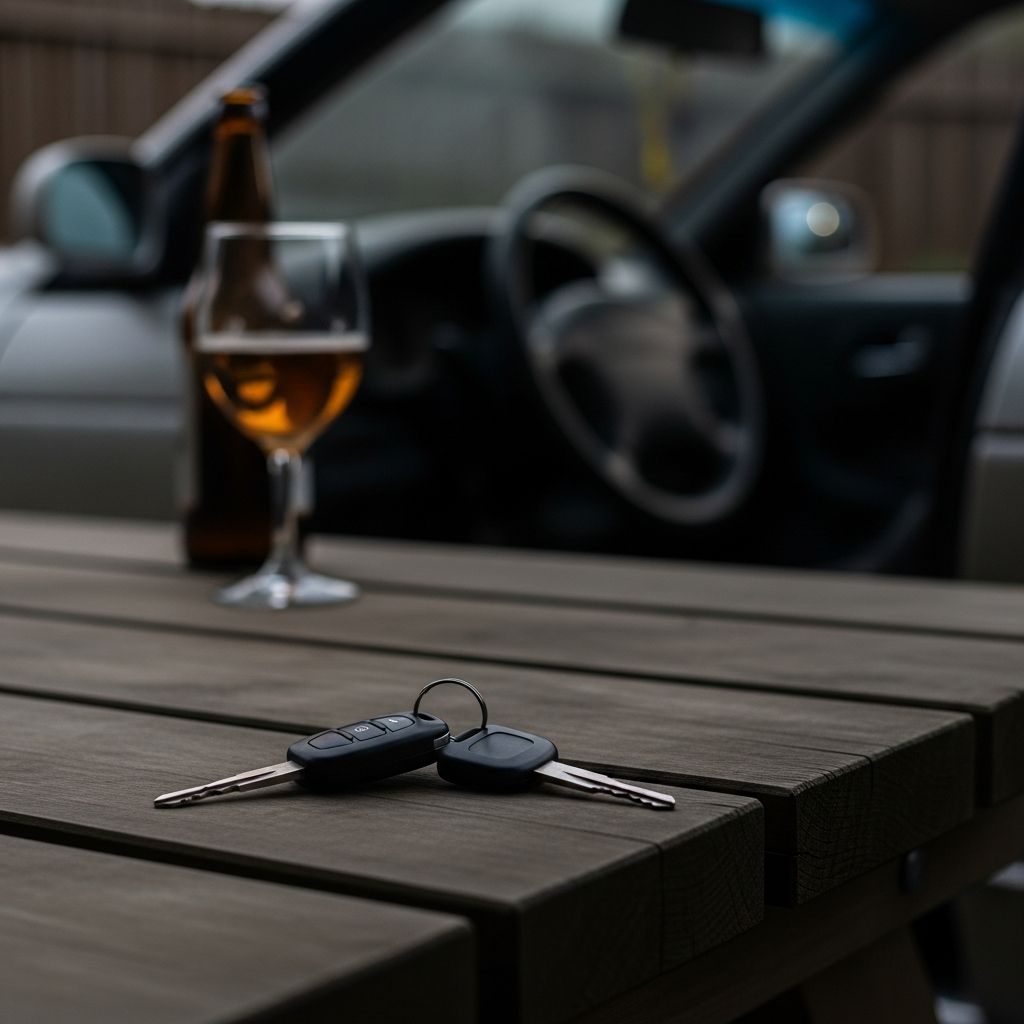
Many drivers believe that parking on private land, such as a driveway or lot, offers immunity from DUI charges. However, laws in most U.S. states extend impaired driving prohibitions to these areas, focusing on actual physical control of a vehicle rather than just public roads. This principle aims to prevent potential harm from inebriated individuals capable of operating machinery.
Understanding the Core Elements of Impaired Driving Laws
Impaired driving offenses, often termed DUI, DWI, or OUI depending on the state, hinge on two main factors: impairment and vehicle operation. Impairment occurs when alcohol, drugs, or substances hinder normal faculties, typically proven by a blood alcohol concentration (BAC) of 0.08% or higher, or observable signs like slurred speech.
“Operation” or “driving” isn’t limited to motion. Courts interpret it broadly to include sitting in the driver’s seat with keys accessible, engine running, or lights on, establishing actual physical control. This prevents scenarios where intoxicated persons could suddenly endanger others.
State Variations in Private Property DUI Enforcement
Laws differ by jurisdiction, but a common thread is protecting public safety beyond highways. Here’s how select states handle it:
- Florida: Statute §316.193 explicitly covers driving or actual physical control on any road or property, public or private. This includes driveways, gated communities, and parking lots. Officers can arrest if impairment is evident, even without movement.
- North Carolina: Driving While Impaired (DWI) applies to highways, streets, or public vehicular areas (PVAs), which encompass mall lots, gas stations, and drive-thrus—private spaces open to traffic. Fully private driveways might evade charges, but borderline cases often qualify.
- Utah: DUI laws reach private property like backyards or driveways if a vehicle is operated impaired, emphasizing risk over location.
- Pennsylvania: “Actual physical control” convictions occur without wheel movement if the motor runs and you’re in the seat, though driveways may offer defenses if no public access.
- California and ‘Anywhere’ States: Broad statutes like Florida’s make driveways fair game for arrests.
| State | Key Statute/Rule | Private Property Coverage | Example Locations |
|---|---|---|---|
| Florida | §316.193 | Full (public/private) | Driveways, lots, communities |
| North Carolina | DWI PVA definition | Public vehicular areas | Malls, gas stations |
| Utah | Broad operation rule | Any operable vehicle | Backyards, private roads |
| Pennsylvania | Physical control | Case-specific | Parked cars, if accessible |
This table highlights enforcement patterns; always check local codes as interpretations evolve.
Common Scenarios Leading to Private Property DUI Charges
Real-world situations often catch drivers off-guard:
- Post-Party Parking: After drinking at a bar or event, sleeping in your car on a private lot with the engine on for heat can trigger arrest under physical control doctrines.
- Home Driveway Starts: Idling your vehicle while impaired, even to warm it up, risks charges if police observe.
- Private Events: Tailgating or golf cart use at private venues falls under DUI if impairment affects control.
- Non-Car Vehicles: Operating lawnmowers or ATVs on private land while intoxicated has led to convictions, as “vehicle” definitions are expansive.
In Florida, a 2020 case involved a repeat offender on a lawnmower, underscoring that no vehicle type is exempt. Prosecutors argue these acts pose imminent risks.
Building a Defense Against Private Property DUI Claims
If charged, viable defenses exist, tailored to facts:
- Lack of Actual Control: Prove keys were inaccessible, you were in the back seat, or engine off.
- Private vs. Public Distinction: Argue the spot isn’t a PVA or accessible roadway; success varies.
- Impairment Timing: Show intoxication occurred after parking, not during operation.
- Probable Cause Issues: Challenge officer observations or tests if no public driving observed.
First-time programs may be available pre-trial, but contesting requires strong evidence. Consult an attorney immediately, as convictions impact licenses, insurance, and records.
Prevention Strategies for Responsible Drivers
Avoid risks altogether:
- Designate a sober driver or use rideshares.
- If sleeping in your car, lock doors, back seat position, no keys in ignition.
- Walk home or stay overnight instead of idling.
- Know your state’s PVA definitions to gauge safe spots.
Public safety campaigns stress planning ahead, as even good intentions like “waiting it off” can backfire legally.
Frequently Asked Questions (FAQs)
Can I get a DUI just for sitting in my running car on my driveway?
Yes, in states like Florida, if you’re in actual physical control while impaired, even without driving. Turn off the engine and remove keys.
Does a private parking lot count as public for DUI purposes?
Often yes, if it’s a public vehicular area like mall or restaurant lots. Purely residential driveways have better defense odds.
What counts as ‘actual physical control’ of a vehicle?
Being in the driver’s seat with access to controls, engine on, or capability to move immediately. Courts assess intent and position.
Can I be charged for DUI on a lawnmower or golf cart at home?
Potentially yes, if it qualifies as a vehicle under broad statutes. Avoid operation while impaired.
Are DUI laws the same in every state for private property?
No, enforcement ranges from strict ‘anywhere’ rules to public-only limits; check local statutes.
Recent Trends and Legislative Updates
As of 2025, states continue refining DUI scopes amid rising impaired driving incidents. Florida’s statutes remain unchanged, reinforcing private property coverage. Debates focus on balancing privacy with safety, with some pushing narrower definitions. Stay updated via official state resources.
Penalties mirror public road DUIs: fines up to thousands, license suspension (90 days to years), jail (first offense often avoided but possible), and ignition interlocks. Repeat offenses escalate dramatically.
References
- What Is The Legal Definition Of Impaired Driving? — Welch and Avery. 2015-11. https://www.tjaverylaw.com/blog/2015/november/what-is-the-legal-definition-of-impaired-driving/
- Can you be convicted for a DUI parked on private property? — Avvo Legal Answers. N/A. https://www.avvo.com/legal-answers/can-you-be-convicted-for-a-dui-parked-on-private-p-985037.html
- Can You Be Arrested for DUI on Private Property in Florida? — Musca Law. N/A. https://www.muscalaw.com/blog/can-you-be-arrested-dui-private-property-florida
- DUI Arrests on Private Property: What the Law Says — Melton Law. 2025-10. https://www.melton.law/blog/2025/october/dui-arrests-on-private-property-what-the-law-say/
- Can I Be Charged with a DUI on Private Property in Florida? — Criminal Defense Law Firm Tampa. N/A. https://criminaldefenselawfirmtampa.com/can-i-be-charged-with-a-dui-on-private-property-in-florida/
- The 2025 Florida Statutes (316.193) — Florida Legislature. 2025. https://www.leg.state.fl.us/statutes/index.cfm?App_mode=Display_Statute&URL=0300-0399%2F0316%2FSections%2F0316.193.html
- Can You Get a DUI on Private Property? — Scheuerman Law LLC. N/A. https://www.scheuermanlaw.com/blog/can-you-get-a-dui-on-private-property/
Similar Articles








Read full bio of Sneha Tete




