
DUI Checkpoints: Legal Rights and Smart Strategies
Navigate DUI checkpoints confidently: Learn your rights to turn around, refuse tests, and challenge illegal stops effectively.
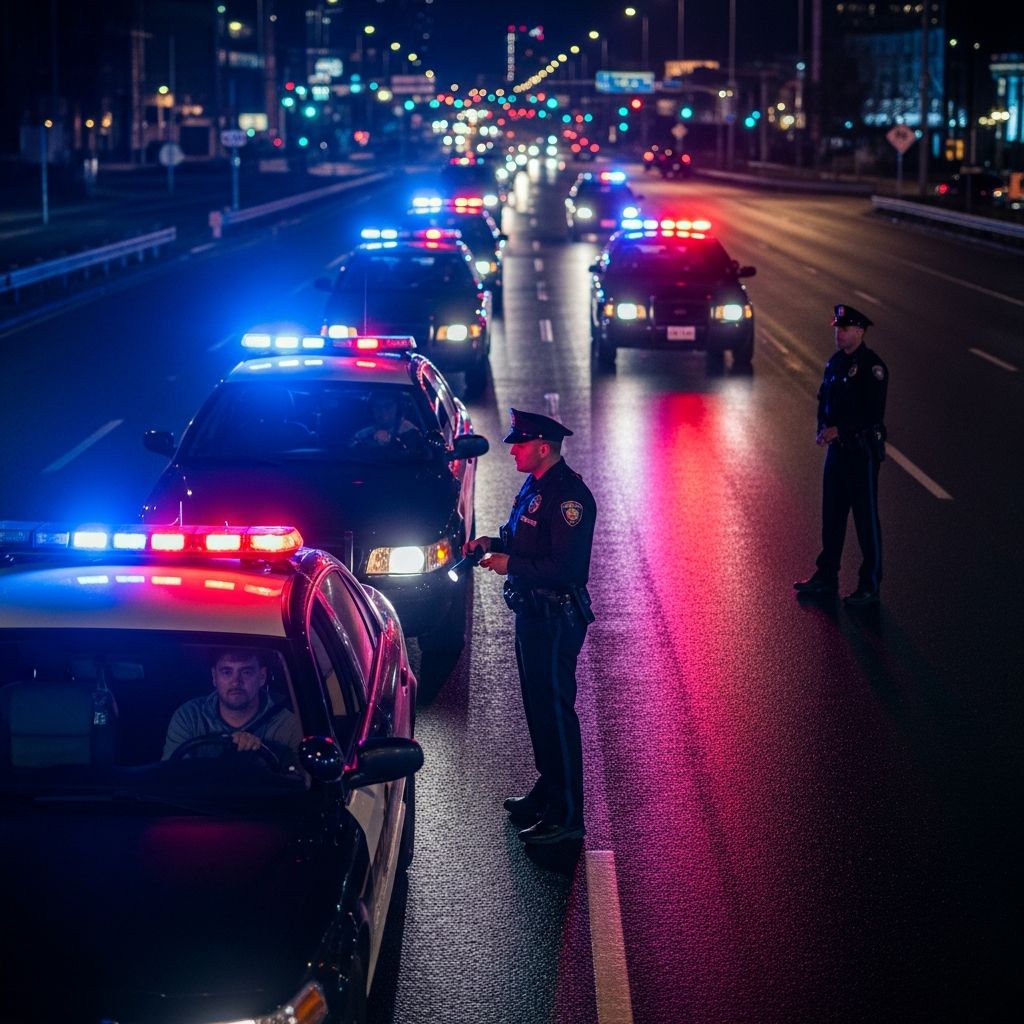
DUI checkpoints, also known as sobriety checkpoints, serve as a key tool for law enforcement to deter impaired driving and enhance road safety. These operations allow officers to briefly stop vehicles without individualized suspicion, but only under strict constitutional guidelines. Drivers encountering these setups often wonder about their options, from making a U-turn to refusing tests. This guide breaks down the legal framework, your protections, and practical steps to protect yourself.
The Constitutional Foundation of Sobriety Checkpoints
The U.S. Supreme Court established the legality of DUI checkpoints in the landmark 1990 case Michigan Dept. of State Police v. Sitz. The Court ruled that such brief stops do not violate the Fourth Amendment’s protection against unreasonable searches and seizures when they advance a significant public interest like preventing drunk driving, with minimal intrusion on drivers.
Key factors making checkpoints constitutional include supervisory planning, neutral vehicle selection, clear visibility, and short detention times. Without these, courts may deem the operation invalid, potentially excluding any evidence obtained.
State-Specific Rules: Focus on Georgia
While the federal ruling provides a baseline, states like Georgia impose additional requirements to ensure checkpoints comply with both U.S. and state constitutions. Georgia law demands:
- Supervisory Approval: A higher-ranking officer must authorize the checkpoint in advance, with documented plans.
- Neutral Stopping Pattern: Officers stop vehicles systematically, such as every third or fifth car, to prevent arbitrary decisions.
- Visible Signage and Setup: Signs, lights, and uniformed officers must alert drivers well in advance.
- Brief Interactions: Compliant drivers face minimal delays, typically under two minutes.
Violations of these standards can render the checkpoint unlawful. For instance, if stops appear random or lack proper signage, a defense attorney might argue for evidence suppression.
Can You Legally Avoid a Checkpoint?
One common question is whether drivers can turn around upon spotting a checkpoint ahead. The answer is yes, provided the maneuver is safe and legal—no sudden swerves, U-turns in no-U-turn zones, or traffic violations. Officers generally cannot pursue solely for avoidance if no other infraction occurs.
| Scenario | Legal? | Risk Level |
|---|---|---|
| Safe U-turn before checkpoint in allowed area | Yes | Low |
| Erratic turn causing hazard | No | High (possible reckless driving charge) |
| Stopping and backing up | No | High (traffic violation) |
| Following all traffic laws to exit road | Yes | Low |
Avoidance alone does not create probable cause for a stop. However, if it leads to a violation, expect scrutiny.
Your Rights During a Checkpoint Stop
Once stopped, cooperation is key, but know your boundaries:
- Provide Basics: Show license, registration, and proof of insurance when asked. You must identify yourself.
- Right to Silence: Politely decline to answer questions about drinking, drug use, or whereabouts. Say, “I respectfully invoke my right to remain silent.”
- Refuse Field Sobriety Tests (FSTs): These include walk-and-turn, one-leg stand, and horizontal gaze nystagmus. No legal obligation to perform; refusal isn’t automatic probable cause.
- Skip Preliminary Breath Test (PBT): Handheld devices are unreliable; refusal heightens suspicion but doesn’t trigger license loss.
Stay calm and courteous—hostility can escalate situations.
Implied Consent Laws and Test Refusals
Georgia’s implied consent law (O.C.G.A. § 40-6-391) mandates chemical testing (breath, blood, or urine) if lawfully arrested for DUI. Refusal leads to automatic license suspension: 12 months for first offense, longer for repeats.
Post-arrest, officers read an implied consent notice. You can consult an attorney before deciding, but delays may not excuse refusal. Evidence of refusal may be admissible in court, except for breath tests in some cases.
Refusal Pros and Cons
| Pros | Cons |
|---|---|
| Avoids potentially faulty test results | Automatic license suspension |
| Prevents self-incrimination via BAC | Admissible as evidence of guilt |
| Time to build defense | Increased DUI charge penalties |
Penalties for DUI in Georgia
Convictions carry steep consequences under O.C.G.A. § 40-6-391:
- First Offense: Fines $300–$1,000, jail 24 hours–12 months (often DUI school alternative), 12-month suspension.
- Second Offense: Fines $600–$1,000, jail 3–15 days, 3-year suspension.
- Felony Threshold: 4+ offenses or child endangerment escalates to felony.
Additional costs include higher insurance, ignition interlocks, and clinical evaluations.
Challenging a Checkpoint Arrest
Not all checkpoint encounters lead to valid arrests. Hire a DUI attorney to:
- Inspect Setup: Verify approval, neutrality, and visibility.
- Review Officer Actions: Check for protocol breaches in tests or questions.
- Contest Evidence: Challenge BAC accuracy, FST subjectivity, or chain of custody.
- Seek Suppression: Motion to exclude illegally obtained evidence.
- Plea Bargain: Reduce charges or penalties.
Illegal checkpoints can result in dismissals.
Practical Advice for Drivers
- Plan sober rides home.
- Spot checkpoints early via signs or traffic.
- If stopped, window down, hands visible, documents ready.
- Invoke rights politely.
- Don’t discuss case with officers.
- Contact lawyer immediately post-release.
Frequently Asked Questions (FAQs)
Is it legal to turn around before a DUI checkpoint?
Yes, if done safely without traffic violations. Officers can’t stop you just for avoiding.
Do I have to take field sobriety tests?
No, refusal is your right, though it may raise suspicion.
What happens if I refuse a breath test after arrest?
Expect 12-month license suspension under implied consent, plus court use of refusal.
Are DUI checkpoints legal everywhere?
Yes in 38 states including Georgia; 12 states prohibit them.
Can a lawyer get my DUI dismissed?
Possibly, if checkpoint flaws or procedural errors exist.
Stay Informed and Protected
DUI checkpoints balance safety and rights. Understanding guidelines empowers you to navigate encounters wisely. Always prioritize sobriety and consult professionals for personalized advice.
References
- DUI Checkpoints in Georgia: What Are Your Rights — Not Guilty Savannah. 2023. https://notguiltysavannah.com/dui-checkpoints-in-georgia-what-are-your-rights/
- DUI Checkpoints in Georgia: Your Rights and Legal Authority — Gordon Hall Law. 2024. https://www.gordonhall.com/dui-checkpoints-in-georgia-your-rights-and-legal-authority/
- Are DUI Checkpoints Legal In Georgia? — Mazloom Law Firm. 2024. https://mazilaw.com/are-dui-checkpoints-legal-in-georgia/
- Understanding DUI Checkpoints in Georgia: Know Your Rights — Farnsworth Law ATL. 2023. https://farnsworthlawatl.com/dui-checkpoints-georgia/
- Rights of Atlanta Drivers at DUI Checkpoints — Atlanta DUI Richard. 2024. https://www.atlantaduirich.com/rights-of-atlanta-drivers-at-dui-checkpoints/
- DUIs Checkpoints and Arrests in Atlanta: What’s Legal and What’s Not — Davis Madden Law. 2025-12-25. https://www.davismaddenlaw.com/blog/dui-checkpoints-and-arrests-in-atlanta-what-s-legal-and-what-s-not
- DUI Checkpoints: Understand the Law and Your Legal Rights — Super Lawyers. 2024. https://www.superlawyers.com/resources/dui-dwi/dui-checkpoints-understand-the-law-and-your-legal-rights/
Similar Articles








Read full bio of Sneha Tete




