
DUI Checkpoint Laws Across the United States
Navigate DUI checkpoint regulations: Know which states permit them and understand your rights.
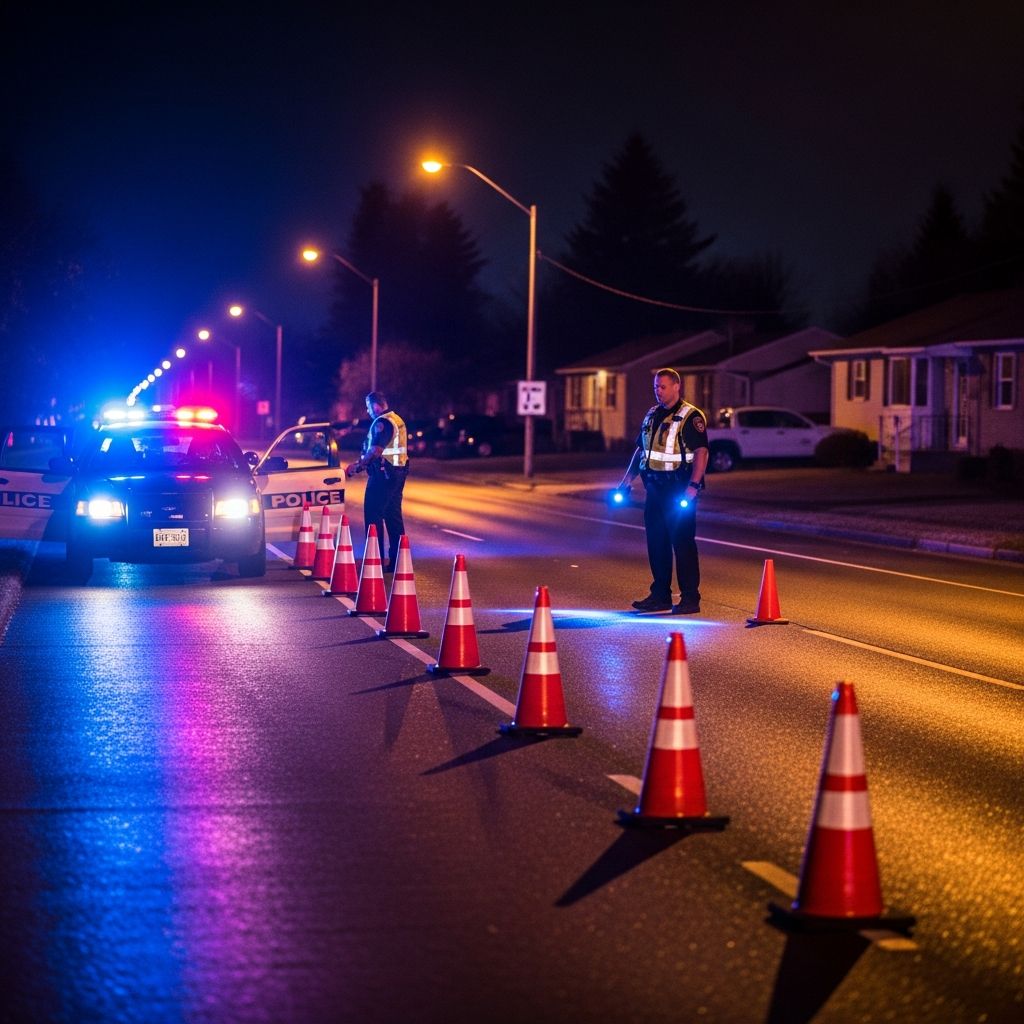
Understanding DUI Checkpoints Across America
Sobriety checkpoints, commonly known as DUI checkpoints, represent a critical enforcement tool in the battle against impaired driving. These temporary roadblocks allow law enforcement to screen motorists for signs of alcohol or drug impairment without requiring specific suspicion of wrongdoing. However, the legality and implementation of these checkpoints vary dramatically across the United States, reflecting diverse judicial interpretations, state constitutional provisions, and legislative choices.
The landscape of checkpoint legality has been shaped by decades of court decisions and state legislation. While federal law permits DUI checkpoints under certain circumstances, individual states maintain significant authority to restrict or prohibit them based on their own constitutional protections and statutory frameworks. Understanding the specific rules in your jurisdiction is essential for protecting your legal rights and comprehending what law enforcement can and cannot do during a roadside stop.
The National Overview of Checkpoint Legality
Currently, 38 states and the District of Columbia authorize the use of DUI checkpoints as part of their impaired-driving enforcement strategies. This represents the majority of American jurisdictions, though the frequency and intensity of checkpoint operations vary significantly among these states. Some states conduct checkpoints regularly during peak drinking seasons and holiday periods, while others rarely implement them despite having legal authorization.
Conversely, 12 states have prohibited DUI checkpoints through various legal mechanisms. These jurisdictions have determined that such checkpoints violate their state constitutions, conflict with existing state law, or exceed the authority granted to law enforcement agencies. The reasons for these prohibitions differ from state to state, ranging from explicit constitutional protections against unreasonable searches to judicial interpretations that prioritize individual privacy rights over the government’s interest in preventing drunk driving.
States That Prohibit DUI Checkpoints
The 12 states that do not permit DUI checkpoints have reached this position through different legal pathways. Understanding the distinction between these different routes to prohibition helps clarify the complexity of checkpoint regulation nationwide.
Constitutional and Case Law Prohibitions
Several states have determined through judicial interpretation that their state constitutions prohibit sobriety checkpoints. Michigan, Oregon, Washington, and Minnesota fall into this category, with state courts concluding that checkpoint stops violate protections against unreasonable searches and seizures contained in their state constitutional provisions. These courts have found that the suspicionless nature of checkpoint stops creates an unconstitutional intrusion on individual liberty, distinguishing their state constitutions from federal constitutional jurisprudence.
Idaho, Montana, and Wyoming similarly prohibit checkpoints through reliance on state constitutional protections. These western states have emphasized strong privacy protections within their state constitutions, leading courts to strike down checkpoint programs that might otherwise survive federal constitutional scrutiny under the U.S. Supreme Court’s precedents.
Statutory and Legislative Bans
Wisconsin and Rhode Island represent a different approach to checkpoint prohibition. These states have enacted legislation that does not authorize DUI checkpoints or has failed to provide sufficient statutory authority for such operations. Rather than relying primarily on constitutional reasoning, these legislatures have chosen not to empower law enforcement to conduct checkpoint operations, effectively prohibiting them through inaction or explicit statutory language.
Unique Prohibition Cases
Texas occupies a distinctive position as the only state that has determined DUI checkpoints violate the U.S. Constitution itself, rather than relying solely on state constitutional grounds. Alaska has also prohibited checkpoints, recognizing the tension between checkpoint operations and individual rights protections. Iowa courts have similarly rejected checkpoint authority, finding that such operations exceed what existing law permits.
Regional Variations in Checkpoint Implementation
Among the 38 states that authorize DUI checkpoints, significant regional patterns emerge in how these operations are conducted and regulated. These patterns reflect different judicial philosophies, legislative priorities, and community standards regarding the balance between public safety and individual privacy.
Northeastern State Requirements
States in the northeastern region generally mandate higher levels of advance public notice before checkpoint operations commence. These jurisdictions typically require law enforcement to announce upcoming checkpoints through media channels, official notifications, and public advisories. This approach reflects a judicial philosophy that emphasizes transparency and provides motorists with information about where and when checkpoints will occur. Additionally, northeastern states often impose more rigorous supervisory oversight requirements, mandating that trained supervisory personnel be present at checkpoints to ensure compliance with legal standards and constitutional requirements.
Western State Protocols
Western states generally impose more detailed documentation requirements for checkpoint procedures. These jurisdictions demand that law enforcement maintain comprehensive records regarding the implementation of checkpoints, including the neutral formula used for selecting vehicles, the number of vehicles stopped, the number of suspected impaired drivers identified, and the specific procedures followed throughout the operation. This documentation-heavy approach reflects a concern with ensuring that checkpoints comply with legal standards and can withstand judicial scrutiny if challenged.
Southern and Midwestern Approaches
Southern states often authorize more frequent checkpoint operations, permitting law enforcement to conduct checkpoints with relatively greater frequency than other regions. This reflects a prioritization of drunk driving prevention within southern legislatures and courts. Conversely, midwestern states commonly impose stricter environmental and visibility conditions for checkpoint operations, requiring that checkpoints be conducted only under appropriate weather conditions and with adequate visibility to ensure motorist safety and fair administration of sobriety tests.
Legal Standards Governing Checkpoint Operations
States that authorize DUI checkpoints must ensure that operations meet constitutional and statutory requirements. The U.S. Supreme Court has established fundamental principles that govern checkpoint legality, even as individual states add their own requirements.
Constitutional Framework
In Michigan Department of State Police v. Sitz (1990), the U.S. Supreme Court held that properly conducted DUI checkpoints do not violate Fourth Amendment protections against unreasonable searches and seizures. The Court recognized that while checkpoints involve brief detentions without individualized suspicion, the minimal intrusion is justified by the substantial government interest in preventing drunk driving accidents and fatalities.
However, subsequent Supreme Court decisions have established boundaries on checkpoint authority. In City of Indianapolis v. Edmond (2000), the Court prohibited checkpoints designed primarily for general crime control purposes, distinguishing them from checkpoints focused specifically on impaired driving. This decision established that checkpoint authority must be tethered to the legitimate purpose of identifying impaired drivers.
Illinois v. Lidster (2004) expanded checkpoint authority slightly, permitting checkpoints that seek information about recent crimes or incidents, provided the underlying purpose remains consistent with legitimate law enforcement objectives. Delaware v. Prouse (1979) required that checkpoint stops follow standardized procedures designed to prevent arbitrary or discriminatory enforcement.
State-Imposed Requirements
States that permit checkpoints have implemented various additional requirements beyond federal constitutional minimums. These include mandates for advance public notice, requirements that supervisory personnel oversee checkpoint operations, specifications regarding the neutral formula for selecting vehicles, minimum officer training standards, and limitations on the duration and scope of checkpoint stops.
Checkpoint Operations and Driver Protections
Understanding your rights during a DUI checkpoint encounter is essential for protecting yourself legally. Law enforcement possesses certain limited authority at checkpoints, but their power does not extend to arbitrary or unreasonable intrusions.
Permissible Law Enforcement Actions
Officers at legal checkpoints may require you to provide identification, vehicle registration, and proof of insurance. They may conduct brief preliminary questioning about your destination and travel plans. Officers may also observe signs of impairment, such as slurred speech, odor of alcohol, or unusual appearance. Background checks and warrant searches using provided identification are generally permissible.
If an officer develops reasonable suspicion of impairment based on observations made at the checkpoint, field sobriety tests may be requested. These preliminary tests, such as the horizontal gaze nystagmus test, walk-and-turn test, or one-leg stand test, fall within permissible checkpoint procedures when reasonable suspicion exists.
Protected Rights and Limitations
Despite checkpoint authority, drivers retain fundamental constitutional protections. Law enforcement cannot conduct extensive searches of your vehicle without consent or a warrant, even at a checkpoint. While officers may request that you roll down your window or provide documents, they may not demand that you exit your vehicle in all circumstances or submit to searches beyond what the checkpoint context permits.
You maintain the right to remain silent regarding questions beyond basic identification and vehicle information. While you must provide identification and vehicle documents, you are not obligated to answer questions about your activities, alcohol consumption, or travel destination. Exercising this right peacefully cannot be held against you or used as a basis for escalating the checkpoint encounter.
Special Checkpoint Authorization Requirements
Three states that permit DUI checkpoints impose additional requirements beyond those found in most other jurisdictions. New Hampshire, South Carolina, and Utah require judicial approval before checkpoint operations can be conducted. This requirement reflects a heightened concern with ensuring that checkpoints meet constitutional and statutory standards before implementation.
In these states, law enforcement must petition a court or judicial officer, demonstrating that the proposed checkpoint meets established legal criteria and serves legitimate traffic safety purposes. Judicial approval serves as an additional safeguard against arbitrary or unjustified checkpoint operations. This requirement underscores the significant authority that courts possess to shape checkpoint regulation, even in states that broadly authorize their use.
States With Funding Limitations
An interesting exception to checkpoint authorization exists in Missouri, where checkpoints are authorized by state law but lack dedicated state funding. This unique situation means that while law enforcement technically possesses the authority to conduct checkpoints, the absence of state budget appropriations creates a practical prohibition on their use. This reflects a legislative choice to deprioritize checkpoint enforcement despite maintaining the legal authority to conduct such operations.
Alternative Enforcement Strategies
States that prohibit DUI checkpoints employ alternative enforcement strategies to combat impaired driving. Saturation patrols represent the most common alternative, involving concentrated deployment of law enforcement officers in high-risk areas during times when impaired driving is statistically more likely. These patrols allow officers to identify impaired drivers based on traffic violations or suspicious driving patterns rather than suspicionless checkpoint stops.
Frequently Asked Questions About DUI Checkpoints
Are DUI checkpoints unconstitutional?
DUI checkpoints are constitutional under federal law when properly conducted, according to U.S. Supreme Court precedent. However, 12 states have determined that checkpoints violate their state constitutions or conflict with state law. Your state’s specific laws determine whether checkpoints are constitutional in your jurisdiction.
What can officers ask at a checkpoint?
Officers may request identification, vehicle registration, and proof of insurance. They may ask brief questions about your destination and can observe signs of impairment. You are not obligated to answer questions beyond providing required documents, and you may decline field sobriety tests at some stages of the encounter.
Can I refuse a sobriety test at a checkpoint?
Preliminary field sobriety tests at checkpoints are technically voluntary, though refusing may provide an officer with reasonable suspicion to conduct further investigation. Refusing chemical testing (breath or blood tests) after arrest may result in license suspension under implied consent laws in most states.
What is a neutral formula for checkpoint stops?
A neutral formula requires officers to stop vehicles according to a predetermined pattern, such as every third or fourth vehicle. This requirement prevents officers from discriminatory or arbitrary selection of vehicles based on the driver’s race, age, or appearance.
Can checkpoints search my vehicle?
Extensive vehicle searches at checkpoints generally require consent or a warrant. Officers may request consent, but you have the right to decline. Without consent or reasonable suspicion of additional crimes, law enforcement cannot conduct thorough searches of your vehicle during a checkpoint stop.
Why do some states prohibit checkpoints?
States that prohibit checkpoints have concluded that they violate state constitutional protections or exceed legislative authority. These states prioritize individual privacy rights and view the suspicionless nature of checkpoints as an unjustified intrusion on liberty, even if federal law permits them.
How often are checkpoints actually conducted?
Despite 38 states authorizing checkpoints, relatively few states conduct them regularly. As of recent surveys, only a portion of states that permit checkpoints actually implement them on a weekly basis, with many conducting them sparingly and primarily during high-risk periods such as holidays.
References
- Countermeasures That Work: Publicized Sobriety Checkpoints — National Highway Traffic Safety Administration (NHTSA). 2022. https://www.nhtsa.gov/book/countermeasures-that-work/alcohol-impaired-driving/countermeasures/enforcement/publicized
- Michigan Department of State Police v. Sitz — U.S. Supreme Court. 1990. https://www.supremecourt.gov/
- City of Indianapolis v. Edmond — U.S. Supreme Court. 2000. https://www.supremecourt.gov/
- Illinois v. Lidster — U.S. Supreme Court. 2004. https://www.supremecourt.gov/
- Delaware v. Prouse — U.S. Supreme Court. 1979. https://www.supremecourt.gov/
- State of Indiana v. Gerschoffer — Indiana Supreme Court. 2002. https://www.in.gov/judiciary/
Similar Articles








Read full bio of Sneha Tete




