
Drone Flight Regulations: Understanding Legal Airspace
Navigate drone regulations: Learn where you can legally fly and compliance requirements for 2026.
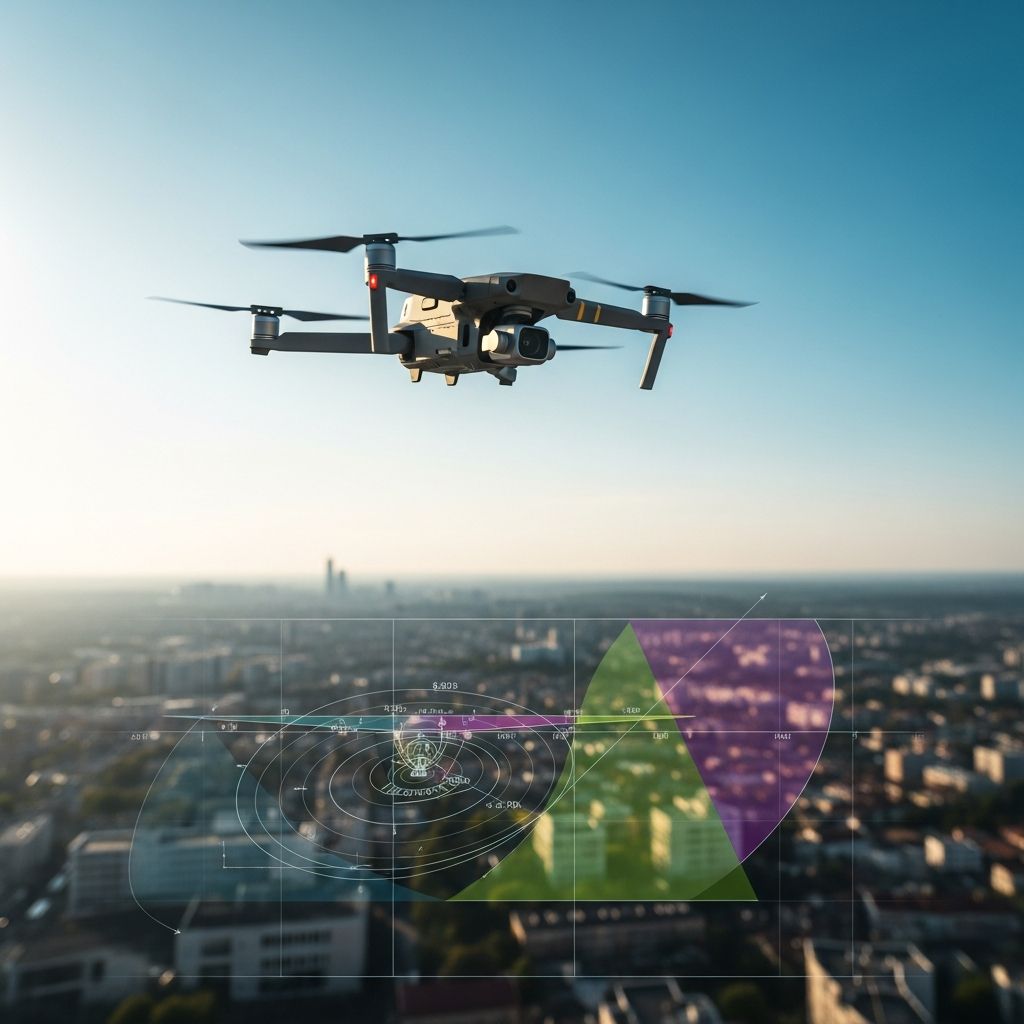
Understanding Airspace Governance and Flight Permissions
The question of whether you can fly a drone anywhere involves understanding the legal framework that governs unmanned aircraft systems across the United States. The Federal Aviation Administration (FAA) maintains jurisdiction over all navigable airspace in the country, including the airspace directly above private property. This foundational principle shapes every aspect of drone operations, regardless of where you want to fly or what type of drone you operate.
The regulatory landscape distinguishes between recreational and commercial drone use, with each category operating under different rules and requirements. Recreational flyers operate under a limited statutory exception that provides basic operational guidelines, while commercial operators must comply with Part 107 regulations, which establish comprehensive standards for professional drone use. Understanding which category applies to your operations is the first step in determining where you can legally fly.
Airspace Classification and No-Fly Zone Identification
Not all airspace is available for drone operations. The FAA has established various categories and restrictions that operators must respect. Certain areas are completely off-limits for drone flights, regardless of pilot experience or drone specifications. These prohibited zones exist to protect public safety, national security, and critical infrastructure.
Major no-fly zones include airports, national parks, military installations, and large-venue event locations. Additionally, airspace near correctional facilities, detention centers, and critical infrastructure receives heightened protection under the SAFER SKIES Act, which took effect in late 2025. Some municipalities have implemented local restrictions as well, with cities like Scottsdale, Arizona requiring local knowledge verification or waivers for operations in sensitive areas.
Even when operating outside designated no-fly zones, pilots must be aware of controlled airspace restrictions. If you intend to fly a drone in controlled airspace, you must obtain authorization from the FAA before proceeding. This requirement applies to both recreational and commercial operators and is essential for maintaining separation from manned aircraft and ensuring overall airspace safety.
Wildlife and Environmental Protection Areas
Beyond traditional no-fly zones, operators should exercise extreme caution near wildlife habitats. State wildlife agencies maintain specific protocols for drone operations in natural areas. California’s wildlife regulations, for example, prohibit flying lower than 100 feet above wildlife and explicitly forbid pursuing or provoking wildlife responses with drones. These restrictions protect sensitive ecosystems and endangered species from disturbance.
Registration, Identification, and Certification Requirements
Operating a drone legally requires completing several administrative steps before flight. The specific requirements depend on your drone’s weight category and whether you plan recreational or commercial operations.
Drone Classification and Registration
The FAA categorizes drones into distinct weight classes, each with different registration and operational requirements. Micro drones weighing less than 250 grams are often exempt from registration, though they must still comply with operational safety rules. Small and standard drones, commonly used for photography and mapping applications, require registration if flown outdoors. Advanced drones intended for commercial or industrial purposes face the strictest requirements and oversight.
A significant regulatory development in 2026 is the mandatory Remote ID requirement for all drones above 250 grams. Every qualifying drone must broadcast its location and identification information, eliminating the grace period that previously existed. This technology enables aviation authorities to track and monitor drone operations in real-time, enhancing airspace safety and security.
Certification and Safety Testing
Recreational flyers must complete the Recreational UAS Safety Test (TRUST) and carry proof of completion while operating. This test ensures operators understand basic safety principles and airspace awareness. For commercial operations, the requirements are substantially more rigorous. Commercial pilots must obtain a valid FAA Part 107 certificate, which requires passing a comprehensive knowledge examination and demonstrating proficiency in drone operations.
The FAA has implemented a recurrency testing requirement for Part 107 certificate holders, mandating renewal every 24 months. This ongoing training requirement reflects the evolving regulatory landscape and the FAA’s commitment to maintaining high professional standards. Arizona has experienced an 18 percent increase in Part 107 certifications since 2022, demonstrating the growing demand for professional drone operators.
Operational Rules and Flight Restrictions
Even when flying in legally permitted areas, drone operators must adhere to specific operational guidelines. These rules govern altitude, speed, visibility, and proximity to people and structures. Understanding these restrictions is essential for safe, legal flights.
Basic Flight Parameters
Both recreational and commercial operators must maintain visual line of sight with their aircraft during operations. This fundamental requirement ensures that pilots can see their drones at all times and detect potential hazards or conflicts with other aircraft. Beyond Visual Line of Sight (BVLOS) operations, which allow drones to fly beyond the operator’s visual range, represent an emerging capability in 2026 but require specific authorization and advanced pilot certifications.
Altitude restrictions represent another critical limitation. Drones must typically remain below 400 feet above ground level, except in specific circumstances where higher flights are authorized. Operators must also maintain safe distances from people, structures, and vehicles, with different distance requirements for recreational versus commercial operations.
Airspace Coordination and Manned Aircraft Safety
Regardless of whether you operate recreationally or commercially, you must yield to manned aircraft. This critical safety principle prioritizes the protection of traditional aviation and the people aboard manned aircraft. If a manned aircraft approaches your operating area, you must immediately land your drone or maneuver to avoid conflict.
Operators in controlled airspace must obtain authorization before flying, even if the airspace would otherwise be suitable for drone operations. This authorization process involves contacting air traffic control and receiving explicit permission to conduct drone activities in specific locations and altitudes. The system ensures that drone operations do not interfere with traditional aircraft traffic and maintains the safety of the National Airspace System.
Flying Over Private Property: Legal Considerations
A common question involves whether drone operators can legally fly over private property. The answer is more complex than simple yes or no, as it involves understanding both federal airspace law and property rights.
The FAA maintains jurisdiction over all navigable airspace, including the airspace directly above private property. This means that legally, drone pilots are permitted to fly over private land as long as they comply with FAA regulations. Recreational flyers operating under Section 44809 and commercial operators following Part 107 guidelines can conduct flights above private property without requiring permission from the property owner, provided they adhere to all federal airspace rules.
However, this federal authority does not eliminate all legal concerns. Property owners retain certain rights regarding their land, and trespassing laws may apply if a drone lands on private property without permission. Additionally, privacy concerns and local ordinances may impose additional restrictions beyond federal requirements. Operators should exercise caution and good judgment when flying near private residences or sensitive locations.
Penalties for Non-Compliance and Enforcement Actions
The consequences of violating drone regulations are substantial. The FAA enforces compliance through significant financial penalties and potential criminal charges.
Financial Penalties
Flying a drone without proper registration can result in fines reaching $27,500 per incident, according to FAA 2024 data. Operating without required Remote ID compliance or in restricted airspace incurs similar penalties. These substantial fines can quickly accumulate, particularly for operators conducting multiple flights without authorization.
Non-compliance may also void drone insurance coverage, leaving operators financially vulnerable in the event of accidents or incidents. This combination of civil penalties and insurance implications creates significant financial risk for non-compliant operators.
Criminal Consequences
Repeat violations or particularly egregious conduct can result in criminal charges rather than civil penalties. The SAFER SKIES Act introduced enhanced penalties for using drones to introduce contraband into correctional facilities, adding five years to prison sentences under 18 U.S.C. § 1791. Using drones to facilitate other felonies results in doubled sentences or an additional five years, whichever is less.
State and local law enforcement agencies now have expanded authority to take action against threatening drones. Under the SAFER SKIES Act, trained state, local, tribal, and territorial (SLTT) agencies can detect, track, disrupt, seize, and disable drones presenting credible threats. These agencies can issue warnings to operators and use federally approved technologies to neutralize threats, with seized drones subject to forfeiture.
Compliance in Specific Jurisdictions
While the FAA establishes baseline federal requirements, certain states and municipalities have implemented additional restrictions. Arizona and Nevada have passed new legislation increasing penalties and introducing stricter oversight for drone flights in sensitive locations. Operators planning flights in these or other states should research local requirements before conducting operations.
Some cities require local permits or waivers for flights in specific areas. Scottsdale, Arizona, for example, may require proof of local knowledge for operations in sensitive zones. These localized requirements supplement federal regulations and must be satisfied for truly compliant operations.
Recent Regulatory Developments and Future Considerations
The drone regulatory environment continues to evolve. The SAFER SKIES Act, approved by Congress in December 2025 and included in the FY2026 National Defense Authorization Act, represents a significant expansion of drone regulation authority. This legislation grants SLTT agencies new capabilities while establishing compliance frameworks and oversight mechanisms.
Remote ID enforcement has become a primary focus for FAA compliance efforts in 2026. All drones above 250 grams must broadcast identification and location information, enabling real-time tracking by aviation authorities. Non-compliance with Remote ID requirements can result in grounded operations, significant fines, or revoked certifications.
The FCC has also implemented restrictions on foreign-made drones and communications equipment. Neither the FCC’s December 2025 nor January 2026 notices prohibit the import or use of previously authorized equipment, but new foreign-made drones face restrictions unless they meet specific exemptions.
Best Practices for Legal and Safe Drone Operations
Successful drone operations require attention to multiple regulatory and safety considerations. Operators should follow these essential practices:
- Determine your specific regulatory category (recreational versus commercial) and understand the applicable rules
- Complete all required certifications—TRUST for recreational operations or Part 107 for commercial use
- Register your drone with the FAA if it exceeds the exempt weight threshold
- Ensure your drone has Remote ID capability or retrofit older models for compliance
- Check for local permits or additional requirements in your jurisdiction before flying
- Identify and respect all nearby no-fly zones and airspace restrictions
- Maintain visual line of sight with your drone during operations
- Stay below 400 feet altitude unless specifically authorized for higher flights
- Yield to manned aircraft and request airspace authorization in controlled areas
- Maintain appropriate distances from people, structures, and vehicles
- Never operate under the influence of substances that impair judgment
- Avoid flying over wildlife or sensitive environmental areas
Frequently Asked Questions
Q: Can I fly a drone anywhere as long as I have a license?
A: No. Even with proper certification, you cannot fly in no-fly zones, restricted airspace, or areas with local prohibitions. You must also comply with all operational rules regardless of your certification level.
Q: What is Remote ID and why is it required?
A: Remote ID is technology that broadcasts a drone’s location and identification information to aviation authorities. It is required for all drones above 250 grams to enable real-time tracking and enhance airspace safety.
Q: Do I need permission from property owners to fly over their land?
A: Under FAA jurisdiction, you do not need permission to fly over private property as long as you comply with all federal regulations. However, property owners retain certain rights, and you should avoid flying near residences due to privacy and local ordinance concerns.
Q: What are the penalties for flying without registration?
A: Penalties can reach $27,500 per incident, and violations may void your insurance coverage. Repeat violations could result in criminal charges.
Q: How often must Part 107 certificate holders renew their certification?
A: Part 107 certificate holders must pass a recurrency test every 24 months to maintain their commercial drone pilot certification.
Q: What are the main no-fly zones I should be aware of?
A: Major no-fly zones include airports, national parks, military installations, large-venue events, correctional facilities, and critical infrastructure. Check local regulations for additional restrictions in your area.
Q: Can I fly my drone Beyond Visual Line of Sight (BVLOS)?
A: BVLOS operations are emerging as a capability in 2026 but require specific authorization and advanced pilot certifications. Standard recreational and Part 107 operations require maintaining visual line of sight.
References
- Drone Restrictions Guide: Stay Compliant in 2026 — Extreme Aerial Productions. 2026. https://www.extremeaerialproductions.com/post/drone-restrictions
- Recreational Flyers & Community-Based Organizations — Federal Aviation Administration. https://www.faa.gov/uas/recreational_flyers
- SAFER SKIES Act Gives States Power to Block Drone Risks — JD Supra. 2025. https://www.jdsupra.com/legalnews/safer-skies-act-gives-states-power-to-2329151/
- Drone Rules for 2025 AND 2026 — UAV Coach (YouTube). https://www.youtube.com/watch?v=ZW_QJ9srBpE
- Drone Regulations in 2026: What Businesses Need to Know — Precision Engineering Supply. 2026. https://precisionengineeringsupply.com/blogs/news/drone-regulations-in-2026-what-businesses-need-to-know
- Can You Fly a Drone Over Private Property? [New for 2026] — UAV Coach. 2026. https://uavcoach.com/drone-over-private-property/
- Legal and Responsible Drone Operations — California Department of Fish and Wildlife. https://wildlife.ca.gov/Drones
Similar Articles








Read full bio of medha deb


