
Consequences of Driving with Expired or No Vehicle Registration
Understand the legal risks, common penalties, and practical steps to take if you are caught driving without valid vehicle registration.
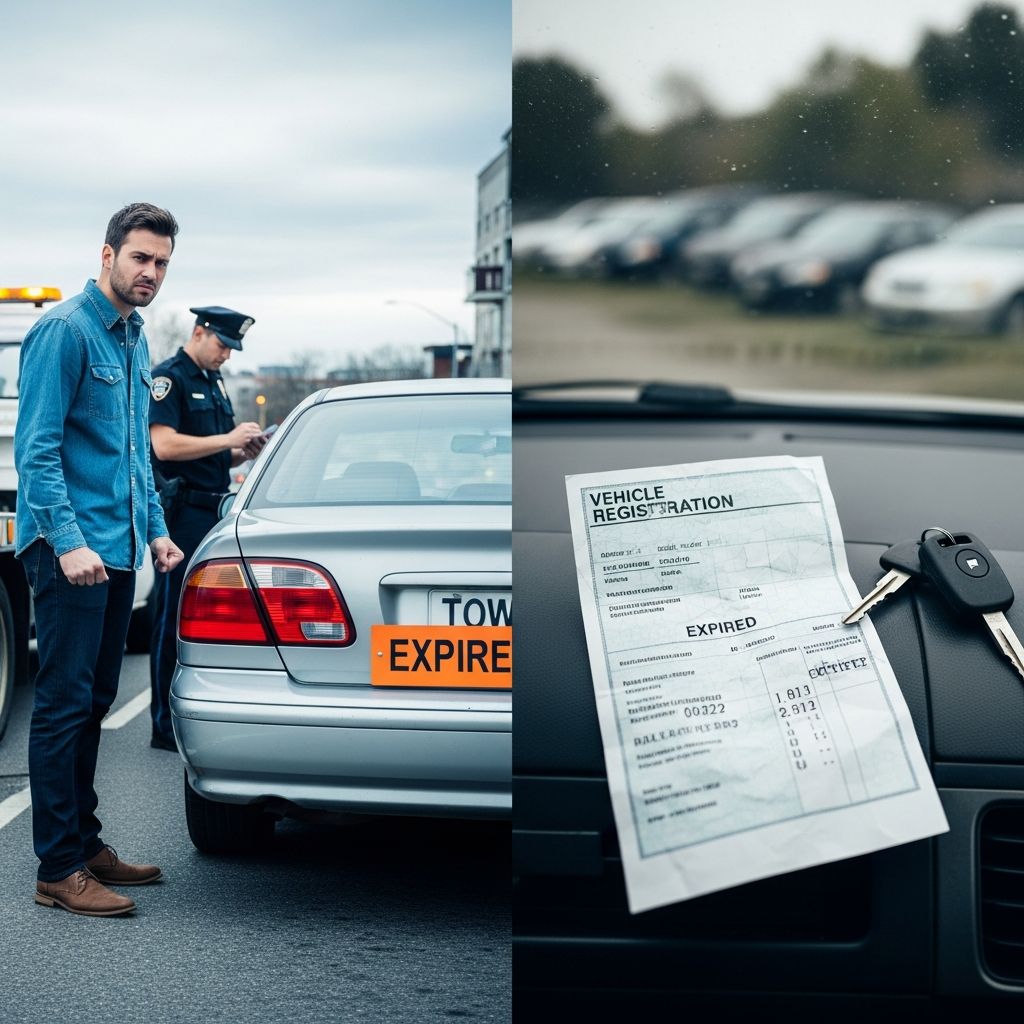
Every U.S. state requires most vehicles driven on public roads to be properly titled, registered, and to display current registration credentials such as license plates and stickers.1 When registration lapses, or a vehicle was never registered, driving it can trigger tickets, fines, and in some situations towing or even criminal charges. This guide explains how registration systems work, what happens if you drive without valid registration, and what to do if you receive a citation.
Why Vehicle Registration Matters
Vehicle registration is not just bureaucratic paperwork. It serves several important functions for states, drivers, and the public.
- Identifies the vehicle and owner: Registration links a specific vehicle to a specific owner in state databases, aiding law enforcement, taxation, and safety recalls.1
- Supports road and infrastructure funding: Many states direct registration fees toward transportation systems and road maintenance.1
- Promotes compliance with safety and emissions standards: In some jurisdictions, proof of inspection or emissions testing is required before registration is renewed.
- Facilitates insurance enforcement: Insurers typically require vehicle identification and registration data when issuing or renewing policies.1
Because of these functions, driving an unregistered or improperly registered vehicle is treated as a legal violation in all U.S. states, even though the exact penalties vary widely.
Common Types of Registration Problems
Not all registration issues are the same. The type of problem often influences how serious the consequences can be.
- Expired registration (lapsed plates): The vehicle was previously registered but the registration period ended and was not renewed by the deadline.
- No registration at all: A vehicle that has never been registered in the state, despite being required to be.
- Improper display of evidence of registration: For example, failing to display a current license plate or registration sticker even though the vehicle is actually registered.3
- Registration suspended, canceled, or revoked: The state has taken action against the registration because of unpaid fees, tax issues, insurance violations, or other reasons.
- Failure to transfer registration after purchase: Some states require the buyer of a used vehicle to update registration within a set number of days after the sale.
In many states, a simple expired registration is treated as a lower-level violation compared to driving a vehicle whose registration has been suspended or deliberately evaded.
How States Typically Classify the Offense
While each state has its own code, registration violations commonly fall into three basic categories.
- Non-moving or administrative violation: In many jurisdictions, driving with expired plates is considered an administrative or non-moving offense, resulting primarily in a fine and not usually counting as a moving traffic violation on your driving record.45
- Traffic infraction: Often treated like a minor traffic ticket—punishable by fines but not by jail, though it can still affect your financial situation and potentially your vehicle’s status.
- Misdemeanor (in aggravated circumstances): When the registration is suspended, canceled, or revoked, or when combined with other violations, some states elevate the offense to a misdemeanor that can carry higher fines and possible jail time.5
Even if a first offense is modest, repeat violations or ignoring court dates can escalate the situation quickly.
Typical Penalties for Driving Without Valid Registration
Consequences vary, but drivers commonly face one or more of the following:
- Fines and court costs: Many states impose flat fines for expired plates or missing registration, sometimes increasing with how long the registration has been overdue or the number of prior offenses.45
- Late registration fees: Separate from the ticket, motor vehicle agencies often charge an additional late renewal fee after a defined grace period.5
- Administrative penalties: Failure to resolve tickets or pay fees can lead to holds on your registration renewal or, in some states, suspension actions connected to non-payment.
- Vehicle towing or impoundment: In certain cases—especially when a vehicle is unregistered or registration is suspended—police may arrange for towing. Release usually requires paying both registration fees and towing/storage charges.
- Criminal charges for severe or repeated violations: Where registration has been revoked or deliberately avoided, or combined with other offenses like driving without insurance, the matter may be treated as a misdemeanor with possible jail exposure.5
Illustrative Penalty Comparison
The table below shows typical patterns that many states follow. It is not a description of any single state’s law, but a general comparison of how seriousness often scales.
| Situation | Common Legal Classification | Typical Penalties |
|---|---|---|
| First-time expired registration, recently lapsed | Non-moving violation / infraction | Modest fine; late renewal fee; usually no jail or criminal record if resolved promptly45 |
| Registration expired for an extended period or multiple prior tickets | Higher-level infraction; may require court appearance | Higher fines; additional fees; possible vehicle immobilization or tow in some jurisdictions |
| Driving when registration is suspended, canceled, or revoked | Often a misdemeanor offense | Substantially higher fines; possible jail; lasting criminal record; insurance consequences5 |
| Unregistered vehicle plus other serious offenses (e.g., no insurance, DUI) | Combination of traffic and criminal charges | Stacked fines; potential license suspension; possible incarceration depending on other charges |
How Police Discover Registration Violations
Officers can detect registration problems in several ways, both during traffic stops and even when your vehicle is parked.
- Visual inspection of plates and stickers: An obviously expired tab or missing plate is an immediate red flag.
- Database checks: Officers can run plate numbers through state databases to confirm whether the registration is current, suspended, or canceled.3
- License plate readers: Automatic readers used on some patrol vehicles or in fixed locations may flag plates associated with registration or insurance issues.
- Secondary to another stop: If you are pulled over for speeding or another moving violation, the officer will usually check your registration status as part of the stop.
Impact on Insurance and Accident Claims
Registration status can also interact with auto insurance and civil liability after a crash.
- Insurance approval often depends on registration information: Insurers usually require accurate vehicle and owner data that come from registration documents, and some may not issue or maintain coverage without proper registration in place.1
- Ticket alone may not raise rates dramatically: In some states, a basic expired registration ticket is treated as a non-moving violation, and by itself may have limited impact on premiums, though insurers consider the overall pattern of behavior.4
- Unregistered vehicle in an accident: If a driver causes a crash while operating an unregistered vehicle, questions may arise about whether the vehicle was properly insured and whether the driver was generally complying with safety laws.1
- Perception of negligence: While failing to register the vehicle does not automatically make someone legally at fault for a collision, courts and insurers may view disregard for registration rules as one factor among many in assessing responsibility and credibility.1
If an at-fault driver lacked both registration and insurance, injured parties may need to pursue compensation through their own uninsured/underinsured motorist coverage or by filing a civil lawsuit.
Temporary Registration and Proof of Renewal
Many states recognize that there can be a short gap between renewing registration and receiving physical plates or stickers. Laws often provide limited protection during that period if you can show proof of renewal.
- Use of receipts or digital proof: Some state codes allow operation of a vehicle that is properly registered but does not yet display the new sticker, as long as the driver carries a printed or digital receipt confirming renewal.3
- Temporary permits: Motor vehicle agencies may issue temporary registration permits or tags that are valid for a defined period (for example, when buying a new vehicle or awaiting plates).5
- Limits of temporary authority: If the temporary permit expires and you have not completed full registration, you can again be cited for operating without valid registration.
Even with proof of renewal, officers retain discretion to issue citations if the display requirements in your state’s law are not met; however, proof may help your case in court or support dismissal of the ticket.
What to Do If You Receive a Registration Ticket
If you are cited for driving with expired or invalid registration, acting quickly often leads to a better outcome.
- Read the citation carefully: Note the specific charge, the date by which you must respond, and whether a court appearance is mandatory.
- Renew or correct your registration immediately: Visit your state’s motor vehicle agency website or office, pay necessary fees, and complete all required steps to bring the registration current.
- Gather documentation: Keep receipts, updated registration cards, temporary permits, and any relevant correspondence from the motor vehicle agency.
- Follow the instructions on the ticket: Some courts allow you to mail or upload proof of renewed registration to seek a reduction or dismissal of the charge, while others require an in-person appearance.45
- Consider legal advice in serious cases: If the citation involves a suspended or revoked registration, multiple prior offenses, or related charges such as driving without insurance, consulting a traffic or criminal defense attorney can help you understand potential consequences and defenses.
Preventing Registration Problems
Because registration violations are largely avoidable, a few simple practices can significantly lower your risk of being ticketed.
- Track your renewal deadline: Note the expiration month and year printed on your sticker or registration card and set calendar reminders several weeks in advance.
- Update your address promptly: If you move, notify your state motor vehicle agency so renewal notices and registration documents reach you.
- Renew early when allowed: Many states allow renewal 30–90 days before expiration, giving you a cushion if delays occur.
- Verify online status: Where available, use your state’s online portal to confirm that the renewal processed correctly and that there are no outstanding blocks or unpaid tickets.
- Resolve tickets promptly: Unpaid traffic or parking fines can sometimes prevent renewal or lead to registration holds, so respond quickly to any citations.
Frequently Asked Questions (FAQs)
Is driving with expired registration always a criminal offense?
Not necessarily. In many states, a routine expired registration is treated as a civil infraction or non-moving violation and punished mainly by a fine.45 However, when registration is suspended or revoked, or when combined with other serious violations, the charge may be elevated to a misdemeanor.
Can an officer tow my car just for expired registration?
In some jurisdictions, officers have discretion to tow vehicles that are unregistered or significantly out of compliance, particularly if the registration has been suspended or if the vehicle appears unsafe. The likelihood of towing often increases with repeat violations or very long periods of expiration.
Does an expired registration ticket put points on my driver’s license?
Many states treat expired registration as a non-moving or administrative offense, meaning it does not add points to your driving record that are normally reserved for moving violations such as speeding or reckless driving.45 You should still check your state’s specific rules or ask a local attorney.
Will my car insurance be canceled if my registration expires?
Insurers typically rely on accurate registration information, and some may refuse to write or renew policies if a vehicle is not properly registered.1 If registration lapses briefly, companies may not immediately cancel coverage, but persistent noncompliance or misrepresentation can lead to non-renewal or cancellation under your policy terms.
Does driving an unregistered vehicle automatically make me at fault in a crash?
No. Fault for an accident is usually based on driving behavior—such as speeding, failing to yield, or distracted driving—rather than registration status alone. However, operating an unregistered vehicle can complicate insurance claims and may influence how judges, juries, or adjusters view your overall compliance with the law.1
Is there any grace period after my plates expire?
Some states build a limited grace period into their enforcement practices, but others do not. Because grace rules vary and officers can often ticket on the first day after expiration, it is safest to assume that once your registration date passes, you are at risk of being cited.
References
- Expired Registration Car Accident Lawsuit in Chicago — Injury Law Support (Illinois-based legal information site summarizing Illinois law). 2024-03-18. https://www.injurylawsupport.org/blog/expired-registration-car-accident-lawsuit-chicago/
- 8-7-19: No Valid Registration — Village of Willowbrook, Illinois Code of Ordinances (American Legal Publishing). 1985-08-26. https://codelibrary.amlegal.com/codes/willowbrookil/latest/willowbrook_il/0-0-0-6793
- 625 ILCS 5/3-701: Operation of Vehicles Without Evidence of Registration — Illinois General Assembly. 2023-01-01. https://www.ilga.gov/legislation/ilcs/fulltext.asp?DocName=062500050K3-701
- Does a Ticket for Expired Registration Affect Your Insurance in Illinois? — Malman Law. 2023-06-15. https://www.malmanlaw.com/malman-law-injury-blog/does-a-ticket-for-expired-registration-affect-your-insurance-in-illinois/
- Illinois Expired Registration Ticket — Driver Defense Team. 2023-05-01. https://www.driverdefenseteam.com/services/traffic-tickets/tickets-in-illinois/expired-registration/
Similar Articles








Read full bio of Sneha Tete


