
Driving With Snow on Your Car Roof: Safety and Legal Risks
Learn how snow and ice on your vehicle roof can create legal liability, traffic citations, and serious safety hazards on the road.
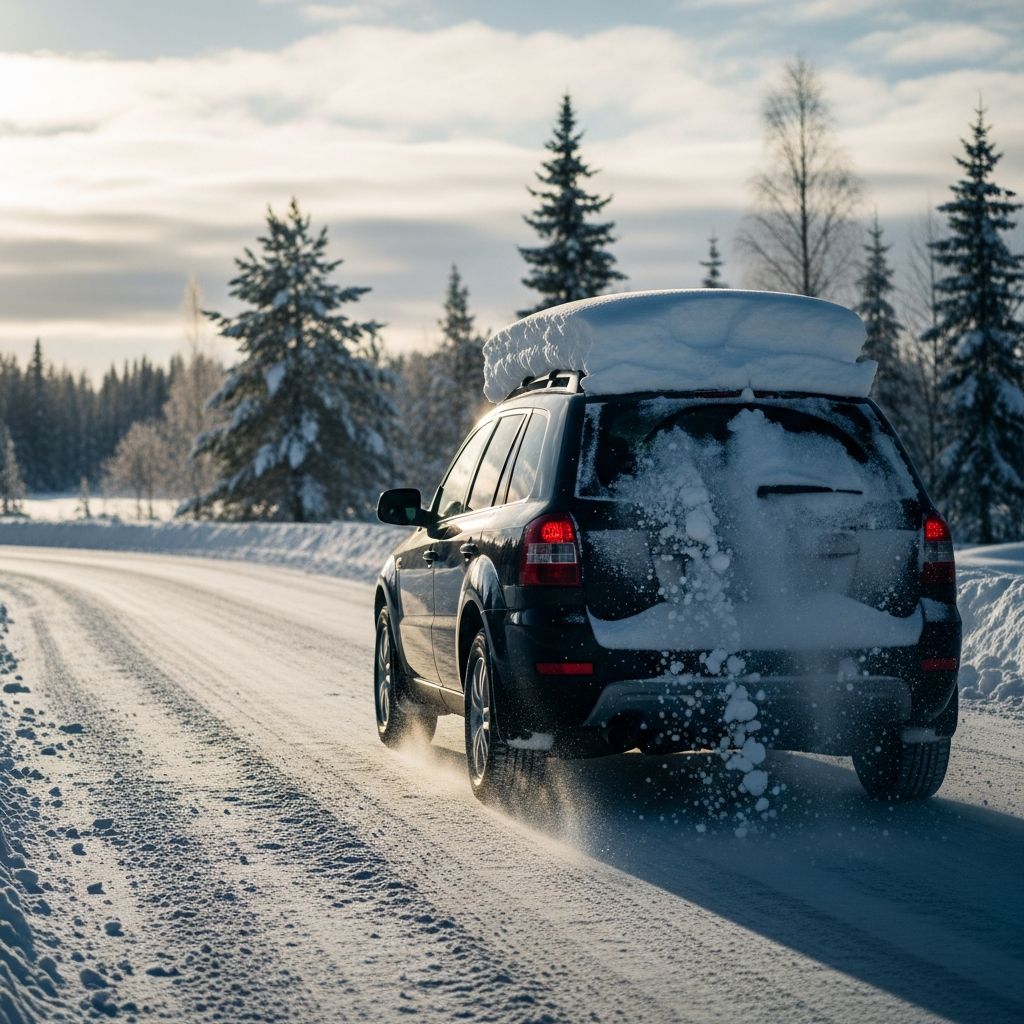
Clearing a frozen windshield on a winter morning is unpleasant enough that many drivers stop once they can see out the front and back windows. But leaving a thick layer of snow or ice on the roof, hood, or trunk can create serious hazards for everyone on the road and can also expose you to fines, lawsuits, and even criminal charges in some situations.
This guide explains why driving with snow or ice on your vehicle matters legally and practically. It covers how state laws approach the problem, when you can be held responsible for damage or injury, and what you can do to protect yourself and other road users during winter weather.
Why Roof Snow and Ice Are More Than a Nuisance
Snow and ice left on a vehicle do not stay put once you gain speed, hit bumps, or brake suddenly. Instead, they can behave like loose cargo or projectiles, creating dangerous and unpredictable conditions for nearby drivers.
- Falling sheets of ice can shatter windshields or force drivers behind you to swerve.
- Blowing powder snow can create a mini whiteout, briefly obscuring visibility for other vehicles.
- Sliding chunks from your own roof can block your windshield or rear glass, making it harder for you to see.
- Added weight of wet snow can affect vehicle handling and stability, especially at highway speeds.
Law enforcement agencies and transportation safety officials warn that ice flying from vehicle roofs has caused serious injuries and fatalities. In New Hampshire, for example, a large sheet of ice flying off a truck led to a fatal crash in 1999, which later inspired the state to adopt a specific law requiring drivers to remove snow and ice from their vehicles, often referred to as “Jessica’s Law.”
How States Regulate Snow and Ice on Vehicles
There is no single federal rule in the United States that uniformly governs snow or ice on private vehicles. Instead, each state addresses the issue through a mix of general traffic safety laws and, in some cases, specific statutes targeting uncleared snow or ice.
Common Legal Approaches
States typically use one or more of the following approaches:
- Unsafe vehicle or equipment laws – Many states make it illegal to operate a vehicle that is in an unsafe condition or that has anything on it that may endanger people or property. Snow and ice can fall into this category if they reduce visibility or are likely to fly off and cause harm.
- Obstructed vision provisions – Laws often prohibit driving if ice, snow, or other materials obstruct the driver’s view through the windshield or windows, or cover mirrors, lights, or license plates.
- Loose load or unsecured cargo rules – Some statutes that apply to hauling cargo also apply to anything on top of a vehicle that may come loose, including slabs of ice or piles of snow.
- Specific snow-and-ice removal laws – A handful of states, including New Hampshire, Pennsylvania, and New Jersey, have laws directly requiring drivers to clear snow and ice before traveling, sometimes with higher penalties if someone is injured.
Illustrative Examples of State Approaches
The table below summarizes a few typical approaches. This is not legal advice and not a complete list of jurisdictions; always check the current law where you drive.
| Type of Rule | What It Usually Covers | Possible Consequences |
|---|---|---|
| General unsafe vehicle laws | Driving a vehicle in a condition that endangers people or property (e.g., snow or ice that can fall off) | Traffic citation, fines, possible points on license, higher penalties if crash occurs |
| Obstructed view rules | Snow or ice on windshield, side windows, mirrors, headlights, taillights, or plates | Equipment or visibility violation tickets, repair orders to fix the issue |
| Specific snow/ice statutes | Failure to remove “accumulated ice or snow” from the roof, hood, and other surfaces before driving | Fines for noncompliance; in some states, enhanced fines or criminal charges if injury or property damage results |
| Unsecured load laws | Any material falling from a vehicle that causes a hazard or damage, including ice chunks | Citations; potential civil liability for resulting harm |
When Snow on Your Roof Becomes a Legal Problem
Even in states that do not explicitly mention snow or ice, several legal theories can apply once your uncleared vehicle causes danger or harm.
Traffic Violations and Fines
Law enforcement can issue tickets when snow or ice:
- Blocks your headlights, taillights, brake lights, or turn signals, making it difficult for others to see you.
- Covers your license plate, making it unreadable.
- Obstructs your view through the windshield or windows.
- Is deemed likely to fly off and create a hazard, making the vehicle itself “unsafe” to operate.
States and localities set their own fine schedules. In some jurisdictions, a basic equipment or unsafe-vehicle violation may carry a relatively modest fine, while violations linked to crashes or injuries can be much more expensive.
Civil Liability for Accidents and Injuries
If snow or ice falls from your car and causes a collision, you may face civil liability under negligence law. To establish negligence, an injured person typically must show that:
- You owed other road users a duty to operate your vehicle with reasonable care.
- You breached that duty by failing to clear accumulated snow or ice that a reasonably careful person would have removed.
- Your breach directly caused their injuries or property damage.
- They suffered actual damages such as medical bills, lost wages, or repair costs.
Court decisions and legal commentary in states with severe winters have recognized that ignoring significant accumulations of snow or ice can be considered unreasonable and negligent, especially when the driver had time and opportunity to clear the vehicle.
Criminal Exposure in Severe Cases
When flying ice or snow leads to serious injury or death, prosecutors may file criminal charges such as:
- Reckless driving or careless driving, where a driver disregards a substantial risk.
- Vehicular assault or vehicular homicide, if state law allows charges when dangerous driving behavior causes death or serious injury.
- In jurisdictions with specific snow-and-ice laws, enhanced penalties triggered by failure to remove accumulations.
Whether charges are brought often depends on the extent of the harm, local law, and how clearly the driver ignored known risks.
Real-World Examples: How Ice and Snow Turn Deadly
Transportation safety agencies and police departments frequently highlight real incidents to emphasize the danger:
- The fatal crash in New Hampshire in 1999 involving a nine-foot sheet of ice from a truck roof, which led to a law specifically targeting snow and ice on vehicles.
- Cases where fragments of ice from large trucks have smashed through windshields of passenger vehicles, causing head injuries and extensive property damage.
- Near-miss reports where drivers behind a snow-covered SUV experienced sudden whiteout conditions, forcing emergency braking on high-speed roads.
These events underline that the risk is not theoretical. Even moderate speeds can give a sheet of ice enough force to break glass and cause life-changing injuries.
Best Practices: Clearing Snow and Ice Safely and Legally
Because winter weather is unavoidable in many regions, the focus must shift from convenience to prevention. Clearing your vehicle thoroughly is one of the simplest ways to reduce legal risk and improve road safety.
Areas of the Vehicle You Should Always Clear
Before driving, take the time to remove snow and ice from:
- Roof – The primary source of large sheets of ice and blowing snow.
- Hood and trunk – Prevents snow from sliding onto the windshield or rear glass.
- Windshield and all windows – Ensures clear visibility in every direction.
- Side mirrors – Essential for lane changes and merging.
- Headlights, taillights, brake lights, and turn signals – Critical so other drivers can see you and anticipate your actions.
- License plates – Required to be visible in every state.
Tools and Techniques
To clear snow efficiently while protecting your vehicle’s surfaces:
- Use a snow brush or foam “snow broom” with a long handle to reach tall vehicle roofs without climbing on the car.
- Reserve plastic ice scrapers for windows and stubborn ice; metal tools can scratch glass and paint.
- Start the car and use the defroster to help soften ice on glass, but avoid letting the engine idle in a closed garage because of carbon monoxide risks.
- Clear around the exhaust pipe before running the vehicle, especially if parked in deep snow; blocked exhaust can lead to carbon monoxide building up inside the car.
- Work from the top down so loosened snow does not re-cover cleared areas.
National and state highway safety offices emphasize that preparing vehicles before driving is part of a broader winter readiness plan that includes checking tire tread, carrying an emergency kit, and adjusting speed to road conditions.
Time-Saving Habits for Winter Mornings
Consistent routines make it easier to comply with safety guidelines even when you are in a hurry:
- Build an extra 10–15 minutes into your schedule on days when snow or freezing rain is expected.
- Keep brushes, gloves, and hats in a spot where you can grab them quickly.
- Whenever possible, park in a garage or under cover to reduce the amount of snow and ice accumulation.
- Consider a winter windshield cover that you can remove along with accumulated snow.
Frequently Asked Questions (FAQs)
Q: Is it always illegal to drive with snow on my car roof?
Not always. Some states do not have a specific law that mentions snow or ice on the roof, but most have general safety and unsecured-load rules that can apply if snow or ice is likely to fly off or is already obstructing your view or lights. In a few states, there are direct requirements to remove accumulated snow and ice before you drive.
Q: Can I be ticketed even if no accident happens?
Yes. Police can issue citations for unsafe vehicle conditions, blocked lights or plates, or obstructed vision even if no crash occurs. If an officer believes the accumulation is dangerous or violates equipment rules, you may receive a ticket.
Q: What if snow blows off my car and causes a crash behind me?
If snow or ice from your vehicle contributes to a collision, you may face civil liability for negligence and, in some cases, traffic or criminal charges. The outcome will depend on your state’s laws, the severity of harm, and the available evidence.
Q: Are commercial trucks treated differently?
Commercial drivers are often subject to additional federal and state safety regulations, including secure-load rules and carrier safety programs. Some states and companies impose strict requirements on clearing trailers and cab roofs because of the severe risks posed by large slabs of ice from high vehicles.
Q: How can I find out what my state’s law says?
You can review your state’s motor vehicle code on the official state legislature or motor vehicle department website, or contact a licensed local attorney for specific legal advice. Official state government sites are the most reliable source for the exact wording and penalties.
References
- Winter Driving Tips — National Highway Traffic Safety Administration (NHTSA). 2023-11-15. https://www.nhtsa.gov/winter-driving-tips
- Jessica’s Law: Why it’s Important to Clear your Roof of Snow and Ice — Parnell, Michels & McKay Law Offices. 2020-12-10. https://pmmlawyers.com/jessicas-law-why-its-important-to-clear-your-roof-of-snow-and-ice/
- Winter Weather Driving Safety — U.S. Federal Highway Administration. 2022-12-01. https://ops.fhwa.dot.gov/weather/weather_events/snow_ice.htm
- Winter Driving Safety — Pennsylvania Department of Transportation (PennDOT). 2023-12-01. https://www.penndot.pa.gov/TravelInPA/Winter/Pages/default.aspx
Similar Articles








Read full bio of medha deb


