
Drafting Strong Professional Services Agreements in California
Learn how to structure, negotiate, and document professional services agreements that comply with California law and reduce disputes.
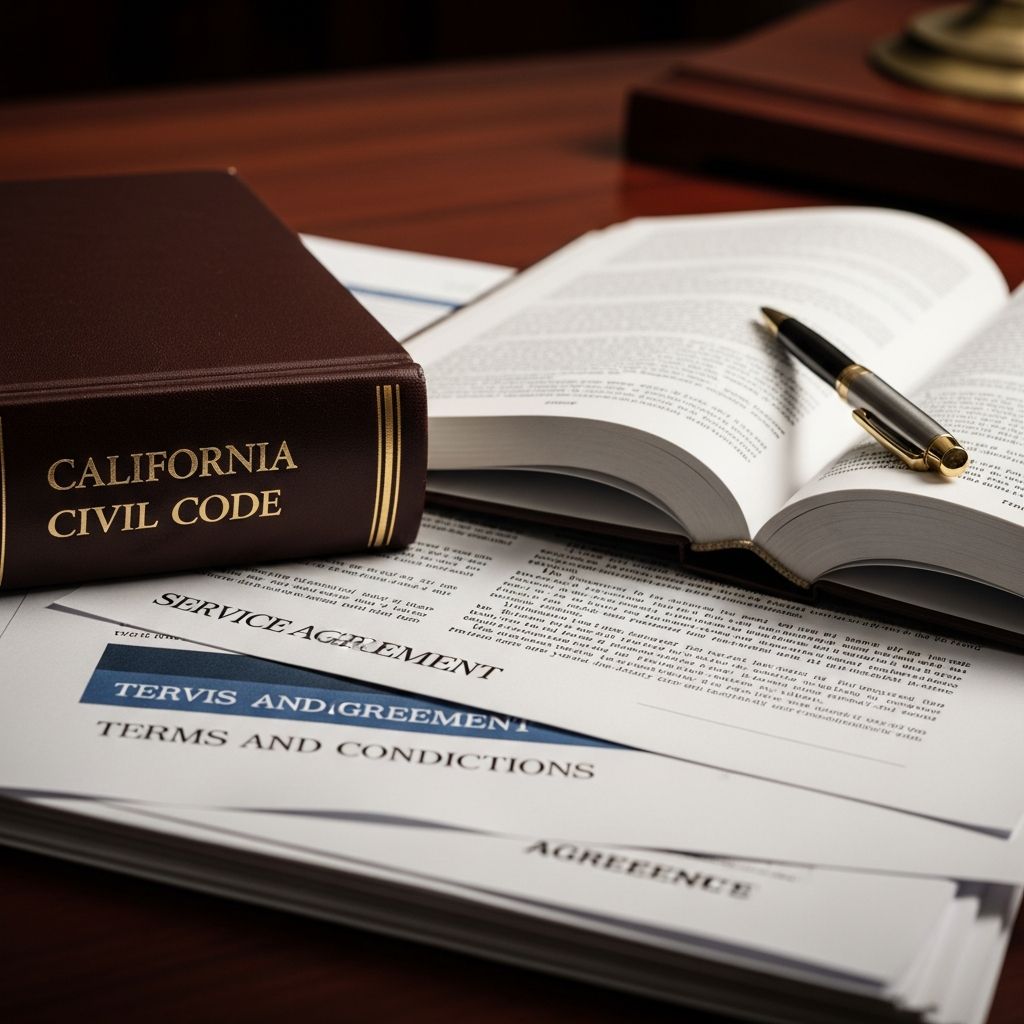
Professional services agreements are the backbone of relationships between clients and providers such as consultants, engineers, accountants, designers, and other specialized professionals. In California, these contracts carry additional importance because state laws impose specific requirements, especially for licensed design professionals and public entities. A well-drafted agreement not only defines the work to be done, but also manages risk, clarifies expectations, and lays out a roadmap for resolving disputes.
This guide walks through the essential building blocks of a professional services agreement governed by California law, highlighting both legal considerations and practical drafting tips.
1. Understanding Professional Services Agreements in the California Context
A professional services agreement is a written contract in which a client hires a provider to perform specialized, often licensed, services for a fee. Unlike simple purchase orders for goods, these agreements focus on expertise, judgment, and a duty to meet professional standards.
In California, multiple statutes and public policies shape how such agreements are structured, particularly when they involve:
- Licensed professionals such as engineers, architects, and land surveyors, who must comply with Business and Professions Code contract requirements.
- Public agencies and universities, which use standardized professional services agreements with strict procurement, indemnity, and insurance provisions.
- Public works or maintenance projects, which may trigger prevailing wage, registration, and labor compliance obligations.
Because California law can differ from other states on contract interpretation, indemnity, and labor issues, agreements should expressly state that they are governed by California law and drafted with those rules in mind.
2. Defining the Scope of Services and Project Parameters
The single most important part of any professional services agreement is a precise description of what work will be performed. Many disputes arise not from bad intentions, but from vague or incomplete scopes of work.
2.1 Crafting a Clear Scope of Services
In most California public agency templates, the scope of services is attached as an exhibit and incorporated into the agreement. Private agreements can follow the same approach.
- Describe deliverables (reports, plans, software, trainings, etc.) in concrete terms.
- Identify milestones and intermediate work products.
- Specify methods or standards where relevant (for example, particular design standards or testing protocols).
- Clarify client responsibilities such as providing data, access, or approvals by specific dates.
When services are expected to be ongoing or flexible, consider including a high-level master scope with the detailed tasks issued via future task orders or authorizations to proceed.
2.2 Duration, Deadlines, and Extensions
A professional services agreement should define both the overall term and the time for performance of specific services.
- Include a start date and an end date for the contract term.
- Identify any critical deadlines (for example, preliminary design within 60 days).
- Explain the process for extensions if delays occur, including change orders or written amendments.
California public institutions commonly use a base agreement with services authorized later through written exhibits specifying the time frame and compensation for each assignment.
3. Compensation, Invoicing, and Cost Controls
Compensation terms should be unambiguous to avoid billing conflicts and to satisfy statutory requirements for written contracts between certain licensed professionals and their clients.
3.1 Choosing a Fee Structure
Common pricing models include:
- Hourly or time-and-materials, often with a not-to-exceed cap.
- Lump-sum pricing tied to defined deliverables.
- Unit pricing (for example, per drawing, per inspection, or per test).
Under the California Business and Professions Code, contracts with professional engineers and some other licensees must include the basis of compensation and how additional services will be billed.
3.2 Invoicing Procedures and Approval
Clear invoicing provisions help align expectations and support public accountability where public funds are involved.
- Specify invoice frequency (monthly, milestone-based, or upon completion).
- Describe required backup documentation (time sheets, expense receipts, progress reports).
- State the payment timetable (for example, 30 days after receipt of a proper invoice).
- Reserve the client’s right to withhold or dispute charges in good faith, particularly for defective or incomplete work.
3.3 Managing Changes and Additional Services
Professional engagements rarely proceed exactly as planned. A robust agreement will:
- Define what counts as additional services (work beyond the original scope).
- Require written authorization before commencing extra work to ensure payment.
- Set rates or fee mechanisms for additional tasks in advance.
4. Professional Standards, Licenses, and Compliance
Professional services agreements should confirm that the provider is properly qualified and will perform work consistent with applicable professional standards.
4.1 Licensure and Qualifications
California agencies typically require that consultants be duly licensed and in good standing where a license is required by law. For example, professional engineers must comply with contract and practice obligations established by the Board for Professional Engineers, Land Surveyors, and Geologists.
- Include representations that the provider holds all required licenses and permits and will maintain them for the duration of the contract.
- Confirm that any subconsultants are similarly qualified.
4.2 Standard of Care
Most professional services agreements include a promise that services will be performed in accordance with the standard of care ordinarily exercised by professionals in the same discipline and region.
A typical clause may state that the consultant will perform with the skill and care ordinarily used by reputable professionals practicing under similar circumstances. This language is particularly common in public-sector templates for engineering and design work.
4.3 Labor and Wage Requirements for Public Projects
Where services are part of a public works or maintenance project, California law may impose prevailing wage and related obligations under the Labor Code.
| Requirement | Key Points in California Public Work |
|---|---|
| Prevailing wages | Consultants and subconsultants may need to pay prevailing wages and keep certified payroll records. |
| DIR registration | Certain contractors must register with the Department of Industrial Relations and maintain registration for the project duration. |
| Workers’ compensation | Employers must maintain workers’ compensation coverage as required by Labor Code provisions. |
Agreements should allocate responsibility to the consultant for understanding and meeting these requirements, including submission of any required payroll records directly to the state.
5. Allocation of Risk: Insurance, Indemnity, and Limits
Because professional services involve judgment and can impact safety, property, or finances, California public and institutional clients typically insist on extensive risk-management provisions.
5.1 Insurance Coverage
Standard contracts require consultants to carry various kinds of insurance and provide evidence before beginning work.
- Commercial general liability insurance covering bodily injury and property damage.
- Professional liability (errors and omissions) insurance appropriate to the type of services.
- Automobile liability insurance when vehicles are used in performing the work.
- Workers’ compensation and employer’s liability coverage if the consultant has employees.
Public-sector templates often require the consultant to ensure that subconsultants carry comparable coverage and that certificates of insurance and endorsements are provided before work starts and upon renewal.
5.2 Indemnification and Defense
Indemnity clauses transfer risk by requiring one party to protect the other against certain third-party claims. In California public contracts, these provisions must be drafted with state statutes and anti-indemnity rules in mind, particularly in construction and design contexts.
Typical public agency agreements require consultants to indemnify and hold harmless the agency and its officers, employees, and agents from claims arising out of the consultant’s negligent acts or omissions, and sometimes to provide a defense. The scope of indemnity should:
- Be tailored to negligence or wrongful acts of the consultant and its subconsultants.
- Be consistent with the limits of California law regarding indemnity for design and construction-related services.
- Coordinate with the insurance obligations so required coverage matches potential liability.
5.3 Limitation of Liability and Damage Exclusions
Professional service providers often seek contractual limits on their total liability or exclusions of certain damages (such as lost profits). The enforceability of such provisions under California law depends on their clarity and context. Any limitation of liability should be carefully considered alongside statutory requirements, public policy, and the availability of insurance.
6. Contract Administration: Changes, Termination, and Dispute Resolution
Even well-drafted projects face changes, delays, and disagreements. A professional services agreement should lay out how these situations will be handled.
6.1 Amendments and Change Management
A common public-sector approach is to require that any change to scope, schedule, or compensation be documented in a written amendment or task order signed by authorized representatives.
- Identify who may authorize changes on behalf of each party.
- Require written approval prior to starting changed or additional work.
- Address how time extensions and fee adjustments will be calculated.
6.2 Suspension and Termination
Many California local agencies reserve broad rights to suspend or terminate professional services agreements for convenience, with payment owed only for properly performed services up to the termination date.
- Termination for cause: triggered by material breach, failure to maintain required licenses or insurance, or failure to comply with law.
- Termination for convenience: typically requires advance written notice (for example, 30 days) and compensation for services satisfactorily completed to date.
- Consultant’s termination rights: often limited, but may allow withdrawal for nonpayment or other significant breaches after notice and cure periods.
6.3 Dispute Resolution Mechanisms
Dispute resolution clauses can require negotiation, mediation, or other processes before litigation. When dealing with public entities, however, some procedures may be dictated by statute or policy.
- Identify the venue and governing law as California, often specifying the county where the client is located.
- Consider requiring informal dispute resolution or mediation as a condition precedent to filing suit.
- Address attorneys’ fees, recognizing that some California statutes independently authorize fee shifting.
7. Special Considerations for Public Agencies and Institutions
Professional services agreements involving California public agencies, universities, and special districts must align with procurement rules and standardized forms.
7.1 Procurement and Selection
California law often requires public entities to use qualifications-based selection for certain professional services such as architecture and engineering. For example, the California State University system and the University of California use formal processes for selecting and contracting with design professionals.
- Agencies may issue Requests for Qualifications (RFQs) and create shortlists of technically capable firms.
- Final selection may be based on interviews and best fit rather than low bid alone.
- Standardized professional services agreement templates are commonly required for contracts over particular dollar thresholds.
7.2 Blanket or Master Professional Services Agreements
Public institutions frequently use blanket or master professional services agreements for a set period, then authorize specific assignments through separate exhibits.
- The master agreement sets general terms and conditions (insurance, indemnity, standard of care).
- Each task order or authorization to perform services defines the scope, compensation, and schedule for a particular project.
- This structure facilitates long-term relationships while maintaining project-level accountability.
8. Practical Drafting Tips to Avoid Common Pitfalls
In addition to legal compliance, well-drafted agreements benefit from clear language and predictable processes. Consider the following practical tips when drafting or reviewing a professional services agreement in California.
- Use plain language where possible while preserving legal precision.
- Align exhibits (scope, fee schedule, insurance requirements) with the main body of the contract to avoid conflicts.
- Confirm authority: make sure signatories have authority to bind their respective organizations, particularly in public entities.
- Address data and confidentiality if the provider will access sensitive or proprietary information.
- Plan for records retention and audit rights, especially where public funds or grants are involved.
- Review conflict-of-interest rules relevant to public officials and consultants performing governmental work.
Frequently Asked Questions (FAQs)
Q1: Is a written professional services agreement always required in California?
California law requires written contracts for certain licensed professionals, such as engineers, except in narrow circumstances where an exception applies. Even when not strictly required by statute, using a written agreement is strongly recommended to document scope, fees, and responsibilities.
Q2: What must be included in a contract with a licensed professional engineer?
Under the California Business and Professions Code, a written contract for professional engineering services must include at least a description of the services, the basis for compensation, information about the names and addresses of the parties, and how additional services and termination will be handled. Many public and private templates expand on these minimum elements to address insurance, indemnity, and other issues.
Q3: How do public agencies in California typically select consultants?
For many professional services, public agencies and institutions use qualifications-based selection processes that may involve RFQs, interviews, and ranking of firms based on competence and experience rather than lowest price alone. Formal procedures and approval thresholds are often detailed in local ordinances or institutional policies.
Q4: Why are insurance and indemnity provisions so detailed in public-sector agreements?
Public entities must protect taxpayer funds, comply with statutory risk-management requirements, and ensure that consultants can respond to potential claims. As a result, they require specific minimum insurance coverages and carefully drafted indemnity clauses consistent with California law and public policy.
Q5: Can a professional services agreement limit the consultant’s liability?
Parties can attempt to limit liability by contract, but such provisions must be clear and are subject to California statutes, case law, and public policy. Some limitations may be unenforceable in certain contexts, especially where public interests or statutory duties are involved, so these clauses should be crafted with particular care.
References
- Example of Professional Services Agreement — Coachella Valley Water District. 2015-03-01. https://www.cvwd.org/DocumentCenter/View/917/Example-of-Professional-Services-Agreement-PDF
- Baldwin Park Municipal Code §34.37 Professional Services — City of Baldwin Park. 2024-05-15. https://codelibrary.amlegal.com/codes/baldwinpark/latest/baldwinpark_ca/0-0-0-1018
- Contract Law Language for Professional Engineers and Land Surveyors — California Board for Professional Engineers, Land Surveyors, and Geologists. 2023-01-01. https://www.bpelsg.ca.gov/laws/contractlawlanguage.shtml
- Professional Service Agreements — California State University. 2022-06-30. https://www.calstate.edu/csu-system/doing-business-with-the-csu/capital-planning-design-construction/operations-center/Pages/professional-service-agreements.aspx
- Design Professional Agreements — University of California Office of the President. 2021-09-01. https://www.ucop.edu/facilities-manual/manual/volume-3/vol-3-chapter-3.html
- Professional Services Agreement (Template) — Cosumnes Community Services District. 2020-01-01. https://www.cosumnescsd.gov/DocumentCenter/View/23587/Exhibit-B—Professional-Services-Agreement-PDF
Similar Articles








Read full bio of Sneha Tete


