
Dog Bite Incident Documentation: Essential Steps
Navigate the dog bite reporting process with confidence and legal clarity.
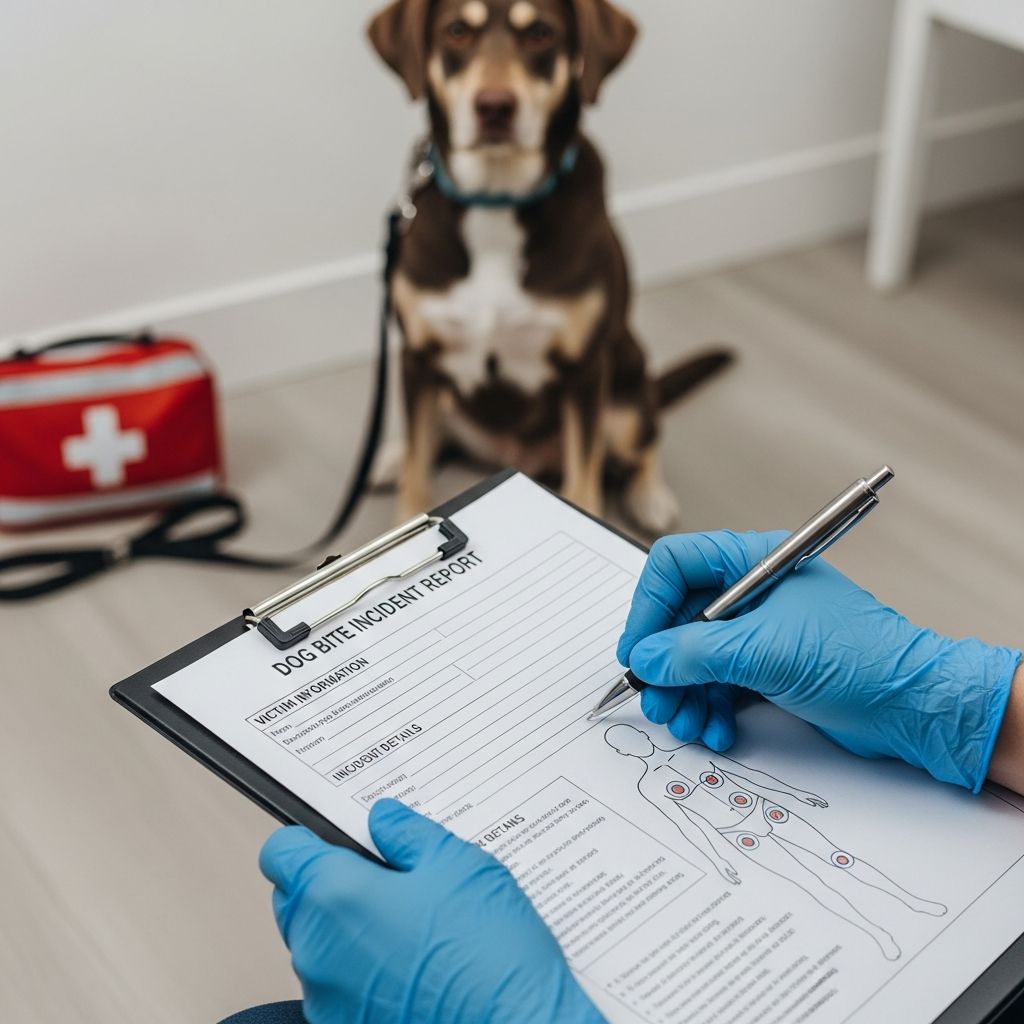
Understanding the Importance of Proper Dog Bite Documentation
When a dog bite occurs, the immediate aftermath is often chaotic and distressing for victims and their families. Beyond the physical pain and emotional trauma, there are critical legal and health considerations that must be addressed promptly. Properly documenting and reporting a dog bite incident serves multiple important purposes: it creates an official record that protects public health, establishes accountability, and preserves evidence that may be essential for any future legal claims or insurance disputes.
The documentation process begins immediately after the incident and extends through multiple reporting channels. Each step in this process plays a vital role in ensuring that the incident is thoroughly investigated and that appropriate measures are taken to prevent similar occurrences in the future. Understanding what needs to be documented and where to report it can significantly impact the outcome of any legal proceedings and help ensure that victims receive appropriate compensation and support.
Immediate Actions Following a Canine Attack
The first priority after any dog bite is ensuring that the victim receives appropriate medical care. Even if the bite appears minor, it is crucial to seek professional medical evaluation, as dog bites can carry serious infection risks, including rabies. A healthcare provider can properly clean the wound, assess its severity, and determine whether additional treatment such as rabies prophylaxis or antibiotics is necessary.
While receiving medical care, victims should request that all medical records and documentation of injuries be provided. This includes:
– Photographs of wounds taken by medical professionals- Detailed descriptions of the injury severity and location- Medical treatment notes and recommendations- Copies of laboratory results or vaccination assessments- Bills and receipts for all medical services rendered
Simultaneously, if possible and safe to do so, the victim or a witness should document the incident scene by taking photographs showing the environment where the bite occurred, any visible property damage, and the location of any barriers or safety features such as fences or gates that may have failed to contain the animal.
Gathering Critical Information at the Scene
The details surrounding a dog bite incident can fade quickly from memory as shock and pain set in. Immediately after safety is assured and medical attention is sought, collecting specific information becomes paramount. This information will be needed for official reports and potential legal proceedings.
Key details to document include the date and exact time the incident occurred, the precise location where the bite happened (including the street address or nearby landmarks if an address is unavailable), and a comprehensive description of the dog involved. The canine description should include apparent breed or mixed breed characteristics, size, color, any distinctive markings or features, and whether the dog was wearing a collar or identification tags.
Information about the dog’s owner is equally important. Obtain the owner’s full name, address, telephone number, and email address if possible. Ask whether the owner has homeowner’s insurance or renter’s insurance, as these policies often cover liability for dog bite incidents. If the owner provides insurance information, document the company name, policy number, and contact details for claims reporting.
Witness information should also be gathered meticulously. Collect the names, contact information, and brief statements from anyone who witnessed the incident. Written or recorded statements from witnesses become valuable evidence if the case progresses to litigation, as they provide independent verification of how the incident occurred.
The Role of Local Animal Control Authorities
Animal control agencies serve as the primary governmental authority responsible for investigating dog bite incidents and enforcing animal control regulations within their jurisdictions. These agencies play a critical role in the official reporting process and have specific responsibilities following a documented bite incident.
To report a dog bite, victims should contact their local animal control office directly. The contact information can typically be found through a simple online search for “[your city/county] animal control” or by contacting the police non-emergency line, which can provide the appropriate contact details. When reporting, provide all the information gathered at the scene, including the dog’s description, owner information, location, and the nature and extent of the injuries sustained.
Once notified, animal control will typically conduct an investigation, which may include:
– Locating and examining the dog involved- Reviewing the dog’s vaccination records with the owner- Assessing whether the dog poses a danger to the community- Determining quarantine requirements for the animal- Documenting any prior complaints or incidents involving the same dog
In California and many other jurisdictions, dogs that have bitten a person must be quarantined for a minimum period, typically ten days, during which they are observed for signs of rabies or other communicable diseases. The quarantine requirement applies regardless of whether the dog’s owner claims the animal is vaccinated against rabies.
Reporting to Health Departments and Other Authorities
Beyond animal control, additional reporting may be required to local health departments, particularly in designated rabies areas or when there is any concern about infectious disease transmission. Health departments work in coordination with animal control agencies to assess public health risks and determine whether the victim needs additional preventative treatment.
In certain circumstances, reporting to the police department may also be necessary. If the dog bite occurred during a criminal activity, if the dog poses an ongoing threat to public safety, or if the incident involved trespassing or other legal violations, a police report should be filed. Police officers will document the incident, collect statements, and may issue citations to the dog owner if applicable laws have been violated.
Each county or municipality may have slightly different procedures for reporting dog bites to these various agencies. Some jurisdictions have established coordinated reporting systems where filing a single report with animal control triggers automatic notifications to relevant health and law enforcement agencies. Victims should inquire about their local procedures to ensure complete reporting across all necessary channels.
Special Circumstances Requiring Specific Reporting
Certain types of dog bite incidents involve additional complexities that require specialized reporting procedures. Understanding these special circumstances ensures that incidents are reported through the appropriate channels and receive proper handling.
Incidents Involving Service Animals: If the dog that caused the bite is a service animal, the incident may need to be reported not only to animal control but also to the California Department of Fair Employment and Housing or equivalent agencies in other states. Service animals are subject to specific regulations, and such incidents may require additional documentation and investigation regarding the animal’s training and behavioral certification.
Stray or Feral Dogs: When the dog cannot be identified or located, the incident should still be reported to animal control. Animal control officers will document the incident, search for the animal, and attempt to locate it for quarantine and observation purposes. These reports help agencies track patterns of dangerous strays in specific neighborhoods.
Multiple Victims or Repeat Offenders: If the same dog has bitten multiple people or if multiple dogs were involved in a single incident, each victim should file a separate report. These reports create documentation of patterns of dangerous behavior that may result in more serious legal consequences for the dog owner.
Documentation Requirements for Complete Reporting
Whether reporting to animal control, health departments, or law enforcement, certain information should be included in every report to ensure completeness and accuracy:
| Information Category | Details to Include |
|---|---|
| Temporal Information | Exact date and time of the incident |
| Location Details | Specific address or location description where bite occurred |
| Canine Description | Breed (or apparent mix), size, color, distinguishing markings, collar/tag information |
| Owner Information | Full name, address, phone, email, insurance details if known |
| Injury Documentation | Nature of injuries, location on body, severity assessment, medical treatment provided |
| Vaccination Status | Dog’s rabies vaccination history if available from owner |
| Witness Information | Names and contact details of all witnesses present |
| Reporter Contact Information | Name, address, phone number of the person making the report |
Preserving Evidence for Legal Claims
Dog bite victims who may pursue legal action should understand that thorough documentation serves as the foundation for claims against the dog owner or applicable insurance carriers. Evidence preservation begins immediately and continues throughout the recovery period.
Photographs should be taken of all injuries, including close-up shots showing the bite marks, puncture wounds, and any resulting infection or scarring. These photographs should be dated and include multiple angles. Additional photographs should document any torn clothing, damaged personal items, or property damage resulting from the incident.
Medical documentation is crucial evidence. Retain all bills, receipts, and records related to treatment for the bite injuries. This includes emergency room visits, urgent care treatment, specialist consultations, mental health counseling if trauma is being addressed, and any ongoing medical care needed for complications or scarring.
Witness statements should be collected as soon as possible while memories are fresh. Written statements or video recordings from witnesses are more compelling evidence than summary notes. If witnesses are willing, obtaining their contact information allows attorneys to reach out directly to verify their accounts.
The official animal control report and any police report filed become important pieces of evidence. Request copies of these reports and ensure that all information contained in them is accurate. If the reports contain errors or omissions, contact the reporting agency to request amendments or supplemental documentation.
Communication with Insurance Companies
Once a dog bite has been reported to authorities, victims should also notify the dog owner’s homeowner’s or renter’s insurance company. Insurance policies typically cover liability for injuries caused by pets on the property owner’s residence or in situations where the owner is responsible.
When contacting the insurance company, provide the policy holder’s name and address along with a detailed description of the incident and injuries. The insurance company will likely assign a claims adjuster who will conduct their own investigation. Cooperate with this investigation while being cautious about any statements made, as insurance companies may attempt to minimize their liability.
Many jurisdictions have established deadlines for filing claims with insurance companies and for pursuing legal action. In California, for example, personal injury lawsuits must generally be filed within two years of the incident. Consulting with an attorney early in the process ensures that all deadlines are met and that claims are properly pursued.
Understanding Quarantine and Investigation Timelines
The process following a dog bite report involves specific legal timelines designed to protect public health. Understanding these timelines helps victims anticipate the investigation process and plan for any necessary follow-up actions.
When a dog bite is reported, animal control typically has a set period to locate the dog if it is not immediately available for examination. Once the dog is located and taken into custody, a mandatory quarantine period begins. In most jurisdictions, this quarantine lasts a minimum of ten days, during which the dog is observed for any signs of rabies or other diseases.
Hearing procedures may also be scheduled to determine the dog’s status and whether it poses an ongoing danger to the community. These hearings typically occur within specified timeframes ranging from fifteen to ninety days after the incident. The dog owner must be given advance notice of any hearing and has the right to present evidence and testimony regarding the dog’s behavior and history.
Frequently Asked Questions
Q: What should I do if I don’t know the dog owner’s identity?
A: Report the incident to animal control as a stray or unidentified dog bite. Provide as detailed a description as possible of the dog so that animal control can search for and identify it. Collect witness statements that may help locate the dog owner.
Q: How long do I have to file a report after being bitten?
A: While there is no standard statute of limitations for reporting a dog bite to animal control, it is advisable to report it as soon as possible while details are fresh and the dog can be located for quarantine and observation. For legal claims, California allows two years from the date of the incident.
Q: Should I keep copies of all reports and documentation?
A: Yes, absolutely. Maintain copies of all incident reports, medical records, police reports, animal control reports, and insurance correspondence. These documents will be essential if you pursue a legal claim or need to reference the incident for any reason.
Q: What if the dog owner disputes the report?
A: The dog owner has the right to dispute findings through legal hearings and may present their own evidence. Your documented evidence, witness statements, and medical records will be important in substantiating your account of the incident.
Q: Can I pursue legal action even if the dog was licensed and vaccinated?
A: Yes. In most jurisdictions, dog owners are held strictly liable for bites that occur in public or when the victim is lawfully on private property, regardless of the dog’s vaccination status or license. Vaccination status may affect quarantine requirements but does not eliminate liability.
References
- How To Report a Dog Bite in California — Callahan & Blaine Law Firm. 2025. https://www.callahan-law.com/how-to-report-a-dog-bite-in-california/
- Investigation, Management, and Prevention of Animal Bites in California — California Department of Public Health (CDPH). https://www.cdph.ca.gov/Programs/CID/DCDC/
- How to File a California Dog Bite Lawsuit — Helbock Law. 2025. https://www.helbocklaw.com/how-to-file-a-california-dog-bite-lawsuit/
- Report a Dog Bite or Aggressive Animal — San Francisco Animal Care & Control. https://www.sfanimalcare.org/services/animal-welfare/report-dog-bite-aggressive-animal/
- Reporting Dog Bites in California — KJT Law Group. 2025. https://www.kjtlawgroup.com/insights/how-to-report-a-dog-bite-in-california/
- County of Del Norte, California – Dog Bites — County of Del Norte Sheriff’s Department. https://www.co.del-norte.ca.us/departments/Sheriff/Bites
Similar Articles








Read full bio of medha deb


