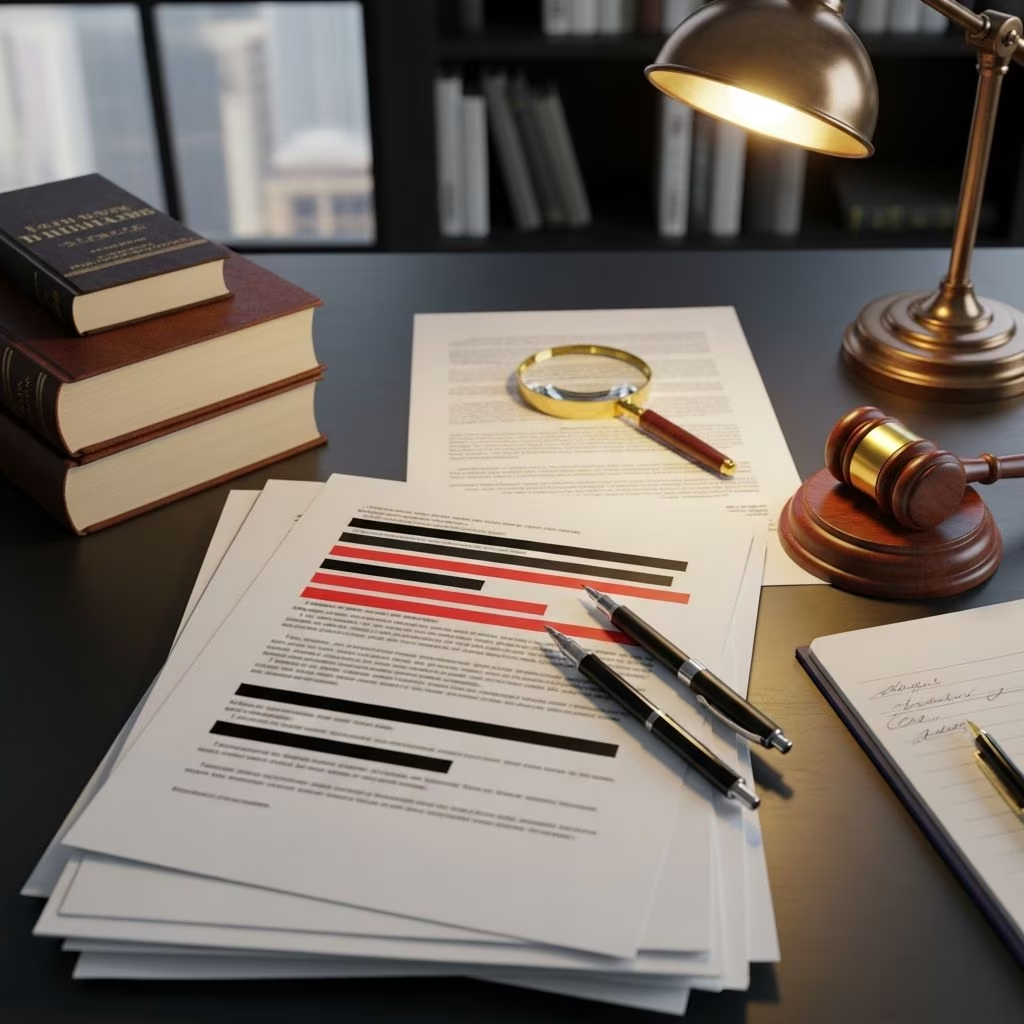
Understanding the Critical Role of Document Redaction in Legal Practice
The ability to properly redact documents represents a fundamental competency that all legal professionals must master. Redaction involves the removal or obscuring of sensitive information from documents before they are disclosed or filed with courts. This seemingly straightforward task carries significant weight in legal practice, as improper redaction can expose confidential client information, violate court orders, breach ethical obligations, and result in professional sanctions or litigation malpractice claims.
Courts increasingly scrutinize redaction practices, and high-profile cases of failed redaction efforts have become cautionary tales within the legal community. The stakes are particularly high because once sensitive information is exposed due to inadequate redaction, the damage is often irreversible. Legal professionals must therefore develop a thorough understanding of redaction principles, recognize the distinction between superficial concealment and genuine information removal, and implement systematic protocols to prevent disclosure errors.
Legal Obligations and Professional Responsibility Standards
Attorneys face binding legal requirements to redact certain categories of information in court filings. The Federal Rules of Civil Procedure establish mandatory redaction standards that govern how sensitive personal information must be handled in judicial documents. Under Rule 5.2(a), titled “Redacted Filings,” attorneys must restrict the disclosure of personally identifiable information to specific limited formats when documents are filed with courts.
Specifically, the Federal Rules require that:
- Social Security numbers and tax identification numbers appear only with the last four digits visible (XXX-XX-1234 format)
- Birth dates are reduced to year of birth only
- Names of minor children are abbreviated to initials only
- Financial account numbers display only the final four digits
Beyond these explicit federal requirements, attorneys must comply with the ABA Model Rules of Professional Conduct. Most critically, Rule 1.6 addresses the confidentiality of information and establishes that lawyers have a duty to maintain client confidences. When attorneys fail to take reasonable steps to protect privileged or otherwise confidential client information through proper redaction, they breach this fundamental ethical obligation. Such breaches can trigger disciplinary proceedings, damage professional reputation, and expose the attorney to liability for harm caused to the client.
Different legal contexts impose varying redaction requirements. Court filings, discovery exchanges between opposing counsel, confidential settlement agreements, and attorney-client communications all involve distinct redaction obligations that attorneys must understand and execute properly.
Common Scenarios Requiring Redaction in Legal Work
Legal professionals encounter redaction obligations across multiple practice contexts:
- Litigation and Court Filings: All documents submitted to courts must comply with applicable redaction rules to protect personally identifiable information and privileged content
- Discovery Process: During the exchange of documents between opposing parties, attorneys must redact materials that contain privileged communications, attorney work product, or information protected by protective orders
- Settlement Agreements: Confidential settlement terms must be redacted before disclosure to third parties or the public
- Attorney-Client Communications: When communications with clients must be produced to opposing counsel or courts, privileged content and sensitive strategic information require redaction
- eDiscovery Production: Large-scale document reviews for electronically stored information demand systematic redaction of privileged documents, confidential information, and irrelevant materials
The Critical Distinction Between Hiding and Permanently Removing Information
Perhaps the most consequential mistake attorneys make involves confusing visual concealment with actual data removal. This fundamental misunderstanding has led to numerous high-profile disclosure failures and professional discipline.
When text is redacted by overlaying visual elements—typically black rectangles or boxes—on top of sensitive content within a PDF or word processing document, the underlying text remains embedded in the digital file. The information is merely hidden from view, not deleted. A person with basic technical knowledge can easily recover the obscured information by:
- Copying text from underneath the overlaid graphics
- Deleting or moving the visual covering elements
- Adjusting document properties or transparency settings
- Accessing uncompressed file data or metadata
True redaction requires permanent removal of the sensitive data from the document file itself. This distinction forms the foundation of proper redaction practice. Simply applying black boxes or using highlight tools without understanding your software’s actual functionality creates a dangerous false sense of security.
Metadata and Hidden Information Vulnerabilities
A frequently overlooked redaction hazard involves metadata—the invisible information embedded within digital documents that describes file properties, revision history, and content attributes. Word processing documents, PDFs, and other electronic files automatically generate and retain metadata that can include:
- Author and editor names and contact information
- Document creation and modification timestamps
- Tracked changes and previous versions of text
- Comments and annotations from document reviewers
- File path information and storage locations
- Deleted content retained in revision histories
Metadata can reveal sensitive information even when the visible document text has been properly redacted. For example, tracked changes in a Word document might show deleted confidential information that appears redacted in the final version. An attorney who focuses exclusively on visual redaction while failing to remove metadata may inadvertently disclose the very information they attempted to protect.
Proper redaction protocols must include systematic metadata removal or document reconstruction to eliminate hidden file information. This often requires using specialized redaction software or recreating documents in formats that do not preserve embedded metadata.
Strategies for Effective Redaction Implementation
Attorneys should approach redaction as a controlled, methodical process rather than a hasty necessity. Implementing the following strategies significantly reduces redaction errors:
Comprehensive Information Identification
Before beginning any redaction, thoroughly review the entire document to identify all sensitive content requiring protection. Rushing through this initial identification phase creates gaps where confidential information escapes redaction. Develop checklists of information categories specific to your legal context, then systematically scan each document against the complete checklist.
Appropriate Tool Selection
Use redaction tools specifically designed for document security rather than general editing features. Dedicated redaction software ensures that marked information is permanently removed during the production process, rather than merely concealed. Verify that your chosen tool actually removes data rather than simply hiding it visually. Test your software with sample documents to confirm its functionality before relying on it for sensitive productions.
Transparent Review Process
After applying redactions, carefully review the marked document to confirm that all sensitive content is properly obscured and no confidential information remains visible. Pay attention to:
- Spacing and alignment around redacted sections to ensure no text peeks through
- Formatting that might reveal redacted content through font color or size changes
- Page numbers or other reference marks that might identify redacted materials
- Related documents that might contain unredacted versions of sensitive information
Documentation and Audit Trails
Maintain detailed records of all redaction decisions, including:
- Which information was redacted and the specific basis for redaction (privilege, confidentiality, Rule 5.2 compliance, etc.)
- Who performed each redaction and the timestamp
- Whether redactions were applied during document review or at production
These audit trails demonstrate that proper procedures were followed and provide evidence of competent handling if redaction decisions are later challenged in court. Documentation becomes particularly important when demonstrating compliance with court orders or professional responsibility rules.
Redaction Techniques for Different Document Formats
| Document Format | Recommended Approach | Key Considerations |
|---|---|---|
| Word Processing Documents | Find and replace sensitive text with placeholders like [NAME REDACTED] or [CONFIDENTIAL]; recreate final document in plain text or PDF | Track changes and comments contain sensitive information; remove all metadata before production |
| PDF Documents | Use dedicated PDF redaction software that permanently removes text; verify underlying data is deleted, not merely obscured | Text can often be copied from beneath black boxes in standard PDF editors; requires specialized tools for secure redaction |
| Scanned or Paper Documents | Physically remove content by cutting, then cover with opaque tape or paper before scanning; alternatively, print, black out text with permanent marker, then scan | 100% effective for paper; requires careful attention to opacity of covering materials; some black paper allows light to penetrate during scanning |
| Email and Electronic Communications | Export to neutral format, apply redactions, verify metadata removed, produce final version | Email headers, forwarding history, and attachment information may contain sensitive data; consider whether entire emails should be withheld rather than redacted |
| Spreadsheets and Databases | Remove rows or columns containing sensitive data; recreate in new file to eliminate hidden data; avoid simply clearing cell contents | Deleted content may remain in file; complex redaction may make document unreadable; consider whether document should be redacted or withheld entirely |
Avoiding Costly Redaction Mistakes
Certain redaction errors appear repeatedly in litigation contexts and should be actively avoided:
Using Basic Tools Instead of Specialized Software
Highlighting tools, drawing features in standard document editors, and image overlays do not constitute proper redaction. These methods leave underlying data intact and create liability risk. Invest in proper redaction software or specialized eDiscovery platforms designed to handle document security.
Failing to Address Word Document Track Changes
Word’s track changes feature maintains a complete history of document modifications. Even if you “accept” changes and delete the tracked version, the information may remain recoverable in the file. Always disable track changes before production and verify through file properties that no revision history remains.
Assuming Black Boxes Equal Security
Simply overlaying black rectangles on sensitive text in a PDF provides only visual concealment. Opposing counsel can often extract the hidden text through copying, manipulation, or specialized software. Only use black boxes as a final visual step after permanent data removal has been achieved through proper redaction software.
Neglecting Related Document Review
Redacting one version of a document while producing an unredacted version elsewhere creates disclosure problems. Maintain centralized document management systems and carefully track all versions to ensure consistency in redaction decisions across related materials.
Producing Original Files Without Redaction Finalization
Some attorneys create redacted versions for review but accidentally produce original, unredacted files during the final production phase. Implement production workflows that prevent access to unreacted originals once redaction decisions have been made.
Organizational Protocols and Staff Training
Redaction competence must extend throughout the legal organization. Partners, associates, paralegals, document review contractors, and third-party vendors all contribute to redaction processes and must understand proper procedures.
Effective redaction programs should include:
- Mandatory training for all staff involved in document review, discovery, or filing
- Written protocols documenting redaction procedures specific to your practice areas
- Regular updates when regulations, court rules, or technologies change
- Clear designation of who has authority to make redaction decisions
- Supervision and quality assurance checkpoints before document production
- Vendor agreements requiring compliance with your redaction standards
- Consequences for non-compliance to emphasize the importance of proper execution
Creating a culture of redaction competence prevents the common scenario where senior attorneys understand proper procedure but junior staff members take shortcuts they believe will save time.
Understanding eDiscovery Protocols and Protective Orders
Many litigation matters now involve electronically stored information requiring large-scale redaction. Courts increasingly require parties to establish ESI (electronically stored information) protocols that govern how redactions will be applied, documented, and tracked across thousands of documents.
Your ESI protocol should specify:
- File formats for document production
- How native files will be handled
- Metadata handling requirements
- Specific redaction methods and tools to be used
- The basis for each redaction (privilege, confidentiality, non-responsiveness, etc.)
- Procedures for inadvertent disclosure and clawback rights
- Audit trail requirements and documentation standards
Many courts also issue protective orders limiting the use of produced documents and specifying redaction requirements. These orders may require that certain categories of information be redacted regardless of general discovery rules. Understanding and complying with protective order language is essential.
Technology Solutions and Emerging Tools
Modern eDiscovery platforms provide integrated redaction capabilities that significantly reduce errors compared to manual redaction approaches. These platforms typically offer:
- Transparent redaction interfaces where reviewers can see exactly what text is being marked
- Automated batch redaction for repeated information
- Metadata removal and file sanitization
- Complete audit trails of all redaction activities
- Collaborative workflows for distributed document review
- Final “burn in” processes that permanently apply redactions only at production time
Emerging artificial intelligence applications can assist with identifying sensitive information patterns, though human review remains essential for nuanced privilege and confidentiality determinations.
Frequently Asked Questions
Q: What is the difference between redaction and withholding a document entirely?
A: Redaction removes specific sensitive information while producing the remainder of the document. Withholding withholds the entire document from production, typically based on privilege or protection. Courts require that you produce documents to the maximum extent possible, redacting only specific sensitive content rather than withholding entire documents when partial disclosure is feasible.
Q: Can I use a standard black marker to redact printed documents?
A: Yes, using a permanent black marker to thoroughly cover sensitive text on paper, then scanning the marked document, is an effective redaction method. Ensure the marker is completely opaque and covers the text entirely. Do not scan with the original marker still visible—either remove the marker after it dries or create the scan with the marker in place. Alternatively, physically cut out the text before scanning.
Q: What should I do if I discover I produced a document with inadequate redaction?
A: Immediately notify opposing counsel and the court of the inadvertent disclosure. Most jurisdictions have clawback procedures under Federal Rule of Evidence 502(e) that protect inadvertently produced privileged documents if you act promptly. Request that the receiving party not review or use the document and return or destroy it. Document your good faith efforts to prevent the error and promptly correct it. Depending on circumstances, you may need to seek protective orders or sanctions relief.
Q: Are there redaction standards that apply across all practice areas?
A: Federal Rule of Civil Procedure 5.2(a) establishes baseline standards for federal court filings, but specific requirements vary by jurisdiction, court, protective order, and practice area. Family law, healthcare law, intellectual property, and government contract practice each have particular redaction obligations. Always review the relevant court rules, protective orders, and ESI protocols specific to your matter before producing documents.
Q: Should I redact the same way in internal firm documents and external productions?
A: No. Your internal work product and attorney-client communications receive different protection than documents produced to opposing parties or courts. Apply redactions appropriate to the destination audience. Documents produced externally require more rigorous redaction since they will be reviewed by opposing counsel. Internal documents may use less formal notation methods since the redaction is primarily organizational rather than protective against external disclosure.
References
- Federal Rules of Civil Procedure Rule 5.2: Redacted Filings — United States Federal Courts. Administrative Office of the U.S. Courts. https://www.uscourts.gov/rules-policies/federal-rulemaking-process/rules-civil-procedure
- ABA Model Rules of Professional Conduct Rule 1.6: Confidentiality of Information — American Bar Association. https://www.americanbar.org/groups/professional_responsibility/publications/model_rules_of_professional_conduct/
- Federal Rule of Evidence 502(e): Inadvertent Disclosure — United States Federal Courts. https://www.uscourts.gov/rules-policies/federal-rules-evidence
- Best Practices: Redaction of Information — United States District Court, Southern District of Alabama. https://www.alsd.uscourts.gov/best-practices-redaction-information
- PDF File Redaction Best Practices — United States Court of Federal Claims. https://www.uscfc.uscourts.gov
- Redaction Risks and Best Practices for Attorneys — Redactable. https://www.redactable.com/blog/redaction-risks-and-best-practices-for-attorneys